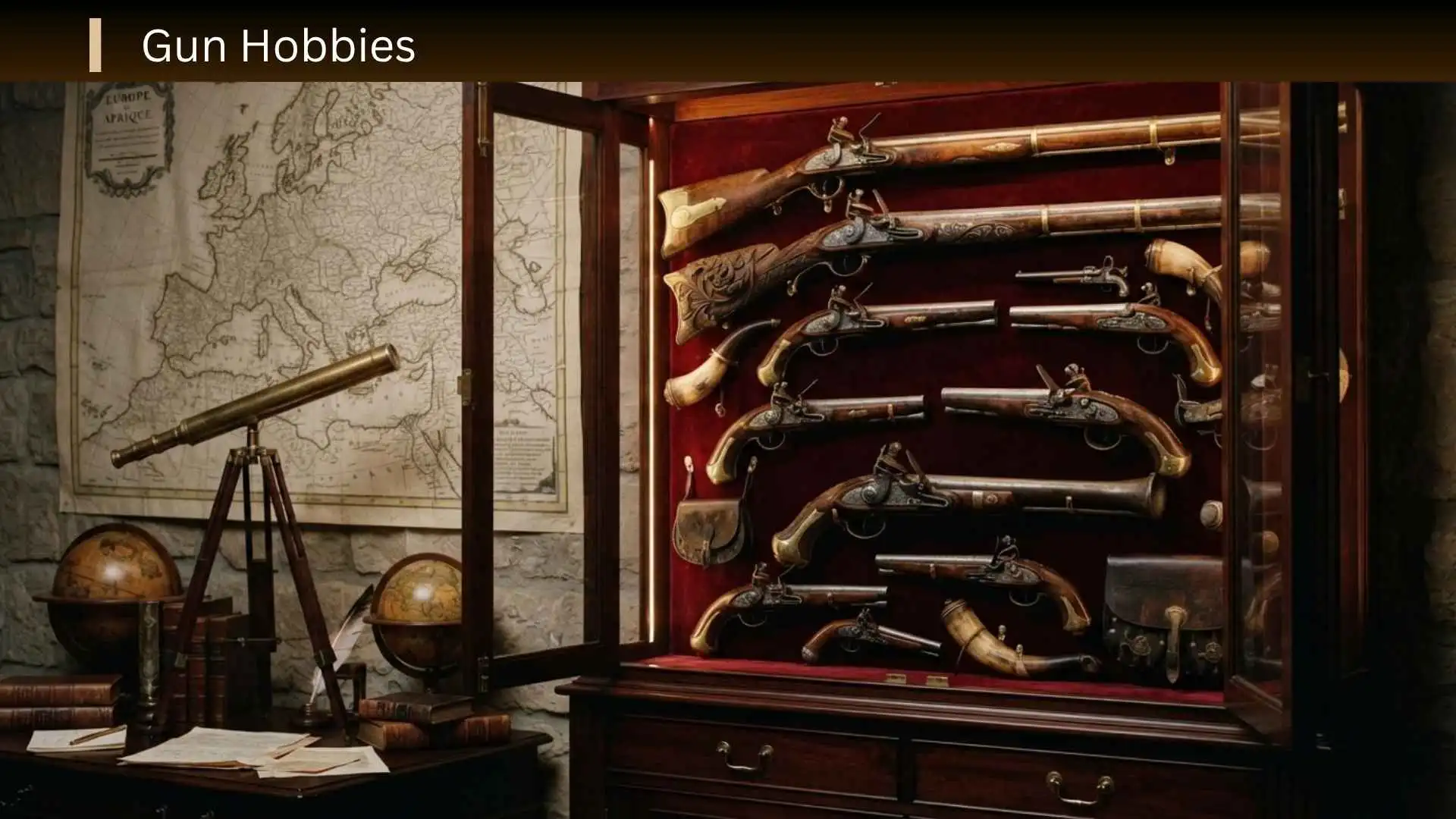
If you’re looking for a hobby that combines focus, skill, and a strong sense of responsibility, gun hobbies can offer a unique way to spend your free time. I know the topic can seem serious at first, but there’s much more to it than simply owning or handling a firearm. You can explore areas such as collecting, historical research, target sports, maintenance, and learning about firearm history and technology.
Whether you’re completely new to the subject or already interested in firearms, you may find that gun hobbies can encourage patience, attention to detail, and continuous learning. In this guide, I’ll explore different types of gun-related hobbies, what makes them interesting, and how you can approach them safely and responsibly.
What Are Gun Hobbies?
Gun hobbies are recreational, educational, sporting, or collecting activities involving firearms or firearm history and culture. They can be active, such as organized target shooting, or primarily educational, such as researching historical firearms.
Not every gun hobby requires owning a firearm. Some activities can be explored through museums, clubs, historical research, supervised ranges, competitions, or collecting related materials that do not involve functional firearms.
The most suitable hobby depends on what you actually enjoy: competition, history, craftsmanship, collecting, outdoor recreation, or learning.
15 Gun Hobbies to Explore
1. Target Shooting
Target shooting is one of the most straightforward firearm-related recreational activities. Participants shoot at designated targets in controlled environments, typically following established range rules.
For beginners, supervised facilities and formal instruction can provide a structured introduction. The emphasis should be on safe handling, following range procedures, and developing responsible habits rather than simply shooting as much as possible.
Best for: People interested in structured recreational shooting
Experience level: Beginner-friendly with proper instruction
Main consideration: Use a reputable, supervised facility and follow its rules
2. Competitive Shooting
Competitive shooting turns target shooting into an organized sport. Participants compete according to specific rules, scoring systems, equipment requirements, and match procedures.
Different disciplines can emphasize different skills, such as accuracy, precision, speed, or consistency. Beginners should first understand the rules and safety procedures of the particular discipline before participating.
Best for: People who enjoy structured competition
Experience level: Beginner to advanced
Main consideration: Learn the rules and safety procedures before entering competitions
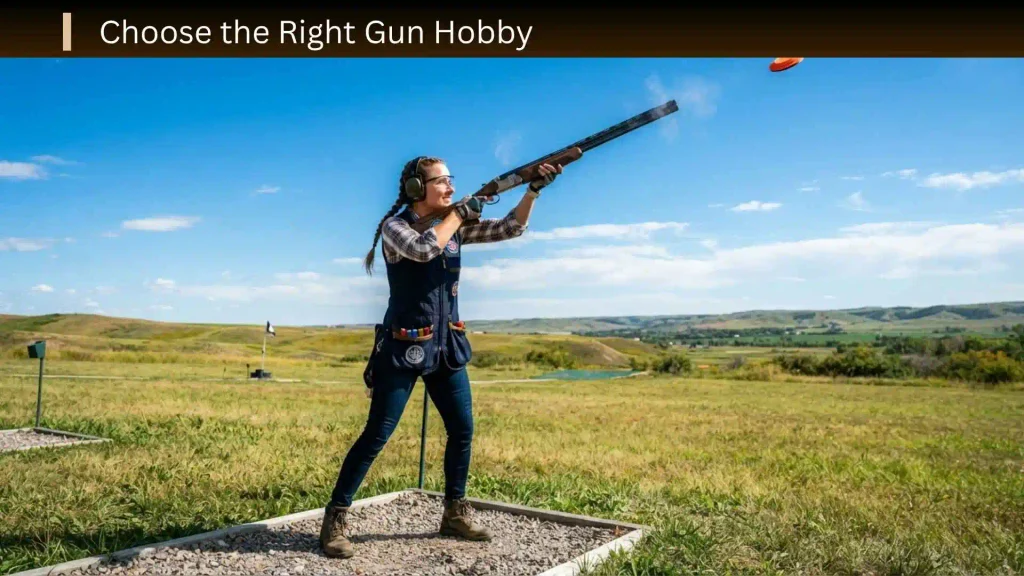
3. Trap and Skeet Shooting
Trap and skeet are organized shotgun sports involving clay targets launched into the air.
The two sports use different target presentations and field layouts, which creates distinct challenges. They can appeal to people who enjoy outdoor sporting activities and the repetitive practice of improving consistency.
Best for: People interested in clay-target sports
Experience level: Beginner-friendly with instruction
Main consideration: Appropriate eye and hearing protection and range supervision are important
4. Sporting Clays
Sporting clays is another clay-target discipline designed to provide varied target presentations that can resemble different types of field shooting.
Unlike a single fixed target pattern, sporting-clays courses can provide a changing experience from station to station.
Best for: People who want variety and an outdoor sporting environment
Experience level: Beginner to advanced
Main consideration: Start with instruction and learn the specific rules of the facility
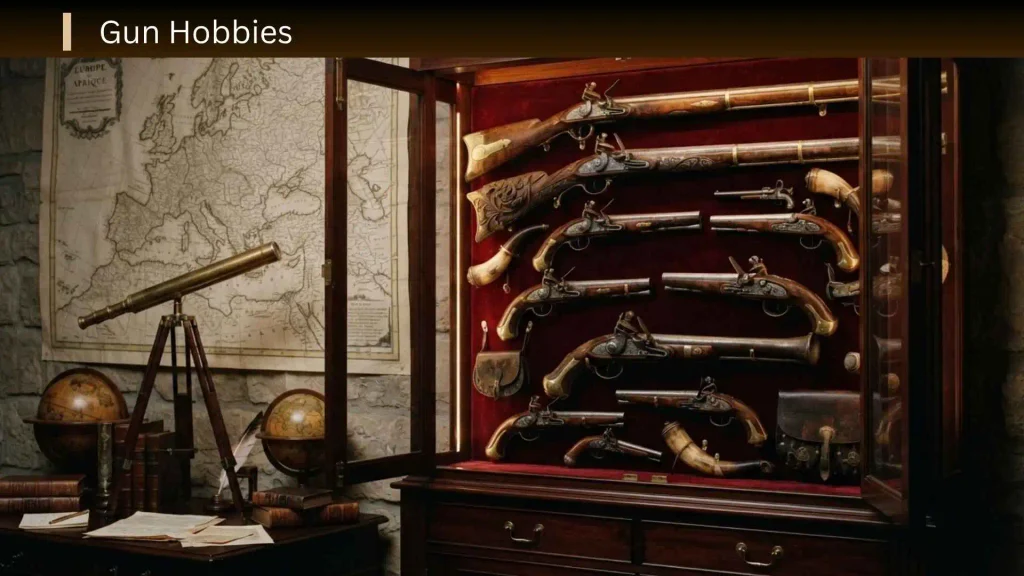
5. Historical Firearm Collecting
Historical collecting focuses on firearms as artifacts connected to technology, manufacturing, military history, sporting traditions, or particular periods.
A collector might specialize in a historical era, manufacturer, design development, or geographic region.
The hobby can involve substantial research. Provenance, authenticity, condition, historical significance, and applicable laws can all matter when evaluating an item.
Best for: History enthusiasts and researchers
Experience level: Beginner to advanced
Main consideration: Research authenticity and understand federal, state, and local requirements before acquiring anything regulated
6. Firearm History Research
You do not need to own firearms to enjoy firearm history.
Research can involve studying technological development, historical events, manufacturing companies, sporting traditions, military history, museums, archival documents, and historical photographs.
This is particularly suitable for people who enjoy reading, writing, genealogy, or historical research.
Best for: Researchers and history enthusiasts
Experience level: Beginner-friendly
Main consideration: Distinguish documented historical evidence from myths and internet folklore
7. Firearm Collecting as a Curatorial Hobby
Some collectors approach the hobby almost like museum curation. Instead of simply accumulating items, they develop a focused collection with a specific theme.
For example, a collection might focus on a particular historical period, manufacturer, technological development, or sporting tradition.
A focused collecting strategy can make research and organization easier than buying unrelated items without a clear purpose.
Best for: Organized collectors
Experience level: Beginner to advanced
Main consideration: Establish a collecting theme and maintain accurate records
8. Firearms Museum Visits
Visiting museums can be an accessible way to explore firearm history without owning or handling firearms.
Museums may present historical weapons alongside information about manufacturing, military history, sporting traditions, politics, technology, and social history.
This option is especially useful for beginners who are still deciding which aspect of the hobby interests them.
Best for: Beginners, families where appropriate, and history enthusiasts
Experience level: Very accessible
Main consideration: Focus on reputable museums and educational exhibits
9. Historical Research and Archiving
Another firearm-related hobby involves preserving historical information rather than collecting physical objects.
You might organize old photographs, documents, catalogs, advertisements, family records, or publicly available historical material.
Digital archiving can be particularly appealing because it requires little physical space.
Best for: People who enjoy documentation and preservation
Experience level: Beginner-friendly
Main consideration: Record sources carefully so historical information remains verifiable
10. Competitive Match Spectating
You can participate in the shooting-sports community without immediately becoming a competitor.
Watching organized competitions can help you understand different disciplines, scoring systems, range etiquette, and the structure of competitive events.
It is also an opportunity to determine whether the competitive side of shooting actually interests you before investing significant time or money.
Best for: Curious beginners
Experience level: Beginner-friendly
Main consideration: Observe before deciding which discipline fits you
11. Firearm-Related Literature Collecting
Books, manuals, historical publications, catalogs, magazines, and other printed materials can become a hobby in their own right.
Collectors may focus on particular historical periods, manufacturers, sporting traditions, authors, or technical history.
Older publications can also provide insight into how firearms and shooting culture were discussed during different periods.
Best for: Readers and collectors
Experience level: Beginner-friendly
Main consideration: Verify historical information because older publications may contain outdated advice or terminology
12. Firearm Photography
Firearm photography combines an interest in photography with historical or sporting subjects.
Photographers can concentrate on legally owned or museum-displayed objects and explore composition, lighting, texture, historical context, and documentation.
This can be a useful choice for someone who enjoys firearm culture but prefers a creative hobby rather than shooting itself.
Best for: Photography enthusiasts
Experience level: Beginner-friendly
Main consideration: Photograph firearms only in lawful and controlled circumstances
13. Sporting and Conservation Activities
Some firearm-related outdoor communities overlap with wildlife conservation, habitat management, and responsible outdoor recreation.
The connection between recreational shooting and conservation varies considerably by activity and organization, so it is important to understand the specific purpose of any program you join.
For anyone interested in this area, conservation organizations and local wildlife agencies can provide more reliable information than informal online discussions.
Best for: Outdoor enthusiasts interested in conservation
Experience level: Varies
Main consideration: Follow applicable wildlife, land-use, and firearm regulations
14. Firearm Related Crafts and Artwork
People interested in firearms do not necessarily need to make shooting the center of their hobby.
Art, illustration, historical writing, scale modeling, photography, and other creative activities can explore firearm history and design without requiring active firearm use.
These hobbies can also combine well with broader interests such as military history, industrial design, or vintage culture.
Best for: Creative hobbyists
Experience level: Beginner-friendly
Main consideration: Keep the activity focused on lawful artistic or historical subjects
15. Shooting Sports Club Participation
Joining an established shooting-sports organization or local club can provide access to structured events, educational opportunities, and a community of people with similar interests.
For beginners, the quality and culture of the organization matter. Look for clubs that take safety seriously, have clearly communicated rules, and provide appropriate instruction or orientation for newcomers.
Best for: People who want a community around the hobby
Experience level: Beginner to advanced
Main consideration: Choose an organization with strong safety standards and responsible practices
Gun Hobbies Compared
| Hobby | Difficulty | Potential Starting Cost | Social Level | Main Interest |
| Target shooting | Low–Moderate | Moderate | Moderate | Recreation |
| Competitive shooting | Moderate–High | Moderate–High | High | Competition |
| Trap and skeet | Low–Moderate | Moderate | Moderate | Clay targets |
| Sporting clays | Low–Moderate | Moderate | Moderate | Outdoor sport |
| Historical collecting | Moderate–High | Varies widely | Low–Moderate | History |
| Firearm history research | Low | Low | Low | Research |
| Museum visits | Low | Low–Moderate | Low–Moderate | Education |
| Archiving | Low | Low | Low | Preservation |
| Literature collecting | Low–Moderate | Low–High | Low | Books and history |
| Firearm photography | Low–Moderate | Low–Moderate | Low | Creativity |
| Club participation | Varies | Varies | High | Community |
| Conservation activities | Varies | Varies | Moderate–High | Outdoors |
Costs vary substantially depending on whether an activity requires range fees, instruction, travel, equipment, membership, collecting, or other expenses. A low-cost way to explore the subject is often research, museums, books, photography, or organized events before deciding whether a more equipment-intensive activity is right for you.
How to Choose the Right Gun Hobby
The best hobby is not necessarily the one that involves the most equipment. Start with the part of the subject that genuinely interests you.
If You Like Competition
Competitive shooting may be the natural fit. Look for an established discipline with clear rules and beginner-friendly events.
If You Like History
Historical research, museum visits, literature collecting, and focused collecting can provide years of material to explore.
If You Prefer Solo Activities
Research, writing, photography, archiving, and collecting-related study can offer more independent ways to engage with the subject.
If You Enjoy Outdoor Activities
Clay-target sports and appropriate organized outdoor activities may be more appealing than primarily research-based hobbies.
If You Want a Social Hobby
Clubs, competitions, educational events, and organized sporting activities can provide opportunities to meet other enthusiasts.
If You Have a Limited Budget
Start with activities that do not require major equipment purchases. Libraries, museums, historical research, photography, and educational events can help you discover your interests first.
Do You Need to Own a Gun to Enjoy Gun Hobbies?
No. Many gun hobbies do not require firearm ownership.
You can explore firearm history through museums, books, archives, photography, writing, collecting non-functional historical materials where lawful, and watching organized sporting events.
If you are interested in shooting sports, supervised facilities and qualified instruction can provide a more appropriate starting point than buying equipment before understanding the activity.
Safety Comes Before Recreation
Firearms should always be treated as potentially dangerous. Anyone participating in a shooting-related hobby should learn and follow recognized firearm-safety practices and the rules of the facility or organization involved.
Important principles include:
- Treat every firearm responsibly.
- Follow the specific safety rules of the range or organization.
- Keep firearms secured when not in use.
- Use appropriate eye and hearing protection where required.
- Never handle a firearm while impaired.
- Keep unauthorized people, particularly children, away from unsecured firearms.
- Obtain appropriate instruction before participating in unfamiliar shooting activities.
- Understand the laws that apply where you live and where the activity takes place.
Safety is not a separate part of the hobby; it is a basic requirement for responsible participation.
Understanding the Legal Side of Gun Hobbies
Firearm laws in the United States can vary by federal, state, and local jurisdiction. Rules may concern possession, transportation, transfers, storage, purchasing, carrying, particular types of firearms or accessories, and participation in certain activities.
Because laws can change and differ by location, do not rely on a generic hobby article as legal advice. Check current requirements from appropriate government sources or obtain advice from a qualified attorney when a specific legal question affects your situation.
The same principle applies to historical collecting. An item being old does not automatically mean every aspect of its possession, transfer, or transportation is unrestricted.
Common Mistakes Beginners Should Avoid
Buying Equipment Before Choosing a Discipline
Different shooting sports and collecting interests have different requirements. Research the activity first rather than purchasing equipment based solely on online recommendations.
Treating Online Content as a Substitute for Training
Videos and articles can provide background information, but they are not a replacement for qualified, hands-on instruction where training is appropriate.
Ignoring Local Rules
A hobby that is lawful and practical in one location may be subject to different requirements elsewhere.
Starting With an Unfocused Collection
Collectors can quickly accumulate unrelated items without developing expertise. A clear theme makes research, organization, and budgeting easier.
Underestimating Storage Responsibilities
Anyone who lawfully possesses firearms should understand and follow applicable safe-storage requirements and use secure storage appropriate to their circumstances.
A Beginner Friendly Way to Start
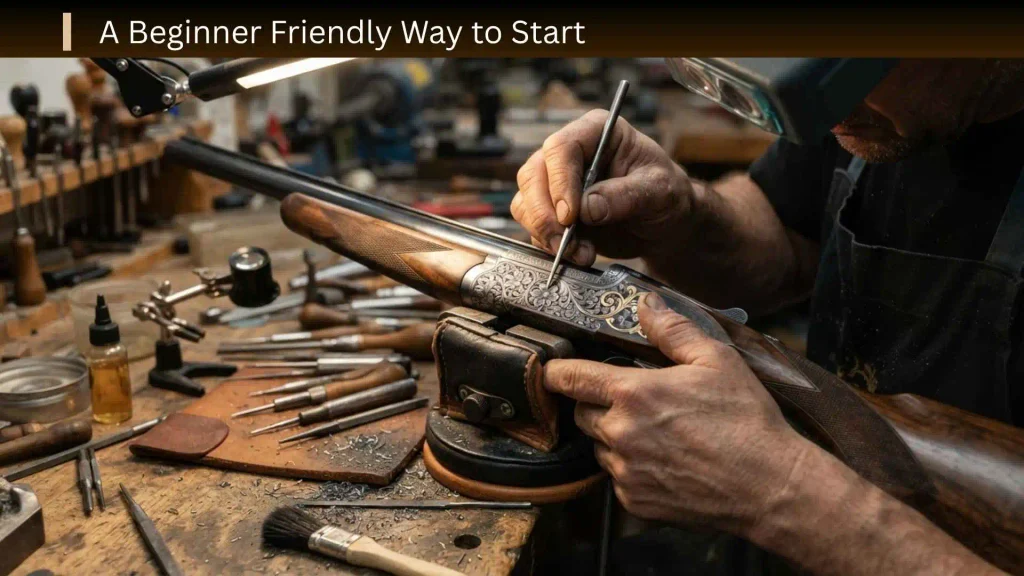
If you are completely new to gun hobbies, you do not need to commit to a particular path immediately.
A sensible progression is:
- Identify your interest. Decide whether history, competition, collecting, photography, outdoor recreation, or another aspect appeals to you.
- Learn the fundamentals. Read reliable educational material and become familiar with basic safety concepts.
- Explore without major spending. Visit a museum, attend an organized event, read books, or research different shooting disciplines.
- Seek qualified instruction where appropriate. Especially if you plan to participate in shooting sports.
- Check applicable laws. Requirements can differ significantly depending on where you live.
- Choose a specific activity. Once you understand the options, select one that matches your interests and circumstances.
- Build gradually. Avoid unnecessary purchases until you know what you actually need.
- Keep safety and responsibility central. A sustainable hobby depends on responsible behavior.
Are Gun Hobbies Expensive?
They can range from relatively inexpensive research-based activities to significantly more expensive shooting sports or collecting.
The major cost factors can include:
- Instruction
- Club membership
- Range or event fees
- Transportation
- Travel
- Equipment
- Storage
- Books and research materials
- Collecting expenses
- Maintenance and other lawful ownership costs
Someone interested primarily in history can potentially spend very little, while a serious collector or competitive participant may face substantially higher expenses.
Frequently Asked Questions
What are the most common gun hobbies?
Common categories include target shooting, competitive shooting, trap and skeet, sporting clays, historical collecting, firearm history research, photography, literature collecting, museum visits, and shooting-club participation.
What is a good gun hobby for beginners?
There is no single best option for everyone. Beginners interested in shooting may start by learning about supervised target or clay-target sports, while people interested in history may prefer museums, books, research, or collecting-related activities.
Can you enjoy gun hobbies without owning a firearm?
Yes. Historical research, museums, photography, books, archiving, artwork, sporting-event spectating, and other activities can be enjoyed without firearm ownership.
Are gun hobbies legal everywhere in the United States?
Firearm laws vary by jurisdiction. Federal, state, and local requirements can affect different aspects of ownership and related activities, so people should verify the rules applicable to their location and circumstances.
What should beginners consider before choosing a gun hobby?
Consider your primary interest, budget, available facilities, time, desired level of social interaction, training requirements, storage responsibilities, and applicable laws.
Is collecting firearms the same as shooting as a hobby?
No. Collecting is primarily focused on acquiring, researching, preserving, and documenting items, while shooting sports focus on recreational or competitive use at appropriate facilities. A person can enjoy one without participating in the other.
What is the safest way to begin a shooting-related hobby?
Start by learning recognized firearm-safety practices and obtaining appropriate instruction through a reputable, supervised facility or qualified instructor. Follow all facility rules and applicable laws.
Conclusion
Gun hobbies encompass much more than shooting. Depending on your interests, you can explore organized target sports, clay-target disciplines, competition, historical research, collecting, photography, museums, literature, archiving, or shooting-sports communities.
For beginners, the strongest starting point is to choose the activity before buying equipment, learn appropriate safety practices, use reputable educational resources, and verify the laws that apply to your location. That approach makes it easier to find a gun hobby that fits your interests while keeping responsible participation at the center.

I’m James Anderson, a dedicated writer and lifelong learner who enjoys researching topics and explaining them in a practical way. Through my work at Cognivoora, I aim to give readers reliable, easy-to-follow information that helps them learn something new. I always try to keep my writing natural, useful, and focused on the questions readers actually have.
Books:
- A Practical Guide to Better Thinking
- Questions Worth Asking