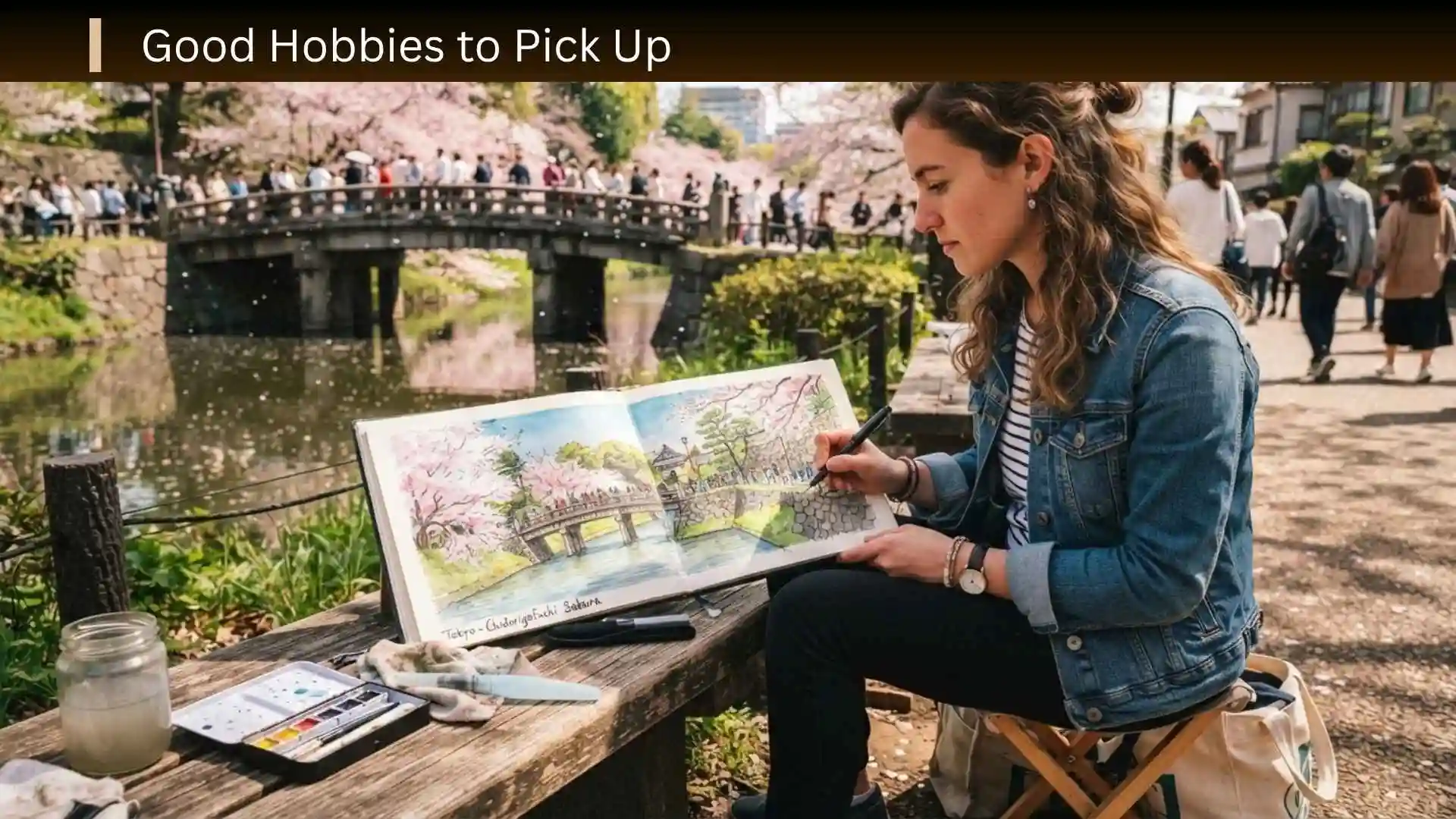
Finding good hobbies to pick up can be easier than you think. I believe the right hobby can add excitement to an ordinary day, help you learn something new, and give you a reason to step away from the usual routine.
You don’t need to be talented or experienced to begin you simply need to be curious. Whether you want to get creative, stay active, relax your mind, meet new people, or develop a useful skill, you can find a hobby that fits your personality and lifestyle. In this guide, I’ll help you explore interesting options so you can discover a hobby you’ll genuinely enjoy and want to keep doing.
What Are Good Hobbies to Pick Up?
Good hobbies are activities that you genuinely enjoy and can realistically continue with your available time, space, energy, and budget. Reading, photography, gardening, cooking, drawing, hiking, playing an instrument, woodworking, birdwatching, and learning a language are just a few examples.
There is no single “best” hobby for everyone. A good hobby should fit your current lifestyle rather than become another obligation.
For example:
- Want something quiet? Try reading, journaling, drawing, puzzles, or birdwatching.
- Want to be more active? Consider hiking, cycling, dancing, swimming, or recreational sports.
- Want to make things? Try woodworking, pottery, knitting, crochet, painting, or cooking.
- Want to learn? Explore a language, musical instrument, photography, astronomy, or chess.
- Want to meet people? Consider a book club, community gardening, recreational league, dance class, or volunteer activity.
- Want a hobby you can do in short sessions? Reading, sketching, photography, puzzles, journaling, and language practice are flexible choices.
Research and health guidance also recognize hobbies as activities that can involve creativity, sensory engagement, self-expression, relaxation, and cognitive stimulation.
30 Good Hobbies to Pick Up
1. Reading
Reading is one of the easiest hobbies to start because you can choose the subject, difficulty, and pace yourself.
You can read novels, biographies, history, science, essays, graphic novels, or nonfiction. Libraries also make it possible to explore different subjects without buying every book.
Best for: Quiet downtime, learning, imagination, and people with limited space.
Getting started: Pick one subject you already enjoy rather than forcing yourself to read something simply because it is considered “good.”
2. Photography
Photography turns ordinary surroundings into opportunities to practice observation and creativity. You do not necessarily need a dedicated camera; a smartphone is enough to learn fundamental concepts such as composition, perspective, lighting, and timing.
You might photograph architecture, landscapes, food, wildlife, people, or everyday details.
Best for: Creative people who enjoy exploring and noticing details.
Getting started: Choose one subject and photograph it from different angles instead of worrying about expensive equipment.
3. Cooking
Cooking is both a hobby and a practical life skill. It can range from learning basic meals to experimenting with international cuisines, baking, fermentation, sauces, or specialty dishes.
One advantage is that progress is easy to see: you learn a technique and immediately have something tangible to show for it.
Best for: People who enjoy hands-on activities and experimenting with flavors.
Getting started: Master a handful of reliable recipes before attempting complicated dishes.
4. Gardening
Gardening can be as simple as keeping a few herbs in containers or as involved as maintaining a vegetable garden.
You can grow herbs, flowers, vegetables, houseplants, or native plants depending on your space and climate.
Best for: People who enjoy nature, hands-on work, and gradual projects.
Getting started: Begin with a few plants that match the light and space you actually have rather than buying a large collection immediately.
5. Drawing
Drawing requires relatively little equipment and gives you an obvious way to track your progress.
You can practice pencil sketches, portraits, landscapes, cartoons, architectural drawing, or digital illustration.
Best for: Creative beginners who want a low-cost hobby.
Getting started: Spend 10–20 minutes drawing simple objects around you. Consistent practice is more useful than waiting until you feel “talented.”
6. Painting
Painting offers many directions, including watercolor, acrylic, gouache, and oil painting.
You can paint landscapes, abstract designs, still life, portraits, or small decorative pieces. Beginners do not need a professional studio to experiment with basic materials.
Best for: People who want a more expressive creative outlet.
Getting started: Choose one medium and learn its basic techniques before purchasing a large collection of supplies.
7. Hiking
Hiking combines exploration with physical activity and can be adapted to different experience levels.
A short local trail can be enough to begin. More experienced hikers can gradually explore longer routes, different terrain, and organized hiking trips.
Best for: People who want to spend more time outdoors.
Getting started: Start with familiar, appropriately rated trails and bring water, suitable footwear, weather-appropriate clothing, and a charged phone.
8. Cycling
Cycling can be a recreational hobby, a way to explore your community, or a structured fitness activity.
You can ride casually on local paths or gradually develop an interest in road cycling, mountain biking, touring, or bike maintenance.
Best for: People who like movement and exploration.
Getting started: Use a properly fitted bicycle and appropriate safety equipment, then begin with short, comfortable rides.
9. Birdwatching
Birdwatching is an excellent example of a hobby that can start almost anywhere. You can observe birds from your backyard, neighborhood, local park, or nature preserve.
Over time, you can learn to identify species by appearance, behavior, habitat, and calls.
Best for: Curious, patient people who enjoy nature.
Getting started: Start by identifying common birds in your area. Binoculars can help later but are not essential for your first attempts.
10. Journaling
Journaling does not require a complicated system. You can write about your day, record ideas, track goals, describe observations, or keep a creative notebook.
Some people prefer structured prompts, while others simply write whatever comes to mind.
Best for: People who enjoy writing, reflection, organization, or documenting ideas.
Getting started: Keep the first entries short. A few sentences are enough to establish the habit.
11. Learning a New Language
Language learning gives you a long-term project with many small milestones.
You can study vocabulary, pronunciation, conversation, writing, and listening. You can also connect the hobby to another interest by watching films, reading simple books, or cooking food associated with the language.
Best for: Lifelong learners and people interested in travel or different cultures.
Getting started: Choose one language and practice consistently rather than switching between several at once.
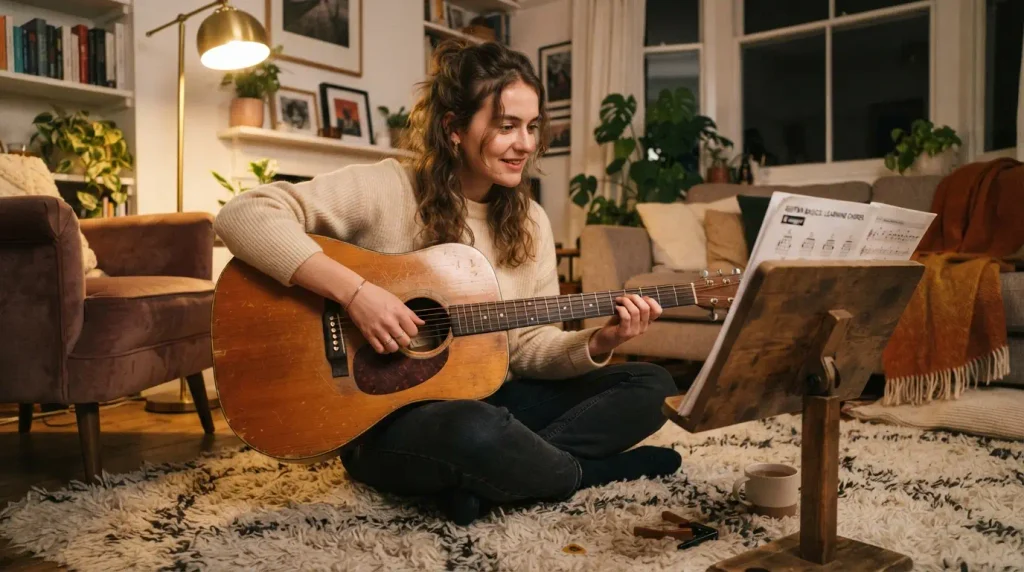
12. Playing a Musical Instrument
Learning guitar, piano, keyboard, ukulele, drums, violin, or another instrument can become a rewarding long-term hobby.
The initial stage can feel awkward, but you do not need to become an advanced musician for the activity to be worthwhile.
Best for: People who enjoy music and structured skill development.
Getting started: Learn a few basic chords, scales, rhythms, or simple songs depending on the instrument.
13. Knitting or Crochet
Knitting and crochet are portable, hands-on hobbies that allow you to create useful or decorative objects.
You can start with simple projects such as scarves, small accessories, blankets, or basic decorative pieces. Crochet can be particularly approachable for people who want to see progress quickly.
Best for: Quiet creative work that can be done at home.
Getting started: Learn a few fundamental stitches and complete a small project before moving to complicated patterns. Beginner guides commonly recommend basic yarn and the appropriate needles or crochet hook as starting equipment.
14. Pottery and Ceramics
Pottery combines creativity with a physical, hands-on process. You can learn hand-building techniques such as pinch pots and coil building or eventually explore wheel throwing.
Because equipment and firing can be difficult to manage at home, a local ceramics studio or class may be the easiest starting point.
Best for: People who like making physical objects.
Getting started: Try an introductory class before investing in specialized equipment.
15. Woodworking
Woodworking can range from simple beginner projects to highly technical furniture making.
You can learn measuring, cutting, joining, sanding, finishing, and eventually more advanced techniques.
Best for: People who enjoy practical, hands-on projects.
Getting started: Begin with a small project and learn safe tool handling before attempting complex builds.
16. Puzzles
Jigsaw puzzles, crossword puzzles, logic puzzles, and Sudoku offer different types of mental challenges.
Puzzles are particularly useful when you want an activity that can be picked up and put down without a large setup.
Best for: Quiet evenings, screen-free time, and people who enjoy problem-solving.
Getting started: Choose a difficulty that is challenging without becoming frustrating.
17. Chess
Chess provides a structured hobby with almost unlimited room for improvement.
Beginners can learn the rules and basic tactics before gradually exploring openings, strategy, endgames, and competitive play.
Best for: Strategic thinkers and people who enjoy measurable skill progression.
Getting started: Learn the rules first, then focus on basic tactics rather than trying to memorize large numbers of openings.
18. Board Games
Board games offer considerably more variety than traditional classics. Strategy games, cooperative games, card-driven games, party games, and two-player games can create very different experiences.
This is also an easy hobby to share with friends or family.
Best for: Social people who enjoy competition, cooperation, or problem-solving.
Getting started: Pick games based on the number of people you realistically expect to play with.
19. Dancing
Dancing can be both a creative activity and a form of physical movement.
Options include ballroom, salsa, swing, hip-hop, contemporary dance, line dancing, and many others.
Best for: People who want movement combined with music and social interaction.
Getting started: A beginner class can provide structure, but online lessons or practicing at home can also work for styles that require less space.
20. Swimming
Swimming is a versatile recreational activity that can be enjoyed casually or developed into a more structured skill.
You can focus on technique, endurance, different strokes, or simply spending time in the water.
Best for: People who enjoy water-based activities and want a hobby that involves movement.
Getting started: If you are inexperienced in the water, prioritize learning basic water safety and swimming skills with appropriate instruction.
21. Baking
Baking is different from general cooking because measurements and processes often matter more precisely.
You can explore bread, cookies, cakes, pies, pastries, or regional specialties.
Best for: People who enjoy detailed processes and tangible results.
Getting started: Begin with forgiving recipes and learn how ingredients such as flour, fat, sugar, eggs, yeast, and leaveners affect the final result.
22. Creative Writing
Creative writing allows you to experiment with short stories, poetry, scripts, essays, fictional characters, or longer projects.
You do not need to plan a novel immediately. A 500-word story can be a complete hobby session.
Best for: People who enjoy imagination, storytelling, and working independently.
Getting started: Choose a simple prompt and write without editing until the first draft is finished.
23. Calligraphy or Hand Lettering
Calligraphy focuses on creating decorative, intentional lettering, while hand lettering often emphasizes individually designed letters and words.
The hobby can be practiced on paper and eventually used for cards, journals, artwork, or personal projects.
Best for: Detail-oriented creative people.
Getting started: Learn basic strokes and letterforms before worrying about elaborate designs.
24. Model Building
Model building can include scale vehicles, airplanes, ships, buildings, miniatures, or other subjects.
The hobby combines assembly, painting, research, and attention to detail.
Best for: Patient people who enjoy structured projects.
Getting started: Choose a beginner-friendly kit and avoid starting with an extremely complex model.
25. Geocaching
Geocaching combines outdoor exploration with a treasure-hunt format. Participants use GPS-enabled devices to locate hidden caches and record their discoveries.
It can give ordinary walks a specific purpose and can be enjoyed alone or with others.
Best for: People who enjoy exploration, puzzles, and outdoor activities.
Getting started: Learn the rules of the activity and choose beginner-friendly locations.
26. Volunteering
Volunteering can become a hobby when you regularly dedicate part of your free time to a cause or community activity.
Possible areas include animal shelters, food programs, environmental projects, libraries, community events, and nonprofit organizations.
Best for: People who want their leisure time to involve community participation.
Getting started: Choose a cause you already care about and find a commitment level that fits your schedule.
27. Collecting
Collecting can turn an existing interest into an organized hobby.
You might collect books, coins, stamps, postcards, sports memorabilia, vinyl records, vintage items, or other objects.
The enjoyable part does not have to be simply acquiring things. Researching history, identifying items, organizing a collection, and learning how to care for it can become part of the hobby.
Best for: Curious people who enjoy research and organization.
Getting started: Define a specific theme or limit before buying anything. This helps prevent a collection from becoming an uncontrolled accumulation of stuff.
28. Home DIY Projects
DIY can involve repairing, improving, decorating, or building things around your home.
Projects might include painting furniture, installing shelves, organizing storage, making simple decorations, or learning basic repairs.
Best for: People who enjoy practical problem-solving.
Getting started: Begin with a project that matches your current tools and skill level. Learn how to use unfamiliar equipment safely before moving to more complicated work.
29. Astronomy and Stargazing
Stargazing can begin with nothing more than a place with a reasonably clear view of the sky.
You can learn constellations, planets, lunar phases, meteor showers, and basic celestial navigation. A pair of binoculars can later expand what you can observe.
Best for: Curious people fascinated by science and the night sky.
Getting started: Learn a few prominent constellations and identify the Moon and easily visible planets before investing in a telescope.
30. Fishing
Fishing combines outdoor recreation, patience, observation, and practical knowledge.
Depending on where you live, you can explore freshwater or saltwater fishing, shore fishing, fly fishing, or other approaches.
Best for: People who enjoy being outdoors and prefer slower-paced activities.
Getting started: Learn the local rules, licensing requirements where applicable, basic equipment, and responsible handling practices before fishing.
Good Hobbies to Pick Up Based on Your Personality
Instead of choosing randomly, start with the experience you want.
| If you want… | Hobbies to consider |
| Something quiet | Reading, journaling, puzzles, drawing |
| More creativity | Painting, photography, writing, pottery |
| More physical activity | Hiking, cycling, swimming, dancing |
| More time outdoors | Gardening, birdwatching, fishing, hiking |
| A social activity | Dancing, board games, volunteering, sports |
| A practical skill | Cooking, woodworking, DIY, gardening |
| A mental challenge | Chess, puzzles, language learning, astronomy |
| Less screen time | Reading, knitting, gardening, drawing |
| A long-term skill | Music, language learning, photography, woodworking |
| Something inexpensive to start | Walking, drawing, reading, writing, birdwatching |
The important point is that a hobby does not have to be impressive or productive. It can simply be something you enjoy returning to.
Best Hobbies If You Have Very Little Free Time
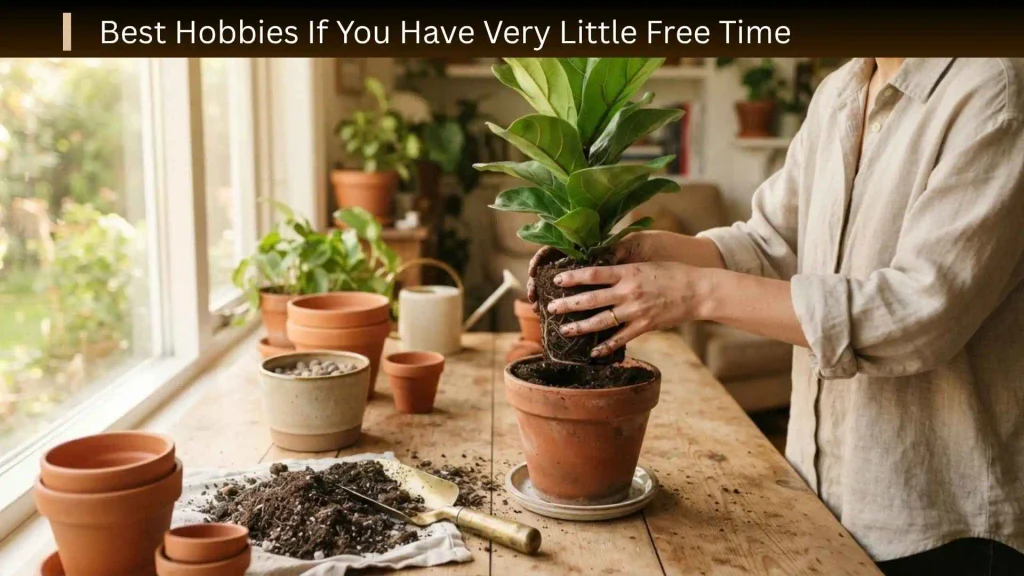
A hobby is much easier to maintain when it does not require a large block of uninterrupted time.
Good choices include:
- Reading
- Journaling
- Drawing
- Photography
- Crochet
- Puzzles
- Language practice
- Sketching
- Cooking simple recipes
- Stargazing
- Birdwatching
For example, you can read for 15 minutes, sketch for 10 minutes, practice vocabulary during a short break, or take a quick walk around your neighborhood.
The goal is to make the hobby fit your schedule rather than waiting for your schedule to become completely free.
Best Hobbies to Pick Up at Home
If you prefer staying home, consider hobbies that need little space or equipment:
- Reading
- Drawing
- Painting
- Journaling
- Baking
- Cooking
- Knitting
- Crochet
- Creative writing
- Chess
- Puzzles
- Model building
- Learning an instrument
- Language learning
- Digital photography or photo editing
Many home-based hobbies can be started gradually. You do not need to create a dedicated hobby room before trying something.
Best Hobbies If You Want to Meet New People
If your main goal is social connection, choose hobbies where interaction happens naturally.
Good options include:
- Recreational sports
- Dance classes
- Book clubs
- Board-game groups
- Community gardening
- Volunteering
- Photography clubs
- Hiking groups
- Art classes
- Cooking classes
- Community theater
A useful advantage of structured hobbies is that conversation has a built-in topic. You are not simply attending an event and trying to make conversation from scratch; you are already sharing an activity.
Good Low Cost Hobbies to Try First
You do not need to spend hundreds of dollars to discover whether you enjoy a hobby.
Start with activities such as:
- Walking
- Reading through a public library
- Drawing with basic pencils
- Journaling
- Writing
- Birdwatching
- Stargazing
- Bodyweight movement
- Puzzles you already own
- Photography with a smartphone
- Learning a language with free resources
- Cooking with ingredients you already use
A useful rule is to test the hobby before upgrading the equipment. If you enjoy the activity consistently, then additional equipment may make sense.
How to Choose the Right Hobby for You
If the list still feels overwhelming, answer five questions:
1. Do you want to create, learn, move, explore, or connect?
Your answer immediately narrows the field.
2. How much time can you realistically give it?
If you have 15 minutes a day, choose something that works in short sessions. If you regularly have several free hours on weekends, you can consider more involved projects.
3. Do you prefer being alone or around people?
Solo hobbies and social hobbies provide very different experiences. Neither is inherently better.
4. What is your starting budget?
Try low-cost options first if you are unsure what you will enjoy. Some hobbies, such as photography, woodworking, or musical instruments, can become significantly more expensive as you advance.
5. What would make you want to come back?
This is perhaps the most important question.
A hobby is easier to maintain when the activity itself is rewarding. If you constantly have to force yourself to do it, it may simply be the wrong hobby for you.
A Simple Way to Test a New Hobby
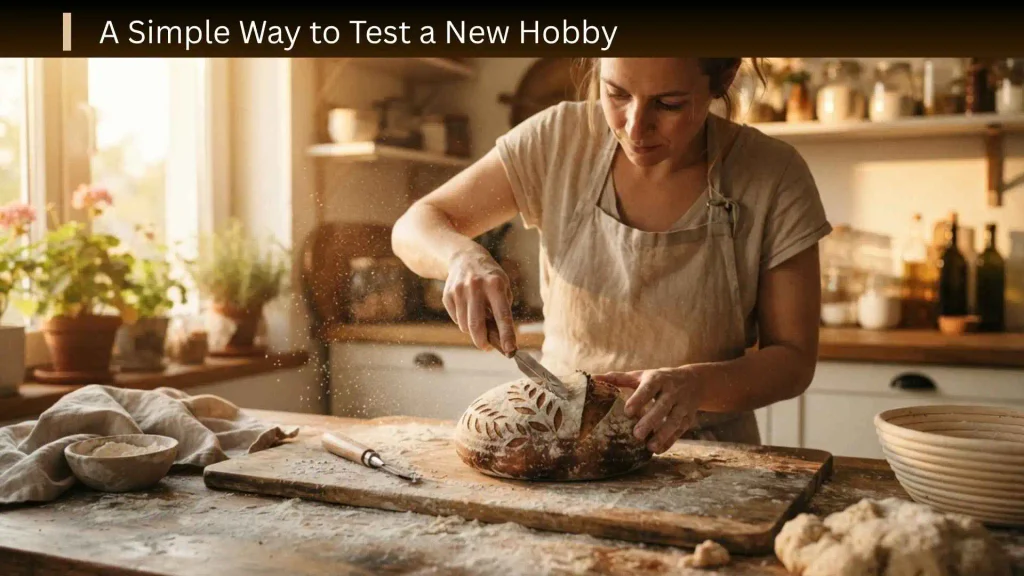
You do not have to commit to a hobby permanently.
Try this approach:
Step 1: Pick three possibilities.
Choose three activities that appeal to different parts of your personality.
Step 2: Start with the smallest version.
Do not buy professional equipment or sign up for a year-long commitment.
Step 3: Try each one two or three times.
The first session may feel awkward because you are learning.
Step 4: Notice how you feel afterward.
Ask whether you felt curious, relaxed, challenged, energized, or interested in continuing.
Step 5: Keep the one that makes you want to return.
You can drop the others without considering the experiment a failure.
This approach prevents a common mistake: spending too much money on equipment before discovering whether you actually like the activity.
Common Mistakes When Choosing a Hobby
Choosing a hobby because it looks impressive
A hobby does not need to produce something impressive to be worthwhile. Choose an activity you actually enjoy.
Buying too much equipment
Start with the basics. Upgrade after you have established genuine interest.
Expecting to be good immediately
Most worthwhile skills have a learning curve. Early mistakes are normal.
Turning every hobby into productivity
Cooking does not have to become a business. Photography does not have to become a side hustle. Writing does not have to become a published book.
A hobby can simply be leisure.
Choosing something that does not fit your lifestyle
An activity may sound exciting but become impractical if it requires equipment, space, travel, or several hours every week that you do not have.
Trying too many hobbies at once
Exploring is good, but constantly switching can prevent you from discovering whether you would eventually enjoy one activity after getting past the beginner stage.
Can a Hobby Become a Skill or Side Income?
Some hobbies can eventually develop into marketable skills, but earning money should not be treated as a guaranteed result.
Photography, woodworking, baking, graphic design, writing, music, gardening, crafting, and programming can potentially lead to paid work for people who develop strong skills and find demand for them.
However, turning a hobby into income introduces additional responsibilities such as pricing, marketing, customer service, taxes, equipment costs, and deadlines.
If your primary reason for starting a hobby is relaxation, keeping it separate from work may actually make it more enjoyable.
Frequently Asked Questions
What are the best hobbies to pick up for adults?
Good options include reading, cooking, photography, gardening, hiking, drawing, learning a language, playing an instrument, woodworking, puzzles, dancing, and birdwatching. The best choice depends on your available time, budget, personality, and interests.
What is a good hobby to start with no experience?
Reading, drawing, journaling, walking, photography with a smartphone, puzzles, birdwatching, and basic cooking are accessible starting points. You can learn the fundamentals as you go.
What are good hobbies to pick up at home?
Reading, painting, drawing, journaling, baking, cooking, knitting, crochet, creative writing, puzzles, chess, model building, language learning, and playing an instrument can all work well at home.
What hobby is good if I am bored?
Choose something that changes what you are doing rather than simply providing another form of passive entertainment. Drawing, cooking, walking, photography, puzzles, gardening, or learning an instrument can give you an active project to focus on.
What are good hobbies for people with limited free time?
Reading, journaling, sketching, photography, puzzles, language practice, crochet, and short walks can fit into relatively small blocks of time. The best option is one that can be stopped and resumed easily.
How do I know which hobby is right for me?
Think about whether you want creativity, physical activity, learning, relaxation, exploration, or social interaction. Then consider your budget, available space, and schedule. Testing a few hobbies briefly is often more useful than trying to decide perfectly in advance.
Should I choose a productive hobby or one that is just fun?
Either can be a good choice. A productive hobby may teach you a useful skill, while a purely recreational hobby can provide enjoyment and a break from responsibilities. You do not need to justify every hobby through productivity.
Conclusion
The best good hobbies to pick up are not necessarily the most unusual or impressive ones. They are the activities that fit your life well enough that you actually want to keep doing them.
If you want something quiet, start with reading, drawing, puzzles, or journaling. If you want to get outside, try hiking, gardening, birdwatching, cycling, or fishing. For creativity, explore photography, painting, writing, pottery, or crafts. And if you want to meet people, consider dancing, volunteering, board games, recreational sports, or local clubs.
When you are unsure, start small. Pick one hobby, give it a few genuine attempts, and pay attention to whether you look forward to doing it again. You do not need to find the perfect hobby you only need to find one worth trying.

I’m Olivia Bennett, a passionate writer who loves exploring ideas, learning new concepts, and sharing knowledge in a straightforward way. I write for Cognivoora with the goal of making useful topics easier to understand without unnecessary complexity. My approach combines research, clarity, and a reader-first perspective.
Books:
- Think Clearly, Live Better
- The Curious Reader’s Guide