When you’re building a resume, every section should help employers understand who you are beyond your job experience. I know it can be difficult to decide which hobbies are actually worth mentioning and which ones may simply take up valuable space.
If you choose the right hobbies, you can show useful qualities such as creativity, teamwork, discipline, leadership, or curiosity. In this guide, you’ll discover good hobbies to put on a resume and learn how to choose interests that genuinely support your skills and career goals.
What Are Good Hobbies to Put on a Resume?
Good hobbies to put on a resume are activities that demonstrate useful qualities such as leadership, creativity, teamwork, discipline, communication, problem-solving, persistence, or technical ability.
Some strong examples include:
- Volunteering
- Blogging or writing
- Photography
- Coding and programming
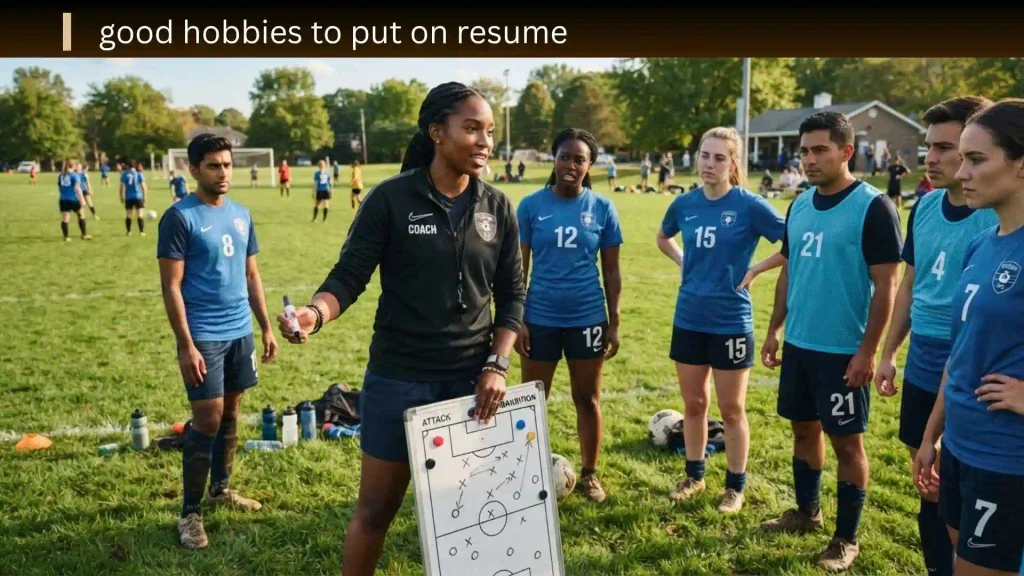
- Playing team sports
- Running or endurance sports
- Public speaking
- Learning languages
- Gardening
- Cooking
- Painting or drawing
- Playing a musical instrument
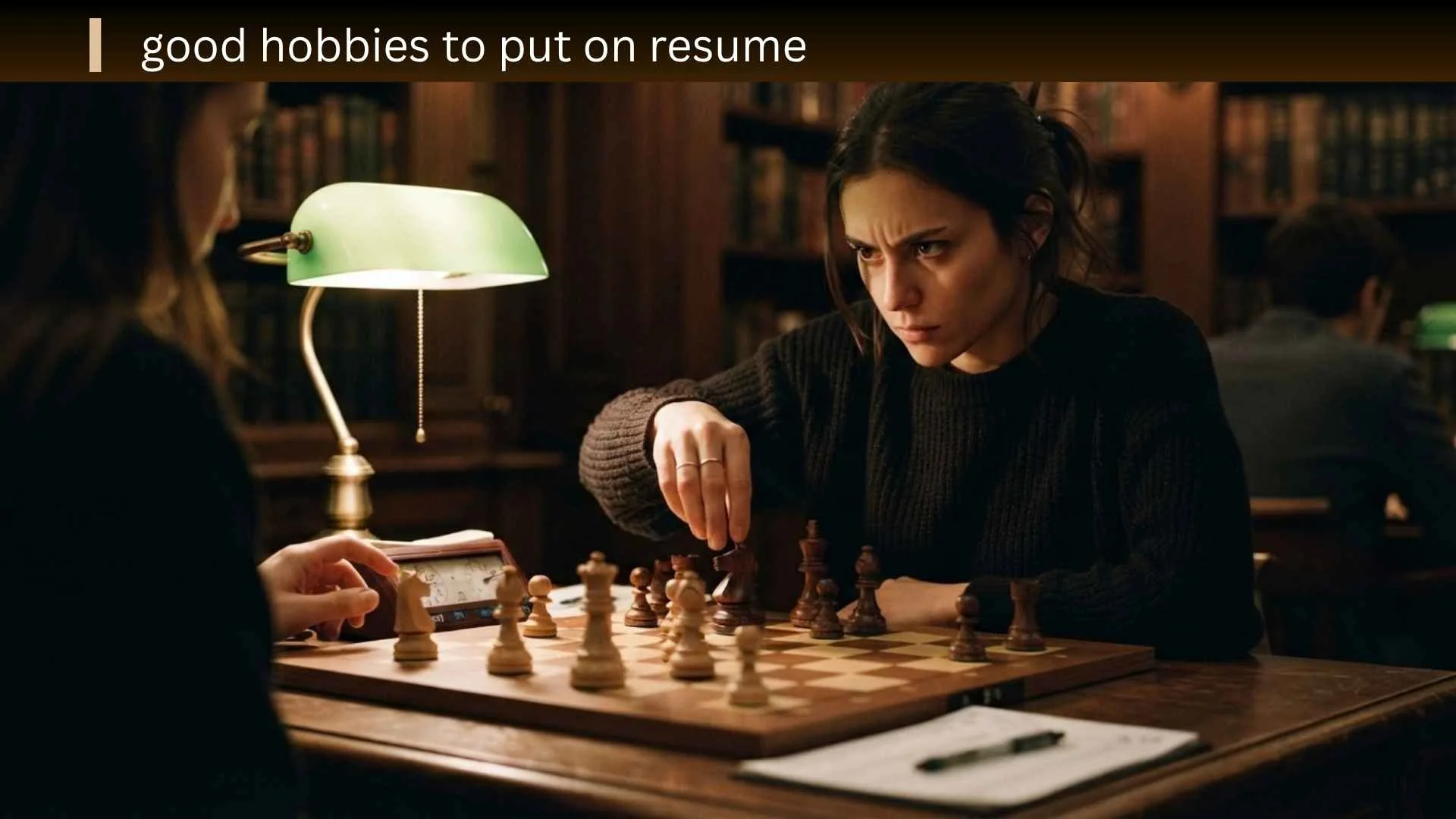
- Chess
- Hiking
- Reading
- Traveling
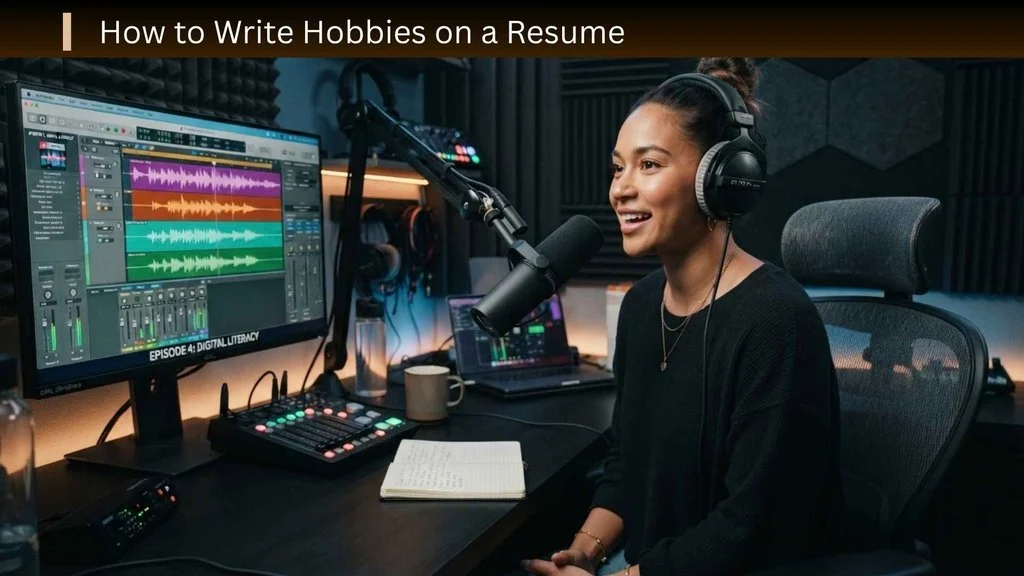
- Podcasting
- Woodworking
- Community organizing
- DIY projects
- Video production
- Digital art
- Board games
- Mentoring
- Personal finance or investing education
Not every hobby belongs on every resume. The best choice depends on the position, industry, employer, and stage of your career.
25 Good Hobbies to Put on a Resume
1. Volunteering
Volunteering is one of the most versatile hobbies or extracurricular activities to include on a resume when it genuinely reflects your interests.
It can demonstrate:
- Community involvement
- Responsibility
- Teamwork
- Communication
- Initiative
- Leadership
For example, someone applying for a nonprofit, education, healthcare, customer service, or community-focused position may find volunteering particularly relevant.
Instead of simply writing “Volunteering,” be specific when possible:
Volunteer tutor at a local community education program
This gives the employer more useful context.
2. Blogging or Writing
Writing as a hobby can demonstrate your ability to communicate ideas clearly and organize information.
It may be particularly relevant for jobs involving:
- Marketing
- Communications
- Public relations
- Content creation
- Journalism
- Education
- Research
- Customer communications
If you maintain a blog, you can mention the subject matter when it is professionally appropriate.
3. Photography
Photography can demonstrate creativity, attention to detail, patience, visual communication, and technical curiosity.
It may be especially useful for candidates interested in:
- Marketing
- Social media
- Design
- Media
- Advertising
- Content creation
For creative positions, photography can also give you an opportunity to discuss or showcase a portfolio.
4. Coding and Programming
Coding is a particularly useful hobby when applying for technology-related positions or jobs where analytical and technical skills matter.
Depending on what you actually do, coding can demonstrate:
- Problem-solving
- Logical thinking
- Technical curiosity
- Persistence
- Independent learning
A stronger resume entry would identify the type of projects you work on rather than simply saying “Coding.”
For example:
Personal coding projects using Python and JavaScript
Only list technologies you genuinely understand or have used.
5. Team Sports
Playing soccer, basketball, volleyball, baseball, hockey, or another team sport can demonstrate collaboration and commitment.
Team sports may communicate qualities such as:
- Cooperation
- Communication
- Accountability
- Discipline
- Goal orientation
However, avoid assuming that playing a sport automatically proves someone has excellent teamwork skills. The value comes from the context and how you explain the activity.
6. Running and Endurance Activities
Running, cycling, swimming, or other endurance activities can reflect consistency, goal setting, and personal discipline.
These hobbies can be useful when they provide a genuine part of your personal profile.
For example:
Distance running and participation in local road races
This is more informative than simply writing “Running.”
7. Public Speaking
Public speaking can be a strong hobby to mention for positions involving presentations, leadership, sales, teaching, management, or communication.
Examples include:
- Speaking clubs
- Debate
- Community presentations
- Toastmasters-style activities
- Hosting educational events
This type of hobby can show that you are comfortable preparing and communicating ideas to an audience.
8. Learning Languages
Studying another language can demonstrate curiosity, persistence, communication skills, and an interest in other cultures.
It can be especially relevant when a position involves:
- International customers
- Global teams
- Travel
- Translation
- Hospitality
- Cross-cultural communication
Be accurate about your proficiency. Do not imply fluency simply because you have studied a language casually.
9. Gardening
Gardening may seem unrelated to most careers, but it can communicate patience, consistency, planning, and hands-on problem-solving.
It can also add personality to a resume when the hobby provides a meaningful conversation point.
Gardening is particularly reasonable for applicants interested in environmental, agricultural, landscaping, sustainability, or outdoor-related work.
10. Cooking
Cooking can demonstrate planning, organization, creativity, attention to detail, and experimentation.
For hospitality, food service, culinary, nutrition-related, or event-related roles, it may be especially relevant.
Rather than listing only “Cooking,” you could specify a genuine area of interest:
Home cooking with a focus on recipe development and international cuisines
11. Painting or Drawing
Visual arts can demonstrate creativity, patience, observation, and attention to detail.
This can be particularly relevant to:
- Graphic design
- Illustration
- Advertising
- Marketing
- Product design
- Creative roles
For artistic careers, your portfolio will generally provide much stronger evidence than the hobby line itself.
12. Playing a Musical Instrument
Playing guitar, piano, violin, drums, or another instrument can demonstrate long-term practice, discipline, creativity, and dedication.
It can also provide useful context about your interests without taking up much resume space.
For example:
Guitar — regular independent practice and local performances
Only include performance claims that accurately describe your experience.
13. Chess
Chess can be a useful hobby for demonstrating an interest in strategy, planning, and analytical thinking.
It may be relevant for roles where these qualities are genuinely important, although you should avoid claiming that playing chess automatically proves superior intelligence or decision-making ability.
If you participate in tournaments or clubs, that context can make the activity more meaningful.
14. Hiking
Hiking can show an interest in outdoor activities and personal challenge while adding personality to an otherwise highly professional resume.
It is generally more useful when it connects naturally with the role or provides an interesting but concise personal detail.
For outdoor, environmental, recreation, or travel-related positions, it may have greater relevance.
15. Reading
Reading is common, so simply writing “Reading” usually provides limited information.
If you choose to include it, make the interest more specific when appropriate.
For example:
Reading nonfiction focused on technology, business, and history
This can provide a clearer picture of your interests than a generic hobby label.
Be careful not to list books or subjects merely because they seem impressive. The hobby should be genuine.
16. Traveling
Travel can demonstrate curiosity, adaptability, planning, and interest in different cultures, but it is not automatically a strong resume hobby.
It becomes more meaningful when there is a specific connection to the position.
For example, extensive travel may be relevant to hospitality, tourism, international business, or travel-related roles.
Avoid using travel as a substitute for actual professional experience.
17. Podcasting
Podcasting can demonstrate communication, research, interviewing, planning, editing, and content-production skills.
It can be especially relevant for:
- Media jobs
- Marketing
- Communications
- Journalism
- Public relations
- Content creation
If you produce a podcast, mention your actual responsibilities rather than simply stating “Podcasting.”
18. Woodworking
Woodworking can demonstrate patience, precision, planning, creativity, and hands-on problem-solving.
It can be particularly interesting for candidates pursuing:
- Skilled trades
- Manufacturing
- Engineering
- Design
- Construction
- Product development
You can mention the types of projects you create if they provide useful context.
19. Community Organizing
Organizing neighborhood activities, community events, clubs, or charitable initiatives can demonstrate leadership, coordination, communication, and initiative.
This can be particularly valuable for positions involving:
- Project management
- Community relations
- Nonprofits
- Event planning
- Public relations
- Leadership
The strongest version describes what you actually did.
20. DIY Projects
DIY hobbies can demonstrate creativity, resourcefulness, planning, and practical problem-solving.
Examples include:
- Furniture projects
- Home improvement
- Electronics projects
- Crafting
- Repair projects
For technical or hands-on jobs, specific projects may be more informative than the broad phrase “DIY.”
21. Video Production
Video production can demonstrate storytelling, planning, editing, visual communication, and technical skills.
It can be particularly relevant to digital marketing, social media, communications, advertising, and media positions.
If you have produced videos, consider mentioning the tools or responsibilities you actually use, such as filming, editing, scripting, or production planning.
22. Digital Art
Digital illustration, animation, 3D modeling, and other forms of digital art can be valuable hobbies for creative and technology-related positions.
For example:
Digital illustration and 3D modeling as independent creative projects
A portfolio is usually more persuasive than a hobby description alone, but the hobby can provide useful context.
23. Board Games
Strategy-based board games can show an interest in planning, problem-solving, and social interaction.
However, this is a relatively niche resume choice. It is best included when it adds genuine personality or has a clear connection to the role.
24. Mentoring
Mentoring others can demonstrate communication, patience, leadership, responsibility, and a willingness to help others develop.
It is particularly relevant for:
- Management
- Education
- Training
- Human resources
- Leadership
- Community positions
If mentoring has become a recurring responsibility, it may belong under Volunteer Experience, Leadership, or Experience rather than the hobbies section.
25. Personal Finance Education
Learning about budgeting, financial planning, investing, or economics can demonstrate curiosity and analytical interest.
However, be precise about what you actually do.
“Personal finance education” is different from claiming professional investment expertise. Avoid making unsupported claims about financial performance or expertise.
Best Hobbies for Different Types of Jobs
The strongest hobby depends heavily on the position you are applying for.
| Career or Job Type | Potentially Relevant Hobbies | What They Can Show |
| Marketing | Blogging, photography, podcasting, video production | Creativity and communication |
| Technology | Coding, electronics, chess, DIY projects | Technical curiosity and problem-solving |
| Design | Drawing, painting, photography, digital art | Creativity and visual skills |
| Sales | Public speaking, team sports, community organizing | Communication and collaboration |
| Education | Reading, volunteering, mentoring, languages | Communication and learning |
| Management | Team sports, volunteering, mentoring, community organizing | Leadership and teamwork |
| Hospitality | Cooking, travel, languages, photography | Service orientation and cultural interest |
| Engineering | Coding, woodworking, electronics, DIY projects | Technical problem-solving |
| Media | Writing, photography, podcasting, video production | Content and communication skills |
| Environmental Work | Gardening, hiking, conservation volunteering | Interest in outdoor and environmental activities |
These are potential connections, not rules. A hobby should not be added merely because it appears on a list for your industry.
Good Hobbies to Put on a Resume With No Experience

If you have little or no professional experience, hobbies can sometimes provide additional evidence of your interests and transferable qualities.
Consider hobbies such as:
- Volunteering
- Team sports
- Coding
- Writing
- Photography
- Public speaking
- Language learning
- Mentoring
- Community activities
- Creative projects
However, hobbies should supplement rather than replace more important resume sections.
For example, if you have completed a coding project, organized a community event, or volunteered regularly, that activity may deserve its own section rather than being buried under “Hobbies.”
A resume for an entry-level applicant can therefore benefit from sections such as:
- Education
- Projects
- Volunteer Experience
- Skills
- Activities
- Hobbies and Interests
Choose the structure based on what gives the employer the clearest evidence of your capabilities.
Best Hobbies for Students to Put on a Resume
Students often have limited professional experience, so hobbies and extracurricular activities can help provide additional context.
Good examples include:
- Sports
- Student clubs
- Volunteering
- Coding
- Writing
- Debate
- Music
- Photography
- Art
- Language learning
- Community service
If an activity involved measurable responsibility, leadership, or a substantial project, it may be better presented as an activity or achievement rather than simply a hobby.
For example, “Member of a soccer team” gives less information than describing a genuine leadership or organizational responsibility you held.
Good Hobbies for a Resume When Applying for Creative Jobs
Creative roles can make hobbies particularly relevant because personal projects may demonstrate skills that are difficult to communicate through traditional work history.
Consider:
- Photography
- Illustration
- Painting
- Digital art
- Writing
- Blogging
- Video production
- Music
- Filmmaking
- Crafting
If your hobby has produced actual work, consider linking or referring to a portfolio when appropriate.
A hiring manager evaluating a designer will generally learn more from seeing your work than from reading “I enjoy graphic design.”
Good Hobbies for a Resume When Applying for Office Jobs
For administrative, business, customer service, and general office roles, hobbies that demonstrate organization, communication, collaboration, or initiative can be useful.
Examples include:
- Volunteering
- Public speaking
- Team sports
- Writing
- Community organizing
- Mentoring
- Language learning
You do not need to make your hobbies sound corporate. The goal is to provide an authentic additional signal about your interests and capabilities.
How to Choose the Right Hobbies for Your Resume
Use a simple four-question test before adding a hobby.
1. Is the hobby genuine?
Only include activities you actually participate in or have a legitimate interest in.
Do not add chess because you think it makes you appear intelligent or list reading because it sounds professional if neither accurately describes you.
2. Does it add something useful?
Ask whether the hobby communicates something that the rest of your resume does not already show.
If your resume already strongly demonstrates teamwork, adding another generic teamwork-related hobby may provide little additional value.
3. Is it appropriate for the employer and position?
Consider the professional context.
A hobby that works well for a creative agency may not have the same value for a highly formal professional environment.
4. Can you discuss it naturally in an interview?
Anything on your resume can become a conversation topic.
Only include hobbies you would be comfortable explaining honestly if an interviewer asked:
“Tell me more about that.”
Should You Put Hobbies on Every Resume?
No. Hobbies are optional and should not automatically appear on every resume.
They are most useful when they:
- Add relevant context
- Help compensate for limited experience
- Demonstrate transferable qualities
- Show meaningful interests
- Provide a memorable but professional personal detail
- Connect naturally to the position
If your resume is already full of relevant experience, skills, projects, and achievements, hobbies may not deserve the space.
For experienced professionals, the available space is often better used for accomplishments directly related to the job.
Where Should Hobbies Go on a Resume?
If you decide to include hobbies, they usually belong toward the bottom of the resume, after more important sections such as experience, education, projects, and skills.
A simple section might look like:
Interests
- Photography and photo editing
- Distance running
- Community volunteering
- Home gardening
You can also use Hobbies & Interests if the activities are genuinely hobbies.
Avoid giving hobbies excessive space. They should support your professional story rather than become the main focus of the resume.
Hobbies vs. Skills: What Should Go on Your Resume?
One important distinction is that a hobby is not automatically a professional skill.
For example:
Hobby: Photography
Skill: Adobe Lightroom photo editing
Hobby: Coding
Skill: Python programming
Hobby: Blogging
Skill: Content writing
Hobby: Playing soccer
Potential transferable quality: Team collaboration
If your hobby has helped you develop a demonstrable skill that is relevant to the job, the skill may deserve a separate place in the Skills section.
This approach gives employers clearer evidence of what you can actually do.
Hobbies You Should Usually Avoid on a Resume
Not every personal interest improves a job application.
Be cautious about listing:
- Very generic interests with no useful context
- Hobbies that take up valuable space without adding information
- Controversial personal activities
- Excessively private interests
- Activities that could distract from your qualifications
- Hobbies you cannot discuss honestly
- Activities that imply expertise you do not have
You should also avoid trying to make ordinary activities sound artificially impressive.
For example, writing “Strategic intellectual recreational activities” instead of simply saying “Chess” makes the resume sound less natural, not more professional.
How to Write Hobbies on a Resume
Keep the wording concise and specific.
Weak
Hobbies: Reading, sports, music, traveling
This provides little information.
Better
Interests: Nonfiction reading, distance running, guitar, and community volunteering
This is more specific while remaining concise.
Stronger When Relevant
Interests: Photography, independent video projects, and local community event volunteering
The stronger version works because the activities provide more context and can potentially connect with relevant skills.
Do Employers Care About Hobbies on a Resume?
Sometimes, but hobbies are generally not the main factor in hiring decisions.
Employers are primarily interested in whether your qualifications, experience, skills, achievements, and background fit the position.
Hobbies can provide additional context. They may help an employer understand your interests, identify transferable qualities, or create a natural conversation point during an interview.
The more directly relevant evidence should normally receive more space on your resume.
Frequently Asked Questions
What are the best hobbies to put on a resume?
The best hobbies are genuine activities that add relevant information about you. Examples include volunteering, coding, writing, photography, team sports, public speaking, mentoring, language learning, and creative projects.
Should I put hobbies on my resume?
You can, but you do not have to. Hobbies are most useful when they add meaningful context, demonstrate transferable qualities, or help distinguish you when your professional experience is limited.
What hobbies look good to employers?
Hobbies involving leadership, teamwork, creativity, communication, technical projects, volunteering, or sustained learning can be useful. However, relevance and authenticity matter more than whether a hobby simply “looks good.”
Should hobbies go at the top or bottom of a resume?
Hobbies and interests generally belong near the bottom of a resume because professional experience, education, skills, projects, and relevant achievements usually deserve greater priority.
Are hobbies important for students and recent graduates?
They can be more useful for students and recent graduates because these applicants may have less professional experience. Still, substantial activities such as leadership, projects, volunteering, or internships may deserve their own sections.
Can I list gaming as a hobby on my resume?
You can if it genuinely adds relevant context and is appropriate for the position. For example, game development, esports participation, content creation, or organized competitive gaming may provide more meaningful information than simply saying “I play video games.”
Should I list reading as a hobby on my resume?
You can, but “reading” is very broad and common. If you include it, consider specifying the types of books or subjects you genuinely read, particularly if they connect naturally to your professional interests.
How many hobbies should I put on my resume?
There is no universal number, but a short selection is usually better than a long list. Choose only the activities that add useful context and keep the section compact.
Conclusion
Good hobbies to put on a resume are not necessarily the hobbies that sound the most impressive. They are the ones that genuinely represent you and add useful information to your application.
Volunteering, writing, coding, photography, sports, public speaking, creative projects, mentoring, and language learning can all be strong choices when they are relevant and accurately presented.
Before adding a hobby, ask whether it is genuine, appropriate for the role, useful to the reader, and worth the space it occupies. If a hobby has developed into a demonstrable skill, project, leadership activity, or volunteer experience, consider giving it a more prominent section on your resume instead.

I’m James Anderson, a dedicated writer and lifelong learner who enjoys researching topics and explaining them in a practical way. Through my work at Cognivoora, I aim to give readers reliable, easy-to-follow information that helps them learn something new. I always try to keep my writing natural, useful, and focused on the questions readers actually have.
Books:
- A Practical Guide to Better Thinking
- Questions Worth Asking