If you’re curious about Broadway hobbies, you may be wondering what makes them so interesting and why people enjoy exploring them. I think hobbies become more meaningful when they let you discover something new, express your personality, or simply enjoy your free time. Whether you’re drawn to theater, music, collecting, crafting, or other creative activities connected with Broadway culture, you can find plenty of ways to turn that interest into something enjoyable.
In this guide, you’ll discover Broadway hobbies that can inspire you, spark your creativity, and help you find an activity you genuinely look forward to.
What Are Broadway Hobbies?
Broadway hobbies are leisure activities inspired by Broadway and musical theater. Popular options include musical theater, acting, singing, theater dance, playwriting, costume design, set design, theater collecting, stage makeup, improv, choreography, and theater history.
Some are performance-based, while others let you enjoy Broadway from behind the scenes or as a dedicated fan.
Best Broadway Hobbies to Try
1. Musical Theater
Musical theater is the most direct Broadway-related hobby for people who want to combine acting, singing, movement, and storytelling.
You can participate in community productions, local theater programs, workshops, or informal performance groups. Classes can also help beginners learn how the three major performance disciplines work together.
Professional musical-theater training commonly combines acting, dance, music, vocal work, and related skills rather than treating them as completely separate abilities.
Best for: People who want an all-around Broadway experience
Difficulty: Beginner to advanced
Cost: Low to moderate depending on classes and productions
Where: Primarily indoors
Good starting point: Try a beginner musical-theater class or community production.
2. Acting
You do not have to become a professional actor to enjoy acting as a hobby.
Acting can involve scene study, monologues, character development, improvisation, theater games, or participating in local productions. It is particularly suitable for someone who enjoys storytelling but does not necessarily want to focus heavily on singing or dancing.
A beginner acting class can provide structured practice without requiring you to audition immediately for a full production.
Try it if: You enjoy characters, dialogue, storytelling, and performing in front of others.
3. Singing Broadway Songs
For people who love Broadway music but are not interested in acting, singing musical-theater songs can be a rewarding standalone hobby.
You can practice songs at home, join a community choir, take voice lessons, attend karaoke events, or participate in musical-theater workshops. Vocal practice can also introduce you to concepts such as diction, phrasing, breath control, interpretation, and musical storytelling.
A useful beginner approach is to choose songs that suit your current vocal range rather than immediately attempting the most demanding numbers.
Best for: Singers and music lovers
Difficulty: Beginner to advanced
Space: Home, studio, rehearsal room, or performance venue
4. Broadway Dance
Broadway dance is a broad category rather than one single dance style. Musical productions can incorporate different forms of movement, including jazz, tap, ballet, contemporary dance, and other theatrical styles.
For beginners, a dance class designed around musical theater can be more approachable than trying to learn advanced choreography from professional productions.
Some Broadway-oriented programs specifically teach combinations of ballet, tap, jazz, and musical-theater movement.
Best for: People who enjoy movement and choreography
Difficulty: Beginner to advanced
Cost: Usually low to moderate for classes
Beginner tip: Start with basic technique before attempting fast stage choreography.
5. Tap Dancing
Tap has a particularly strong connection with American musical theater and can be a fascinating hobby for Broadway fans.
Unlike simply watching dance, tap gives you an active way to explore rhythm, musicality, coordination, and footwork. Beginners can start with basic steps before progressing to combinations.
You will need suitable footwear and enough floor space to practice safely without damaging inappropriate flooring.
Best for: Rhythm lovers and dancers
Difficulty: Beginner-friendly but progressively challenging
Where: Dance studio or suitable home practice area
6. Improvisational Theater
Improv is acting without relying on a predetermined script in the traditional way.
It can be performed recreationally through theater groups, classes, workshops, or comedy communities. Exercises often involve spontaneous character choices, storytelling, listening, and reacting to other performers.
For someone interested in Broadway but nervous about memorizing scripts, improv can provide a less formal entry into performance.
Why it stands out: Every session can produce different characters, situations, and stories.
7. Community Theater
Community theater can turn a Broadway interest into a social hobby.
Depending on the organization, you may be able to participate as an actor, singer, dancer, stagehand, costume helper, prop assistant, usher, or backstage volunteer. You do not necessarily have to be a performer to become involved.
This makes community theater especially useful for people who love productions but are unsure whether they want to perform.
Best for: Social theater fans who want hands-on experience
Difficulty: Varies by role
Social level: High
8. Playwriting and Musical Writing
If you enjoy creating stories more than performing them, consider playwriting or writing musicals.
A playwriter can develop characters, dialogue, scenes, conflicts, and dramatic structure. Musical writing adds songs and lyrics to the storytelling process.
You do not need to begin with a full-length production. A practical first project might be a five-minute scene, a short monologue, or a single musical-theater song with an original story.
Best for: Writers, storytellers, and creative thinkers
Cost: Very low
Where: Anywhere you can write
9. Choreography
Broadway fans who enjoy analyzing dance can take the next step by learning to create choreography.
Start with a short piece of music and experiment with movement, formations, transitions, and storytelling. You can choreograph a solo routine or create combinations for a small group.
Choreography is particularly interesting because it requires you to think about more than individual dance steps. You have to consider how movement supports the music, characters, mood, and story.
Best for: Experienced dancers and creative movement enthusiasts
Difficulty: Moderate to advanced
10. Costume Design and Theater Costuming
Costumes can communicate a character’s personality, occupation, social position, period, and transformation before the character even speaks.
As a hobby, costume design can range from sewing original garments to researching historical clothing, altering existing pieces, designing costumes on paper, or creating costumes for amateur productions.
You can begin with a small project rather than attempting a complete theatrical wardrobe.
What you can learn:
- Fabric selection
- Sewing
- Color and texture
- Character interpretation
- Historical clothing
- Costume construction
- Wardrobe organization
Best for: Fashion enthusiasts, makers, and theater fans who prefer working behind the scenes.
11. Stage Makeup and Character Makeup
Stage makeup is another behind-the-scenes hobby that combines creativity with performance.
You can practice creating character looks, period-inspired appearances, theatrical transformations, and makeup suitable for stage lighting. Beginners should start with basic techniques and use products intended for cosmetic application.
If you work with other people, follow appropriate hygiene practices and avoid sharing products or tools in ways that could cause contamination.
Best for: Creative people interested in visual storytelling
Difficulty: Beginner to advanced
12. Set Design and Scenic Art
A theater production needs a physical world in which its story can happen.
Set design involves thinking about space, architecture, color, furniture, props, movement, and how the audience will perceive the stage. You can explore this hobby by sketching imaginary sets, creating miniature models, painting scenic backdrops, or helping with community productions.
This is a good option if you love Broadway but prefer visual design and construction to performing.
Best for: Artists, builders, designers, and visual thinkers
Difficulty: Beginner to advanced depending on the project
13. Collecting Playbills and Theater Memorabilia
You do not have to perform to have a serious Broadway-related hobby.
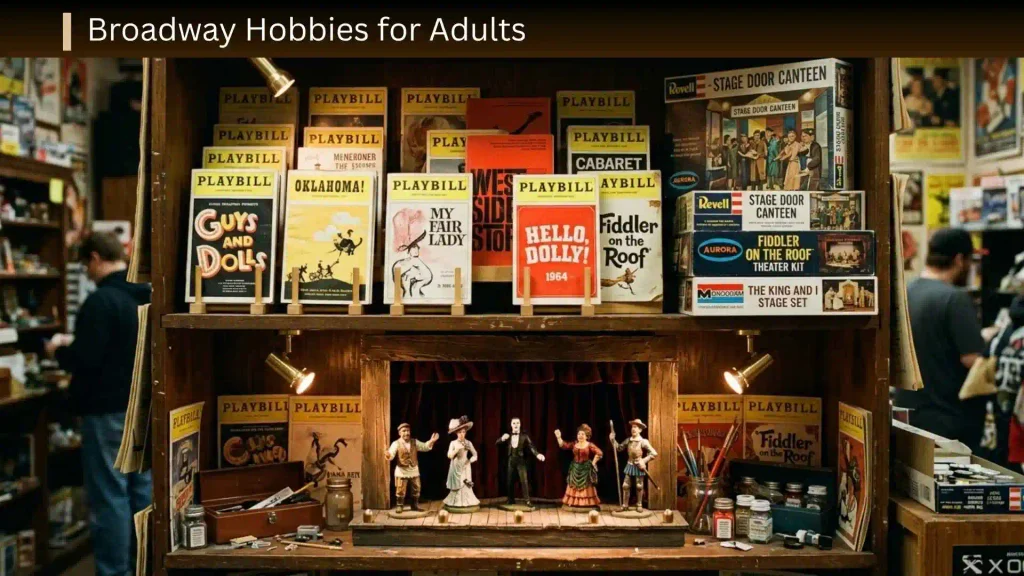
Collecting Playbills, posters, programs, ticket-related memorabilia, cast recordings, merchandise, or other theater artifacts can turn your interest in Broadway into a collecting hobby.
A useful approach is to establish a theme rather than buying everything. For example, you might collect programs from shows you have seen, productions by particular composers, revivals, or performances connected to a particular era.
Best for: Broadway fans who enjoy history and collecting
Cost: Highly variable
Space: Low to moderate
14. Broadway and Musical Theater History
If you are fascinated by how theater developed, consider studying musical-theater history as a hobby.
You can explore how productions, performance styles, choreography, orchestration, staging, and theater culture have changed over time. Rather than memorizing lists of famous shows, choose a specific period, genre, performer, composer, choreographer, or theatrical movement and investigate it deeply.
Keeping a theater notebook can make the hobby more engaging. Record productions you watch, interesting creative choices, historical discoveries, and questions you want to investigate.
Best for: Readers, researchers, history enthusiasts, and serious theater fans
Cost: Low
Social level: Low to moderate
15. Theater Reviews and Show Journaling
If you naturally analyze performances after watching them, turn that habit into a hobby.
Keep a journal in which you record your thoughts about productions. Instead of simply writing whether you “liked” a show, consider:
- How effectively did the story develop?
- Which characters changed?
- How did music contribute to the storytelling?
- What did the choreography communicate?
- How did the set influence the production?
- Which performances stood out to you?
- What would you like to learn more about?
You can keep your writing private or eventually publish reviews on a personal website, blog, or social platform.
Best for: Theater fans who enjoy writing and critical analysis.
Broadway Hobbies Compared
| Hobby | Difficulty | Starting Cost | Social Level | Main Focus |
| Musical theater | Beginner–Advanced | Moderate | High | Acting, singing, dance |
| Acting | Beginner–Advanced | Low–Moderate | High | Character and storytelling |
| Singing | Beginner–Advanced | Low–Moderate | Low–Moderate | Vocal performance |
| Broadway dance | Beginner–Advanced | Moderate | High | Movement and choreography |
| Tap dancing | Beginner–Advanced | Moderate | Moderate–High | Rhythm and footwork |
| Improv | Beginner–Advanced | Low–Moderate | High | Spontaneous performance |
| Community theater | Varies | Low–Moderate | High | Production experience |
| Playwriting | Beginner–Advanced | Low | Low | Storytelling |
| Costume design | Beginner–Advanced | Low–High | Low–Moderate | Visual character design |
| Stage makeup | Beginner–Advanced | Low–Moderate | Low–Moderate | Character appearance |
| Set design | Beginner–Advanced | Low–High | Moderate | Scenic design |
| Playbill collecting | Easy–Advanced | Variable | Low | Collecting and history |
| Theater history | Easy–Advanced | Low | Low | Research and learning |
| Theater journaling | Easy | Very low | Low | Writing and analysis |
Which Broadway Hobby Is Best for You?
The right hobby depends less on how much you love Broadway and more on what you want to do with that interest.
If You Want to Perform
Start with:
- Musical theater
- Acting
- Singing
- Broadway dance
- Tap dancing
- Improv
Musical theater is the broadest option because it allows you to combine multiple performance skills. Training programs commonly integrate singing, acting, and dancing, while some programs let students specialize in individual disciplines.
If You Are Shy or Prefer Low Pressure Activities
Consider:
- Theater history
- Playbill collecting
- Theater journaling
- Playwriting
- Costume design
- Set design
You can develop a strong connection with theater without immediately stepping onto a stage.
If You Love Music
Try:
- Singing Broadway songs
- Musical-theater performance
- Tap dancing
- Choreography
- Musical writing
Learning how songs function inside a story can make familiar productions more interesting because you begin noticing the relationship between lyrics, character, music, and dramatic action.
If You Love Dance
Good choices include:
- Broadway dance
- Tap
- Choreography
- Musical theater
You can begin with beginner classes and gradually work toward more complex combinations.
If You Prefer Behind the Scenes Work
Look into:
- Costume design
- Set design
- Stage makeup
- Props
- Community-theater production work
- Theater research
A stage production depends on far more than the performers audiences see.
Broadway Hobbies for Adults
Broadway-inspired hobbies are not limited to children or aspiring professional performers.
Adults can take recreational acting, musical-theater, vocal, and dance classes simply for enjoyment and skill development. For example, current adult theater programs offer acting fundamentals, musical theater, vocal technique, and performance workshops.
Adults who prefer less performance pressure can instead explore collecting, theater history, writing, costume projects, or watching productions critically.
The important distinction is that a Broadway hobby does not have to be a career goal. You can enjoy learning stage skills without intending to audition professionally.
Broadway Hobbies for Kids and Teens
Children and teenagers can explore Broadway-inspired activities through age-appropriate musical-theater, acting, singing, and dance programs.
Some youth programs combine these disciplines while gradually increasing the complexity of performance work.
For younger children, prioritize programs that emphasize:
- Play and creativity
- Age-appropriate movement
- Basic singing
- Storytelling
- Group participation
- Confidence-building
- Enjoyment
Older students who want more structured training can explore audition preparation, vocal technique, choreography, scene study, and musical-theater performance.
How to Start a Broadway Hobby Without Spending Much
You do not need expensive professional equipment to begin.
Start With One Skill
Instead of trying to become an actor, singer, dancer, costume designer, and stage technician simultaneously, choose the part of theater that interests you most.
For example:
Love characters? Try acting.
Love music? Try singing.
Love movement? Try dance.
Love clothes? Try costume design.
Love stories? Try playwriting.
Love research? Try theater history.
Use Local Resources
Look for:
- Community theaters
- Local dance studios
- Acting classes
- Choirs
- Performing-arts centers
- Libraries
- School or college theater programs
- Theater workshops
- Amateur performance groups
Community programs can be particularly useful because they may provide opportunities to participate in productions without requiring a professional career objective.
Start With a Small Project
A hobby becomes easier to maintain when the first project is manageable.
Instead of producing an entire musical, try one scene.
Instead of designing an entire costume collection, create one character.
Instead of writing a full musical, write one short scene.
Instead of learning an entire dance number, learn a short combination.
Small projects give you a clear finish line and help you discover whether you actually enjoy the activity.
Do You Need to Be a “Triple Threat” to Enjoy Broadway Hobbies?
No.
The term triple threat generally refers to a performer who can act, sing, and dance. Those skills can be valuable in musical theater, particularly for performers who need to handle several aspects of a production.
But a hobby does not require professional-level ability.
You can focus primarily on singing, acting, dancing, writing, design, collecting, or theater research. Even professional productions contain different roles with different skill requirements, so there is no reason to assume that every theater enthusiast needs identical abilities.
Broadway Hobbies vs. Watching Broadway Shows
Watching Broadway productions is itself a legitimate leisure activity, but it differs from participatory hobbies.
Watching shows is primarily a spectator activity.
Performing or creating theater requires active participation.
You can combine the two. In fact, watching productions critically can help you identify the aspects of theater that interest you most. One show might make you curious about choreography, while another might lead you toward costume design, acting, orchestration, or stagecraft.
This is one reason Broadway can serve as a gateway to several different hobbies rather than being a single hobby by itself.
Common Beginner Mistakes
Trying to Learn Everything at Once
Broadway combines many disciplines, which can make beginners feel as though they need to master everything immediately. Start with one area and expand gradually.
Choosing a Hobby Because It Sounds Impressive
The best hobby is the one you genuinely enjoy practicing. If you love writing but dislike performing, playwriting may be a better fit than acting.
Comparing Yourself With Professional Performers
Professional Broadway performers have trained extensively and work in a highly specialized environment. A recreational hobby has a different purpose.
Measure progress against your own previous ability rather than against a professional stage production.
Buying Too Much Equipment Too Early
Start with the basics. You can invest in specialized equipment after you know that the hobby will hold your interest.
Focusing Only on the Finished Performance
The rehearsal, learning, experimentation, and creative process are important parts of theater. A hobby can remain rewarding even when there is no performance at the end.
How to Make Broadway Hobbies More Engaging
Once you have tried a hobby for a while, introduce a personal challenge.
For example:
- Learn a new dance style.
- Memorize a monologue.
- Study a composer or choreographer.
- Write an original scene.
- Create a costume for a fictional character.
- Attend a local production.
- Join a theater group.
- Keep a production journal.
- Learn basic music notation.
- Try a workshop outside your usual specialty.
Cross-training can also make the hobby more interesting. An actor might experiment with dance; a dancer might study character work; a singer might explore acting through song.
Are Broadway Hobbies Good for Introverts?
Yes. Broadway-related hobbies vary widely in their social demands.
If you enjoy interaction, community theater, improv, musical theater, and group dance can provide regular collaboration.
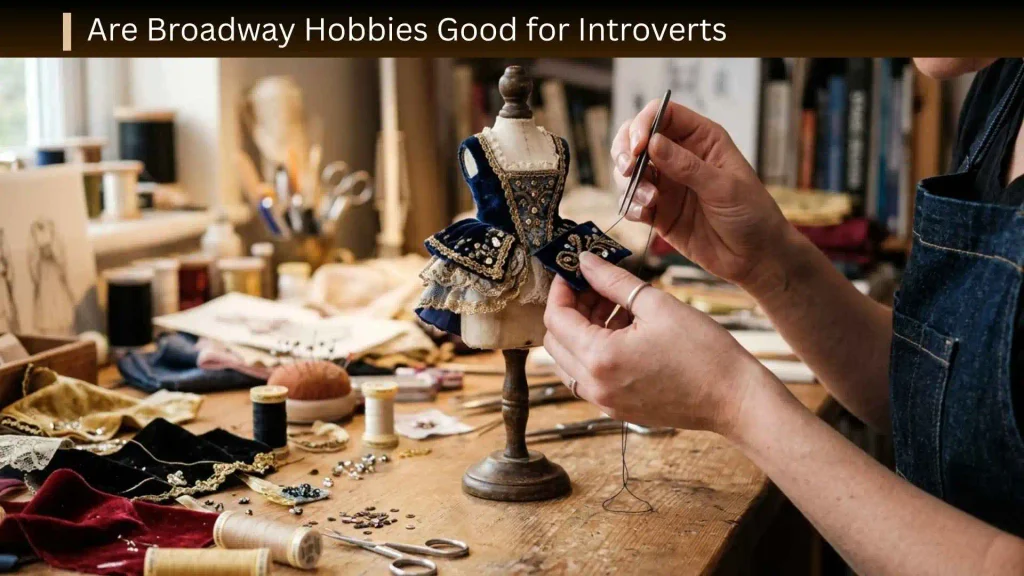
If you prefer solitary activities, consider playwriting, theater history, journaling, collecting, costume design, or studying productions.
There is no requirement to choose a highly social theater activity simply because Broadway itself is associated with large performances.
Are Broadway Hobbies Expensive?
They can be inexpensive or relatively costly depending on the activity.
Lower-cost options include:
- Theater journaling
- Reading plays
- Theater history
- Writing
- Home singing practice
- Collecting information about productions
Potentially higher-cost options include:
- Regular dance classes
- Private vocal lessons
- Costume construction
- Specialized equipment
- Frequent theater attendance
- Collecting valuable or rare memorabilia
You can usually control the cost by starting small and increasing your spending only after identifying the part of the hobby you genuinely enjoy.
Frequently Asked Questions About Broadway Hobbies
What are the best Broadway hobbies for beginners?
Musical theater classes, beginner acting, singing, theater history, playwriting, and introductory dance are good starting points. Choose according to whether you prefer performing, creating, learning, or collecting.
Can I enjoy Broadway as a hobby without becoming an actor?
Absolutely. You can explore singing, dance, costume design, set design, writing, theater history, collecting, reviewing, or simply develop a deeper appreciation for productions.
What Broadway hobby is best for someone who loves singing?
Singing musical-theater repertoire is the most direct choice. Musical theater classes are another option if you want to combine singing with acting and movement.
What Broadway hobby is best for dancers?
Broadway dance, tap, choreography, and musical theater are natural choices. A beginner should select instructions appropriate to their current dance experience.
Are Broadway hobbies suitable for adults?
Yes. Adults can participate in recreational acting, singing, dance, musical theater, writing, collecting, and theater education. Current theater programs offer dedicated classes and workshops for adult participants.
Can children start Broadway hobbies?
Yes, provided the activity and instruction are appropriate for the child’s age and ability. Youth musical-theater programs commonly offer age- or grade-specific classes combining acting, singing, dancing, and performance.
Do I need professional training to start a Broadway hobby?
No. Professional training may become useful if you eventually pursue professional performance, but recreational theater activities can begin with beginner classes, community groups, or self-directed projects.
What is the easiest Broadway hobby to start at home?
Theater journaling, playwriting, studying theater history, reading plays, and practicing suitable songs are among the simplest options because they require little space or specialized equipment.
Conclusion
Broadway hobbies can take you far beyond watching performances. You can sing, act, dance, write, design costumes, create sets, collect Playbills, study theater history, or participate in community productions.
If you want an active performance experience, start with musical theater, acting, singing, or dance. If you prefer creative work away from the spotlight, playwriting, costume design, set design, or stage makeup may suit you better. And if you simply love Broadway culture, collecting, research, reviewing, and theater journaling can turn that interest into a rewarding long-term hobby.
The best choice is ultimately the one that matches the way you naturally enjoy theater: onstage, backstage, creatively, socially, or as an enthusiastic audience member.

I’m Sophia Carter, a writer who enjoys discovering interesting ideas and transforming them into helpful content. At Cognivoora, I write with a simple goal: to make information clearer, more accessible, and genuinely useful for readers. I value thoughtful research, easy explanations, and content that people can trust and return to whenever they need it.
Books:
- The Knowledge Journey
- Understanding the World Around Us