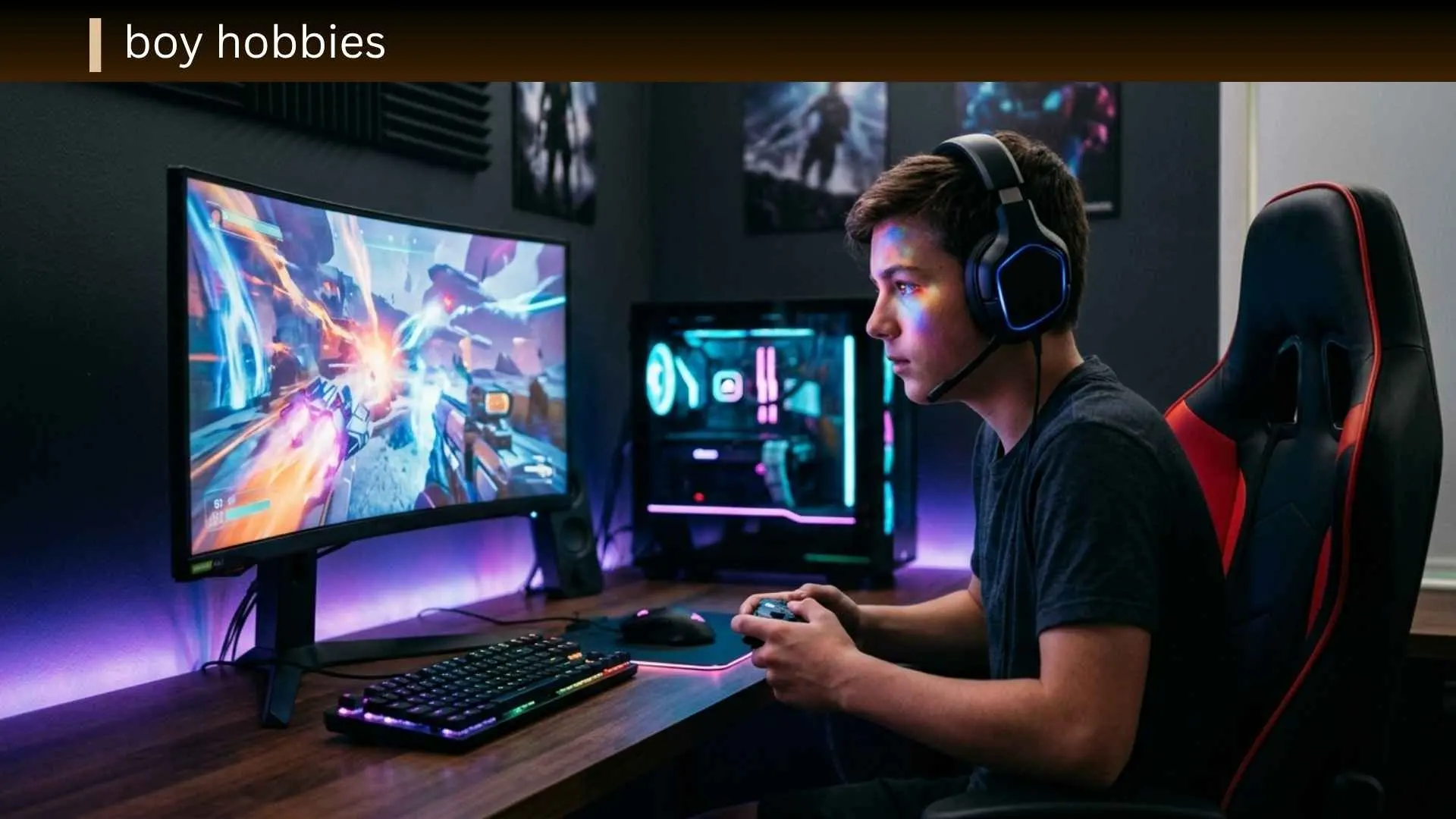
Finding the right hobby can change the way a boy spends his free time. I believe a good hobby should be more than just something to do when you’re bored,it should give you a chance to explore, create, learn, move, and discover what you genuinely enjoy. Whether you love building things, playing sports, drawing, gaming, collecting, or exploring the outdoors, there are countless hobbies for boys to try.
You don’t have to be naturally talented or know exactly what you like before getting started. I’ve found that sometimes the best hobby is the one you never expected to enjoy. You can try something new, make mistakes, and switch to another activity until you find something that feels right for you.
In this guide, you’ll discover fun, creative, active, educational, indoor, and outdoor boy hobbies for different ages and interests. So, if you’re looking for an exciting way to spend your free time, let’s explore some hobbies that can turn ordinary moments into something you actually look forward to..
What Are Good Hobbies for Boys?
Good hobbies for boys include building models, LEGO and construction projects, drawing, photography, coding, robotics, sports, hiking, fishing, cooking, gardening, reading, playing an instrument, woodworking, chess, collecting, cycling, camping, astronomy, and creative writing.
The right choice depends on age, interests, budget, available space, and whether the boy prefers active, creative, technical, social, outdoor, or independent activities.
Best Boy Hobbies at a Glance
| Hobby | Difficulty | Cost | Time Commitment | Where | Best For |
| LEGO & building | Easy | Low–Moderate | Low–Moderate | Indoor | Builders and problem-solvers |
| Drawing | Easy | Low | Low | Indoor | Creative kids |
| Coding | Moderate | Low–Moderate | Moderate | Indoor | Tech-minded learners |
| Robotics | Moderate | Moderate | Moderate | Indoor | Experimenters |
| Soccer | Easy | Moderate | Moderate–High | Outdoor | Active kids |
| Basketball | Easy | Low–Moderate | Moderate | Both | Sports lovers |
| Cycling | Easy–Moderate | Moderate | Moderate | Outdoor | Adventurous kids |
| Hiking | Easy | Low–Moderate | Moderate | Outdoor | Nature lovers |
| Photography | Easy–Moderate | Low–High | Low–Moderate | Both | Visual thinkers |
| Cooking | Easy–Moderate | Low–Moderate | Low–Moderate | Indoor | Practical learners |
| Chess | Moderate | Low | Low–Moderate | Indoor | Strategic thinkers |
| Gardening | Easy | Low–Moderate | Moderate | Outdoor | Nature enthusiasts |
| Reading | Easy | Low | Low–Moderate | Indoor | Curious learners |
| Playing an instrument | Moderate | Moderate–High | Moderate | Indoor | Music lovers |
| Fishing | Easy–Moderate | Moderate | Moderate–High | Outdoor | Patient outdoor enthusiasts |
| Model building | Moderate | Moderate | Moderate | Indoor | Detail-oriented creators |
| Camping | Moderate | Moderate | Occasional | Outdoor | Families and adventurers |
Creative Hobbies for Boys
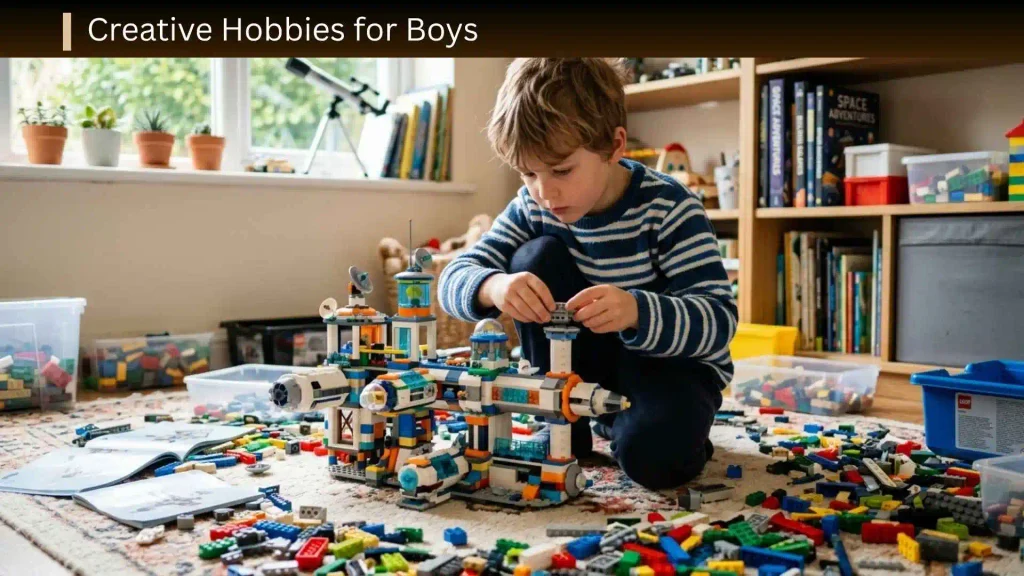
Creative hobbies give boys a way to make things rather than simply consume entertainment. They can also accommodate very different personalities: one child might enjoy sketching quietly, while another prefers constructing elaborate models.
1. Drawing and Sketching
Drawing is one of the easiest hobbies to start because it requires little equipment. A sketchbook and pencils are enough for beginners.
Boys can explore:
- Character drawing
- Cartoons and comics
- Animals
- Cars and vehicles
- Landscapes
- Architecture
- Fantasy creatures
- Doodles
- Technical sketches
A useful beginner approach is to draw familiar objects rather than trying to create perfect artwork immediately. Regular practice with shapes, proportions, shading, and perspective can gradually improve drawing ability.
Best for: Creative and visually curious boys
Starting cost: Low
Where: Indoors
2. Painting
Painting offers more room for experimenting with color, texture, and different materials. Beginners can start with watercolor, acrylic paint, or simple poster paints.
Instead of focusing only on finished pictures, a boy can make the hobby more interesting by trying different subjects and techniques. Painting miniatures, landscapes, signs, abstract designs, or canvas artwork can each create a very different experience.
3. Photography
Photography turns ordinary surroundings into opportunities for observation. A smartphone can be enough to learn basic photography before investing in a dedicated camera.
A young photographer can practice:
- Composition
- Lighting
- Nature photography
- Sports photography
- Architecture
- Portraits
- Close-up photography
- Wildlife observation
- Photo editing
One useful challenge is to choose a theme each week, such as “interesting shadows” or “things that are blue,” and create a small collection around it.
4. Creative Writing
Creative writing is a good option for boys who enjoy stories, imagination, or creating characters.
Possible projects include:
- Short stories
- Comic scripts
- Fantasy adventures
- Mystery stories
- Poetry
- Journaling
- Fictional worlds
- Character profiles
Writing becomes more engaging when the goal is specific. For example, a boy might write a one-page mystery in which the reader has to figure out what happened.
5. LEGO and Construction
LEGO and similar construction systems combine creativity with planning and problem-solving. A boy can follow instructions or create original designs.
Projects can range from simple vehicles and buildings to mechanical models and large fictional environments.
The most valuable part is often designing something independently. A useful challenge is to build a structure with a particular constraint, such as limited pieces or a requirement that it actually move.
6. Model Building
Model building can include cars, aircraft, ships, architecture, figures, or other subjects. It is particularly appealing to boys who enjoy detailed projects and seeing a complicated object gradually take shape.
The hobby can introduce skills such as:
- Careful assembly
- Painting
- Research
- Patience
- Attention to detail
- Following technical instructions
Younger children may need age-appropriate kits and adult supervision, particularly when tools or adhesives are involved.
7. Making Comics
Comic creation combines drawing, writing, storytelling, and visual design.
A beginner can start with a simple four-panel story:
- Introducing the character.
- Create a problem.
- Show an unexpected development.
- Finish with a solution or joke.
The result does not need to look professionally illustrated. The storytelling itself is the main project.
Active Hobbies for Boys
Some boys naturally prefer hobbies that involve movement, competition, exploration, or physical challenges. These activities can be especially useful when a child spends a lot of time sitting for school or screen-based entertainment.
8. Soccer
Soccer is a versatile team sport that can be played casually with friends or pursued more seriously through organized teams.
A beginner does not need advanced skills to start. Basic dribbling, passing, shooting, and ball control provide plenty of practice opportunities.
Best for: Social and active boys
Where: Outdoor or indoor facilities
Social level: High
9. Basketball
Basketball can be practiced alone or with other people, which makes it flexible.
A boy can work on:
- Dribbling
- Passing
- Shooting
- Footwork
- Defensive movement
- Coordination
One advantage is that a single hoop can support both casual play and structured skill practice.
10. Martial Arts
Martial arts can appeal to boys interested in structured learning, technique, discipline, and physical activity.
Different schools teach different styles, so the environment matters as much as the style itself. For children, look for an age-appropriate program with qualified instructors, appropriate safety practices, and an emphasis on controlled technique rather than unnecessary aggression.
11. Swimming
Swimming is both a recreational activity and a skill that can remain useful throughout life.
Boys can progress from basic water confidence to formal instruction and eventually recreational or competitive swimming. Water safety should remain a priority, especially for children.
12. Cycling
Cycling offers a combination of exercise, independence, and exploration. A boy can ride around a safe local area, join family rides, learn basic bicycle maintenance, or eventually explore longer routes.
A properly fitted helmet and appropriate riding environment are important, and younger riders should have supervision appropriate to their age and surroundings.
13. Skateboarding
Skateboarding combines balance, coordination, persistence, and technical skill. Beginners should start with basic balance and board control before attempting more difficult tricks.
Protective equipment and a suitable practice area are particularly important for beginners.
14. Rock Climbing
Indoor climbing can be an engaging hobby for boys who like physical problem-solving. Instead of simply moving upward, climbers have to figure out how to position their body and choose their next moves.
Because climbing involves inherent physical risk, children should use facilities with appropriate supervision and follow the facility’s safety requirements.
15. Hiking
Hiking is a simple way to combine physical activity with nature exploration.
A boy who finds ordinary exercise boring may enjoy hiking because there is a destination or discovery involved. Trips can include identifying plants, observing wildlife, photographing interesting landscapes, or learning about local geography.
Start with routes appropriate for the child’s age and ability rather than choosing a difficult trail simply because it looks impressive.
Outdoor Boy Hobbies
Outdoor hobbies are particularly useful for boys who enjoy exploration, nature, hands-on activities, or spending less time indoors.
16. Fishing
Fishing rewards patience and observation. It can also become a social hobby shared with parents, grandparents, siblings, or friends.
Beginners can learn about:
- Basic fishing equipment
- Local fish species
- Bait and tackle
- Casting
- Responsible handling of catches
- Local fishing regulations
Rules vary by location, so anglers should check the applicable state or local requirements before fishing.
17. Gardening
Gardening is a hands-on hobby in which boys can see a project develop over weeks or months.
A beginner can grow:
- Herbs
- Tomatoes
- Peppers
- Flowers
- Lettuce
- Easy-to-grow vegetables
Growing something from seed can make the process particularly rewarding because it introduces observation, planning, and responsibility without requiring a large garden.
18. Camping
Camping combines outdoor skills, exploration, cooking, and family or group time.
A boy might learn how to:
- Set up a tent
- Organize camping equipment
- Prepare simple meals
- Read a trail map
- Identify basic outdoor hazards
- Practice Leave No Trace principles
For younger children, camping can be kept simple with a family campsite rather than starting with a demanding backcountry trip.
19. Birdwatching
Birdwatching is a surprisingly accessible hobby. A boy can begin by observing birds from a backyard, park, or local trail.
A pair of binoculars can help, but they are not essential at first. A field guide or bird-identification app can make observations more interesting.
The hobby encourages attention to sound, movement, habitat, and identifying characteristics.
20. Stargazing and Astronomy
Astronomy is ideal for boys who constantly ask questions about space.
Beginners can start by learning:
- Major constellations
- The phases of the Moon
- Visible planets
- Meteor showers
- Basic star identification
A telescope is not necessary to begin. Learning the night sky with the unaided eye can actually make later telescope use more meaningful.
21. Geocaching
Geocaching turns outdoor exploration into a treasure-hunting activity using GPS-enabled devices.
Participants search for hidden caches and record their finds according to the rules of the activity. It can make a familiar park or neighborhood feel like a new place to explore.
Younger children should participate with an adult or responsible older companion.
Technology and STEM Hobbies for Boys
Technology-based hobbies can be much more than passive screen time when the boy is creating, programming, designing, or experimenting.
22. Coding
Coding teaches computers how to perform instructions and can become a creative hobby rather than merely an academic subject.
Beginners can make:
- Simple games
- Interactive stories
- Animations
- Small websites
- Digital tools
- Simulations
Younger children may find block-based programming easier initially, while older beginners can progress into text-based programming languages.
The key is to build something tangible. “Learn programming” is a vague goal; “make a simple game” gives the hobby a clear purpose.
23. Robotics
Robotics combines programming, construction, electronics, and problem-solving.
A beginner project might involve making a robot follow a line, respond to sensors, or perform a simple movement. More advanced projects can become considerably more sophisticated.
Robotics tends to work particularly well for boys who enjoy both physical construction and computer-based experimentation.
24. Electronics
Basic electronics projects can introduce concepts such as circuits, switches, sensors, LEDs, and microcontrollers.
Use beginner-oriented educational kits and age-appropriate projects rather than experimenting with household mains electricity. Electrical safety becomes increasingly important as projects become more advanced.
25. 3D Design and Printing
Boys interested in technology and making can learn basic 3D modeling and eventually create physical objects with a 3D printer.
Possible beginner projects include:
- Simple organizers
- Game pieces
- Small models
- Key tags
- Geometric objects
- Custom holders
The most interesting part is often designing an object to solve a small real-world problem.
Intellectual and Strategy Hobbies

Not every hobby needs to involve running, building, or making something physical. Some boys enjoy activities centered on strategy, information, puzzles, and mental challenges.
26. Chess
Chess is a strategy game built around planning, pattern recognition, tactics, and decision-making.
A beginner can learn the movement of the pieces first, then gradually study simple tactics and basic opening principles. Playing short games can keep learning from becoming overly theoretical.
Chess can be played casually at home, with friends, through clubs, or online.
27. Puzzles
Jigsaw puzzles, logic puzzles, mechanical puzzles, and brain teasers offer different kinds of challenges.
A boy who dislikes traditional schoolwork may still enjoy puzzles because they provide a clear problem with a visible goal.
28. Reading
Reading can become a hobby when a boy finds material that genuinely matches his interests.
That might mean:
- Science fiction
- Fantasy
- Mystery
- Graphic novels
- History
- Sports
- Animals
- Science
- Adventure
- Biographies
There is no need to limit the hobby to a particular type of book. The objective is to develop a sustained interest in reading and learning.
29. Collecting
Collecting gives boys a reason to research, organize, compare, and preserve objects connected to an interest.
Possible collections include:
- Coins
- Stamps
- Rocks and minerals
- Sports cards
- Model vehicles
- Books
- Fossils
- Postcards
A useful collecting habit is to keep track of what each item is, where it came from, and why it is interesting rather than simply accumulating objects.
Practical Hobbies for Boys
Some hobbies produce useful everyday skills along with enjoyment.
30. Cooking
Cooking is a practical hobby that can begin with very simple recipes.
Boys can learn:
- Measuring ingredients
- Following recipes
- Food preparation
- Kitchen organization
- Basic cooking techniques
- Cleaning as they work
Younger children should use age-appropriate tasks and adult supervision around knives, hot surfaces, ovens, and other kitchen hazards.
A good first project is something the child actually wants to eat. Interest in the result can make learning the process much more motivating.
31. Woodworking
Woodworking can develop patience, measurement skills, planning, and craftsmanship.
Beginner projects might include simple boxes, small shelves, birdhouses, or other straightforward constructions. Because woodworking involves cutting tools, younger children require close adult supervision and should use tools appropriate for their age and ability.
32. Basic Bicycle Maintenance
A boy who enjoys cycling may also enjoy learning how bicycles work.
Beginner maintenance can introduce concepts such as:
- Cleaning a bicycle
- Checking tire pressure
- Understanding bicycle components
- Lubricating appropriate parts
- Basic adjustments
More advanced repairs should be learned with proper instruction rather than guessed at, particularly when a mistake could affect braking or steering.
33. Sewing and Fabric Crafts
Sewing is not limited by gender and can be a surprisingly practical creative hobby for boys interested in making things.
Projects might include:
- Simple repairs
- Fabric pouches
- Small decorations
- Costumes
- Stuffed creations
- Custom clothing projects
Hand sewing provides an inexpensive starting point, while machine sewing can be introduced later with appropriate instruction.
34. Leathercraft
Leathercraft can appeal to boys who enjoy working with materials and creating physical objects.
Simple projects can include small wallets, key holders, or decorative pieces. Because some leatherworking tools are sharp, beginners should use suitable equipment with proper instruction and supervision.
35. Music
Learning an instrument gives a boy a structured creative activity that can develop gradually over years.
Popular starting choices include:
- Guitar
- Piano or keyboard
- Drums
- Ukulele
- Violin
- Woodwind instruments
The best instrument is usually the one the child is genuinely interested in learning. A short, consistent practice routine is generally more manageable for beginners than occasional long sessions.
How to Choose the Right Hobby for a Boy

There is no single “best hobby for boys.” A better approach is to look at what naturally attracts the individual child.
Start With His Existing Interests
Look at what he already talks about, watches, builds, reads, or asks questions about.
For example:
- Loves cars → model building, photography, mechanics-related learning
- Loves animals → birdwatching, wildlife photography, pet care, nature study
- Loves video games → coding, game design, robotics
- Loves sports → soccer, basketball, cycling, swimming
- Loves drawing → illustration, comics, animation
- Loves taking things apart → electronics, robotics, mechanical models
- Loves stories → reading, creative writing, filmmaking
The goal is not to force a completely new personality onto the child. Existing curiosity is often the easiest starting point.
Consider His Preferred Energy Level
Some boys need a hobby that gets them moving. Others are happiest spending an hour quietly concentrating on a project.
Think about whether he tends to prefer:
- Physical activity
- Quiet concentration
- Hands-on projects
- Competition
- Creativity
- Exploration
- Social interaction
- Independent work
Match the Hobby to the Available Space
A hobby can fail simply because its practical requirements do not fit the home.
For a small living space, consider:
- Reading
- Drawing
- Chess
- Coding
- Writing
- Photography
- Small-scale model building
For a yard or accessible outdoor area, options expand to:
- Gardening
- Basketball
- Cycling
- Camping
- Birdwatching
- Gardening projects
Consider the Budget
You do not need to spend a lot of money to discover whether a boy enjoys a hobby.
Start with the simplest version possible.
For example, before buying an expensive camera, use a phone for photography. Before purchasing an elaborate telescope, learn basic astronomy. Before investing heavily in robotics, try a beginner project.
This “test before upgrading” approach prevents expensive equipment from becoming a substitute for genuine interest.
Boy Hobbies by Personality
Personality can be a useful starting point, although children should not be boxed into categories.
| If He Enjoys… | Consider These Hobbies |
| Building things | LEGO, models, woodworking, robotics |
| Being active | Soccer, basketball, swimming, cycling |
| Nature | Hiking, fishing, gardening, birdwatching |
| Technology | Coding, robotics, electronics, 3D design |
| Art | Drawing, painting, photography, comics |
| Competition | Chess, sports, strategy games |
| Quiet activities | Reading, puzzles, drawing, model building |
| Social activities | Team sports, music groups, clubs |
| Adventure | Camping, hiking, climbing, cycling |
| Animals | Birdwatching, nature study, animal photography |
| Stories | Reading, writing, filmmaking, comics |
| Music | Guitar, piano, drums, singing |
Best Low Cost Hobbies for Boys
If budget is the main consideration, several hobbies can be started without specialized equipment.
Good inexpensive options include:
- Drawing
- Creative writing
- Reading
- Running
- Hiking
- Bodyweight exercise appropriate to age
- Chess
- Puzzles
- Birdwatching
- Gardening with basic supplies
- Photography with a smartphone
- Basketball if a suitable court is available
- Cooking using ordinary household ingredients
A low-cost hobby can still become highly sophisticated. Drawing, for example, can eventually develop into illustration or digital art without requiring expensive supplies at the beginning.
Best Indoor Hobbies for Boys
For rainy days, winter, limited outdoor access, or small living spaces, consider:
- LEGO
- Model building
- Drawing
- Painting
- Reading
- Chess
- Coding
- Robotics
- Electronics
- Creative writing
- Cooking
- Photography
- Music
- Puzzles
- Sewing
Indoor hobbies are particularly useful when a boy needs an alternative to passive screen entertainment.
Best Outdoor Hobbies for Boys
For children who want more exploration and movement, consider:
- Hiking
- Cycling
- Fishing
- Camping
- Soccer
- Basketball
- Swimming
- Gardening
- Birdwatching
- Stargazing
- Geocaching
- Skateboarding
- Rock climbing
The best choice depends on the local environment, weather, transportation, supervision needs, and the child’s abilities.
Hobbies Boys Can Do With Parents
A hobby can become more meaningful when it creates regular opportunities to spend time together.
Good parent-child options include:
- Cooking
- Fishing
- Hiking
- Camping
- Cycling
- Gardening
- Photography
- Astronomy
- Building models
- LEGO projects
- Chess
- Woodworking with appropriate supervision
- Learning an instrument
- Birdwatching
The parent does not have to be an expert. Learning something together can be part of the appeal.
Hobbies for Boys Who Spend Too Much Time on Screens
If the goal is to introduce more variety into a screen-heavy routine, avoid treating every screen-based interest as the enemy. Instead, look for hobbies that connect digital interests to real-world creation.
For example:
Video games → coding or game design
YouTube → filmmaking or video editing
Cars in games → model building or photography
Minecraft → architecture, LEGO, or 3D design
Sports games → playing the real sport
Science videos → astronomy, experiments, or nature observation
This approach can make a new hobby feel like an extension of something the boy already enjoys rather than an unwanted replacement.
How to Help a Boy Stick With a New Hobby
A child does not necessarily need to become good at a hobby immediately. Early enjoyment is often more important.
Keep the First Project Small
A huge project can create frustration. Give him something that can be completed in one afternoon or over a few short sessions.
Let Him Choose Between Options
Instead of saying, “You need a hobby,” offer several possibilities:
Would you rather build something, learn a sport, make art, explore outside, or learn about technology?
Choice increases the chance that the activity feels personally meaningful.
Avoid Turning Every Hobby Into a Lesson
Not every activity needs measurable improvement. Sometimes the value is simply curiosity, enjoyment, experimentation, or time spent making something.
Expect Interests to Change
A boy might be fascinated by robotics for six months and then suddenly become interested in photography. That does not necessarily mean the first hobby failed.
Trying different hobbies is part of discovering what fits.
Upgrade Equipment Only After Interest Develops
Expensive gear can be tempting, but enthusiasm should come before major purchases. Start with basic equipment and invest more when the child demonstrates sustained interest.
Common Mistakes When Choosing Hobbies for Boys
Choosing Based on Stereotypes
Not every boy likes sports, competition, machines, or outdoor activities. Boys can enjoy painting, cooking, sewing, dance, reading, gardening, music, or any other hobby that interests them.
Making the Hobby Too Competitive
Competition can motivate some children but discourage others. If a boy enjoys basketball but dislikes organized competition, casual games may be a better fit than a competitive league.
Picking a Hobby Because the Parent Likes It
A parent’s enthusiasm can help, but the child still needs ownership of the activity.
Buying Too Much Equipment Too Soon
A closet full of expensive equipment does not create a hobby. Interest has to come first.
Expecting Immediate Commitment
A child may need to try several activities before finding one that sticks. Exploration is not wasted time.
What Makes a Hobby Worth Keeping?
A hobby is especially valuable when it offers at least one of these qualities:
- It holds the child’s attention without constant pressure.
- It provides room to improve.
- It encourages curiosity.
- It produces something tangible.
- It creates opportunities to socialize.
- It gets him moving.
- It teaches a useful skill.
- It gives him a constructive way to relax.
- It connects naturally with an existing interest.
- It makes him want to learn more independently.
The best hobbies often combine several of these qualities, but they do not need to.
Frequently Asked Questions About Boy Hobbies
What are the best hobbies for boys?
The best hobbies depend on the individual boy. Popular options include sports, LEGO and building, coding, robotics, drawing, photography, hiking, fishing, reading, chess, cooking, music, model building, gardening, and cycling.
What is a good hobby for a boy who likes technology?
Coding, robotics, electronics, game development, 3D modeling, photography, and digital design are strong choices. A technology hobby is most engaging when the child is creating or solving something rather than simply consuming digital content.
What are some inexpensive hobbies for boys?
Drawing, reading, creative writing, chess, hiking, running, puzzles, birdwatching, gardening, and smartphone photography can all be started relatively inexpensively.
What are good hobbies for boys who do not like sports?
Consider drawing, coding, LEGO, model building, reading, chess, photography, astronomy, creative writing, cooking, music, electronics, puzzles, or collecting.
What are good outdoor hobbies for boys?
Hiking, cycling, fishing, camping, gardening, birdwatching, geocaching, swimming, skateboarding, stargazing, and outdoor sports are all possibilities. The appropriate choice depends on age, location, equipment, and supervision requirements.
What hobbies can boys do at home?
Boys can draw, paint, read, write, build LEGO models, make model kits, code, play chess, practice an instrument, cook, photograph objects around the house, solve puzzles, or work on age-appropriate electronics and craft projects.
How do I get a boy interested in a hobby?
Start with something connected to an existing interest, keep the first project manageable, offer choices, and avoid putting too much pressure on performance. It may take several attempts to find an activity that genuinely clicks.
Should boys have hobbies outside of sports?
There is no requirement that boys participate in sports. A balanced selection of activities can expose them to different ways of creating, learning, socializing, exploring, and staying active. The right mix depends on the child’s interests and circumstances.
Conclusion
The best boy hobbies are not determined by gender. They are the activities that fit a particular child’s curiosity, personality, abilities, available time, budget, and environment.
A boy who loves building might thrive with LEGO, robotics, or model making. Someone who needs movement may prefer cycling, soccer, swimming, or hiking. A quieter child might gravitate toward drawing, reading, chess, astronomy, or coding. Others may discover a passion through cooking, photography, music, gardening, or collecting.
Start small, let him explore different possibilities, and pay attention to what makes him genuinely curious. A good hobby does more than fill free time—it can become a lasting source of creativity, learning, skill-building, and enjoyment.

I’m Ethan Mitchell, a curious writer who enjoys turning complex ideas into simple, useful information. At Cognivoora, I focus on creating clear and engaging content that readers can understand and apply in everyday life. I believe good writing should educate, answer real questions, and leave readers with something valuable to remember.
Books:
- The Everyday Mind
- Simple Ideas, Better Thinking