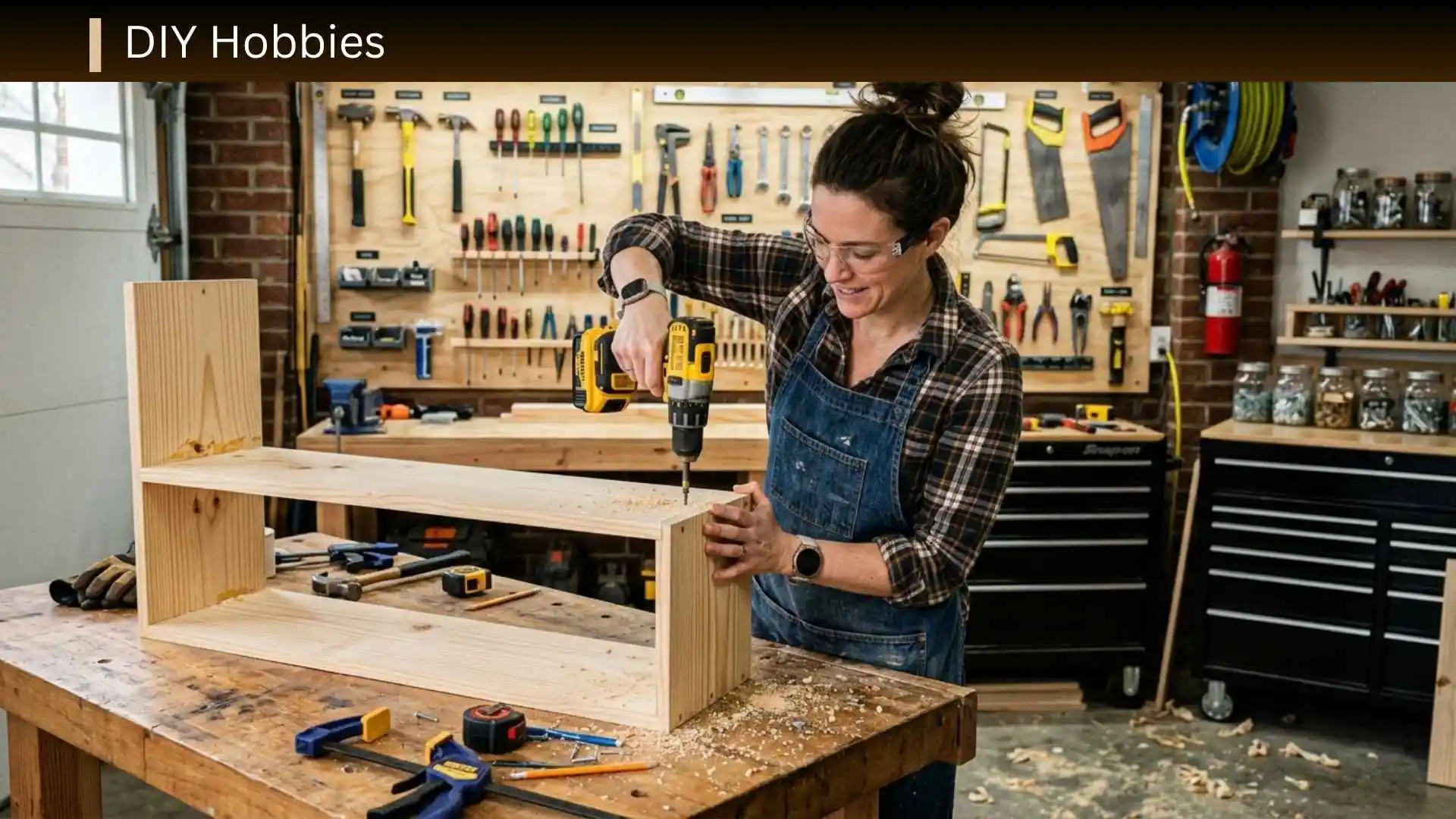
I love the idea of turning simple materials into something useful, beautiful, or completely my own and that is exactly what makes DIY hobbies so exciting. Whether you want to escape your screen, learn a practical skill, decorate your home, or simply enjoy a creative afternoon, you can find a DIY hobby that fits your interests and skill level.
You don’t need to be an expert or spend a lot of money to get started. With a little curiosity and creativity, you can make something with your own hands and enjoy the satisfaction that comes from saying, “I made this.”
What Are DIY Hobbies?
DIY, short for “do it yourself,” refers to making, modifying, repairing, or improving something rather than simply buying a finished product or hiring someone else to do the work.
As hobbies, DIY activities are usually chosen for the process as much as the finished result. You might sew a bag, build a shelf, paint furniture, make candles, design greeting cards, or restore an old object simply because you enjoy learning and creating.
DIY hobbies can be:
- Creative: painting, drawing, jewelry making, paper crafts
- Practical: woodworking, furniture restoration, sewing, home repair
- Decorative: home décor, wreath making, macramé
- Technical: electronics, 3D printing, model building
- Nature-based: gardening, terrariums, botanical crafts
- Sustainable: upcycling, clothing repair, furniture reuse
- Social: craft groups, workshops, maker communities
The flexibility is one of their biggest advantages: you can choose a hobby that matches your interests rather than following a fixed activity.
35 DIY Hobbies to Try

1. Painting
Painting is one of the most accessible DIY hobbies because you can work on paper, canvas, wood, furniture, or other suitable surfaces.
Beginners can experiment with acrylic paint because it is versatile and works for many different projects. Try simple landscapes, abstract designs, painted signs, or decorative objects before moving into more complex techniques.
Good for: Creative beginners who enjoy color and visual expression
Starting cost: Low to moderate
Space: Small workspace
2. Drawing and Sketching
Drawing requires relatively little equipment, making it a practical DIY hobby for people who want to create without setting up a large workspace.
Start with pencils and paper and practice basic subjects such as household objects, plants, animals, or simple landscapes. As your skills develop, you can explore colored pencils, markers, charcoal, or digital drawing.
Beginner project: Create a daily sketchbook and draw one ordinary object each day.
3. DIY Jewelry Making
Jewelry making allows you to create bracelets, necklaces, earrings, rings, and decorative accessories.
A beginner can start with beads, findings, stringing materials, and basic jewelry tools. More advanced techniques can include wire wrapping, metalworking, or polymer clay jewelry.
Good for: Small projects and personalized gifts
Starting cost: Low to moderate
Space: Small table or craft area
4. Candle Making
Candle making involves combining wax, a suitable wick, fragrance or other permitted additives, and a container or mold to create candles.
Because candle making involves heated materials and open flames, beginners should follow the safety instructions supplied with their wax, containers, fragrance materials, and equipment. A well-ventilated, dedicated workspace is preferable.
Beginner project: Make a small batch of container candles using a beginner-friendly candle-making kit.
5. Soap Making
Soap making can become a detailed craft involving ingredients, molds, scents, colors, and different formulations.
For beginners, melt-and-pour soap is generally simpler than working with lye. Traditional cold-process soap making involves sodium hydroxide, which requires careful handling and appropriate protective equipment.
Good for: People who enjoy recipes, customization, and useful handmade products
Starting cost: Moderate
6. Sewing
Sewing combines creativity with a practical skill that can be used to make clothing, accessories, decorations, and household items.
You can start with hand sewing or learn to use a sewing machine. Simple projects such as tote bags, pillow covers, fabric organizers, and basic repairs provide useful practice.
Beginner project: Make a simple tote bag from sturdy fabric.
7. Embroidery
Embroidery involves decorating fabric with stitched designs. It is portable, relatively inexpensive, and suitable for small projects.
You can learn basic stitches such as the backstitch, satin stitch, French knot, and chain stitch. Once comfortable, create floral designs, lettering, decorative patches, or personalized gifts.
Good for: Quiet, detailed projects
Starting cost: Low
Space: Very small
8. Knitting
Knitting uses yarn and needles to create garments, accessories, and home décor.
Beginners can start with a scarf or simple square project while learning basic stitches. Once comfortable, you can progress to hats, socks, sweaters, blankets, and more complicated patterns.
9. Crochet
Crochet uses a single hook to create fabric from yarn. Many people find it approachable because basic projects can be constructed from a relatively small number of stitches.
Beginner projects include:
- Dishcloths
- Scarves
- Coasters
- Simple hats
- Granny squares
- Small baskets
Crochet is also useful for learning how patterns, yarn weights, and tension affect the final project.
10. Macramé
Macramé involves creating decorative objects by tying cords into knots and patterns.
Common projects include plant hangers, wall decorations, keychains, curtains, and small accessories. It requires little equipment beyond appropriate cord and a place to anchor your work.
Good for: Home décor enthusiasts
Starting cost: Low
Space: Small to moderate
11. Pottery and Air-Dry Clay
Working with clay gives you a way to make physical objects such as small sculptures, ornaments, trays, and decorative pieces.
Traditional pottery generally requires specialized equipment such as a kiln for firing, while air-dry clay can be a more accessible option for home projects. Polymer clay is another option for smaller crafts and accessories, following the manufacturer’s instructions.
Beginner project: Make small decorative dishes, ornaments, or miniature sculptures.
12. Paper Crafting
Paper crafting covers a broad range of activities, including card making, paper flowers, origami, scrapbooking, paper cutting, and decorative projects.
It is particularly suitable for beginners because many projects require inexpensive supplies.
Good for: People who want inexpensive projects with minimal equipment
Starting cost: Low
13. Origami
Origami is the art of folding paper into shapes and objects.
It is an especially convenient DIY hobby because the basic material is inexpensive and portable. Start with simple animals, flowers, boxes, or geometric designs before attempting complex models.
14. Scrapbooking
Scrapbooking combines photographs, paper, writing, decorative elements, and layouts to preserve memories or tell a visual story.
Instead of buying large quantities of supplies immediately, beginners can start with a small number of photographs and basic paper products. Digital scrapbooking is another option if you prefer working on a computer or tablet.
15. DIY Greeting Cards
Making greeting cards allows you to combine drawing, painting, paper cutting, stamping, lettering, and other techniques.
You can create cards for birthdays, holidays, weddings, thank-you messages, or other occasions. The hobby also gives beginners a manageable way to experiment with different materials without committing to a large project.
16. Woodworking
Woodworking is a broad DIY hobby that ranges from simple hand-tool projects to advanced furniture construction.
Beginners can start with projects such as:
- Small shelves
- Planter boxes
- Picture frames
- Simple stools
- Wooden trays
- Birdhouses
Woodworking requires more attention to workspace, tools, dust, cutting techniques, and safety than many paper or textile crafts.
Good for: People who enjoy building functional objects
Starting cost: Moderate to high depending on tools
17. Furniture Restoration
Furniture restoration involves repairing, cleaning, refinishing, repainting, or otherwise improving older furniture.
It can be a rewarding way to turn a worn piece into something useful. Beginners should start with relatively simple pieces and learn about the existing finish before sanding, stripping, painting, or applying new coatings.
Beginner project: Restore a small wooden side table or chair.
18. DIY Home Décor
Home décor projects can include wall art, decorative shelves, signs, cushions, planters, organizers, and other household items.
This category works particularly well for people who want a DIY hobby that produces objects they can actually use around their home.
A useful approach is to choose projects based on an existing need rather than creating objects that have no practical purpose.
19. Upcycling
Upcycling means creatively reusing an existing object or material to give it a new function or appearance.
Examples include transforming:
- Old furniture into storage
- Glass containers into organizers
- Fabric scraps into accessories
- Old clothing into bags
- Wooden materials into décor
Upcycling can also reduce the amount of new material needed for a project, although the environmental impact depends on the materials, processes, and eventual lifespan of the finished item.
20. Clothing Customization
If you enjoy fashion but want something more hands-on, customize existing clothing.
You might add embroidery, patches, fabric details, decorative stitching, dye, or other appropriate modifications. Start with inexpensive garments so mistakes become part of the learning process rather than an expensive setback.
21. Tie-Dye and Fabric Dyeing
Fabric dyeing allows you to change the appearance of clothing, fabric accessories, and other suitable textiles.
Tie-dye is an accessible starting point, while more advanced dyeing techniques involve different patterns, resist methods, and color combinations.
Always follow the dye manufacturer’s instructions, particularly regarding protective equipment, ventilation, washing, and surfaces that may be stained.
22. Miniature Making
Miniature making involves constructing tiny scenes, rooms, buildings, furniture, figures, or other objects.
This hobby rewards patience and attention to detail. Materials can include cardboard, wood, clay, paper, fabric, paint, and found objects.
Good for: Detail-oriented hobbyists who enjoy long-term projects
Starting cost: Low to moderate
Time commitment: Often high
23. Model Building
Model building involves assembling and finishing scale models of subjects such as vehicles, aircraft, ships, buildings, or fictional designs.
The hobby can involve cutting, gluing, painting, sanding, and detailed finishing. Beginners should choose a model designed for their skill level rather than immediately selecting a highly complex kit.
24. 3D Printing
3D printing turns digital designs into physical objects using a 3D printer.
It combines making with basic digital design and technology. Beginners can initially print existing models from reputable sources before learning computer-aided design to create their own objects.
Possible projects include organizers, replacement parts, decorative objects, prototypes, and hobby accessories.
Starting cost: Moderate to high
Space: Moderate
Learning curve: Moderate
25. Electronics Projects
Basic electronics can become a fascinating DIY hobby if you enjoy understanding how things work.
Beginner projects might involve simple educational kits, LEDs, sensors, or microcontroller-based projects. Start with low-voltage educational projects and follow the instructions for your equipment rather than experimenting with household mains electricity.
Good for: Problem-solvers and technology enthusiasts
26. Terrarium Making
Terrariums are miniature plant environments arranged inside suitable transparent containers.
Creating one involves selecting compatible plants, arranging the growing medium, positioning decorative elements, and maintaining appropriate moisture and light.
A small terrarium can be a manageable first project because it takes little space.
27. Gardening
Gardening is a practical DIY hobby that involves growing and caring for plants.
You can grow flowers, herbs, vegetables, houseplants, or container plants depending on your available space and local conditions.
If you live in an apartment or have limited outdoor space, container gardening or indoor plant projects can provide a smaller-scale starting point.
28. Seed Starting
Seed starting focuses specifically on growing plants from seeds before moving them into their longer-term growing environment.
It can teach useful skills involving planting depth, moisture, light, timing, and transplanting. Because plant requirements vary considerably, choose species appropriate for your growing conditions.
29. Leathercraft
Leathercraft involves cutting, shaping, punching, stitching, and finishing leather to create useful or decorative objects.
Beginners can start with relatively simple projects such as keychains, card holders, small pouches, or bracelets. Specialized tools can become a significant expense as the hobby becomes more advanced.
30. Beading
Beading is a versatile craft involving beads, wire, thread, cord, and other components.
You can create jewelry, ornaments, decorative objects, accessories, or small gifts. Because projects can be extremely small, beading is convenient for people who do not have much workspace.
31. DIY Photography Projects
Photography can also be approached as a DIY creative hobby without expensive equipment.
Try still-life photography, homemade backdrops, light experiments, product-style compositions, or themed photo challenges using a smartphone or camera you already own.
The DIY element comes from constructing the scene, experimenting with lighting, and creating visual results from readily available materials.
32. Homemade Greeting and Gift Projects
Some DIY hobbies focus specifically on making personalized gifts.
You could create:
- Photo albums
- Painted artwork
- Handmade cards
- Fabric accessories
- Decorative boxes
- Personalized ornaments
- Small woodworking projects
The advantage is that the project can be selected around the recipient rather than around a particular craft technique.
33. Wreath Making
Wreath making involves arranging materials around a circular base to create decorative pieces for doors, walls, or special events.
Seasonal wreaths can be made using artificial flowers, fabric, paper, greenery, ribbons, or other suitable decorative materials.
Good for: Home décor and seasonal crafting
Starting cost: Low to moderate
34. DIY Organizing Projects
If you prefer useful projects over purely decorative crafts, make organizers for your home.
Examples include drawer dividers, desk organizers, cable-management solutions, storage boxes, wall organizers, and small shelves.
This is particularly useful for beginners because the project has a clear purpose: identify a storage problem and design a simple solution.
35. DIY Repair and Restoration
Learning basic repair skills can turn everyday maintenance into a hobby.
Depending on your skill level and the object involved, projects might include repairing furniture, mending clothing, replacing simple hardware, restoring household items, or maintaining hobby equipment.
For electrical, structural, gas-related, or otherwise high-risk repairs, use appropriate professional help rather than treating an unfamiliar repair as a casual DIY project.
Best DIY Hobbies for Beginners
Not every DIY hobby has the same learning curve. If you are completely new to making things, start with an activity that has inexpensive materials, simple first projects, and little specialized equipment.
| DIY Hobby | Difficulty | Starting Cost | Space Needed | Good First Project |
| Drawing | Easy | Low | Very small | Daily sketchbook |
| Paper crafts | Easy | Low | Small | Greeting card |
| Origami | Easy | Low | Very small | Simple animal |
| Embroidery | Easy | Low | Very small | Small floral design |
| Crochet | Easy–Moderate | Low | Small | Coaster or scarf |
| Painting | Easy–Moderate | Low–Moderate | Small | Simple canvas |
| Jewelry making | Easy–Moderate | Low–Moderate | Small | Bracelet |
| Sewing | Moderate | Low–Moderate | Small–Moderate | Tote bag |
| Upcycling | Moderate | Low–Moderate | Moderate | Repurposed container |
| Woodworking | Moderate | Moderate–High | Moderate–Large | Small shelf |
| 3D printing | Moderate | Moderate–High | Moderate | Small organizer |
| Electronics | Moderate | Moderate | Small–Moderate | Educational LED project |
These categories are approximate. Your actual cost and difficulty will depend on the equipment you already own, the materials you choose, and the complexity of the project.
How to Choose the Right DIY Hobby
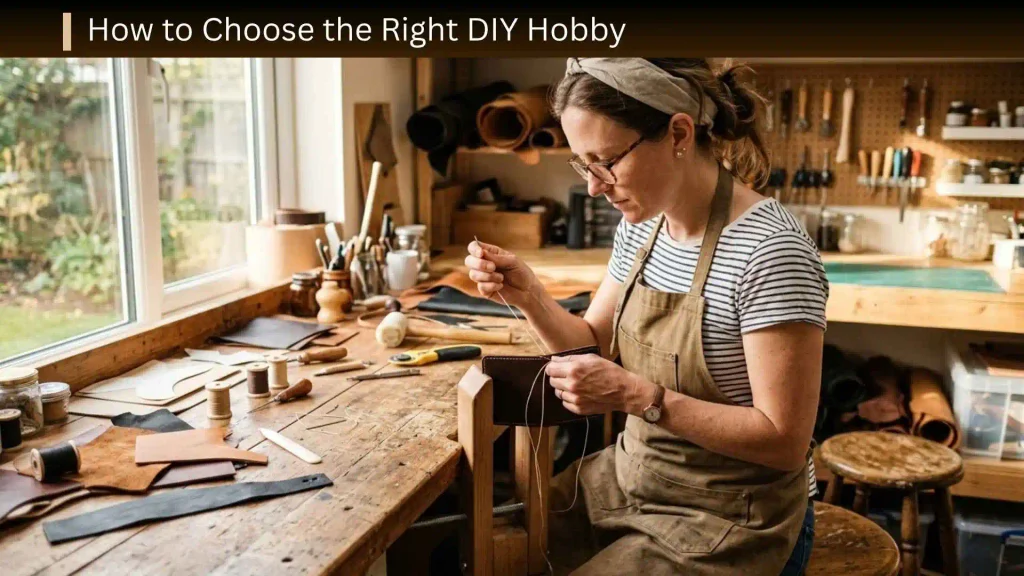
The best DIY hobby is not necessarily the most popular one. It is the one that fits your interests, available resources, and preferred way of working.
Consider what you want to make
Think about the finished object you would genuinely enjoy creating.
If you want useful household objects, consider woodworking, sewing, furniture restoration, or organizing projects. If you want decorative pieces, painting, macramé, pottery, or paper crafts may be more appropriate.
Consider your available space
Space can eliminate some options immediately.
A small desk is enough for drawing, embroidery, jewelry making, or paper crafts. Woodworking, furniture restoration, and some larger projects require considerably more room.
If you live in an apartment or shared home, a compact hobby may be easier to maintain.
Consider your budget
You do not need to purchase every tool at the beginning.
Start with the minimum equipment required for a simple project. Once you know that you enjoy the activity, gradually invest in better tools or additional materials.
This approach reduces the risk of spending heavily on a hobby that you eventually abandon.
Decide whether you prefer useful or decorative projects
Some people enjoy making beautiful objects, while others prefer projects that solve practical problems.
For useful projects:
Sewing, woodworking, furniture restoration, gardening, repairs, and DIY organization are strong choices.
For decorative projects:
Painting, macramé, wreath making, paper crafts, pottery, and miniature making may be better fits.
Think about your preferred pace
Some DIY hobbies produce a finished item in an afternoon. Others involve projects that take days or weeks.
If you want quick results, try paper crafts, simple jewelry, painting, or small upcycling projects.
If you enjoy slow, detailed work, consider miniatures, woodworking, embroidery, model building, or advanced sewing.
DIY Hobbies by Budget
Low-cost DIY hobbies
If you want to spend as little as possible, consider:
- Drawing
- Origami
- Paper crafts
- Basic embroidery
- Simple crochet
- Upcycling
- Gardening from existing materials
- Homemade cards
The key is to start with projects that use inexpensive or already available materials.
Moderate cost DIY hobbies
These can require specialized supplies but do not necessarily require a full workshop:
- Sewing
- Jewelry making
- Painting
- Candle making
- Leathercraft
- Miniature making
- Model building
- Pottery with appropriate equipment or materials
Higher cost DIY hobbies
Costs can increase substantially when equipment becomes part of the hobby:
- Advanced woodworking
- 3D printing
- Advanced electronics
- Traditional pottery
- Furniture restoration
- Large-scale crafting
Higher cost does not necessarily mean greater enjoyment. A small, inexpensive project can be just as satisfying as an elaborate workshop setup.
DIY Hobbies for Small Spaces
If you have limited room, prioritize hobbies that can be stored in a small box or drawer.
Good choices include:
- Drawing
- Embroidery
- Origami
- Crochet
- Knitting
- Jewelry making
- Beading
- Paper crafting
- Small-scale painting
- Miniature making
A folding table, storage container, and a dedicated cleanup routine can make many small DIY hobbies easier to manage.
DIY Hobbies That Make Useful Things
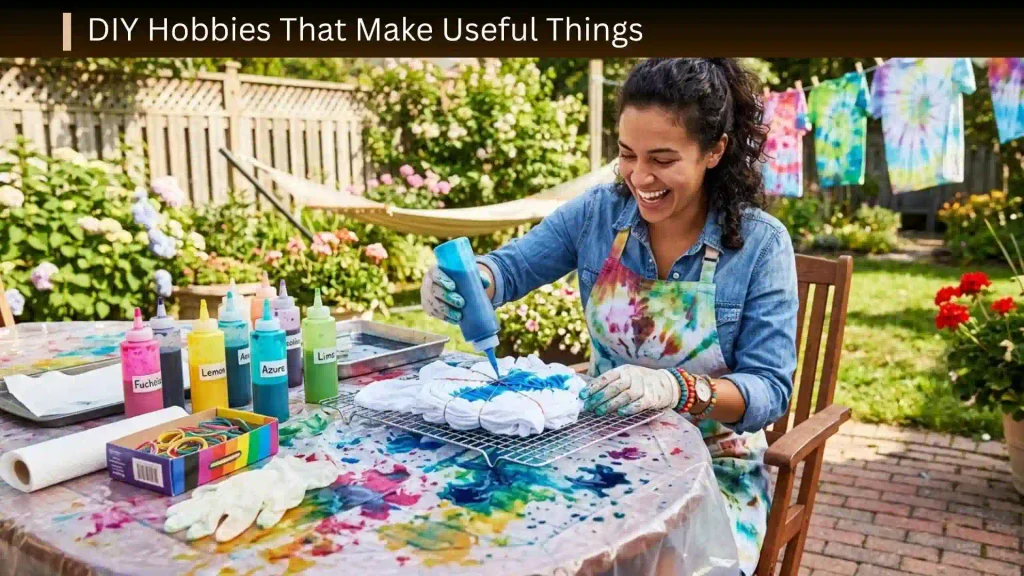
If you want your hobby to produce objects you can actually use, focus on function-driven projects.
Sewing: bags, organizers, cushions, simple clothing projects
Woodworking: shelves, trays, boxes, planters
Gardening: herbs, vegetables, flowers, and plants
Leathercraft: card holders, pouches, accessories
Upcycling: storage, décor, and repurposed household items
DIY repair: restored or repaired possessions
3D printing: organizers, prototypes, and suitable replacement objects
A practical project can also make learning easier because you have a clear reason to complete it.
DIY Hobbies for Creative Expression
If your primary goal is artistic expression, consider:
- Painting
- Drawing
- Photography
- Jewelry design
- Pottery
- Paper art
- Textile art
- Miniature making
- Clothing customization
- Wreath design
These hobbies provide room to experiment with colors, textures, shapes, patterns, and personal style.
How to Start a DIY Hobby Without Overspending
A common beginner mistake is buying a large collection of supplies before completing a first project.
A better approach is simple:
Choose one project → buy only the necessary materials → complete it → evaluate what you enjoyed → expand gradually.
For example, someone interested in woodworking does not need to build a complete workshop before making a small project. Someone interested in painting does not need dozens of paints and brushes before learning basic techniques.
You can also look for beginner kits, borrow suitable tools when practical, reuse materials, and choose projects designed for your current skill level.
Common DIY Hobby Mistakes to Avoid
Starting with an overly difficult project
A complicated first project can make a promising hobby frustrating. Choose something that teaches one or two fundamental skills rather than trying to master everything at once.
Buying too many supplies
More materials do not automatically produce better results. Start small and learn what you actually use.
Ignoring workspace requirements
A hobby that looks simple online may require drying space, ventilation, dust control, storage, or specialized equipment. Check the practical requirements before beginning.
Skipping instructions
For activities involving tools, heat, chemicals, electrical components, or specialized equipment, read the manufacturer’s or material supplier’s instructions before use.
Expecting professional results immediately
DIY skills improve through repetition. Early projects are often more useful as practice than as demonstrations of what you will eventually be able to make.
Choosing a hobby solely because it looks profitable
A DIY activity can sometimes become a source of income, but turning a hobby into a business introduces additional considerations such as material costs, pricing, demand, selling platforms, taxes, customer service, and consistency.
Choose something you genuinely enjoy before deciding whether to monetize it.
Can DIY Hobbies Become a Side Income?
Some DIY skills can potentially be monetized, but a hobby does not automatically become a profitable business.
Potentially marketable areas include:
- Handmade jewelry
- Artwork
- Sewing and textile products
- Woodworking
- Personalized gifts
- Home décor
- Photography
- Digital designs
- Craft patterns
- Restored furniture
Profit depends on factors such as material costs, labor time, skill, product quality, demand, pricing, selling fees, and the ability to consistently find customers.
For that reason, it is better to view monetization as a possible second stage rather than the reason every DIY hobby should be chosen.
A Simple DIY Hobby Selection Guide
If you are still unsure what to try, use your preferences as a shortcut:
- Want something inexpensive? Try drawing, origami, paper crafts, or embroidery.
- Want to make gifts? Try jewelry, cards, sewing, painting, or personalized décor.
- Want practical skills? Try woodworking, sewing, repairs, gardening, or furniture restoration.
- Have very little space? Try crochet, embroidery, drawing, beading, or paper crafts.
- Enjoy technology? Try 3D printing or beginner electronics.
- Love detailed work? Try miniatures, model building, embroidery, or jewelry making.
- Enjoy working with natural materials? Try gardening, terrariums, or suitable wood projects.
- Want to reuse old items? Try upcycling, clothing customization, or furniture restoration.
- Want fast projects? Try cards, paper crafts, simple painting, or small jewelry.
- Want a long-term skill? Try sewing, woodworking, pottery, photography, or electronics.
The most useful choice is the one you are likely to practice consistently.
Frequently Asked Questions
What are the best DIY hobbies for beginners?
Drawing, paper crafts, origami, embroidery, simple crochet, painting, and basic jewelry making are approachable options. They can be started with relatively little equipment and provide simple projects for learning fundamental skills.
What DIY hobby is the cheapest to start?
Origami and drawing can be among the least expensive because the required materials are simple. Paper crafts, basic embroidery, and some forms of upcycling can also be started inexpensively.
What DIY hobbies can I do at home?
Most DIY crafts can be done at home, including painting, drawing, sewing, crochet, knitting, embroidery, jewelry making, paper crafts, miniatures, terrariums, and some woodworking. More demanding activities may require suitable ventilation, workspace, equipment, or safety precautions.
What DIY hobby is good for someone with little space?
Embroidery, drawing, crochet, knitting, origami, beading, jewelry making, and paper crafts work particularly well in small spaces because supplies can usually be stored compactly.
What DIY hobbies make useful things?
Sewing, woodworking, gardening, leathercraft, upcycling, furniture restoration, and DIY organization can all produce practical objects. The best choice depends on whether you prefer textiles, wood, plants, repairs, or household organization.
Can I start a DIY hobby without buying expensive tools?
Yes. Many DIY hobbies can begin with basic materials and inexpensive equipment. Start with a simple project and purchase additional tools only when you know the hobby suits you.
Which DIY hobbies can potentially make money?
Jewelry making, woodworking, sewing, artwork, personalized gifts, home décor, photography, and some digital or craft-based skills can potentially be monetized. However, income is not guaranteed and depends on demand, pricing, quality, costs, and consistency.
How do I choose between different DIY hobbies?
Start with three questions: What do I want to make? How much space and money can I dedicate to it? Do I prefer quick projects or detailed long-term work? Your answers can quickly narrow the options.
Conclusion
DIY hobbies offer a flexible way to create useful objects, explore artistic interests, develop practical skills, and spend time working with your hands. You can choose a low-cost activity such as drawing or origami, a textile craft such as sewing or embroidery, a practical skill such as woodworking, or a more technical hobby such as electronics or 3D printing.
If you are a beginner, start with one small project rather than a large collection of supplies. Completing a manageable project will give you a better idea of whether you enjoy the materials, process, difficulty, and time commitment. From there, you can gradually develop the skills and equipment that genuinely fit your interests.

I’m Ethan Mitchell, a curious writer who enjoys turning complex ideas into simple, useful information. At Cognivoora, I focus on creating clear and engaging content that readers can understand and apply in everyday life. I believe good writing should educate, answer real questions, and leave readers with something valuable to remember.
Books:
- The Everyday Mind
- Simple Ideas, Better Thinking