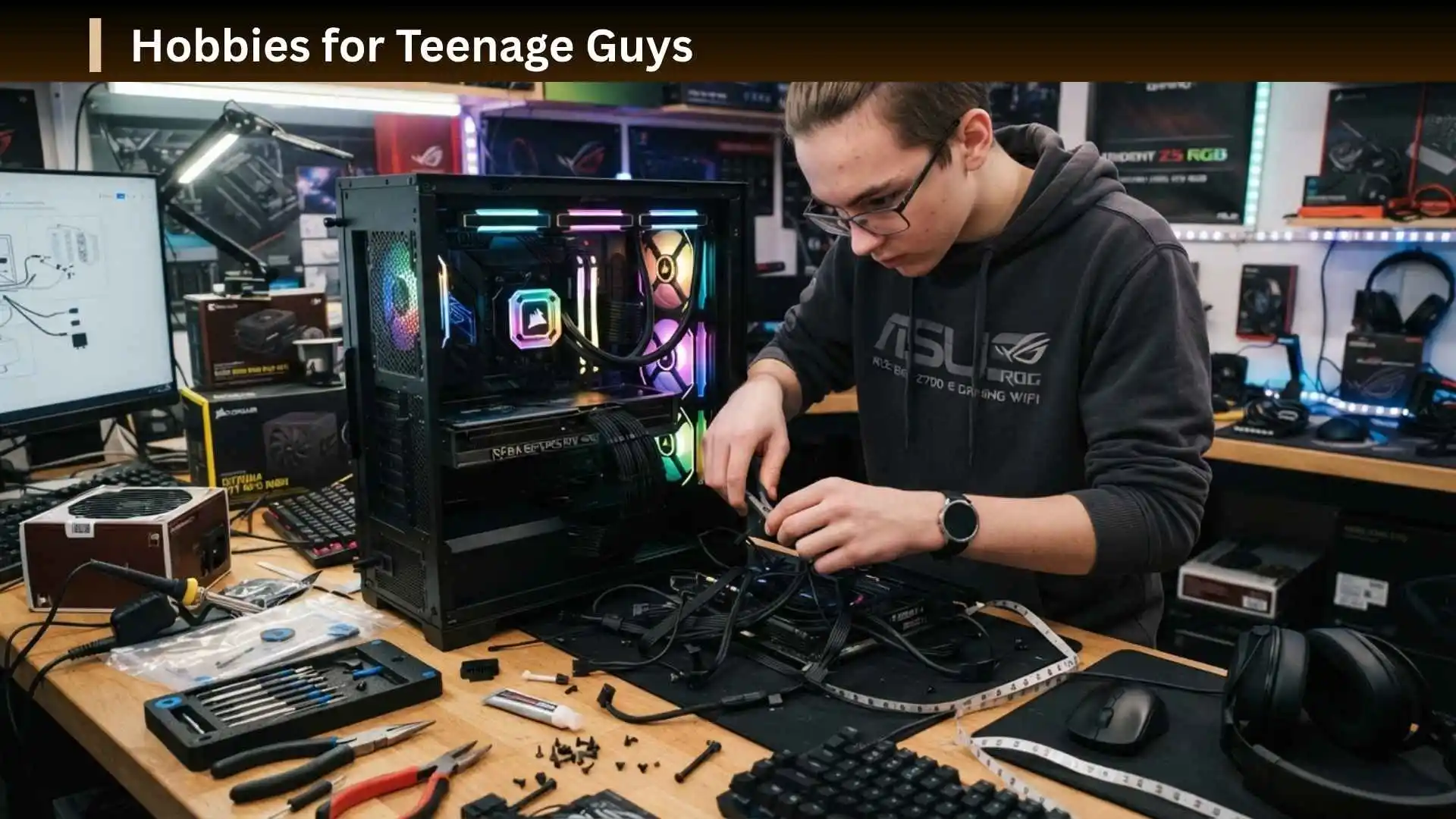
Teenage years are a great time to explore new interests, develop useful skills, and discover activities that make free time more enjoyable. Hobbies for teenage guys can range from sports and fitness to gaming, photography, cooking, coding, music, collecting, DIY projects, and outdoor adventures. The best hobby does not have to be expensive or impressive—it simply needs to be something you genuinely enjoy and want to explore.
Trying different activities can also help teenagers build confidence, creativity, patience, problem-solving skills, and healthy routines. Whether you want a relaxing hobby, a creative outlet, a social activity, or something that challenges you, there are plenty of options to consider. The key is to start small, stay curious, and give yourself time to find what fits your personality and interests..
Best Hobbies for Teenage Guys
Here are some of the most worthwhile options, from inexpensive activities you can start at home to hobbies that involve equipment, friends, or outdoor time.
| Hobby | Cost to Start | Difficulty | Best For |
| Photography | $–$$ | Easy | Creative teens |
| Drawing | $ | Easy | Artists and beginners |
| Cooking | $–$$ | Easy | Practical skills |
| Coding | $ | Medium | Technology fans |
| Basketball | $–$$ | Easy | Active teens |
| Skateboarding | $$ | Medium | Outdoor fun |
| Fishing | $$ | Easy–Medium | Relaxing outdoors |
| Guitar | $$ | Medium | Music lovers |
| Video Editing | $ | Medium | Creative projects |
| Model Building | $–$$ | Medium | Detail-oriented teens |
| Hiking | $ | Easy | Outdoor exploration |
| Chess | $ | Medium | Strategy fans |
| Reading | $ | Easy | Learning and relaxation |
| Drawing Comics | $ | Easy–Medium | Storytellers |
| Robotics | $$ | Medium–Hard | STEM enthusiasts |
| Gardening | $ | Easy | Hands-on activities |
Costs vary depending on whether you already have equipment and whether you buy beginner or advanced gear.
Creative Hobbies for Teenage Guys

Creative hobbies give teens a way to make something rather than simply consume entertainment. They can also be changed to match different interests and skill levels.
Drawing and Sketching
Drawing is one of the easiest hobbies to begin because you only need paper and a pencil. You can work on realistic sketches, cartoons, characters, landscapes, vehicles, or your own designs.
A beginner can start with 10–20 minutes of practice several times a week instead of trying to master everything at once.
Digital Art
If you enjoy computers and visual creativity, digital art can be a natural next step. Depending on your setup, you can create illustrations, character designs, wallpapers, concept art, or graphics.
A basic drawing tablet can be added later; you do not need expensive equipment to begin learning the fundamentals.
Photography
Photography can turn ordinary surroundings into creative projects. A smartphone is enough to learn important concepts such as composition, lighting, perspective, and timing.
Try themed challenges such as:
- Photographing interesting textures
- Taking pictures during golden hour
- Finding unusual architecture
- Photographing nature
- Creating a photo story around your neighborhood
Video Editing
Video editing is useful for school projects, personal videos, sports clips, gaming content, and creative storytelling.
Start by learning basic cuts, transitions, captions, audio adjustment, and simple color corrections. You can gradually move into more advanced editing as your skills improve.
Comic Creation
If you enjoy drawing and storytelling, creating comics combines both interests. You can invent characters, write short stories, design panels, and experiment with different art styles.
You do not need to produce a long graphic novel. A one-page comic is a perfectly good project.
Creative Writing
Writing short stories, fictional characters, scripts, poetry, or personal essays can be a surprisingly engaging hobby. It is especially useful for teens who enjoy movies, books, games, or storytelling.
One simple approach is to write a short scene around a single idea rather than worrying about completing an entire novel.
Active Hobbies for Teenage Guys
Active hobbies can provide a reason to spend less time sitting and more time moving. The right choice depends on available facilities, interests, and comfort level.
Basketball
Basketball works well as both a solo and social hobby. You can practice shooting, ball handling, footwork, and conditioning on your own or play pickup games with friends.
It is also easy to set small goals, such as improving a particular dribbling move or making a certain number of consecutive shots.
Soccer
Soccer is another flexible option. You can practice ball control and shooting alone, join a school or community team, or play casually with friends.
The hobby can be as competitive or relaxed as you want.
Skateboarding
Skateboarding combines movement, balance, coordination, and skill progression. Beginners should learn in an appropriate area and use suitable protective equipment, particularly while learning basic skills.
Progress can be measured through individual techniques rather than comparing yourself with experienced skaters.
Cycling
Cycling can be a hobby, a form of exploration, or both. You can ride around local trails, participate in recreational cycling, or simply use a bike to explore areas that are practical and safe to reach.
Always follow local cycling laws and use appropriate safety equipment.
Hiking
Hiking is a good choice if you enjoy nature more than organized sports. Trails can range from short local walks to longer excursions.
For longer hikes, planning matters. Check the route beforehand, consider weather conditions, carry enough water, and let someone know where you are going.
Running
Running requires very little equipment and can be done at different levels. You might begin with short runs and gradually work toward a personal distance goal.
The focus does not have to be competition. Tracking your own progress can make the hobby more motivating.
Martial Arts
Martial arts can combine physical activity, technique, discipline, and structured learning. Options vary widely, including karate, judo, Brazilian jiu-jitsu, taekwondo, boxing, and other disciplines.
If you are interested, look for a reputable local program with qualified instructors and an environment appropriate for teenagers.
Technology Hobbies for Teenage Guys
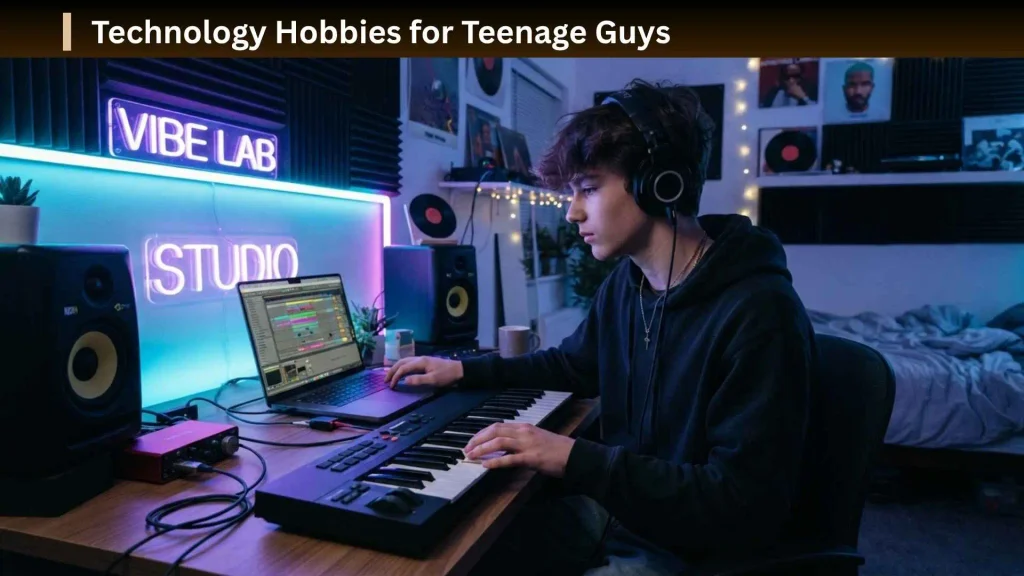
Technology-related hobbies can be entertaining while also teaching skills that can be useful for future projects.
Coding
Coding lets you turn ideas into programs, websites, games, and automated projects.
Beginners can start with a beginner-friendly language or visual programming environment. Rather than trying to memorize everything, build small projects such as:
- A simple calculator
- A quiz
- A basic game
- A personal webpage
- A to-do list
- A text-based adventure
Projects provide a clear reason to learn new programming concepts.
Game Development
If you love video games, making a small game can be very different from simply playing one. You can learn about game mechanics, level design, storytelling, graphics, sound, and programming.
Start with a tiny project. A simple playable game teaches more than an ambitious project that never gets finished.
Robotics
Robotics combines programming, electronics, mechanical concepts, and problem-solving. Beginner kits can provide a structured way to experiment.
More advanced projects might involve sensors, motors, autonomous movement, or custom designs.
3D Modeling
3D modeling allows you to create digital objects, characters, environments, and prototypes.
It can be particularly interesting for teens who like gaming, animation, engineering, architecture, or product design.
Electronics
Learning basic electronics can turn curiosity about how devices work into hands-on projects. Beginners can explore simple circuits, LEDs, switches, sensors, and microcontrollers.
Safety is important: start with beginner-level projects and follow the instructions for the equipment you use.
Hobbies to Do at Home
Not every hobby requires a team, club, or trip somewhere. Many can be practiced in a bedroom, garage, kitchen, or other suitable space at home.
Cooking
Cooking is both a hobby and a practical life skill. Start with simple dishes and gradually learn techniques such as chopping, seasoning, measuring, sautéing, baking, and preparing sauces.
Good beginner projects include:
- Homemade pizza
- Tacos
- Pasta dishes
- Breakfast recipes
- Sandwich variations
- Cookies or simple baked goods
Always use kitchen appliances and sharp tools safely and follow appropriate supervision requirements.
Baking
Baking is ideal if you enjoy precise instructions and experimenting with food. Unlike some forms of cooking, measurements and timing can have a major effect on the result.
Start with simple recipes before attempting more complicated desserts.
Chess
Chess is an inexpensive hobby that can be played in person or online. Beginners can focus on basic rules, opening principles, tactics, checkmates, and endgames.
Playing regularly against opponents around your skill level makes it easier to see improvement.
Reading
Reading does not have to mean only school-assigned books. Try science fiction, fantasy, biographies, sports writing, history, mysteries, graphic novels, or nonfiction related to something you already enjoy.
The best book is often the one you actually want to finish.
Model Building
Model building can appeal to teens interested in cars, aircraft, ships, military history, architecture, or science fiction.
The hobby rewards patience and attention to detail. Start with a beginner-friendly kit and learn basic assembly and painting techniques before buying complex models.
LEGO Building
LEGO can be much more than following official instructions. Try designing vehicles, buildings, machines, bridges, or fictional worlds from your own ideas.
It can also serve as an introduction to basic engineering concepts such as structure, balance, and mechanical movement.
Outdoor Hobbies for Teenage Guys
Outdoor hobbies can provide a change of environment and encourage exploration.
Fishing
Fishing combines patience, outdoor time, and practical knowledge. You can learn about local fish species, equipment, bait, casting, and responsible fishing practices.
Rules and licensing requirements vary by location, so check your state or local regulations before fishing.
Camping
Camping can teach practical outdoor skills such as setting up shelter, preparing food, organizing equipment, and navigating an outdoor environment.
For teenagers, camping with family, a youth organization, or experienced friends can provide a safer way to learn.
Birdwatching
Birdwatching may sound simple, but it can become surprisingly engaging once you start identifying species and noticing differences in behavior, calls, habitats, and appearance.
A pair of binoculars can help, but you can begin by observing birds without specialized equipment.
Gardening
Gardening is a hands-on hobby that lets you grow flowers, herbs, vegetables, or other plants. You can begin with a small container rather than needing a large yard.
Growing something from a seed to a mature plant provides a clear project with visible progress.
Geocaching
Geocaching combines outdoor exploration with a location-based treasure-hunting concept. Participants use coordinates or an app to find hidden caches.
Always respect private property, local rules, and the environment when participating.
Skill Building Hobbies for Teenage Guys
Some hobbies are especially valuable because they can develop abilities that transfer to everyday life, school, creative projects, or future careers.
Woodworking
Woodworking involves planning, measuring, assembling, and finishing projects. Beginners can start with simple projects and gradually learn how different tools and materials work.
Because power tools and cutting tools can be dangerous, teenagers should use appropriate supervision, protective equipment, and instruction.
Car Maintenance
For teens interested in cars, learning basic vehicle maintenance can be an engaging practical hobby. Topics might include understanding the owner’s manual, checking tire pressure, learning what dashboard warning lights mean, and understanding routine maintenance schedules.
Work involving lifting vehicles, electrical systems, fuel systems, or other hazards should be approached with proper training and adult supervision.
Sewing
Sewing is not limited to traditional clothing projects. You can repair clothes, customize garments, make bags, create costumes, or work on fabric-based crafts.
A basic sewing project can teach patience, measuring, planning, and attention to detail.
Magic Tricks
Magic is a fun hobby for someone who enjoys performing and practicing techniques. Card tricks and simple illusions can be learned with inexpensive materials.
The real challenge is not merely knowing the trick but performing it smoothly and presenting it confidently.
Learning a Language
Learning another language can become a long-term hobby. Apps, books, videos, conversation practice, and media in the target language can all contribute to learning.
Set practical goals such as learning everyday phrases or being able to understand a short conversation rather than expecting fluency immediately.
Social Hobbies for Teenage Guys
If your main goal is meeting people and spending time with friends, choose hobbies that naturally involve interaction.
Good choices include:
- Team sports
- Chess clubs
- Robotics clubs
- Debate
- Theater
- Band
- Photography groups
- Hiking groups
- Volunteering
- Board games
- Community art programs
- Martial arts classes
A social hobby does not necessarily need to be competitive. The important factor is having a regular activity where you interact with people who share an interest.
Hobbies for Teenage Guys Who Are Bored
If you are bored and cannot decide what to try, use a simple experiment rather than searching for the perfect hobby.
Pick one activity from each category:
- Creative: drawing, photography, writing, or video editing.
- Active: basketball, cycling, hiking, or running.
- Technical: coding, robotics, electronics, or 3D modeling.
- Practical: cooking, gardening, woodworking, or sewing.
- Social: chess, team sports, theater, or a club.
Spend a few sessions with each. The hobby that makes you want to continue without being forced is probably worth exploring further.
How to Choose the Right Hobby

The best hobby is not necessarily the most impressive one. It is the one that matches your interests, circumstances, and willingness to practice.
Consider these questions:
What Do You Already Enjoy?
If you love video games, game development or 3D modeling may be a better fit than forcing yourself into an unrelated hobby.
If you enjoy being outdoors, hiking, cycling, fishing, or photography might make more sense.
Do You Want to Be Alone or With People?
Choose solo hobbies such as drawing, reading, coding, or model building if you prefer independent activities.
Choose team sports, clubs, theater, martial arts, or group activities if you want more social interaction.
How Much Can You Spend?
You do not need an expensive hobby.
Drawing, reading, running, hiking, writing, and many forms of coding can be started cheaply. Other hobbies, such as musical instruments, robotics, cycling, or photography, may require a larger initial investment.
Start with basic equipment and upgrade only when you know you enjoy the activity.
Do You Want Fun or Skill Development?
Many hobbies provide both, but your priorities may differ.
If you want immediate entertainment, board games, sports, photography, or cooking may be appealing.
If you want a skill you can build over years, coding, music, woodworking, drawing, a language, photography, or video editing may be stronger choices.
How to Turn a Hobby Into a Long-Term Interest
A hobby becomes easier to maintain when you make the starting point small.
Instead of saying, “I’m going to become great at guitar,” set a smaller goal such as learning three basic chords.
Instead of planning to become a professional photographer, take 20 interesting photos and study what makes each composition work.
Instead of trying to build a large game, create one tiny playable level.
Small projects create visible progress and make it easier to decide whether you genuinely enjoy the hobby.
Should Teenage Guys Have More Than One Hobby?
Yes. There is no reason to limit yourself to a single hobby.
A useful combination can include one active hobby, one creative or technical hobby, and one relaxing hobby.
For example:
- Basketball + coding + reading
- Cycling + photography + chess
- Soccer + guitar + cooking
- Hiking + drawing + video editing
Having different types of hobbies can prevent you from depending entirely on one activity for entertainment.
FAQs
What are the best hobbies for teenage guys?
Some strong choices include basketball, coding, photography, cooking, drawing, guitar, hiking, cycling, chess, video editing, robotics, fishing, woodworking, and creative writing. The best option depends on whether the teen prefers active, creative, technical, social, or relaxing activities.
What are some cheap hobbies for teenage guys?
Reading, drawing, writing, running, hiking, bodyweight exercise, chess, photography with a smartphone, and learning a language can be started with little or no additional spending.
What hobbies can teenage guys do at home?
Cooking, baking, coding, drawing, digital art, reading, chess, model building, LEGO, writing, video editing, electronics, and learning an instrument can all be practiced at home.
What is a good hobby for a teenage guy who likes technology?
Coding, game development, robotics, electronics, 3D modeling, photography, and video editing are good options. The right choice depends on whether he prefers programming, hardware, design, or media creation.
What are good outdoor hobbies for teenage guys?
Hiking, cycling, fishing, camping, photography, gardening, birdwatching, skateboarding, and recreational sports are popular types of outdoor hobbies.
How can a teenage guy find a hobby he actually likes?
Try several activities for a short period instead of trying to choose perfectly on the first attempt. Pay attention to which activities make you curious, encourage you to practice, or leave you wanting to learn more.
Are hobbies important for teenagers?
Hobbies can provide opportunities to explore interests, develop skills, spend time away from passive entertainment, and connect with other people. Their value depends on the individual and the activity.
Conclusion
The best hobbies for teenage guys are the ones that make you curious enough to keep learning. Whether you choose basketball, coding, photography, cooking, music, hiking, drawing, robotics, or something completely different, you do not need to be naturally talented when you start.
Begin with what interests you, keep the initial cost reasonable, and give yourself enough time to get past the beginner stage. A hobby does not have to become a career or a competition—it can simply be something you enjoy while building skills and discovering what you like.

I’m Ethan Mitchell, a curious writer who enjoys turning complex ideas into simple, useful information. At Cognivoora, I focus on creating clear and engaging content that readers can understand and apply in everyday life. I believe good writing should educate, answer real questions, and leave readers with something valuable to remember.
Books:
- The Everyday Mind
- Simple Ideas, Better Thinking