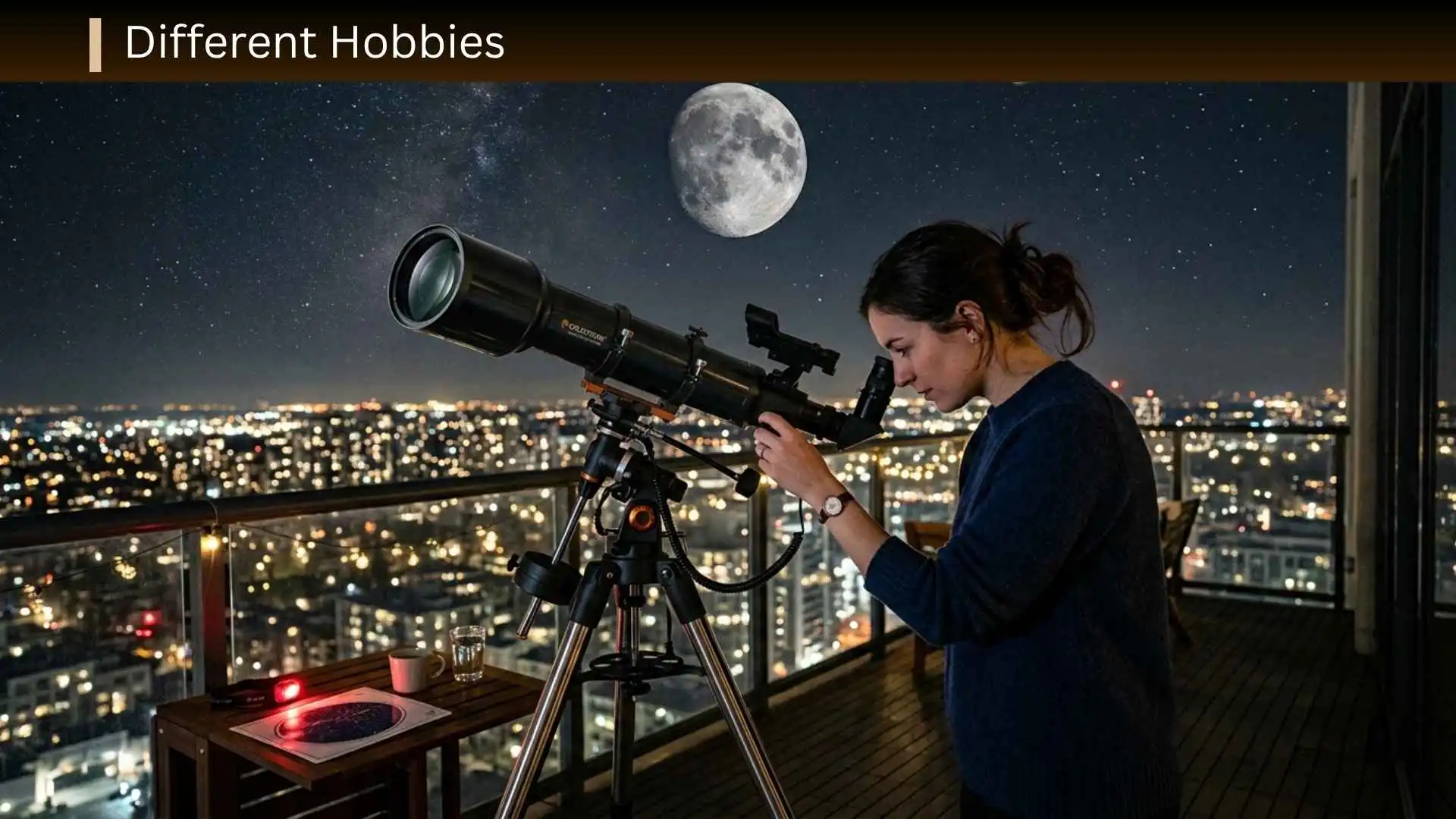
Have you ever wondered why some hobbies instantly grab your attention while others feel completely boring? I believe the right hobby can add more fun, creativity, and meaning to your everyday life. Whether you enjoy making things with your hands, exploring new ideas, staying active, or simply relaxing after a busy day, there are countless different hobbies waiting for you to discover.
You don’t need to be an expert or spend a lot of money to get started. You might find yourself enjoying something you never expected, from painting and gardening to photography, cooking, reading, gaming, or learning a new skill. In this guide, I’ll help you explore different hobbies so you can find activities that match your interests, personality, time, and lifestyle.
Different Hobbies at a Glance
Here are some of the most popular categories to explore:
- Creative hobbies: Drawing, painting, photography, writing, pottery, knitting
- Outdoor hobbies: Hiking, gardening, fishing, birdwatching, camping
- Fitness hobbies: Running, cycling, swimming, yoga, martial arts
- Intellectual hobbies: Reading, learning languages, chess, astronomy, history
- Social hobbies: Dancing, volunteering, book clubs, team sports, trivia
- Practical hobbies: Cooking, woodworking, sewing, home brewing, DIY projects
- Technology hobbies: Coding, electronics, digital art, 3D printing, game development
- Collecting hobbies: Coins, stamps, books, records, sports memorabilia
- Relaxing hobbies: Puzzles, coloring, journaling, meditation, model building
The best choice depends less on what is considered popular and more on what you genuinely want to do repeatedly.
Creative Hobbies
Creative hobbies give you a way to make, design, write, photograph, or otherwise express something. Many can be started with inexpensive supplies.
1. Drawing
Drawing can range from casual doodling to realistic pencil portraits, cartoons, illustrations, and digital artwork. Beginners can start with a pencil and sketchbook without purchasing specialized equipment.
2. Painting
Painting offers many directions, including watercolor, acrylic, oil, and gouache. Watercolor can be convenient for people who want a relatively portable hobby, while acrylics are versatile for experimenting with different surfaces.
3. Photography
Photography involves much more than owning an expensive camera. You can begin with a smartphone and practice composition, lighting, architecture, nature, portraits, or everyday scenes.
4. Creative Writing
Writing short stories, poetry, personal essays, or fiction can turn spare time into a creative practice. A notebook or computer is usually enough to begin.
5. Journaling
Journaling can involve recording daily experiences, ideas, observations, goals, or creative thoughts. It can be as simple as writing a few sentences whenever you have something worth recording.
6. Calligraphy
Calligraphy focuses on decorative handwriting and lettering. It can be practiced traditionally with pens and ink or through modern brush lettering.
7. Knitting
Knitting allows you to create practical objects such as scarves, hats, blankets, and sweaters. It can be learned gradually by starting with basic stitches and simple projects.
8. Crocheting
Crocheting uses a hook rather than knitting needles and can be used to make blankets, clothing, accessories, toys, and decorative items.
9. Sewing
Sewing combines creativity with a practical skill. Beginners can start with basic hand sewing before progressing to a sewing machine and more complicated projects.
10. Pottery
Pottery involves shaping clay into functional or decorative objects. Local studios and community art centers can be useful starting points for people who do not have space or equipment at home.
11. Jewelry Making
You can make bracelets, necklaces, earrings, and other accessories using beads, wire, metal, clay, or other materials. The hobby ranges from simple crafts to highly technical techniques.
12. Scrapbooking
Scrapbooking combines photographs, paper, illustrations, writing, and decorative elements to create personalized albums and memory books.
13. Origami
Origami is the art of folding paper into recognizable shapes and figures. It requires little space and can begin with ordinary paper.
14. Wood Carving
Wood carving involves shaping pieces of wood with carving tools to create decorative or functional objects. Because sharp tools may be involved, beginners should learn proper tool handling and safety before attempting advanced work.
15. Candle Making
Candle making can be approached as a craft involving containers, wax, wicks, colors, and fragrances. Proper handling of hot wax and heat-producing equipment is important.
Outdoor Hobbies
Outdoor hobbies are especially useful for people who prefer movement, nature, fresh air, or activities away from screens.
16. Hiking
Hiking can be as simple as walking a local trail or as challenging as spending an entire day in mountainous terrain. Beginners should choose routes appropriate for their fitness, experience, weather conditions, and available equipment.
17. Gardening
Gardening involves growing and caring for plants. You can grow vegetables, flowers, herbs, native plants, or container gardens depending on your available space.
18. Birdwatching
Birdwatching combines observation, nature, and identification. A field guide or bird-identification app and a pair of binoculars can help you get started.
19. Camping
Camping can range from staying at an established campground to more remote forms of outdoor recreation. Beginners often benefit from starting with a well-equipped campground before attempting more demanding trips.
20. Fishing
Fishing can be a quiet, patient outdoor hobby. Requirements and regulations vary by location, so beginners should check the applicable state and local rules before fishing.
21. Cycling
Cycling can serve as recreation, exercise, transportation, or exploration. You can ride paved paths, roads, gravel routes, or designated mountain-bike trails depending on your interests.
22. Kayaking
Kayaking provides a way to explore lakes, rivers, and coastal areas. Beginners should learn basic paddling and water-safety practices and choose conditions appropriate for their experience.
23. Geocaching
Geocaching uses GPS-enabled devices to find hidden containers placed by other participants. It can add a game-like element to walking and exploring.
24. Nature Photography
Nature photography combines outdoor exploration with photography. You can focus on landscapes, plants, wildlife, insects, or seasonal changes.
25. Stargazing
Stargazing can begin without a telescope. Learning major constellations and observing the Moon and bright planets can provide a starting point before investing in specialized equipment.
26. Foraging
Foraging involves identifying and gathering wild foods or useful plants. Because incorrect identification can be dangerous, beginners should learn from reliable local resources and experienced educators rather than relying on guesswork.
27. Rockhounding
Rockhounding involves searching for and studying rocks, minerals, fossils, and other geological specimens where collecting is permitted.
28. Running
Running can be a structured fitness hobby or simply a way to explore local routes. Beginners can start with manageable distances and gradually adjust their routine.
29. Golf
Golf combines outdoor recreation, technique, and practice. It can be played casually or pursued as a skill-focused hobby.
30. Disc Golf
Disc golf combines walking with throwing specialized flying discs toward targets. Courses are available in many communities, making it an accessible outdoor option for many beginners.
Indoor Hobbies
Indoor hobbies are useful when weather, space, schedule, or personal preference makes outdoor activities less practical.
31. Reading
Reading is one of the most flexible hobbies because you can choose fiction, nonfiction, biographies, history, science, mystery, fantasy, or virtually any other subject.
32. Puzzles
Jigsaw puzzles, logic puzzles, crossword puzzles, and number puzzles offer different types of mental challenges. You can choose difficulty based on your experience.
33. Chess
Chess combines strategy, planning, pattern recognition, and competition. You can play against another person or use an online platform for practice.
34. Board Games
Modern board games cover everything from cooperative strategy games to party games and simulations. This makes the hobby suitable for both social groups and dedicated enthusiasts.
35. Model Building
Model building can include scale vehicles, aircraft, ships, architecture, miniatures, and other subjects. Some projects emphasize assembly while others place greater emphasis on painting and customization.
36. Lego Building
Building with LEGO or similar construction systems can be a creative hobby for children and adults. Experienced builders can design their own creations rather than following instructions.
37. Baking
Baking combines creativity with measurable techniques. Beginners can start with cookies, muffins, breads, or simple cakes before attempting more technical recipes.
38. Cooking
Cooking can become a hobby when you move beyond simply preparing necessary meals and begin exploring cuisines, techniques, ingredients, or specialized dishes.
39. Coffee Brewing
Coffee enthusiasts can explore different beans, brewing methods, grind sizes, water ratios, and preparation techniques. You can keep the hobby simple or become highly technical.
40. Tea Exploration
Trying teas from different regions and learning about preparation methods can turn an everyday beverage into a focused hobby.
Intellectual and Learning Hobbies
If you enjoy learning for its own sake, intellectual hobbies can provide an ongoing source of projects and questions.
41. Learning a Language
Learning Spanish, French, Japanese, American Sign Language, or another language can become a long-term hobby. Regular practice matters more than trying to master everything immediately.
42. Astronomy
Astronomy goes beyond casual stargazing. You can learn about planets, stars, galaxies, cosmology, observational techniques, and the history of space exploration.
43. History
History enthusiasts can focus on particular periods, countries, wars, inventions, social movements, historical figures, or family and local history.
44. Genealogy
Genealogy involves researching family relationships and historical records. It can combine document research, interviews with relatives, archival work, and organization of family information.
45. Philosophy
Reading philosophy can introduce questions about ethics, knowledge, existence, logic, politics, and human thought. A reading list organized around one topic can make the subject easier to approach.
46. Creative Coding
Coding does not have to be pursued as a career. Hobby programmers can build small websites, games, automation projects, interactive stories, or useful personal tools.
47. Electronics
Electronics hobbyists learn how circuits and components work and can progress toward projects involving sensors, microcontrollers, lights, or other devices. Beginners should start with low-risk educational projects and follow appropriate electrical safety practices.
48. Mathematics Puzzles
Mathematical puzzles provide challenges involving logic, probability, patterns, geometry, and problem solving without requiring advanced academic study.
49. Collecting Knowledge
Some people enjoy creating deep personal knowledge collections around a subject such as transportation, architecture, maps, inventions, mythology, or historical objects.
Social Hobbies
Social hobbies are a good fit if you want your free time to include regular interaction with other people.
50. Dancing
Social dance styles can include salsa, swing, ballroom, country dancing, and many others. Classes can provide a structured way for beginners to learn.
51. Volunteering
Volunteering can become a recurring hobby centered around causes or community activities that matter to you. Opportunities vary considerably between communities.
52. Book Clubs
Book clubs combine reading with conversation. They can be especially useful for people who enjoy books but want a social element as well.
53. Trivia
Trivia groups and events appeal to people who enjoy general knowledge, friendly competition, and team-based problem solving.
54. Team Sports
Basketball, soccer, softball, volleyball, and recreational leagues can provide both physical activity and regular social interaction.
55. Community Theater
Community theater can involve acting, directing, costumes, set construction, lighting, stage management, or other behind-the-scenes roles.
56. Choir or Group Singing
Group singing provides a structured musical activity without requiring you to perform alone. Local choirs and community music organizations may offer different experience levels.
57. Public Speaking Clubs
A public speaking group can provide regular opportunities to practice speeches, presentations, storytelling, and impromptu speaking.
Practical Hobbies
Practical hobbies produce something useful or teach skills that can be applied in everyday life.
58. DIY Home Projects
DIY projects can include painting, simple repairs, furniture improvements, organization projects, and decorative work. Choose projects that match your tools and skill level.
59. Woodworking
Woodworking can range from simple beginner projects to furniture construction and advanced joinery. Beginners should learn safe tool operation before using power equipment.
60. Cooking From Scratch
Making bread, pasta, sauces, preserves, or other foods from basic ingredients can turn everyday cooking into a skill-building hobby.
61. Home Brewing
Home brewing can be a technical hobby involving ingredients, recipes, equipment, fermentation, and careful sanitation. Because laws and regulations vary, anyone interested should check applicable local rules before starting.
62. Sewing and Clothing Alteration
Beyond making new garments, sewing can be used to repair clothing, alter fit, replace buttons, and customize existing pieces.
63. Furniture Restoration
Restoring older furniture can combine research, cleaning, repair, refinishing, and design. The appropriate approach depends on the material and condition of the item.
64. Automotive Maintenance
For people interested in cars, learning basic maintenance can be both educational and practical. Beginners should distinguish between straightforward maintenance and repairs requiring specialized knowledge or equipment.
Technology and Digital Hobbies
Technology creates hobbies that can be creative, technical, or both.
65. Digital Art
Digital drawing and painting can be practiced with a tablet, computer, or compatible device. Software ranges from beginner-friendly drawing programs to advanced professional tools.
66. Video Editing
Video editing involves assembling footage, audio, graphics, transitions, and other elements into a finished video. You can edit family projects, travel footage, short films, or creative experiments.
67. Animation
Animation can begin with simple frame-by-frame exercises and develop into 2D or 3D projects.
68. Game Development
Making games combines programming, design, storytelling, sound, visual art, and problem solving. Small projects are generally easier for beginners to finish than ambitious games.
69. 3D Printing
3D printing allows hobbyists to turn digital models into physical objects. Projects can include organizers, replacement parts, models, prototypes, and decorative objects.
70. Graphic Design
Graphic design can involve typography, layouts, illustrations, branding concepts, posters, and digital compositions.
71. Website Building
Creating websites can be both a creative and technical hobby. Beginners can start with visual website builders or learn HTML, CSS, and JavaScript for greater control.
72. Digital Music Production
Digital audio software allows hobbyists to experiment with recording, arranging, sampling, mixing, and electronic music production.
Collecting Hobbies
Collecting can be focused on almost any category, but the most enjoyable collections usually have a clear personal interest behind them.
73. Coin Collecting
Coin collecting involves examining coins based on factors such as country, era, design, condition, and historical significance.
74. Stamp Collecting
Stamp collecting can focus on countries, themes, historical periods, printing varieties, or particular types of stamps.
75. Book Collecting
Book collectors may focus on particular authors, subjects, editions, publishers, genres, or historical periods.
76. Vinyl Record Collecting
Record collecting combines music discovery with physical media. Collectors may focus on particular artists, genres, pressing variations, or album artwork.
77. Sports Memorabilia
Sports fans may collect cards, signed items, programs, photographs, equipment, or other memorabilia. Authenticity and condition are important considerations when purchasing collectible items.
78. Antique Collecting
Antique collecting involves researching older objects and understanding their origins, condition, construction, and historical context.
Low Cost Hobbies to Try
You do not need a large budget to develop a hobby. Some activities require little or no specialized equipment.
Good low-cost options include:
- Reading
- Walking
- Writing
- Journaling
- Drawing
- Birdwatching
- Hiking
- Stargazing
- Chess
- Puzzles
- Learning a language
- Photography with a smartphone
- Gardening from seeds
- Origami
- Creative writing
- Bodyweight exercise
- Geocaching
- Local history research
The phrase “low cost” does not necessarily mean completely free. Some hobbies have inexpensive entry points but become more expensive if you later buy specialized equipment.
Different Hobbies for Introverts
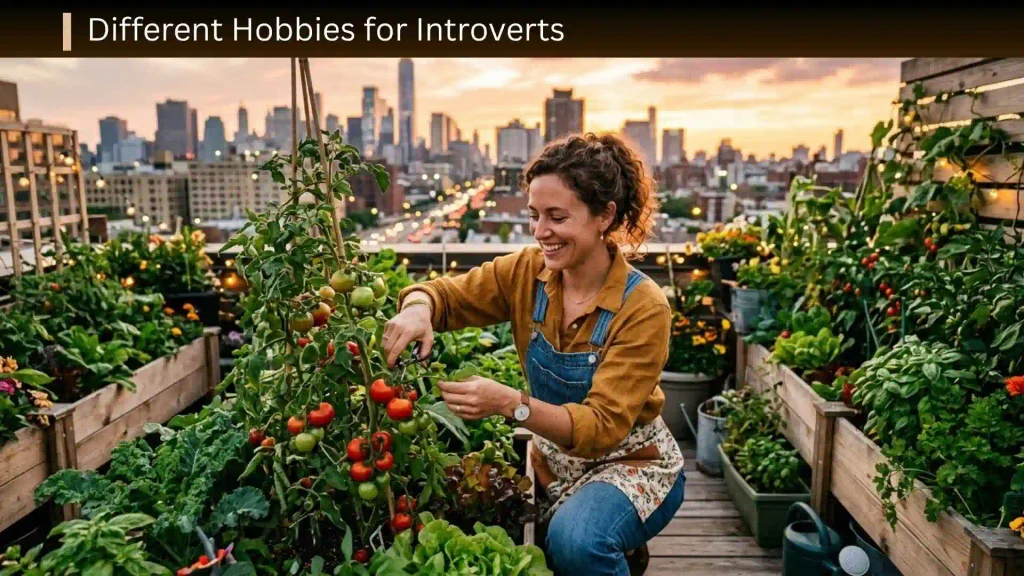
If you prefer independent activities or smaller social settings, consider:
- Reading
- Drawing
- Writing
- Photography
- Gardening
- Birdwatching
- Coding
- Puzzles
- Chess
- Model building
- Stargazing
- Knitting
- Journaling
- Cooking
- Learning a language
Being introverted does not mean you cannot enjoy social hobbies. The useful distinction is whether you prefer solo activities, small groups, predictable interaction, or larger social environments.
Different Hobbies for People Who Get Bored Easily
Some hobbies provide almost endless variation, making them suitable for people who want frequent new challenges.
Consider:
- Photography
- Cooking
- Hiking
- Learning languages
- Travel journaling
- Gardening
- Creative writing
- Game development
- DIY projects
- Woodworking
- Astronomy
- Drawing
- Collecting
- Volunteering
- Cycling
For example, photography can continually change depending on the subject, location, season, lighting, and technique. Cooking can similarly remain varied by introducing different cuisines and ingredients.
Different Hobbies You Can Do at Home
If you want a hobby that does not require regular travel, try:
- Reading
- Writing
- Painting
- Drawing
- Knitting
- Crocheting
- Sewing
- Baking
- Cooking
- Puzzles
- Chess
- Model building
- LEGO building
- Digital art
- Coding
- Video editing
- Music production
- Indoor gardening
- Journaling
- Calligraphy
Your available space matters. A person living in a small apartment may find knitting, drawing, reading, or digital art easier to manage than woodworking or large-scale crafting.
How to Choose the Right Hobby

With so many different hobbies available, choosing one can be harder than finding ideas. A simple way to narrow the options is to consider five questions.
1. Do You Want to Make, Learn, Move, Collect, or Connect?
Think about the primary experience you want.
- Make: Painting, woodworking, sewing, pottery
- Learn: Languages, history, astronomy, philosophy
- Move: Hiking, cycling, dancing, swimming
- Collect: Coins, books, stamps, records
- Connect: Volunteering, team sports, book clubs
You can choose more than one category.
2. How Much Time Do You Actually Have?
A hobby should fit your real schedule rather than an idealized version of it.
If you have only 15–30 minutes at a time, consider reading, drawing, journaling, puzzles, language practice, or short walks.
If you regularly have several hours available, hobbies such as hiking, woodworking, photography, gardening, cooking, or model building may provide deeper projects.
3. What Is Your Starting Budget?
Consider the cost of both entry and expansion.
A hobby may start cheaply but become more expensive as you purchase better tools, equipment, materials, or collectibles. Set a budget before buying advanced gear.
4. Do You Prefer Structure or Freedom?
Some people enjoy clear goals and progression. Others want an activity without rules.
More structured: Chess, martial arts, language learning, golf, running, music lessons.
More open-ended: Drawing, photography, gardening, writing, collecting, DIY projects.
5. Do You Want a Skill or an Experience?
A hobby does not have to produce measurable improvement.
If you want to develop a skill, choose something with a clear learning path. If your primary goal is relaxation or exploration, choose an activity where the process itself is enjoyable.
A Simple Way to Test a New Hobby
You do not have to commit immediately. Try a hobby on a small scale first.
Step 1: Choose three possibilities.
Pick three activities that appeal to you for different reasons.
Step 2: Try the cheapest reasonable version.
Avoid purchasing a large amount of equipment before you know whether you enjoy the activity.
Step 3: Give each hobby several sessions.
A first attempt may feel awkward because you are still learning the basics.
Step 4: Notice how you feel afterward.
Ask whether you feel interested enough to do it again.
Step 5: Keep the one that naturally pulls you back.
You do not need to force yourself to continue an activity simply because it looks productive.
Hobbies vs. Interests: What Is the Difference?
An interest is something you enjoy learning about or thinking about, while a hobby generally involves regularly spending time doing an activity for enjoyment or personal development.
For example, you might be interested in astronomy without regularly observing the night sky. If you begin routinely stargazing, learning constellations, and tracking celestial events, astronomy may become a hobby.
The distinction is not strict. An interest can naturally develop into a hobby when you begin actively practicing it.
Can a Hobby Become a Side Income?
Some hobbies can potentially be monetized, but earning money changes the nature of the activity.
Examples include:
- Photography
- Writing
- Graphic design
- Crafting
- Baking
- Sewing
- Woodworking
- Illustration
- Coding
- Music production
- Teaching a skill
- Collecting and reselling certain items
However, income is not guaranteed. Success depends on factors such as skill, demand, pricing, competition, marketing, operating costs, and consistency.
If making money becomes the main objective, you are moving from a purely recreational hobby toward a business or side-income activity. That distinction matters because customer expectations and financial considerations can reduce some of the freedom that makes a hobby enjoyable.
How to Avoid Abandoning a New Hobby
A common mistake is starting with too much ambition.
Instead of deciding to become an expert immediately, choose a small first project. Someone interested in photography could begin by taking photos around their neighborhood rather than buying a large collection of equipment. Someone interested in woodworking could start with a simple project rather than attempting complex furniture.
It also helps to avoid comparing your beginning with someone else’s years of practice. Progress becomes easier to notice when you measure your own improvement.
Most importantly, you are allowed to quit a hobby that you do not enjoy. Trying different activities is part of discovering what suits you.
Frequently Asked Questions
What are some different hobbies to try?
Some options include reading, photography, gardening, hiking, painting, cooking, writing, cycling, birdwatching, woodworking, knitting, chess, collecting, coding, dancing, and learning a language. The best choice depends on your interests, time, budget, and preferred environment.
What are good hobbies for beginners?
Good beginner hobbies generally have a simple entry point and do not require extensive equipment or prior knowledge. Reading, drawing, walking, photography with a smartphone, cooking, journaling, puzzles, gardening, and language learning are examples.
What hobbies can I do alone?
Reading, writing, drawing, photography, gardening, coding, puzzles, chess, knitting, model building, stargazing, cooking, and collecting can all be practiced independently.
What are inexpensive hobbies?
Reading, writing, walking, drawing, journaling, origami, puzzles, stargazing, language learning, hiking, and smartphone photography can often be started without a large investment.
What hobby is best for someone who does not know what they like?
Start with three very different activities rather than trying to identify a perfect hobby immediately. For example, choose one creative activity, one physical activity, and one learning-based activity. Try each several times and keep the one you most naturally want to continue.
Can hobbies improve practical skills?
Yes. Depending on the activity, hobbies can develop skills such as cooking, sewing, photography, writing, programming, woodworking, communication, organization, or creative problem solving. The practical value varies by hobby and by how deeply you pursue it.
Should I have more than one hobby?
There is no requirement to limit yourself to one hobby. Having different types of hobbies can work well when they serve different purposes—for example, one physical activity, one creative activity, and one relaxing activity.
How much should I spend on a new hobby?
Start with the minimum reasonable investment needed to participate safely and learn the basics. Once you know you genuinely enjoy the activity, you can decide whether additional equipment or materials will improve your experience.
Conclusion
There are countless different hobbies, from simple activities such as reading and walking to specialized pursuits such as woodworking, astronomy, digital art, collecting, or game development. The right hobby is not necessarily the most popular or impressive one; it is the activity that fits your interests, schedule, budget, environment, and preferred way of spending time.
If you are unsure where to begin, choose three contrasting activities and test each one without making a major investment. The hobby worth keeping is usually the one that makes you curious enough to come back and continue learning.

I’m Olivia Bennett, a passionate writer who loves exploring ideas, learning new concepts, and sharing knowledge in a straightforward way. I write for Cognivoora with the goal of making useful topics easier to understand without unnecessary complexity. My approach combines research, clarity, and a reader-first perspective.
Books:
- Think Clearly, Live Better
- The Curious Reader’s Guide