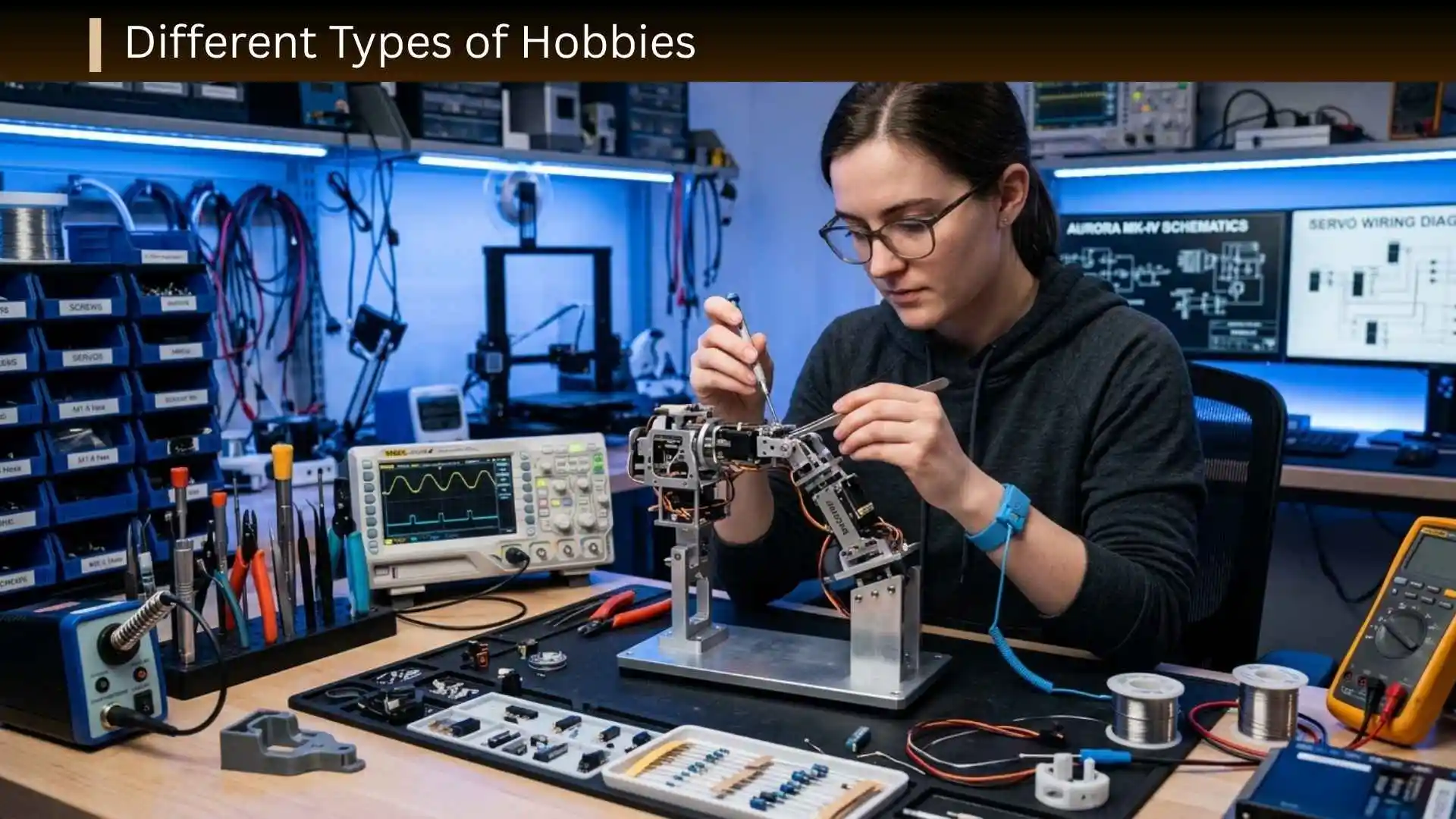
Have you ever wondered why some activities make you lose track of time while others feel like a chore? I believe the right hobby can add more than just fun to your day,it can give you a chance to explore your interests, learn something new, and enjoy time away from everyday responsibilities. Whether you love creating things, staying active, learning new skills, or simply relaxing, there is likely a hobby that fits your personality and lifestyle.
You don’t need to be an expert or spend a lot of money to get started. In this guide, you’ll discover different types of hobbies, from creative and outdoor activities to relaxing, social, educational, and skill-based hobbies. As you explore these options, you may find a new interest that matches your schedule, budget, and the way you enjoy spending your free time.
What Are the Different Types of Hobbies?
Hobbies are activities people choose to do regularly for enjoyment, personal interest, learning, creativity, relaxation, social interaction, or recreation. They can be broadly grouped according to what you do and what you want from the activity.
Common types include:
- Creative and artistic hobbies
- Crafting and handmade hobbies
- Outdoor and nature hobbies
- Sports and active hobbies
- Intellectual and educational hobbies
- Music-related hobbies
- Writing and language hobbies
- Technology and digital hobbies
- Cooking and food hobbies
- Gardening and plant hobbies
- Collecting hobbies
- Social and community hobbies
- Travel and exploration hobbies
- Relaxing and mindful hobbies
- Animal-related hobbies
- DIY and practical hobbies
- Photography and filmmaking hobbies
- Performance hobbies
The categories can overlap. For example, photography can be creative, technical, outdoor, and travel-related at the same time.
1. Creative and Artistic Hobbies

Creative hobbies allow you to produce something using imagination, visual expression, or artistic technique. They are suitable for people who enjoy experimenting with colors, shapes, materials, images, or ideas.
Popular creative hobbies
- Drawing
- Painting
- Sketching
- Watercolor painting
- Acrylic painting
- Oil painting
- Digital art
- Illustration
- Calligraphy
- Hand lettering
- Collage
- Art journaling
- Sculpture
- Printmaking
- Origami
- Mixed-media art
Best for: People who enjoy self-expression and making things.
Beginner approach: Start with inexpensive materials and choose one medium rather than buying a large collection of supplies.
Drawing, for example, can begin with nothing more than a pencil and paper. Digital art may require a tablet and software, while painting costs vary considerably depending on the medium and materials.
2. Crafting and Handmade Hobbies
Craft hobbies focus on making physical objects, decorations, gifts, clothing, or useful household items.
Examples include:
- Knitting
- Crocheting
- Sewing
- Embroidery
- Quilting
- Cross-stitch
- Candle making
- Soap making
- Jewelry making
- Beading
- Leathercraft
- Wood carving
- Paper crafts
- Scrapbooking
- Model building
- Pottery
- Basket weaving
These hobbies differ significantly in equipment, workspace, and learning curve. Someone looking for a portable hobby might prefer crochet or embroidery, while someone with a dedicated workspace may enjoy woodworking or pottery.
3. Outdoor and Nature Hobbies
Outdoor hobbies are ideal if you prefer spending free time outside rather than at home. Many can also be combined with exercise, photography, exploration, or nature observation.
Examples of outdoor hobbies
- Hiking
- Camping
- Backpacking
- Birdwatching
- Fishing
- Geocaching
- Gardening
- Nature photography
- Stargazing
- Rock collecting
- Kayaking
- Canoeing
- Cycling
- Trail walking
- Wildlife observation
- Outdoor sketching
Outdoor hobbies vary from highly active pursuits to quiet observation. Birdwatching and stargazing can be relatively low-impact, whereas backpacking and kayaking generally require more preparation and equipment.
Beginner tip: Choose an activity that fits the environment and conditions available to you rather than assuming you need to travel far to enjoy an outdoor hobby.
4. Sports and Active Hobbies
Sports and physical recreation can turn exercise into a structured hobby. You can participate competitively, casually, individually, or as part of a team.
Popular options include:
- Running
- Swimming
- Cycling
- Tennis
- Pickleball
- Basketball
- Soccer
- Golf
- Volleyball
- Badminton
- Table tennis
- Bowling
- Martial arts
- Rock climbing
- Skateboarding
- Roller skating
- Yoga
- Dance
The right choice depends on your preferred activity level, access to facilities, budget, and whether you enjoy individual or group activities.
For example, running requires relatively little equipment, while golf, climbing, and organized sports may involve facility fees or specialized equipment.
5. Intellectual and Educational Hobbies
Not every hobby needs to be physically demanding or artistic. Learning itself can become a hobby.
Educational hobbies include:
- Reading
- History
- Astronomy
- Philosophy
- Psychology
- Learning about science
- Genealogy
- Archaeology as an amateur interest
- Chess
- Sudoku
- Crossword puzzles
- Logic puzzles
- Mathematics
- Learning about geography
- Studying cultures
- Online courses
- Researching historical subjects
These activities work particularly well for people who enjoy asking questions, solving problems, or exploring subjects deeply.
A useful advantage of this category is its flexibility. You can spend five minutes solving a puzzle or several hours studying a subject without needing a special physical space.
6. Reading and Book Related Hobbies
Reading is one of the easiest hobbies to adapt to different interests and schedules.
You can explore:
- Fiction
- Nonfiction
- Biography
- History
- Science fiction
- Fantasy
- Mystery
- Poetry
- Essays
- Graphic novels
- Travel books
- Philosophy
- Personal development
- Literary classics
Reading can also develop into related hobbies such as book collecting, book reviewing, literary discussion groups, journaling about books, or visiting independent bookstores and libraries.
If you struggle to choose what to read, start with a subject you already enjoy instead of trying to follow someone else’s reading list.
7. Writing and Language Hobbies
Writing can be both a creative outlet and a way to explore ideas.
Possible hobbies include:
- Creative writing
- Journaling
- Poetry
- Short stories
- Fiction writing
- Blogging
- Memoir writing
- Screenwriting
- Letter writing
- Writing reviews
- Language learning
- Translation practice
- Handwriting
- Creative prompts
Language learning can also combine with travel, reading, music, culture, and social activities.
The important distinction is that a hobby does not have to produce professional work. You can write privately simply because you enjoy the process.
8. Music Hobbies
Music offers hobbies for performers, listeners, collectors, and learners.
Examples include:
- Singing
- Playing guitar
- Playing piano
- Drumming
- Learning violin
- Learning another instrument
- Songwriting
- Music production
- DJing
- Music theory
- Building a music collection
- Discovering new artists
- Attending concerts
- Choral singing
If you are starting from scratch, choose one musical activity rather than trying to learn several instruments simultaneously.
Someone who wants a quiet solo hobby might prefer learning piano or guitar, while someone who enjoys social participation could consider a choir, ensemble, or community music group.
9. Photography and Filmmaking Hobbies
Photography can be approached as an artistic, technical, travel, nature, or documentary hobby.
Popular photography interests include:
- Landscape photography
- Portrait photography
- Street photography
- Wildlife photography
- Nature photography
- Architecture photography
- Food photography
- Macro photography
- Night photography
- Smartphone photography
- Travel photography
Filmmaking expands the hobby into video, storytelling, sound, editing, and production.
You do not necessarily need expensive equipment to begin. A smartphone can provide a practical starting point for learning composition, lighting, storytelling, and editing.
10. Cooking and Food Hobbies
Food-related hobbies can combine creativity with a useful everyday skill.
Consider:
- Cooking
- Baking
- Bread making
- Cake decorating
- Making pasta
- Grilling
- Vegetarian cooking
- Exploring international cuisines
- Coffee brewing
- Tea preparation
- Fermentation
- Food photography
- Recipe development
- Chocolate making
- Decorating cookies
A useful way to start is to choose a specific area rather than attempting to master all of cooking at once.
For example, someone interested in baking could start with bread or cookies and gradually develop more advanced techniques.
11. Gardening and Plant Hobbies
Gardening is not limited to people with large yards. Plant-related hobbies can work in many different living situations.
Examples include:
- Vegetable gardening
- Flower gardening
- Container gardening
- Indoor plants
- Herb gardening
- Succulent collecting
- Bonsai
- Seed starting
- Composting
- Landscape gardening
- Native plant gardening
- Balcony gardening
Your available sunlight, climate, space, and willingness to maintain plants should influence your choice.
Someone living in an apartment may find container gardening or indoor plants more practical than a traditional vegetable garden.
12. Collecting Hobbies
Collecting involves finding, organizing, studying, displaying, or preserving objects that interest you.
Examples include:
- Coins
- Stamps
- Books
- Postcards
- Trading cards
- Rocks and minerals
- Vintage toys
- Vinyl records
- Sports memorabilia
- Antiques
- Art prints
- Maps
- Watches
- Model cars
- Historical objects
A collection does not need to be expensive. The most sustainable approach is to define a clear theme and establish a reasonable budget before buying items.
Collecting can also become an educational hobby because researching an item’s history, origin, design, or cultural significance can be as interesting as acquiring it.
13. Technology and Digital Hobbies
Technology can turn into a hobby when you enjoy building, experimenting, creating, or learning with digital tools.
Examples include:
- Coding
- Web design
- App development
- 3D modeling
- 3D printing
- Digital illustration
- Video editing
- Music production
- Game development
- Electronics
- Robotics
- Computer building
- Digital animation
- Data visualization
- Home automation
These hobbies can have steeper learning curves than some beginner-friendly recreational activities, but they can also develop useful technical skills.
If you are new to technology, start with one project that produces a visible result. Completing a small project can be more useful than attempting to learn an entire field at once.
14. DIY and Practical Hobbies
DIY hobbies involve repairing, building, modifying, or improving physical objects and spaces.
Examples include:
- Furniture building
- Woodworking
- Home improvement
- Painting furniture
- Basic repairs
- Sewing repairs
- Electronics projects
- Model building
- Restoration
- Metalworking
- 3D printing
- Tool restoration
These hobbies can require tools and dedicated workspace, so beginners should consider storage, equipment costs, and appropriate safety practices before starting.
15. Social Hobbies
Some people enjoy hobbies primarily because they create opportunities to interact with others.
Social hobbies include:
- Board games
- Card games
- Book clubs
- Trivia
- Community theater
- Choirs
- Dance classes
- Recreational sports
- Volunteer activities
- Community gardening
- Hobby clubs
- Photography groups
- Craft groups
- Language exchange groups
Social hobbies can be especially useful if the main goal is to combine an activity with regular interaction.
The activity itself does not have to be highly social. A shared interest can provide a natural reason to meet and communicate with other people.
16. Travel and Exploration Hobbies
Travel does not have to mean expensive vacations. Exploration can also happen close to home.
Possible hobbies include:
- Road trips
- Visiting museums
- Exploring historical sites
- Urban exploration in appropriate public areas
- Local photography
- Scenic drives
- Visiting parks
- Trying regional foods
- Mapping places
- Learning local history
- Weekend trips
A useful approach is to create a personal exploration list based on places accessible within a day or weekend.
This turns travel into an ongoing hobby rather than something that happens only during major vacations.
17. Relaxing and Quiet Hobbies
If your main goal is to spend free time quietly, look for hobbies that do not require intense competition or social interaction.
Options include:
- Reading
- Coloring
- Puzzles
- Journaling
- Knitting
- Crochet
- Drawing
- Gardening
- Model building
- Birdwatching
- Origami
- Calligraphy
- Listening to music
- Tea preparation
- Photography
- Nature observation
A quiet hobby can still be challenging and absorbing. The key distinction is that the activity provides a lower-pressure way to focus your attention.
18. Animal Related Hobbies
People who enjoy animals can explore hobbies centered on observation, care, education, or outdoor activities.
Examples include:
- Birdwatching
- Aquarium keeping
- Fishkeeping
- Dog training as a recreational activity
- Horse riding
- Wildlife photography
- Nature observation
- Learning about animal behavior
Animal-related hobbies require responsible care. If an activity involves keeping an animal, the animal’s welfare, space requirements, ongoing costs, and appropriate care should come before the hobbyist’s interests.
19. Performance Hobbies
Performance hobbies involve presenting a skill to an audience, whether casually or formally.
Examples include:
- Acting
- Theater
- Stand-up comedy
- Singing
- Dancing
- Public speaking
- Storytelling
- Magic
- Puppetry
- Improvisation
- Musical performance
These hobbies can be appealing if you enjoy expression, practice, and interaction with an audience.
They also provide different levels of participation. You can perform privately, join a local group, or eventually participate in organized performances.
20. Hobbies That Combine Multiple Categories
Some of the best hobbies do not fit neatly into one category.
For example:
| Hobby | Categories It Combines | Good Fit For |
| Photography | Creative, outdoor, technology, travel | Visual learners |
| Gardening | Outdoor, practical, nature | People who enjoy hands-on projects |
| Cooking | Creative, practical, food | People who enjoy making things |
| Hiking | Outdoor, fitness, exploration | Active explorers |
| Birdwatching | Nature, outdoor, photography | Patient observers |
| Woodworking | DIY, creative, practical | Hands-on makers |
| Music production | Music, technology, creative | Digital creators |
| Geocaching | Outdoor, exploration, technology | People who enjoy searching |
| Board games | Social, strategy, entertainment | Groups and strategy fans |
| Genealogy | Research, history, technology | People interested in family history |
Thinking in combinations can make it easier to identify a hobby that matches several interests at once.
How to Choose the Right Hobby
With so many different types of hobbies, the biggest challenge may not be finding an activity—it may be choosing one that fits your life.
Consider these questions.
Do you prefer making, learning, moving, collecting, or connecting?
This is a useful starting point.
- Making: Try painting, woodworking, crafts, cooking, or writing.
- Learning: Try reading, astronomy, history, languages, or coding.
- Moving: Try hiking, swimming, cycling, dancing, or sports.
- Collecting: Try books, coins, records, cards, or natural objects.
- Connecting: Try clubs, recreational sports, volunteering, or group classes.
Do you want a solo or social hobby?
Choose a solo hobby if you prefer working independently and controlling your schedule.
Good examples include:
- Reading
- Drawing
- Gardening
- Coding
- Writing
- Photography
- Puzzles
Choose a social hobby if interaction is an important part of the experience.
Examples include:
- Team sports
- Book clubs
- Choirs
- Dance classes
- Board-game groups
- Community activities
Many hobbies can work either way depending on how you practice them.
How much time can you realistically give it?
A hobby should fit your actual schedule.
If you have only a few minutes at a time, consider activities that can be started and stopped easily, such as reading, sketching, puzzles, or journaling.
If you have longer uninterrupted periods, you might prefer hiking, woodworking, cooking, painting, gaming, or larger creative projects.
What is your starting budget?
You do not need to choose the cheapest hobby automatically, but understanding the initial commitment can prevent frustration.
| Starting Cost | Examples |
| Low | Reading, walking, writing, sketching, birdwatching, basic puzzles |
| Moderate | Baking, crafts, gardening, cycling, photography, musical instruments |
| Higher | Golf, advanced woodworking, specialized photography, certain water sports, collecting |
These categories are only general guides. Costs can vary widely depending on whether you use equipment you already own, buy new gear, take classes, or pursue a specialized version of the hobby.
Do you have enough space?
Space can eliminate some options before you start.
For a small home, consider:
- Reading
- Writing
- Drawing
- Crochet
- Puzzles
- Digital art
- Language learning
- Music practice where appropriate
- Small-scale gardening
For a garage, workshop, yard, or other dedicated area, larger hobbies such as woodworking, pottery, gardening, or model building may become more practical.
A Simple Hobby Matching Framework
If you are still unsure, start with your desired experience rather than the name of a hobby.
Want to create something?
Try painting, crafts, cooking, woodworking, photography, writing, or music.
Want to spend more time outside?
Try hiking, gardening, cycling, fishing, birdwatching, camping, or nature photography.
Want to learn something?
Try languages, history, astronomy, coding, reading, chess, or genealogy.
Want to meet people?
Try recreational sports, clubs, volunteering, classes, theater, dance, or board games.
Want something quiet?
Try reading, drawing, puzzles, journaling, crochet, gardening, or model building.
Want a practical skill?
Try cooking, sewing, woodworking, gardening, home DIY, electronics, or basic repair projects.
Want a hobby that can potentially become income-producing?
Consider photography, writing, crafts, illustration, baking, woodworking, music production, or digital skills—but treat monetization as a separate goal. A hobby becoming profitable depends on demand, quality, consistency, pricing, and the time you are willing to invest.
How to Start a New Hobby Without Overcomplicating It
You do not need to become an expert before a hobby becomes worthwhile.
A practical starting process is:
- Choose one activity. Avoid starting five hobbies simultaneously.
- Set a small first goal. For example, complete one drawing, cook one new recipe, or read one book.
- Use what you already have when possible.
- Learn the basics before buying specialized equipment.
- Practice consistently enough to discover whether you actually enjoy it.
- Upgrade equipment only when you understand what you need.
- Decide whether you prefer keeping the hobby casual or developing greater skill.
The most important test is simple: Do you enjoy doing the activity enough to want to return to it?
You do not have to be naturally talented at a hobby. Many hobbies become more enjoyable as familiarity and skill develop.
How Are Hobbies Different From Interests?
An interest is something you enjoy thinking about, learning about, or following. A hobby generally involves actively spending time doing an activity for enjoyment or personal interest.
For example, someone may be interested in photography by watching photography videos and looking at photographs. Photography becomes more clearly a hobby when that person regularly takes and edits photographs.
The distinction is not rigid. An interest can gradually develop into a hobby as you begin participating more actively.
Frequently Asked Questions
What are the main types of hobbies?
The main categories include creative, crafting, outdoor, sports, intellectual, music, writing, technology, cooking, gardening, collecting, social, travel, relaxing, animal-related, DIY, photography, and performance hobbies.
How do I find a hobby that suits me?
Start by considering what you want from your free time: creativity, learning, exercise, relaxation, social interaction, exploration, or practical skills. Then choose an activity that fits your available time, budget, space, and preferred level of social interaction.
What are some hobbies that are inexpensive to start?
Reading, writing, walking, drawing, journaling, basic puzzles, birdwatching, and many forms of exercise can be started with little or no specialized equipment. Costs increase when an activity requires classes, specialized gear, materials, or dedicated facilities.
Can one hobby belong to more than one category?
Yes. Many hobbies naturally overlap. Photography, for example, can be creative, technical, outdoor, and travel-related. Gardening can be a nature, outdoor, creative, and practical hobby.
What are good hobbies for beginners?
Good beginner hobbies are activities that can be started at a basic level without a large initial investment. Reading, drawing, cooking, gardening, photography with a smartphone, walking, puzzles, writing, and simple crafts are examples.
What hobbies can potentially make money?
Some hobbies can potentially be monetized, including photography, writing, crafts, illustration, baking, woodworking, music production, and certain digital skills. However, earning money is not automatic; it depends on market demand, skill, quality, pricing, and consistency.
Is it better to have one hobby or several?
There is no universal rule. One hobby can allow you to develop deeper skill, while several hobbies can provide variety. A practical approach is to maintain one or two activities you genuinely enjoy and experiment with others occasionally.
Conclusion
The different types of hobbies are broad enough to accommodate almost every interest and lifestyle. You can create art, learn a subject, explore nature, play sports, make things, collect objects, cook, work with technology, meet people, or simply enjoy a quiet activity at home.
The best hobby is not necessarily the most popular or impressive one. It is the activity that fits your interests, circumstances, and preferred way of spending your free time. Start small, give yourself time to learn, and choose something you would genuinely like to do again.

I’m James Anderson, a dedicated writer and lifelong learner who enjoys researching topics and explaining them in a practical way. Through my work at Cognivoora, I aim to give readers reliable, easy-to-follow information that helps them learn something new. I always try to keep my writing natural, useful, and focused on the questions readers actually have.
Books:
- A Practical Guide to Better Thinking
- Questions Worth Asking