Feeling like your free time could use a little more excitement? I know how easy it is to get caught up in work, responsibilities, and the same daily routine. That’s where fun hobbies for adults can make a real difference. You don’t need a lot of money, special skills, or hours of free time to start you just need something that makes you curious and excited to try.
Whether you want to get creative, learn something new, stay active, meet people, or simply relax after a busy day, you can find a hobby that fits your personality and lifestyle. In this guide, I’ll help you explore fun hobby ideas so you can discover something you’ll genuinely enjoy.
35 Fun Hobbies for Adults
1. Photography
Photography is a flexible hobby because you can start with equipment you already own, including a smartphone. You can photograph landscapes, architecture, food, pets, people, or everyday moments.
As your skills develop, you can explore composition, lighting, portrait photography, street photography, or photo editing.
Best for: Creative people who enjoy exploring and noticing details
Starting cost: Low with a smartphone; higher with dedicated camera equipment
2. Gardening
Gardening gives you a hands-on activity with a visible result. You can grow flowers, herbs, vegetables, houseplants, or container gardens depending on your available space.
Apartment dwellers can start with a few containers rather than needing a large yard.
Best for: People who enjoy plants and hands-on projects
Space: Can work indoors, on balconies, patios, or in yards
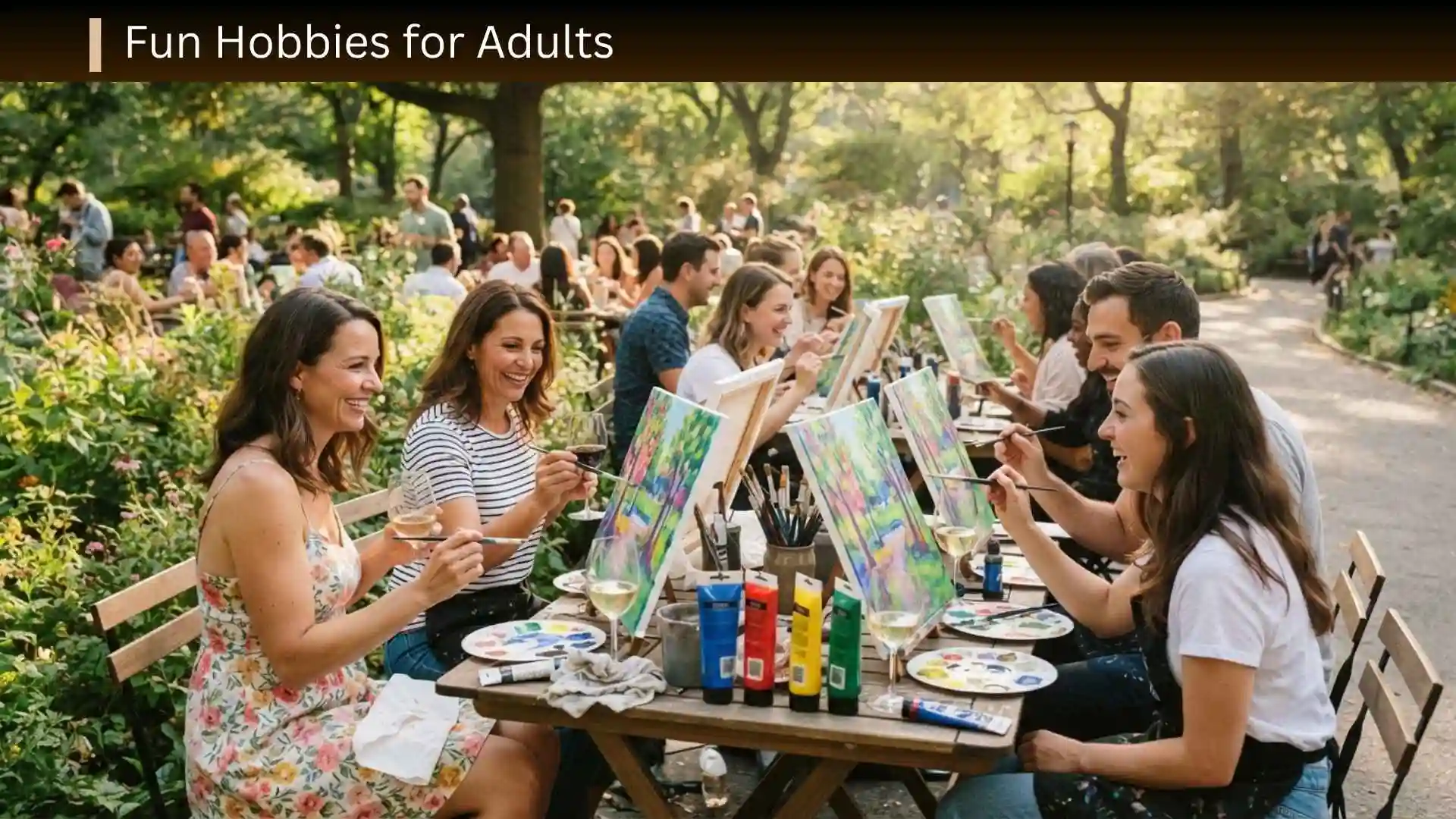
3. Painting
Painting provides plenty of room for experimentation. Acrylics are often a practical starting point because they are versatile and relatively straightforward to work with.
You do not need to produce professional artwork for painting to become an enjoyable hobby. Learning basic color mixing, shapes, shading, and composition can give beginners a clear path for improvement.
Best for: Creative beginners and visual learners
Starting cost: Low to moderate
4. Drawing and Sketching
Drawing requires relatively little equipment, making it one of the easiest creative hobbies to start. A pencil, eraser, and sketchbook can be enough.
You can practice portraits, landscapes, animals, objects, cartoons, or simple daily sketches.
Best for: People who want a portable, inexpensive creative hobby
5. Creative Writing
Creative writing can include short stories, poetry, personal essays, fictional characters, or even writing prompts.
If a blank page feels intimidating, start with short exercises rather than trying to write an entire book. Writing for 10–15 minutes at a time can help you develop consistency.
Best for: People who enjoy ideas, storytelling, and language
6. Cooking
Cooking is both a hobby and a practical life skill. Instead of repeatedly preparing the same meals, choose a specific area to explore, such as baking, international cuisines, homemade sauces, vegetarian cooking, or bread making.
A themed approach can make learning more interesting and give you a reason to try new techniques.
Best for: Adults who enjoy experimenting and creating something useful
7. Baking
Baking is particularly appealing if you enjoy following processes and working toward a finished result. Cookies, cakes, breads, pies, and pastries offer different levels of difficulty.
Once you understand basic techniques, you can begin modifying recipes and developing your own variations.
Best for: Detail-oriented and creative people
8. Learning an Instrument
Learning guitar, piano, keyboard, ukulele, drums, or another instrument can become a long-term hobby with a clear sense of progression.
Adults do not need to become professional musicians. Learning a few favorite songs can provide an achievable starting goal.
Best for: Music lovers who enjoy structured practice
9. Singing
Singing can be practiced privately at home or developed through lessons, choirs, or community groups.
You can focus on singing for enjoyment, learning songs, improving vocal technique, or eventually performing for others.
Best for: Music lovers who prefer using their voice rather than an instrument
10. Dancing
Dancing combines movement, music, and skill development. Options range from ballroom and salsa to hip-hop, swing, contemporary dance, and line dancing.
Classes can also make dancing a social hobby, while online lessons provide a more private way to learn.
Best for: People who want an active and potentially social hobby
11. Hiking
Hiking is a simple way to turn outdoor exploration into a regular hobby. Trails can range from easy local walks to more challenging mountain routes.
Beginners should choose routes appropriate for their fitness, experience, weather conditions, and available equipment.
Best for: Adults who enjoy nature and exploration
12. Cycling
Cycling can be approached casually or more seriously. You might ride around your neighborhood, explore local trails, commute by bike, or gradually work toward longer recreational rides.
The main consideration is having a suitable bike and safe places to ride.
Best for: People who enjoy outdoor movement and exploration
13. Walking and Urban Exploring
You do not need a demanding exercise routine to make walking a hobby. Try exploring different neighborhoods, parks, waterfronts, historic areas, or interesting local streets.
Photography can easily be combined with this hobby.
Best for: Beginners who want a simple, flexible outdoor activity
14. Birdwatching
Birdwatching encourages you to pay attention to wildlife and your surroundings. You can begin by identifying birds in a local park or even around your home.
A field guide or identification app can help beginners learn species more easily.
Best for: Nature lovers and patient observers
15. Fishing
Fishing offers a slower-paced outdoor hobby that can involve learning about equipment, locations, techniques, and local species.
Before fishing, check local regulations and licensing requirements because rules vary by location.
Best for: People who enjoy being outdoors and taking their time
16. Camping
Camping can range from a comfortable campground stay to more minimalist outdoor experiences.
Beginners can start with established campgrounds and short overnight trips rather than immediately attempting complicated backcountry adventures.
Best for: Adults who enjoy nature, travel, and outdoor skills
17. Reading
Reading remains one of the most accessible hobbies because you can choose almost any subject or genre.
Try fiction, biographies, history, science, business, mysteries, fantasy, or nonfiction based on your interests. Libraries can also make reading an inexpensive hobby.
Best for: People who prefer quiet, flexible activities
18. Journaling
Journaling can take many forms. You can keep a daily diary, record ideas, write reflections, track goals, or maintain a simple gratitude journal.
There is no requirement to write lengthy entries. A few sentences can be enough.
Best for: Adults who enjoy writing and reflection
19. Puzzles
Jigsaw puzzles, crossword puzzles, logic puzzles, and other puzzle formats provide different types of mental challenges.
They are especially convenient for people who want a hobby they can do in short sessions.
Best for: People who enjoy problem-solving and quiet activities
20. Board Games
Board games range from quick casual games to complex strategy games. Playing with friends or family can turn the hobby into a regular social activity.
You can choose cooperative games if you prefer working together rather than competing.
Best for: Social adults and strategy enthusiasts
21. Chess
Chess offers a hobby with a substantial learning curve. Beginners can start by learning the rules, basic tactics, opening principles, and simple endgames.
You can play online, with friends, or at local chess clubs.
Best for: People who enjoy strategy and analytical challenges
22. Knitting or Crochet
Knitting and crochet are hands-on crafts that allow you to create useful or decorative items such as scarves, blankets, hats, and accessories.
They can be learned gradually, starting with basic stitches before moving to more complicated patterns.
Best for: Adults who enjoy repetitive, hands-on creative work
23. Sewing
Sewing can start with simple repairs and gradually develop into garment making, quilting, or home projects.
Learning basic stitches, fabric selection, measuring, and machine operation provides a foundation for more advanced projects.
Best for: Practical and creative people
24. Woodworking
Woodworking can range from small beginner projects to advanced furniture construction.
If you are new to the hobby, start with simple projects and learn proper tool handling before moving to more complex work. Eye protection and appropriate safety practices are important when using woodworking tools.
Best for: Adults who enjoy building physical objects
25. Pottery and Ceramics
Working with clay offers a tactile creative experience. Depending on the facilities available, you can make bowls, mugs, sculptures, decorative pieces, or other objects.
Community studios and classes can be useful because ceramics often requires specialized equipment.
Best for: People who enjoy hands-on art
26. Calligraphy and Hand Lettering
Calligraphy combines writing with visual design. You can begin with basic lettering exercises and gradually experiment with different styles and layouts.
It can also complement other hobbies such as journaling, card making, and illustration.
Best for: Detail-oriented creative adults
27. Model Building
Model building includes activities such as assembling scale models, miniature scenes, vehicles, aircraft, ships, or other detailed projects.
It can be particularly satisfying if you enjoy working slowly and paying attention to small details.
Best for: Patient hobbyists who enjoy detailed projects
28. Collecting
Collecting can be built around almost any subject that genuinely interests you, including books, postcards, coins, vinyl records, sports memorabilia, art prints, or vintage objects.
A good collection does not have to be expensive. The enjoyment can come from researching, organizing, and finding interesting pieces.
Best for: Curious people who enjoy research and discovery
29. Learning a Language
Learning a new language can be approached as a long-term hobby rather than a race toward fluency.
You can combine apps, books, podcasts, conversation practice, movies, music, and cultural content. Setting small goals makes the process easier to maintain.
Best for: Adults who enjoy learning and exploring other cultures
30. Home DIY Projects
DIY can turn practical household tasks into a hobby. Painting furniture, organizing spaces, building shelves, decorating rooms, or repairing simple items can provide useful projects with tangible results.
Start with projects that match your existing skills and use appropriate safety precautions for tools and materials.
Best for: Hands-on people who like practical results
31. Volunteering
Volunteering can become a meaningful hobby when you regularly contribute time to a cause or organization you care about.
Possible activities include helping at community organizations, animal shelters, libraries, environmental projects, or local events.
Best for: Adults looking for a social activity with a community focus
32. Stargazing
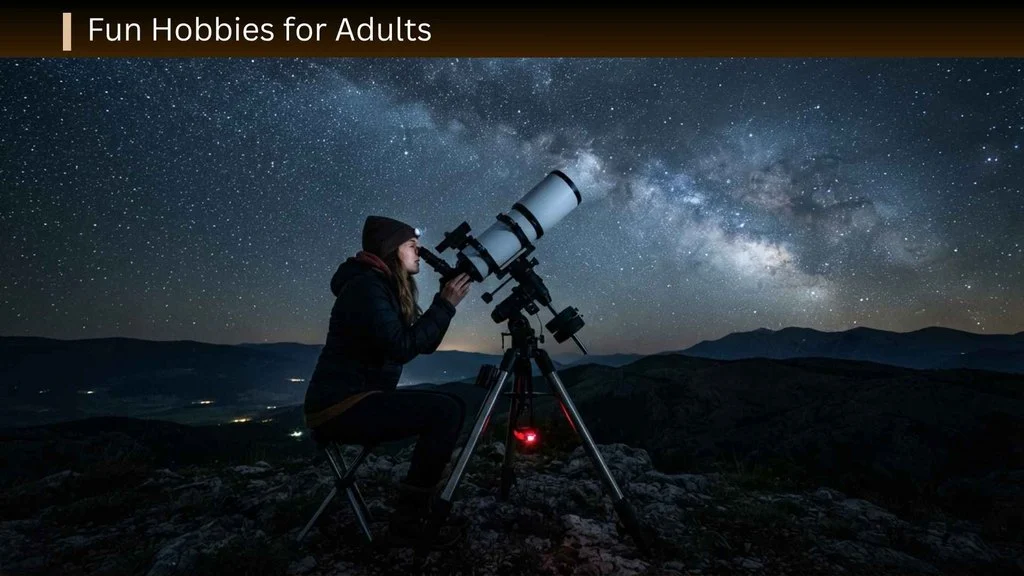
Stargazing encourages you to learn about the night sky, planets, constellations, and astronomical events.
You can begin without expensive equipment by learning to recognize prominent objects in the sky. A telescope or binoculars can be added later if your interest grows.
Best for: Curious adults who enjoy science and quiet outdoor activities
33. Geocaching
Geocaching combines outdoor exploration with a location-based treasure-hunting concept. Participants use GPS-enabled devices to locate hidden containers and follow clues.
It can make ordinary walks more engaging and can be enjoyed individually or with friends.
Best for: Adults who enjoy exploration, puzzles, and outdoor activities
34. Home Brewing and Specialty Beverages
Adults interested in food and beverages can explore coffee brewing, tea preparation, homemade syrups, mocktails, or other specialty beverage techniques.
Coffee and tea are particularly accessible because you can experiment with preparation methods, ingredients, and equipment without turning the hobby into a major project.
Best for: People who enjoy experimentation and sensory hobbies
35. DIY Photography Walks
A photography walk combines two hobbies: walking and photography. Pick an area, choose a theme, and photograph things that fit it.
For example, you could focus on interesting doors, architecture, shadows, local businesses, nature, or unusual textures.
Best for: Adults who want a hobby that gets them out of the house without requiring a complicated plan
How to Choose the Right Hobby

With dozens of possibilities, the biggest challenge may be deciding where to start. Instead of asking which hobby is objectively the best, ask which one fits your current lifestyle.
Choose Based on Your Energy Level
If you want something calming after work, consider reading, journaling, puzzles, drawing, knitting, or stargazing.
If you want movement, consider hiking, cycling, dancing, walking, or another active outdoor hobby.
Consider Your Budget
Some hobbies can begin with items you already own. Reading through a library, smartphone photography, walking, writing, and sketching can require little initial spending.
Other hobbies can become more expensive because of equipment, materials, classes, or specialized facilities.
A useful approach is to set a small starting budget and avoid buying advanced equipment until you know you enjoy the activity.
Think About Your Available Space
A small apartment may make large woodworking projects impractical, while reading, drawing, photography, language learning, cooking, or knitting can fit into limited spaces.
Your available space should influence your choice rather than becoming an obstacle.
Decide Whether You Want a Social or Solo Hobby
If you want to meet people, consider dancing, volunteering, board games, community classes, hiking groups, or clubs.
If you prefer independent activities, photography, reading, writing, gardening, drawing, puzzles, and language learning can be done mostly on your own.
Consider Whether You Want a Skill-Based Hobby
Some hobbies are primarily recreational, while others give you a skill you can continue developing.
If progression motivates you, consider photography, musical instruments, cooking, woodworking, painting, chess, sewing, or learning a language.
These hobbies provide natural milestones as your abilities improve.
Best Fun Hobbies for Adults by Goal
| If you want… | Good options |
| A low-cost hobby | Reading, walking, drawing, writing, journaling |
| A creative hobby | Painting, photography, pottery, sewing, creative writing |
| An active hobby | Hiking, cycling, dancing, walking |
| A social hobby | Board games, volunteering, dancing, clubs, group classes |
| A relaxing hobby | Reading, gardening, knitting, puzzles, stargazing |
| An outdoor hobby | Hiking, birdwatching, fishing, camping, photography |
| A practical hobby | Cooking, baking, sewing, DIY, gardening |
| A skill-building hobby | Music, language learning, chess, photography, woodworking |
| A hobby for small spaces | Reading, drawing, writing, knitting, language learning |
| A hobby you can start cheaply | Walking, reading, journaling, sketching, smartphone photography |
How to Start a New Hobby Without Overcomplicating It

The easiest way to abandon a hobby is to turn it into a major project before you have even started.
Choose one activity and create a very small first step.
For example:
- Photography: Take 10 photos around your neighborhood.
- Drawing: Fill one page with simple sketches.
- Cooking: Learn one unfamiliar recipe.
- Gardening: Start with one or two plants.
- Reading: Choose one book rather than creating an enormous reading list.
- Hiking: Find an easy local trail.
- Music: Learn the basic chords or notes on an instrument.
- Language learning: Practice for 10 minutes a day.
- Writing: Write 300 words about any topic.
- Knitting or crochet: Learn one basic stitch.
After a few sessions, you will have a better idea of whether the hobby genuinely interests you.
Should You Have More Than One Hobby?
Absolutely. Different hobbies can serve different purposes.
For example, you might choose:
- One creative hobby for self-expression
- One active hobby for movement
- One quiet hobby for downtime
- One social hobby for connecting with people
You do not need to pursue all of them equally. A hobby should fit into your life rather than create another source of pressure.
How to Know When a Hobby Is Right for You
A promising hobby usually has at least one of these qualities:
- You are curious enough to keep learning.
- You enjoy the activity itself, not only the finished result.
- You can fit it into your schedule.
- The starting cost is reasonable for you.
- You have enough space or access to the necessary facilities.
- You look forward to doing it again.
- You can see yourself improving without feeling pressured.
You also do not have to stick with a hobby simply because you invested money in it. If an activity consistently feels like a chore, it may simply not be the right hobby for you.
Frequently Asked Questions
What are the most fun hobbies for adults?
Popular options include photography, cooking, gardening, hiking, painting, reading, dancing, music, board games, creative writing, cycling, and crafting. The best choice depends on whether you want something active, creative, social, relaxing, or skill-based.
What is a good hobby for an adult with little free time?
Choose an activity that can be done in short sessions. Reading, drawing, journaling, photography, puzzles, language learning, and cooking can often be adapted to the amount of time you have available.
What are some fun hobbies that do not cost much money?
Walking, reading through a library, journaling, drawing with basic supplies, creative writing, smartphone photography, and exploring local parks can be inexpensive ways to start.
What hobbies are good for meeting new people?
Dancing, volunteering, board games, hiking groups, community classes, music groups, and hobby clubs can provide natural opportunities to interact with other people.
What is a good hobby for someone who gets bored easily?
Choose a hobby with multiple directions for learning. Photography, cooking, gardening, music, language learning, woodworking, and collecting can continually introduce new subjects, techniques, or projects.
Can a hobby become a side-income opportunity?
Some hobbies can potentially be monetized, including photography, writing, crafting, baking, woodworking, teaching skills, and creating digital work. However, income is not guaranteed and depends on factors such as skill, demand, pricing, competition, marketing, and consistency.
How do I choose a hobby if I do not know what I like?
Start with your existing interests. Think about whether you prefer creating, learning, moving, collecting, exploring, solving problems, spending time outdoors, or socializing. Then try two or three inexpensive activities for a short period before investing heavily in equipment.
Conclusion
The best fun hobbies for adults are the ones that fit naturally into your interests, schedule, budget, and lifestyle. You could choose a creative activity such as painting or photography, an outdoor option such as hiking or birdwatching, a practical hobby such as cooking or gardening, or a quiet pursuit such as reading or puzzles.
You do not need to find the perfect hobby immediately. Start small, give one activity a fair trial, and pay attention to whether you genuinely enjoy the process. If it does not suit you, try something else. The goal is to find an activity that makes your free time more rewarding not another obligation to manage.

I’m Olivia Bennett, a passionate writer who loves exploring ideas, learning new concepts, and sharing knowledge in a straightforward way. I write for Cognivoora with the goal of making useful topics easier to understand without unnecessary complexity. My approach combines research, clarity, and a reader-first perspective.
Books:
- Think Clearly, Live Better
- The Curious Reader’s Guide