
Finding enjoyable indoor hobbies for women can make time at home more rewarding, whether you want to learn a skill, express your creativity, relax after work, stay mentally active, or simply try something different.
The best indoor hobby does not have to be expensive or complicated. Some require little more than a notebook and a few minutes of free time, while others can grow into serious creative skills. From painting and reading to baking, gardening, crafting, music, and puzzles, there are options for nearly every interest and lifestyle.
What Are the Best Indoor Hobbies for Women?
The best indoor hobbies depend on what you want from your free time. Creative hobbies such as painting, crochet, pottery, and jewelry making are good for self-expression. Relaxing hobbies such as reading, coloring, journaling, and puzzles can provide a slower-paced activity. Skill-building hobbies such as learning a language, playing an instrument, photography, or coding can turn free time into an opportunity to learn.
Here are 35 indoor hobbies worth considering:
- Reading
- Journaling
- Drawing
- Painting
- Adult coloring
- Calligraphy
- Hand lettering
- Crochet
- Knitting
- Embroidery
- Sewing
- Quilting
- Jewelry making
- Scrapbooking
- Paper crafts
- Origami
- Baking
- Cooking
- Cake decorating
- Indoor gardening
- Houseplant care
- Puzzles
- Board games
- Learning a musical instrument
- Singing
- Learning a new language
- Photography
- Creative writing
- DIY home projects
- Candle making
- Soap making
- Digital art
- Photography editing
- Genealogy
- Online learning
1. Reading
Reading is one of the easiest indoor hobbies to start because you can enjoy it almost anywhere at home.
You can explore fiction, biographies, mysteries, romance, science fiction, history, personal development, cookbooks, essays, or books about a subject you already enjoy.
Good for: Relaxation, learning, imagination, quiet evenings
Equipment: Books or an e-reader
Cost: Free to moderate, depending on how you obtain books
Difficulty: Easy
If buying every book is expensive, libraries and used bookstores can make reading a more affordable long-term hobby.
2. Journaling
Journaling can be as simple as writing a few sentences about your day. You can also turn it into a structured hobby with reading journals, gratitude lists, creative prompts, travel journals, goal tracking, or commonplace books.
There is no single correct way to journal. The appeal is that you can adapt the practice to your personality.
Good for: Reflection, creativity, organization
Equipment: Notebook and pen
Cost: Low
Difficulty: Easy
3. Drawing
Drawing is a flexible hobby that can start with a pencil and ordinary paper.
Beginners can practice basic shapes, shading, objects around the house, flowers, faces, animals, or simple illustrations. As your skills develop, you can explore sketching, portraiture, fashion illustration, comics, or realistic drawing.
Good for: Creativity and skill development
Equipment: Pencil, eraser, paper or sketchbook
Cost: Low to moderate
Difficulty: Beginner-friendly, but skill develops with practice
4. Painting
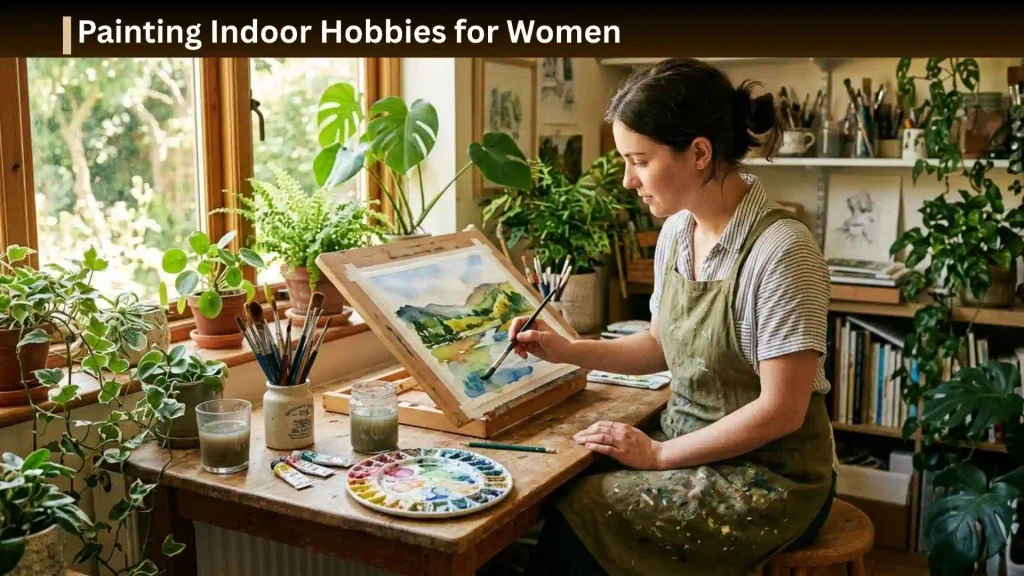
Painting offers more ways to experiment with color and texture than basic drawing.
You might try watercolor, acrylic, gouache, or oil painting. Watercolor can be convenient for small spaces because the setup is relatively compact, while acrylics are versatile for many beginner projects.
You do not need to begin with a large canvas. Small paintings can make learning less intimidating.
5. Adult Coloring
Adult coloring is a straightforward option if you want something creative without having to draw everything yourself.
Coloring books range from botanical illustrations and geometric patterns to animals, landscapes, and elaborate designs. Colored pencils, markers, or gel pens can provide different effects.
Good for: Quiet creative time
Equipment: Coloring book and coloring tools
Cost: Low
Difficulty: Very easy
6. Calligraphy
Calligraphy turns handwriting into a creative skill. You can explore traditional lettering styles, modern calligraphy, brush lettering, or decorative writing.
It can eventually become useful for handmade cards, invitations, signs, gift tags, and other paper projects.
A beginner can start with practice paper and an inexpensive pen rather than purchasing a large collection of specialized tools.
7. Hand Lettering
Hand lettering differs from ordinary handwriting because individual letters are deliberately designed and illustrated.
You can practice quotes, names, greeting cards, signs, or decorative headings. It also pairs naturally with journaling, scrapbooking, and card making.
8. Crochet
Crochet is a popular fiber craft that can be practiced indoors while listening to music or watching a show.
Beginners can start with simple projects such as dishcloths, scarves, small baskets, or basic blankets. Once you understand common stitches, you can move into amigurumi, garments, accessories, and more complicated patterns.
Good for: Creativity and hands-on crafting
Equipment: Crochet hook, yarn, scissors, and patterns
Cost: Low to moderate
Difficulty: Beginner-friendly with practice
9. Knitting
Knitting is another versatile fiber hobby.
You can make scarves, hats, sweaters, blankets, socks, and other useful objects. Knitting requires learning techniques such as casting on, knitting, purling, increasing, decreasing, and finishing.
Starting with a small project can help you learn without committing to a large time-consuming item.
10. Embroidery
Embroidery involves decorating fabric with thread using different stitches and patterns.
It can be an excellent small-space hobby because a basic project fits easily in a bag or drawer. You can embroider flowers, initials, landscapes, patterns, or original designs.
It also works well for customizing clothing, fabric accessories, and home decorations.
11. Sewing
Sewing can be both a creative and practical indoor hobby.
Beginners can learn to repair clothing, sew simple accessories, make pillows, or create basic garments. More advanced projects can include dresses, bags, quilts, costumes, and home furnishings.
A sewing machine is helpful for many projects, but hand sewing is enough to learn fundamental techniques and complete smaller projects.
12. Quilting
Quilting combines fabric selection, design, cutting, sewing, and composition.
It can be a particularly satisfying hobby for someone who enjoys detailed projects and wants to create something functional. Quilting does require more materials and workspace than some smaller crafts, so it is worth considering your available space before starting.
13. Jewelry Making
Jewelry making can involve beads, wire, charms, metal components, polymer clay, or other materials.
You can make earrings, bracelets, necklaces, rings, or decorative pieces. Beginners can start with simple bead-based designs before learning more advanced wirework or metalworking techniques.
Good for: Fashion, creativity, handmade gifts
Equipment: Depends on the jewelry style
Cost: Low to moderate
Difficulty: Easy to intermediate
14. Scrapbooking
Scrapbooking combines photographs, paper, stickers, writing, embellishments, and design.
It can be a meaningful way to preserve memories from vacations, family occasions, celebrations, or everyday moments. Digital scrapbooking is another option if you prefer working on a computer or tablet.
15. Paper Crafts
Paper crafting covers a broad range of activities, including handmade cards, paper flowers, paper cutting, collage, bookmarks, gift decorations, and paper models.
One advantage is that many projects can be completed with inexpensive supplies and little workspace.
16. Origami
Origami is the art of folding paper into decorative or functional forms.
You can begin with basic folds and gradually attempt animals, flowers, boxes, geometric shapes, and more complex models.
It is inexpensive, portable, and does not require a large collection of equipment.
17. Baking

Baking can turn an ordinary afternoon into a practical creative project.
You can explore cookies, breads, cakes, muffins, pies, pastries, and other baked goods. Beginners may want to start with reliable recipes containing familiar ingredients before attempting technically demanding pastries.
Baking can also become a way to learn about measurements, ingredients, temperatures, doughs, and food preparation.
18. Cooking
Cooking is both a hobby and a useful everyday skill.
Instead of simply making the same meals repeatedly, you can approach cooking as an exploration of cuisines, ingredients, techniques, sauces, breads, soups, vegetarian dishes, or homemade versions of restaurant favorites.
Keeping a personal recipe collection can make the hobby more organized.
19. Cake Decorating
Cake decorating adds an artistic component to baking.
You can learn piping, frosting techniques, simple decorations, fondant work, cupcake designs, and themed cakes. Start with basic piping rather than immediately attempting elaborate celebration cakes.
This hobby can eventually support birthdays, holidays, parties, and homemade gifts.
20. Indoor Gardening
Indoor gardening is a good choice if you enjoy plants but do not have access to a large outdoor garden.
Depending on your home environment, you can grow houseplants, herbs, small vegetables, succulents, or decorative plants.
The important thing is to choose plants according to the available light, temperature, space, and your willingness to maintain them.
21. Houseplant Care
You do not need dozens of plants to make plant care a hobby.
You can learn about watering, potting, propagation, pruning, lighting, soil, and plant identification. Keeping a simple plant journal can make the hobby more engaging by recording growth and care routines.
22. Puzzles
Jigsaw puzzles are an accessible indoor hobby that can be enjoyed alone or with family and friends.
You can choose landscapes, artwork, animals, architecture, maps, or abstract designs. If table space is limited, a puzzle board or portable puzzle mat can make storage easier.
23. Board Games
Board games can transform an indoor evening into a social hobby.
There are strategy games, cooperative games, party games, word games, card games, abstract games, and two-player games. Your ideal choice depends on whether you prefer competition, teamwork, storytelling, strategy, or casual entertainment.
24. Learning a Musical Instrument
Learning an instrument can provide a long-term skill-building hobby.
Piano, keyboard, guitar, ukulele, violin, and other instruments can be practiced indoors. Beginners should expect the first stages to involve basic coordination, rhythm, technique, and repetition.
Short, consistent practice sessions are often easier to maintain than occasional marathon sessions.
25. Singing
Singing can be practiced without purchasing a large amount of equipment.
You might sing for enjoyment, learn songs, practice vocal exercises, explore different musical styles, or participate in a choir or online music community.
If you want to develop technique, structured lessons can provide guidance on fundamentals such as breathing, pitch, rhythm, and vocal control.
26. Learning a New Language
Learning a language gives your indoor free time a clear educational purpose.
You can practice vocabulary, pronunciation, reading, writing, listening, and conversation. Movies, podcasts, books, music, flashcards, and language-learning apps can all become part of your routine.
Choosing one specific language and setting a manageable weekly goal can make the hobby easier to sustain.
27. Photography
Photography does not necessarily require expensive professional equipment.
A smartphone can be enough to explore composition, lighting, perspective, color, architecture, food photography, indoor still life, or portraits. Since the activity can be practiced inside, you can experiment with ordinary household objects and natural window light.
Photography can also lead naturally into photo editing.
28. Creative Writing
Creative writing allows you to create stories, poems, characters, essays, fictional worlds, or personal pieces.
You can begin with short exercises rather than attempting an entire novel. Writing prompts, character sketches, short stories, and poetry can help you discover which form you enjoy most.
29. DIY Home Projects
DIY projects can turn practical household improvements into a hobby.
Examples include simple decor, furniture refinishing, organization projects, wall art, storage solutions, or upcycling existing objects.
Always choose projects that match your tools, skill level, workspace, and safety requirements.
30. Candle Making
Candle making combines creativity with an interest in fragrance and home decor.
You can experiment with container candles, colors, scents, labels, and presentation. However, candle making involves hot wax and an open flame, so beginners should follow the safety instructions supplied with their materials and equipment.
31. Soap Making
Soap making can be an interesting craft for people who enjoy creating handmade products.
There are different soap-making methods, and they vary considerably in complexity and safety requirements. Beginners should understand the specific process and follow reliable instructions, particularly when working with ingredients that can cause chemical burns.
A simpler melt-and-pour approach can be easier for someone who wants to focus on design rather than the chemistry of making soap from scratch.
32. Digital Art
Digital art can be practiced on a tablet, computer, or compatible device.
You can explore illustration, character design, digital painting, graphic compositions, patterns, or simple animations. It is particularly useful if you prefer creating without storing physical art supplies.
33. Photo Editing
If you already enjoy photography, editing can become a hobby of its own.
You can learn cropping, exposure adjustments, color correction, retouching, composition, and creative effects. Working with your own photographs gives you a practical way to see how different adjustments affect an image.
34. Genealogy
Genealogy involves researching family history and organizing information about relatives and previous generations.
You can begin by interviewing relatives, reviewing family documents, organizing photographs, and building a family tree. Good research practices matter because family stories and online records can contain errors, so it is useful to distinguish documented information from family tradition or assumptions.
35. Online Learning
Online learning can turn an indoor hobby into a structured educational project.
You can study subjects such as art history, creative writing, design, cooking, languages, music, technology, history, business, or another topic that interests you.
The best approach is to choose a subject you genuinely want to understand rather than collecting courses without completing them.
How to Choose the Right Indoor Hobby
With so many options, the easiest way to narrow your choices is to decide what you want your hobby to provide.
| If you want… | Consider… |
| A relaxing activity | Reading, coloring, puzzles, journaling |
| Creative expression | Painting, drawing, digital art, writing |
| A practical skill | Cooking, baking, sewing, gardening |
| A hands-on craft | Crochet, knitting, embroidery, jewelry making |
| Social interaction | Board games, singing, online communities |
| Mental stimulation | Languages, puzzles, genealogy, learning |
| A low-cost hobby | Reading, drawing, journaling, origami |
| A long-term skill | Music, painting, sewing, photography |
| A hobby for small spaces | Journaling, crochet, embroidery, reading |
| A hobby that can produce gifts | Baking, jewelry, crafts, sewing |
Best Indoor Hobbies for Women on a Budget
You do not need to spend a lot of money to start a hobby.
Some inexpensive choices include:
- Reading through a library
- Journaling
- Drawing with basic pencils
- Origami
- Free writing
- Digital photography with a smartphone
- Walking through online educational resources
- Learning a language with free materials
- Puzzles you already own
- Simple paper crafts
- Basic hand embroidery
- Indoor plant propagation from existing plants
A useful strategy is to start with what you already have. Before buying a complete craft kit, try a small project and see whether you actually enjoy the activity.
Best Indoor Hobbies for Women Who Want to Relax
If your primary goal is to slow down, choose hobbies that do not feel like another obligation.
Reading, coloring, knitting, crochet, journaling, puzzles, embroidery, listening to music, and simple crafts can provide quiet alternatives to passive screen time.
The right hobby should fit naturally into your routine. A hobby that requires a complicated setup may be less appealing when you only have 20 minutes available.
Best Creative Indoor Hobbies
For women who enjoy making things, some of the strongest choices include:
- Painting
- Drawing
- Digital art
- Calligraphy
- Hand lettering
- Crochet
- Knitting
- Embroidery
- Sewing
- Jewelry making
- Scrapbooking
- Cake decorating
- Photography
- Creative writing
- Paper crafts
These hobbies also offer opportunities to develop a recognizable personal style over time.
Best Indoor Hobbies for Women Who Live Alone
Living alone can make solo hobbies particularly appealing.
Reading, cooking, baking, gardening, painting, photography, writing, puzzles, music, genealogy, and online learning can all be done independently.
If you want more social connection, consider hobbies that naturally include communities, such as book clubs, crafting groups, online gaming, language exchanges, music groups, or writing communities.
Best Indoor Hobbies for Women With Limited Free Time
If your schedule is busy, choose hobbies that can be divided into short sessions.
Good choices include:
- Journaling
- Reading
- Drawing
- Coloring
- Crochet
- Embroidery
- Language practice
- Puzzles
- Hand lettering
- Photography
- Creative writing
A hobby does not need to take hours to be worthwhile. Even a short, consistent session can help you make progress on a skill or creative project.
How to Start a New Indoor Hobby Without Getting Overwhelmed
Starting too ambitiously is one of the easiest ways to lose interest.
Start with one small project
Instead of deciding to become a painter, for example, choose one small painting to complete. If you enjoy the process, you can expand from there.
Avoid buying everything at once
Many hobbies have specialized equipment that beginners do not immediately need. Start with basic supplies and upgrade when you understand what you actually enjoy.
Give yourself permission to be a beginner
Your first project may not look the way you imagined. That is normal when learning a new skill.
The goal at the beginning is not perfection. It is discovering whether the activity is enjoyable enough to continue.
Choose a realistic routine
If you have limited free time, schedule a hobby once or twice a week rather than creating an unrealistic daily commitment.
Follow your curiosity
You do not have to choose a hobby because it is popular. If you are fascinated by genealogy, miniatures, baking bread, painting flowers, or learning guitar, that interest is a better reason to begin than trends.
Can Indoor Hobbies Become Creative Side Projects?
Yes. Some hobbies can eventually develop into creative projects or small businesses, although earning money should not be the primary reason to choose a hobby.
Depending on your skills and interests, possibilities can include:
- Handmade jewelry
- Artwork
- Greeting cards
- Crochet or knitted items
- Photography
- Custom baked goods where legally permitted
- Digital illustrations
- Writing
- Sewing projects
- Handmade home decor
If you eventually sell products or services, research applicable local rules, taxes, licensing, safety requirements, and platform policies before starting.
Indoor Hobbies vs. Outdoor Hobbies
Indoor and outdoor hobbies serve different preferences.
| Indoor hobbies | Outdoor hobbies |
| Usually less dependent on weather | Weather can affect plans |
| Convenient at home | Often involve travel or outdoor space |
| Good for small, regular sessions | Can encourage movement and exploration |
| Many require limited space | May require access to suitable locations |
| Often easier to practice year-round | Seasonal options can be important |
Neither category is automatically better. The best hobby is the one that fits your interests, schedule, environment, and energy level.
Frequently Asked Questions
What are some easy indoor hobbies for women?
Reading, journaling, adult coloring, drawing, puzzles, origami, photography, and simple crafts are easy options for beginners. Most can be started with inexpensive supplies and do not require extensive training.
What are the best indoor hobbies for women at home?
Some popular choices include painting, crochet, knitting, baking, cooking, reading, gardening, sewing, creative writing, photography, puzzles, and learning a musical instrument. The best choice depends on whether you want relaxation, creativity, social connection, or skill development.
What indoor hobbies can women do alone?
Almost any hobby can be practiced alone, including reading, writing, painting, drawing, crochet, knitting, sewing, baking, cooking, gardening, photography, puzzles, genealogy, and language learning.
What are some cheap indoor hobbies for women?
Reading through a library, journaling, drawing, origami, creative writing, photography with a smartphone, and learning from free educational resources can be inexpensive ways to start.
What is a good indoor hobby for someone who gets bored easily?
Choose a hobby with multiple levels or variations. Photography, cooking, painting, languages, music, crafts, and creative writing can remain interesting because there are always new techniques or projects to explore.
What indoor hobby can help develop a useful skill?
Cooking, baking, sewing, photography, language learning, music, digital art, writing, gardening, and DIY projects can all develop skills that extend beyond simple entertainment.
How do I choose an indoor hobby?
Start by identifying what you want from your free time. If you want relaxation, consider reading or coloring. If you want creativity, try painting or crafts. If you want practical skills, consider cooking, sewing, or gardening. If you want intellectual stimulation, try languages, genealogy, puzzles, or structured learning.
Conclusion
The best indoor hobbies for women are not necessarily the most complicated or expensive ones. A good hobby is simply an activity that fits your interests and gives you a reason to look forward to your free time.
If you want something relaxing, try reading, coloring, journaling, or puzzles. For creativity, explore painting, drawing, crochet, embroidery, jewelry making, or digital art. If you prefer practical skills, cooking, baking, sewing, gardening, and DIY projects are excellent places to start.
You also do not need to commit to one hobby forever. Try a small project, pay attention to what you enjoy, and allow your interests to change over time. The right indoor hobby can become a creative outlet, a useful skill, a social connection, or simply a satisfying way to spend an evening at home.

I’m James Anderson, a dedicated writer and lifelong learner who enjoys researching topics and explaining them in a practical way. Through my work at Cognivoora, I aim to give readers reliable, easy-to-follow information that helps them learn something new. I always try to keep my writing natural, useful, and focused on the questions readers actually have.
Books:
- A Practical Guide to Better Thinking
- Questions Worth Asking