
Finding the right hobby can give you something to look forward to, whether you want to relax after a busy day, explore your creativity, stay active, or simply spend more time doing something you genuinely enjoy. I believe a good hobby does not have to be expensive, complicated, or impressive, it just needs to make you feel happy and connected to yourself.
If you’re wondering which hobbies are actually worth trying, you’re in the right place. You can choose from creative activities like painting and crafting, relaxing hobbies like reading and gardening, active options like yoga and hiking, or practical skills such as cooking and photography. The key is finding something that fits your interests, lifestyle, time, and personality.
In this guide, I’ll help you explore a variety of good hobbies for women so you can discover an activity that feels enjoyable rather than like another task on your to-do list. You might even find a new passion you never expected.
Good Hobbies for Women
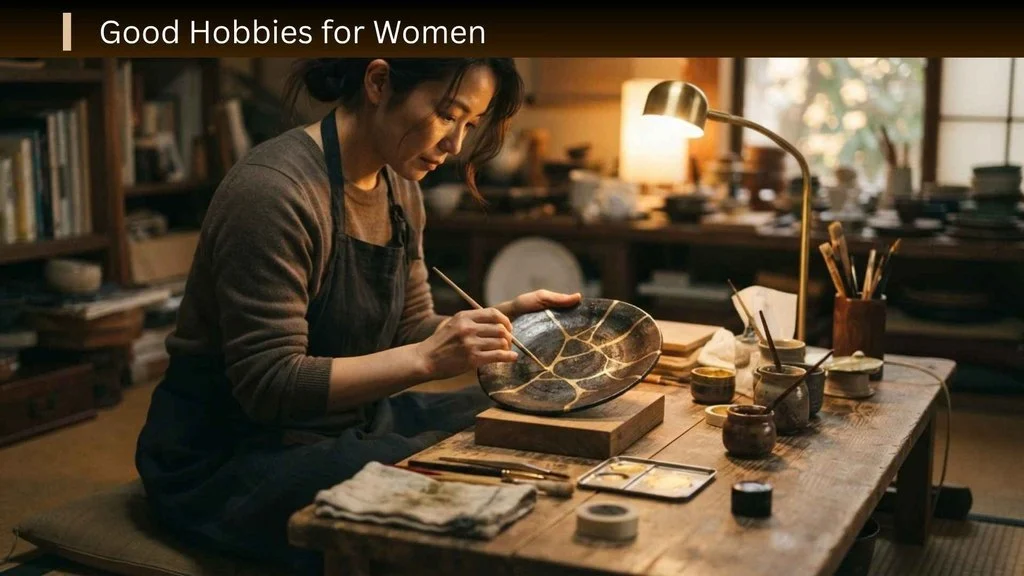
1. Reading
Reading is an accessible hobby with almost no learning curve. You can choose fiction, biographies, history, personal development, romance, mysteries, science fiction, or virtually any subject that interests you.
A library card, e-reader, or used bookstore can keep the cost low. If you struggle to make time for reading, start with 10–15 minutes a day rather than setting an ambitious reading goal.
Best for: Quiet evenings, solo time, learning, and relaxation
Starting cost: Low
2. Gardening
Gardening gives you a hands-on way to spend time outdoors while caring for living plants. You can grow flowers, herbs, vegetables, houseplants, or container gardens.
You do not need a large yard. A few containers on a balcony, patio, or sunny windowsill can be enough to begin.
Best for: Nature lovers and hands-on activities
Starting cost: Low to moderate
3. Photography
Photography can turn ordinary outings into opportunities to notice interesting details. You can begin with a smartphone instead of buying a dedicated camera.
As your skills develop, you might explore portrait photography, landscapes, street photography, food photography, wildlife, architecture, or macro photography.
Best for: Creative people who enjoy visual storytelling
Starting cost: Low if using a smartphone; potentially high with dedicated equipment
4. Painting
Painting offers plenty of room for experimentation. Watercolor, acrylic, and oil painting each have different characteristics and techniques.
Beginners can start with a small canvas or watercolor pad and a basic set of supplies rather than purchasing a large collection of materials.
Best for: Creative expression and focused solo time
Starting cost: Low to moderate
5. Drawing and Sketching
Drawing is particularly easy to start because you need little more than paper and a pencil. You can practice portraits, landscapes, fashion sketches, botanical illustrations, cartoons, or everyday objects.
Regular practice matters more than expensive equipment.
Best for: Beginners who want a simple creative hobby
Starting cost: Very low
6. Journaling
Journaling can take many forms. You might keep a traditional diary, gratitude journal, reading journal, travel journal, idea notebook, or creative journal.
The important thing is to choose a format you will actually use. You do not need elaborate stationery or a complicated system.
Best for: Reflection, writing, organization, and creativity
Starting cost: Low
7. Writing
Writing can become a hobby without requiring you to publish anything. You could write short stories, poetry, personal essays, fictional characters, travel memories, or simply keep a collection of ideas.
If you enjoy storytelling, writing can also develop communication and creative skills over time.
Best for: People who enjoy words and imagination
Starting cost: Very low
8. Knitting
Knitting combines creativity with a repetitive physical process. Once you learn the basic stitches, you can progress from simple scarves and dishcloths to sweaters, hats, blankets, and more complex designs.
It can be especially appealing if you enjoy hobbies where you can see tangible progress.
Best for: Craft lovers and people who enjoy making useful objects
Starting cost: Low to moderate
9. Crocheting
Crochet is another fiber craft that can be learned through basic stitches and gradually expanded into more complicated projects.
You can make blankets, accessories, decorations, clothing, toys, and gifts. Small projects are useful for learning without committing to a large time investment.
Best for: Creative, hands-on hobbyists
Starting cost: Low
10. Sewing
Sewing can range from simple hand-sewing projects to using a sewing machine for clothing and home décor.
A beginner might start by repairing clothes, making simple bags, or altering garments before moving into more advanced projects.
Best for: Practical creativity and making or modifying clothing
Starting cost: Low to high, depending on equipment
11. Embroidery
Embroidery is a portable craft that can be practiced with relatively little equipment. You can decorate clothing, fabric, wall art, bags, or gifts.
Because many projects are small, embroidery can work well when you want a hobby that does not require a dedicated workspace.
Best for: Detail-oriented crafters
Starting cost: Low
12. Pottery and Ceramics
Working with clay provides a very different creative experience from drawing or painting. You can make bowls, mugs, vases, sculptures, and decorative pieces.
Because ceramics often require specialized equipment such as a kiln, beginners may find it easier to start through a local studio or class.
Best for: Hands-on creativity and people who enjoy three-dimensional projects
Starting cost: Moderate to high
13. Baking
Baking can be both creative and practical. You can begin with simple breads, cookies, muffins, cakes, or pastries and gradually learn more technical methods.
If you already have basic kitchen equipment, experimenting with new recipes can be relatively inexpensive.
Best for: Food lovers and people who enjoy sharing what they make
Starting cost: Low to moderate
14. Cooking New Cuisines
Instead of simply cooking familiar meals, turn cooking into a learning hobby by exploring cuisines you have not prepared before.
You could choose a different cuisine each month and learn about its ingredients, techniques, and traditional dishes.
Best for: Curious food lovers
Starting cost: Low to moderate
15. Home Coffee Brewing
Coffee can become a surprisingly detailed hobby. You can explore brewing methods, grind size, beans, water, and preparation techniques.
You do not need expensive equipment at first. Begin with one brewing method and learn how small changes affect the result.
Best for: People who enjoy rituals, experimentation, and coffee
Starting cost: Low to moderate
16. Yoga
Yoga can be practiced at home, in a studio, or in a class. It combines movement with balance, flexibility, coordination, and controlled breathing.
Beginners should choose an appropriate level and avoid forcing movements beyond their current ability.
Best for: People looking for a movement-based hobby
Starting cost: Low to moderate
17. Dancing
Dancing can be both a physical activity and a creative pursuit. Options range from ballroom and salsa to hip-hop, contemporary, ballet, and other styles.
Taking a beginner class can provide structure, while online lessons may offer a convenient option for practicing at home.
Best for: Active people who enjoy music and movement
Starting cost: Low to moderate
18. Hiking
Hiking combines exercise, exploration, and time outdoors. The activity can be adapted to different experience levels by choosing trails according to distance, terrain, weather, and personal ability.
For beginners, a short, well-established trail is usually a more practical starting point than an ambitious route.
Best for: Outdoor enthusiasts and people who enjoy exploring
Starting cost: Low to moderate
19. Birdwatching
Birdwatching encourages you to slow down and observe your surroundings. You can begin by learning to identify common birds in your local area.
A smartphone can be enough to get started, although binoculars can make distant birds easier to observe.
Best for: Nature lovers and patient observers
Starting cost: Low to moderate
20. Cycling
Cycling can be a recreational hobby, a way to explore your community, or a more structured activity involving longer rides.
Choose equipment appropriate for where and how you intend to ride, and use suitable safety equipment and local cycling practices.
Best for: Outdoor recreation and active exploration
Starting cost: Moderate
21. Swimming
Swimming can be both recreational and skill-based. You can practice technique, join a class, swim casually, or work toward longer distances.
For adults who never learned to swim confidently, structured instruction can be a useful way to develop basic skills.
Best for: People who enjoy water-based activities
Starting cost: Low to moderate, depending on facility access
22. Learning a New Language
Learning a language can turn spare time into an ongoing intellectual project. You can combine apps, books, audio lessons, conversation practice, and media in the language you are learning.
Choose a language connected to a genuine interest—such as travel, family connections, literature, or culture—to make sustained practice easier.
Best for: Lifelong learners and culturally curious people
Starting cost: Low to moderate
23. Playing a Musical Instrument
You could learn piano, guitar, ukulele, violin, drums, or another instrument that interests you.
The best choice is usually the instrument you are genuinely excited to practice. Beginners can start with basic lessons and short practice sessions rather than expecting rapid progress.
Best for: Music lovers and people who enjoy skill-building
Starting cost: Low to high
24. Singing
Singing does not require you to perform publicly. You can sing for personal enjoyment, join a choir, take lessons, or practice vocal techniques privately.
A structured class may be useful if you want to develop technique rather than simply sing recreationally.
Best for: Music lovers and expressive personalities
Starting cost: Low
25. Puzzles
Jigsaw puzzles, crosswords, logic puzzles, Sudoku, and similar activities offer different kinds of mental challenges.
Puzzles are also convenient when you want a hobby that can be done in short sessions without extensive preparation.
Best for: Quiet evenings and problem-solving
Starting cost: Low
26. Chess
Chess provides a structured way to develop strategic thinking and pattern recognition. You can play casually, study openings and tactics, or participate in clubs and competitions.
Online platforms also make it possible to practice against different skill levels.
Best for: Competitive thinkers and strategy enthusiasts
Starting cost: Very low
27. Calligraphy and Hand Lettering
Calligraphy focuses on lettering technique, while hand lettering allows more freedom in designing letters and words.
It can be used for cards, journals, artwork, invitations, signs, or decorative projects.
Best for: People who enjoy typography and detailed creative work
Starting cost: Low
28. Scrapbooking
Scrapbooking gives you a way to preserve photographs, tickets, notes, and other memories in a creative format.
Digital scrapbooking is another option if you prefer working on a computer rather than collecting physical supplies.
Best for: Memory keepers and creative organizers
Starting cost: Low to moderate
29. Volunteering
Volunteering can function as a meaningful hobby when you consistently participate in a cause or organization you care about.
Possible areas include animal welfare, environmental projects, libraries, community programs, food assistance, mentoring, and cultural organizations.
Best for: People who want their free time to contribute to their community
Starting cost: Usually low
30. Thrifting and Upcycling
Thrifting can become a hobby focused on finding interesting clothing, furniture, books, décor, or collectibles. Upcycling takes the idea further by modifying or repurposing something rather than simply purchasing it.
This hobby can combine shopping, creativity, restoration, and personal style.
Best for: Creative bargain hunters and DIY enthusiasts
Starting cost: Low to moderate
31. Interior Decorating
Interior decorating can be explored without renovating an entire home. You might experiment with furniture layouts, lighting, color combinations, textiles, plants, or small decorative projects.
Creating mood boards is an inexpensive way to develop your ideas before buying anything.
Best for: People interested in design and visual organization
Starting cost: Low for planning; potentially high for projects
32. Travel Planning
You do not need to travel constantly to enjoy travel planning as a hobby. Researching destinations, building itineraries, comparing transportation options, learning about local customs, and finding interesting attractions can become an enjoyable project in itself.
It can also improve the quality of future trips by encouraging more thoughtful planning.
Best for: Curious people who enjoy research and exploration
Starting cost: Very low
33. Genealogy
Genealogy involves researching family history and building a record of family relationships and historical information.
It can become a long-term project because each discovery may lead to another person, place, document, or historical period to investigate.
Best for: Researchers and people interested in family history
Starting cost: Low to moderate
34. Collecting
Collecting can revolve around almost anything: books, postcards, stamps, vintage objects, art prints, coins, records, plants, or other items.
A good collection has a clear personal reason behind it. Setting a budget and deciding what qualifies for your collection can help prevent unnecessary spending.
Best for: People who enjoy discovery, organization, and niche interests
Starting cost: Low to potentially high
35. DIY Home Projects
DIY projects can turn practical household tasks into a creative hobby. Depending on your skills and equipment, you might make decorations, organize storage, restore furniture, or complete simple home improvements.
For projects involving electrical systems, structural work, hazardous materials, or specialized tools, use appropriate professional guidance rather than treating them as casual beginner projects.
Best for: Practical, hands-on people
Starting cost: Low to high
Which Hobby Is Best for You?
The best hobby is usually the one that matches what you want from your free time, not simply the activity that sounds impressive.
Use these questions to narrow your choices:
| If you want to… | Consider… |
| Make something | Painting, sewing, crochet, pottery, woodworking, embroidery |
| Stay active | Hiking, dancing, cycling, swimming, yoga |
| Relax alone | Reading, journaling, puzzles, drawing, gardening |
| Meet people | Dancing, volunteering, book clubs, sports, classes |
| Learn a skill | Music, languages, photography, cooking, chess |
| Spend time outdoors | Gardening, hiking, birdwatching, cycling |
| Preserve memories | Scrapbooking, photography, genealogy |
| Explore creativity | Writing, painting, photography, calligraphy |
| Keep costs low | Reading, writing, drawing, journaling, walking |
| Have a long-term project | Gardening, genealogy, collecting, learning an instrument |
This approach is more useful than choosing a hobby based solely on whether it is currently popular.
Good Hobbies for Women Who Prefer Solo Activities

If you enjoy having time to yourself, consider hobbies that allow you to control the pace and environment.
Some strong choices include:
- Reading
- Writing
- Drawing
- Painting
- Gardening
- Photography
- Journaling
- Knitting
- Crochet
- Puzzles
- Baking
- Learning a language
- Playing an instrument
- Genealogy
Solo does not have to mean isolated. Many of these hobbies also have optional communities, classes, clubs, and online groups if you eventually want to connect with others who share the same interest.
Good Hobbies for Women Who Want to Meet People
If your main goal is social connection, choose an activity where interaction naturally happens rather than trying to force socializing around a solitary hobby.
Good options include:
- Dance classes
- Choirs
- Book clubs
- Volunteer organizations
- Recreational sports
- Art classes
- Pottery classes
- Language groups
- Hiking groups
- Craft groups
A class-based hobby can be particularly useful because the activity itself gives people something to talk about, reducing the pressure to start conversations from scratch.
Good Low Cost Hobbies to Start
You do not need to spend hundreds of dollars to develop a worthwhile hobby.
Some inexpensive starting points include:
- Reading — Use a public library or borrow books.
- Walking — Explore local parks or routes.
- Writing — Use a notebook or existing digital device.
- Drawing — Start with ordinary paper and pencils.
- Photography — Use your smartphone.
- Journaling — Keep a simple notebook.
- Birdwatching — Begin by observing common local species.
- Cooking — Learn new techniques using ingredients you already buy.
- Language learning — Combine free resources with regular practice.
- Puzzles — Start with free digital or borrowed puzzles.
Starting cheaply also gives you a chance to determine whether you actually enjoy an activity before investing more money.
How to Start a New Hobby Without Giving Up
A common mistake is making a new hobby unnecessarily complicated.
Instead, try this approach:
Start with one activity
Do not buy supplies for five different hobbies at once. Choose one activity that genuinely interests you.
Set a small first goal
Your first goal could be reading one book, completing one drawing, baking one recipe, attending one class, or taking one short hike.
Keep the schedule realistic
A hobby does not need to take hours every day. Even a short, regular session can help you build familiarity with an activity.
Delay expensive purchases
Use basic equipment until you understand what you actually need. This is especially useful for hobbies such as photography, sewing, cycling, music, and crafts.
Allow yourself to be a beginner
You are not supposed to be good at a new hobby immediately. Early mistakes are part of learning, particularly with creative and technical activities.
Notice what you look forward to
After several sessions, ask yourself whether you feel curious about doing it again. Genuine interest is a stronger reason to continue than simply having purchased the necessary equipment.
How to Choose Between Similar Hobbies
Sometimes several hobbies sound appealing, so compare them according to practical factors.
For example, if you want a creative hobby:
Drawing is inexpensive and portable.
Painting provides more opportunities to work with color and different materials.
Photography lets you combine creativity with exploration.
Sewing can produce practical items while developing a technical skill.
Pottery provides a hands-on, three-dimensional experience but usually requires access to specialized equipment.
The “best” choice depends on whether you value portability, cost, social interaction, practical results, or creative freedom.
Should a Hobby Be Productive?
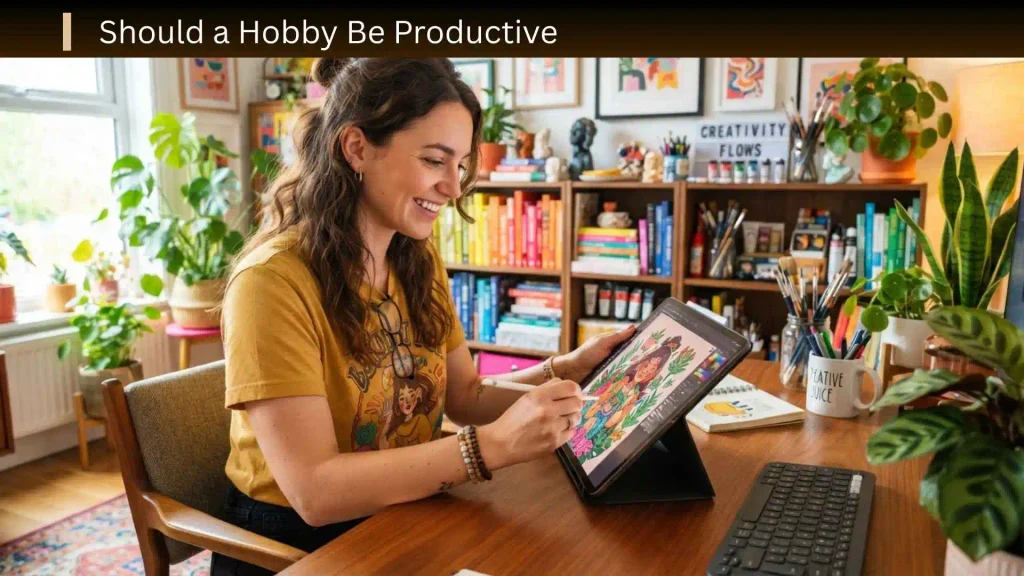
Not necessarily.
A hobby can teach you a valuable skill, produce something useful, support physical activity, or simply provide enjoyable free time. There is no requirement that every leisure activity become productive, monetized, or professionally useful.
If you enjoy making bread, reading mysteries, collecting postcards, painting landscapes, or solving puzzles, the activity can be worthwhile simply because you enjoy doing it.
Likewise, you do not need to turn every creative skill into a business. Keeping an activity recreational can be a perfectly good choice.
When a Hobby Can Become More Than a Hobby
Some hobbies can eventually develop into skills, social activities, or even potential income opportunities. Examples include:
- Photography
- Baking
- Sewing
- Painting
- Writing
- Graphic design
- Crafting
- Music
- Gardening
- Teaching a skill
However, monetizing a hobby changes the experience. Once customers, deadlines, pricing, marketing, and business responsibilities become involved, the activity may feel less like leisure.
If you want to explore income potential, start by developing the underlying skill first rather than assuming that every hobby will become a profitable business.
Frequently Asked Questions
What are the best hobbies for women?
There is no single best hobby for all women. Good choices include reading, gardening, photography, painting, writing, cooking, dancing, hiking, sewing, learning languages, playing music, volunteering, and many other activities. The best option depends on your interests, budget, available time, and preferred level of social interaction.
What is a good hobby for a woman who is bored at home?
Reading, painting, drawing, journaling, baking, cooking, knitting, crochet, puzzles, learning a language, playing an instrument, photography, and indoor gardening are all practical options. Choose based on whether you want something creative, educational, relaxing, or hands-on.
What are some inexpensive hobbies for women?
Reading, writing, drawing, walking, journaling, photography with a smartphone, birdwatching, language learning, and free online learning can all be started with little money. Libraries and community resources can also reduce the cost of learning.
What hobbies are good for meeting new people?
Dance classes, book clubs, volunteering, recreational sports, hiking groups, art classes, pottery workshops, choirs, and language groups naturally create opportunities to interact with other people.
What is a good hobby for someone who wants to be creative?
Painting, drawing, photography, writing, sewing, embroidery, crochet, pottery, calligraphy, scrapbooking, and DIY projects are strong choices. Consider whether you prefer visual art, writing, crafts, or practical projects.
Can a hobby become a side income?
Some hobbies can potentially be monetized, including photography, baking, sewing, crafts, writing, art, and teaching. However, income is not guaranteed and depends on factors such as skill, demand, pricing, competition, marketing, and consistency.
How do I know if a hobby is right for me?
Try a small version of the activity before making a major investment. Pay attention to whether you enjoy the process itself, whether the required time and cost fit your lifestyle, and whether you are interested in improving after the first few attempts.
Conclusion
The best hobbies for women are not defined by age, personality, or traditional expectations. A good hobby is one that fits your life and gives you a reason to spend your free time on something you genuinely value.
If you want creativity, try painting, photography, writing, or crafts. If you want movement, consider dancing, hiking, cycling, swimming, or yoga. If you prefer quiet activities, reading, journaling, puzzles, gardening, and drawing may be better choices. And if social connection matters most, classes, volunteering, clubs, and group activities can provide a natural starting point.
Rather than searching for the “perfect” hobby, choose one that interests you, start small, and give yourself enough time to discover whether it fits.
I’m Sophia Carter, a writer who enjoys discovering interesting ideas and transforming them into helpful content. At Cognivoora, I write with a simple goal: to make information clearer, more accessible, and genuinely useful for readers. I value thoughtful research, easy explanations, and content that people can trust and return to whenever they need it.
Books:
- The Knowledge Journey
- Understanding the World Around Us