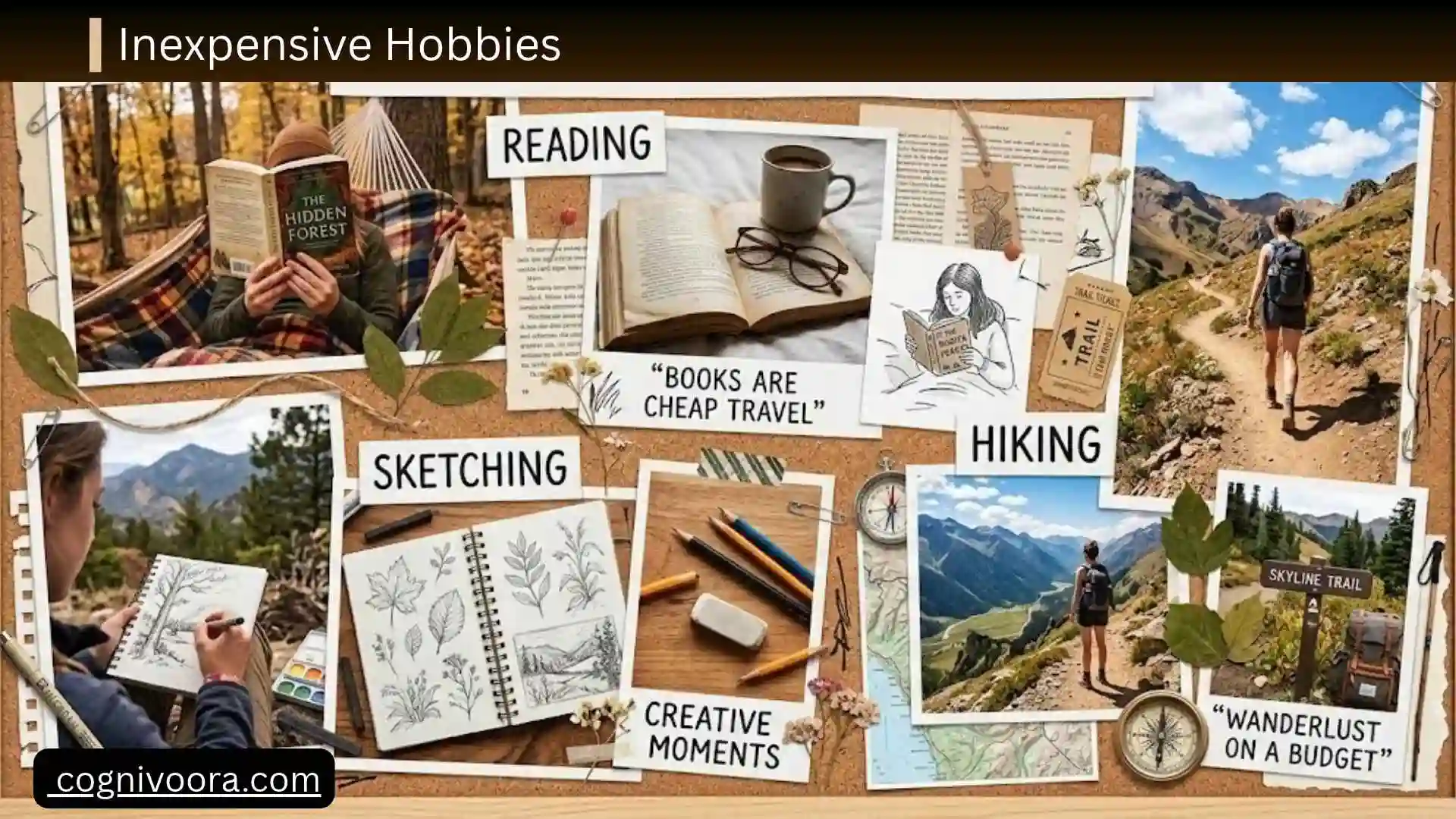
Finding inexpensive hobbies is a practical way to make your free time more enjoyable without turning a hobby into a major expense. Many activities require little more than items you already have at home, while others can be started with a small one-time purchase.
The best inexpensive hobby is not necessarily the one that costs the least. It is one that fits your interests, available time, space, and budget well enough that you will actually want to keep doing it.
What Are Inexpensive Hobbies?
Inexpensive hobbies are recreational activities that can be started and maintained with little financial investment. They can include creative, educational, physical, outdoor, collecting, and skill-building activities.
Some are nearly free, such as journaling, walking, birdwatching, writing, or learning from free educational resources. Others may require basic supplies, such as drawing, crochet, gardening, photography, or baking.
A useful way to think about hobby cost is:
- Startup cost: What you need to begin
- Ongoing cost: What you regularly spend to continue
- Space required: Whether you need a desk, yard, workshop, or outdoor area
- Time commitment: Whether you can enjoy it for 10 minutes or several hours
- Skill level: How easy it is to begin as a complete beginner
25 Inexpensive Hobbies to Try

1. Walking
Walking is one of the simplest hobbies to start because you can do it almost anywhere without specialized equipment.
You can make it more interesting by exploring different neighborhoods, parks, trails, or local landmarks. Walking can also become a photography, nature-observation, or podcast-listening hobby.
Best for: People who want a simple outdoor activity with minimal equipment.
2. Reading
Reading can become an inexpensive long-term hobby, especially if you use a public library, borrow books from friends, or purchase used books.
You can explore novels, biographies, history, science, personal development, mysteries, or virtually any subject that interests you.
Cost-saving idea: Check your local library before buying a book.
3. Journaling
Journaling requires very little equipment. A basic notebook and pen are enough to begin.
You can use a journal for daily reflections, creative writing, goal tracking, travel notes, gratitude lists, observations, or recording ideas.
Best for: People who enjoy writing, reflection, or organizing their thoughts.
4. Drawing
Drawing does not require expensive art equipment. A pencil, eraser, and inexpensive sketchbook can provide plenty of material for a beginner.
Start with simple subjects such as household objects, plants, buildings, animals, or people. As your skills improve, you can experiment with shading, perspective, portraits, and illustration.
5. Creative Writing
Creative writing can be almost completely free. You can write short stories, poetry, personal essays, fictional scenes, or a novel.
A computer, tablet, or ordinary notebook can serve as your writing space.
One advantage of writing as a hobby is that there is no need to buy new supplies every time you want to practice.
6. Photography With Your Phone
You do not need a professional camera to explore photography. A smartphone can be enough to learn basic composition, lighting, framing, and visual storytelling.
Try photographing architecture, nature, food, pets, interesting textures, or everyday scenes.
You can make the hobby more challenging by choosing a theme each week.
7. Birdwatching
Birdwatching can be started with nothing more than curiosity and a place where birds are present.
A free or inexpensive bird-identification resource can help you learn to recognize species by appearance, behavior, habitat, and sound. A notebook can also be useful for recording observations.
Binoculars are helpful but are not required when you are just getting started.
8. Gardening
Gardening can become expensive if you immediately purchase specialized tools, containers, decorative plants, and equipment. It can also be kept inexpensive by starting small.
Try growing herbs, flowers, or vegetables in a few containers rather than creating a large garden.
Using containers you already own and learning how to propagate suitable plants can further reduce expenses.
9. Cooking
Cooking is both a practical skill and a hobby. Instead of buying specialty ingredients for complicated recipes, choose inexpensive dishes and learn how to prepare them well.
You can explore different cuisines, homemade sauces, bread, soups, pasta dishes, or seasonal meals.
Best for: People who want a hobby that produces something useful at the end.
10. Baking
Baking can be an affordable hobby when you focus on basic recipes using common ingredients.
Start with cookies, muffins, simple breads, cakes, or other recipes that do not require specialized equipment.
As you improve, you can make the hobby more creative by experimenting with flavors, shapes, decoration, and presentation.
11. Sketching Nature
Combine walking and drawing by taking a small sketchbook outdoors.
You can sketch trees, leaves, flowers, buildings, landscapes, insects, or anything else that catches your attention.
This is especially useful if you want a creative hobby that gets you away from a screen.
12. Origami
Origami turns sheets of paper into decorative and functional forms through folding.
You can begin with ordinary paper rather than purchasing specialized origami paper. Basic designs can be learned gradually, followed by more complicated models.
It is a particularly convenient hobby for small living spaces because the materials take up very little room.
13. Puzzles
Jigsaw puzzles, crossword puzzles, logic puzzles, and number puzzles offer different types of challenges.
For jigsaw puzzles, buying used puzzles or exchanging them with friends can help keep the cost down. Digital puzzle options can also eliminate the need for physical storage.
14. Board Games
Board games can be inexpensive when you buy used games, borrow them, or choose games that can be played repeatedly with the same group.
Rather than constantly purchasing new games, find a few that offer enough strategic or social variety to remain interesting.
Best for: People who enjoy social hobbies and friendly competition.
15. Learning a New Language
Learning a language does not necessarily require expensive classes or subscription services.
You can combine free learning materials, library resources, podcasts, books, writing exercises, and conversation practice.
The key is consistency. Spending a small amount of time practicing regularly can be more useful than buying numerous resources that you rarely use.
16. Origami and Paper Crafts
Paper crafts extend beyond traditional origami. You can experiment with paper cutting, handmade cards, bookmarks, paper decorations, and simple models.
Scrap paper, old magazines, cardboard, and packaging can sometimes become useful craft materials.
17. Calligraphy and Hand Lettering
Calligraphy and hand lettering can begin with ordinary pens and paper.
Practice individual letters, spacing, strokes, and simple compositions before investing in specialized pens or inks.
Once you develop basic control, you can create greeting cards, signs, journal pages, or decorative quotes.
18. Geocaching
Geocaching combines outdoor exploration with a location-based treasure-hunt concept.
Participants search for hidden containers or locations using coordinates and clues. Depending on where you live and how you participate, you may be able to explore the hobby with little more than a smartphone.
It can turn an ordinary walk into a small adventure.
19. Fishing
Fishing can be inexpensive if you borrow or buy basic used equipment rather than immediately building a large collection of specialized gear.
Before fishing, check the regulations and licensing requirements that apply where you plan to fish.
Best for: People who enjoy quiet outdoor activities and spending time near water.
20. DIY Home Projects
Small DIY projects can turn practical household tasks into a hobby.
Examples include refinishing simple furniture, organizing storage, making basic decorations, repairing minor household items, or building simple projects from inexpensive materials.
The important distinction is to choose projects appropriate for your skill level and use proper safety practices.
21. Thrifting
Thrifting can be approached as a hobby rather than simply a way to shop.
You can search for vintage books, interesting clothing, home décor, records, collectibles, or unusual objects. Setting a strict budget helps prevent an inexpensive hobby from becoming an expensive shopping habit.
22. Collecting Small, Affordable Items
Collecting does not have to mean purchasing rare or valuable objects.
You could collect postcards, interesting rocks where collection is permitted, stamps, used bookmarks, pressed leaves, or other low-cost items.
The most sustainable approach is to establish a clear theme and spending limit before your collection grows.
23. Stargazing
Stargazing can begin without a telescope.
Start by learning major constellations and becoming familiar with the night sky. A clear location away from excessive artificial light can make observation easier.
A telescope can be added later if you discover that astronomy genuinely interests you.
24. Volunteering
Volunteering can function as a meaningful hobby while allowing you to contribute to your community.
Opportunities may include helping at community events, animal shelters, libraries, environmental projects, food organizations, or nonprofit activities, depending on what is available locally.
Some volunteer activities require specific commitments or qualifications, so check the organization’s requirements before signing up.
25. Learning a Practical Skill
Learning a practical skill can turn free time into long-term personal development.
Depending on your interests, you might learn basic woodworking, sewing, home maintenance, coding, bicycle maintenance, drawing, cooking, or another useful skill.
The advantage is that the hobby can eventually become useful beyond recreation.
Best Inexpensive Hobbies by Interest
Different hobbies appeal to different personalities. Choosing according to your interests is often better than choosing solely according to price.
| If you enjoy… | Consider… |
| Being outdoors | Walking, birdwatching, gardening, stargazing, geocaching |
| Creativity | Drawing, writing, origami, calligraphy, photography |
| Learning | Reading, languages, astronomy, practical skills |
| Social activities | Board games, volunteering, group walks |
| Quiet time | Reading, journaling, puzzles, drawing |
| Making things | Baking, cooking, paper crafts, DIY |
| Exploration | Thrifting, photography, geocaching, walking |
| Collecting | Stamps, postcards, books, small themed collections |
| Technology | Smartphone photography, digital writing, learning software skills |
| Physical activity | Walking, hiking, recreational cycling, outdoor exploration |
How to Choose an Inexpensive Hobby
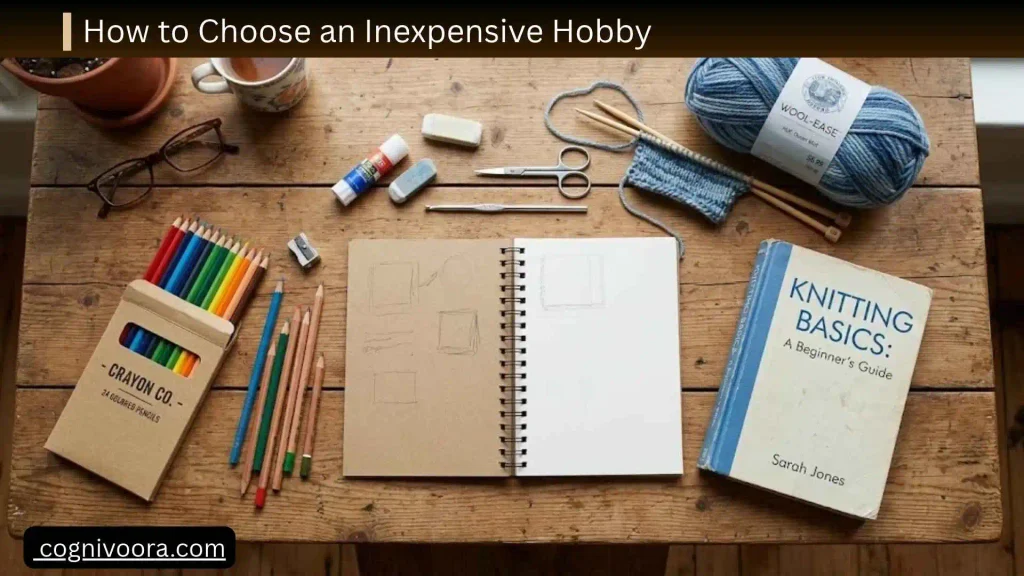
Start With What You Already Own
Before purchasing supplies, look around your home.
You may already have:
- Books
- Pens and notebooks
- A smartphone
- Kitchen equipment
- Craft materials
- Outdoor clothing
- Cardboard and paper
- Computers or tablets
- Plants and containers
Starting with existing resources removes much of the financial risk.
Set a Monthly Hobby Budget
Even an inexpensive hobby can become costly when purchases happen impulsively.
Choose a realistic monthly amount and decide what qualifies as a necessary purchase versus an optional upgrade.
For example, instead of buying five different types of art supplies immediately, start with a pencil and sketchbook. Upgrade only when you know what you actually use.
Try Before You Invest
Borrow equipment, use library resources, attend community events, or try free versions of activities when possible.
This is particularly useful for hobbies such as photography, fishing, musical instruments, crafting, and specialized sports.
Choose Hobbies With Low Ongoing Costs
A hobby with a small startup cost can still become expensive if it requires frequent purchases.
For long-term affordability, consider whether the activity requires consumable supplies, memberships, replacement equipment, travel, or frequent upgrades.
Avoid Turning Every Hobby Into a Collection
One common way to overspend on hobbies is buying equipment instead of practicing the hobby.
A beginner may purchase specialized tools, accessories, storage systems, books, and upgrades before developing the skill itself.
A better approach is simple:
Practice first. Upgrade later.
Nearly Free Hobbies
If your budget is extremely limited, focus on hobbies that use free resources or things you already own.
Some possibilities include:
- Walking
- Reading library books
- Journaling
- Creative writing
- Drawing with basic materials
- Birdwatching
- Stargazing
- Learning a language with free resources
- Nature observation
- Photography with a smartphone
- Free community events
- Volunteering
- Meditation or quiet reflection
- Exploring local parks
- Learning new recipes from ingredients you already have
The best nearly free hobby is usually one that removes the need for specialized equipment.
Inexpensive Hobbies for Adults at Home
You do not need to leave home to develop an enjoyable hobby.
Good indoor options include:
- Reading
- Journaling
- Drawing
- Creative writing
- Baking
- Cooking
- Origami
- Puzzles
- Calligraphy
- Hand lettering
- Learning a language
- Digital photography editing
- DIY projects
- Board games
- Learning practical skills
For people with limited space, paper-based hobbies, writing, reading, puzzles, and digital learning are particularly easy to manage.
Inexpensive Hobbies for People Who Get Bored Easily
If you tend to lose interest quickly, choose hobbies with multiple levels of difficulty or several related activities.
For example, photography can begin with simple phone pictures and eventually include composition, editing, portraits, landscapes, architecture, and themed photo projects.
Similarly, gardening can progress from growing one herb to experimenting with containers, propagation, flowers, vegetables, and garden design.
Hobbies that provide room for progression are often easier to maintain because you can keep learning rather than repeating exactly the same activity.
How to Keep a Hobby Inexpensive
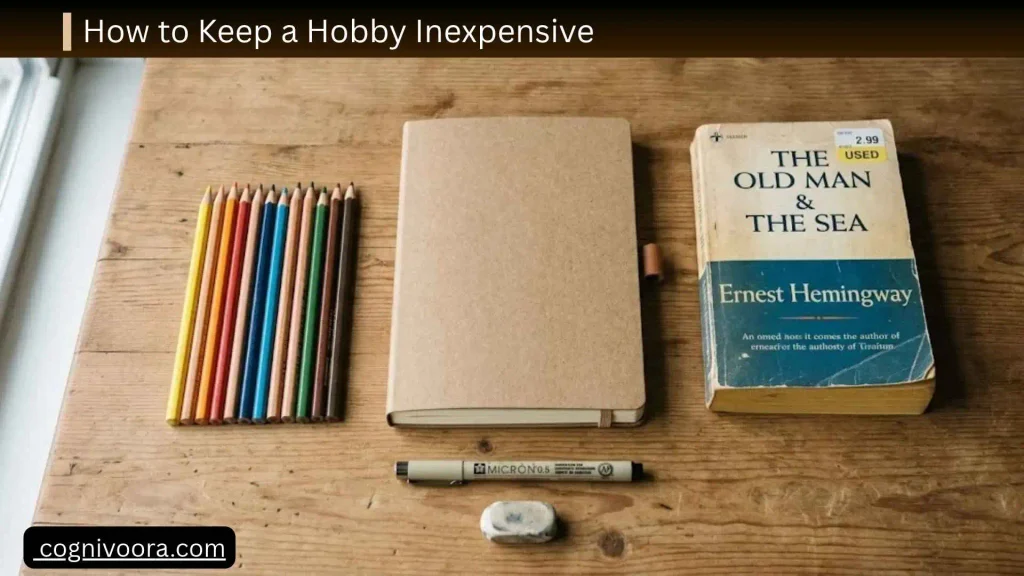
The cost of a hobby is often determined more by purchasing habits than by the activity itself.
Use these strategies:
- Set a spending limit before shopping.
- Borrow equipment when possible.
- Buy used items for suitable hobbies.
- Use free libraries and community resources.
- Reuse materials instead of replacing them immediately.
- Avoid buying advanced equipment before developing basic skills.
- Wait before making nonessential purchases.
- Choose hobbies with low recurring costs.
- Exchange books, games, plants, or supplies with friends.
- Focus on doing the hobby rather than accumulating hobby-related products.
Inexpensive Hobbies vs. Expensive Hobbies
An inexpensive hobby is not automatically better than an expensive one. The important question is whether the cost is appropriate for the enjoyment and value you receive.
| Factor | Inexpensive hobby | Higher-cost hobby |
| Startup expense | Usually low | Often higher |
| Equipment | Basic or existing items | May require specialized gear |
| Ongoing cost | Often low | Can be significant |
| Accessibility | Usually easy to start | May require facilities or training |
| Experimentation | Low financial risk | Greater commitment |
| Upgrade potential | Optional | Often extensive |
For someone exploring new interests, inexpensive hobbies have one major advantage: they let you experiment without making a large financial commitment.
Frequently Asked Questions
What are the best inexpensive hobbies?
Some of the best inexpensive hobbies include reading, walking, journaling, drawing, creative writing, birdwatching, photography with a smartphone, gardening, cooking, puzzles, origami, stargazing, and learning practical skills.
The best choice depends on whether you prefer creative, social, educational, physical, or relaxing activities.
What is a hobby I can start with almost no money?
Walking, creative writing, journaling, reading library books, nature observation, birdwatching, and stargazing can often be started with little or no dedicated spending.
You can also look around your home for materials that can support drawing, paper crafts, cooking, or DIY projects.
What are good inexpensive hobbies to do at home?
Reading, drawing, journaling, writing, puzzles, origami, baking, cooking, calligraphy, learning a language, board games, and digital learning are good options for home.
How can I enjoy hobbies without spending a lot?
Start with what you already own, borrow equipment, use libraries and free resources, buy used items when appropriate, and delay upgrades until you know the hobby suits you.
A predefined hobby budget can also prevent small purchases from accumulating.
Are inexpensive hobbies worth it?
Yes. An inexpensive hobby can provide enjoyment, creativity, learning, social interaction, or physical activity without requiring a large financial commitment.
The value of a hobby comes from how well it fits your interests and how consistently you enjoy doing it, not simply how much money you spend.
What hobby is best for someone who wants to learn a skill?
Cooking, drawing, creative writing, photography, gardening, sewing, woodworking, language learning, and DIY projects can all develop skills over time.
Choose one where you can start at a basic level and gradually increase the difficulty.
Conclusion
Inexpensive hobbies can be surprisingly diverse. You can explore creativity through drawing or writing, spend time outdoors with walking or birdwatching, develop practical abilities through cooking or DIY projects, or relax with reading and puzzles.
You do not need a large collection of equipment to begin. Start with an activity that genuinely interests you, use what you already have, and spend money only when it improves the experience. That approach makes it easier to discover a hobby you enjoy while keeping your budget under control.

I’m Ethan Mitchell, a curious writer who enjoys turning complex ideas into simple, useful information. At Cognivoora, I focus on creating clear and engaging content that readers can understand and apply in everyday life. I believe good writing should educate, answer real questions, and leave readers with something valuable to remember.
Books:
- The Everyday Mind
- Simple Ideas, Better Thinking