A character’s hobbies can reveal far more than their job, appearance, or personality description. The right hobby can show what a character values, how they spend quiet moments, what they fear, what they are good at, and how they connect with other people.
Whether you are writing a novel, short story, screenplay, comic, role playing game, or character profile, choosing meaningful hobbies for characters can make fictional people feel more believable and memorable.
The best hobby is not necessarily the most unusual one. It is one that fits the character while also giving you opportunities for conflict, relationships, backstory, humor, or emotional development.
What Are Good Hobbies for Characters(Quick Answer)
Good hobbies for characters include reading, gardening, photography, painting, cooking, hiking, collecting objects, playing an instrument, fishing, woodworking, gaming, baking, birdwatching, journaling, dancing, volunteering, astronomy, sewing, sports, puzzles, and restoring old items.
For stronger characterization, choose a hobby based on the character’s personality, goals, background, lifestyle, skills, flaws, and relationships rather than selecting a hobby simply because it sounds interesting.
Why Hobbies Matter in Character Development
Hobbies give characters something to do when the main plot is not happening. More importantly, they can communicate information about a character without forcing the writer to explain it directly.
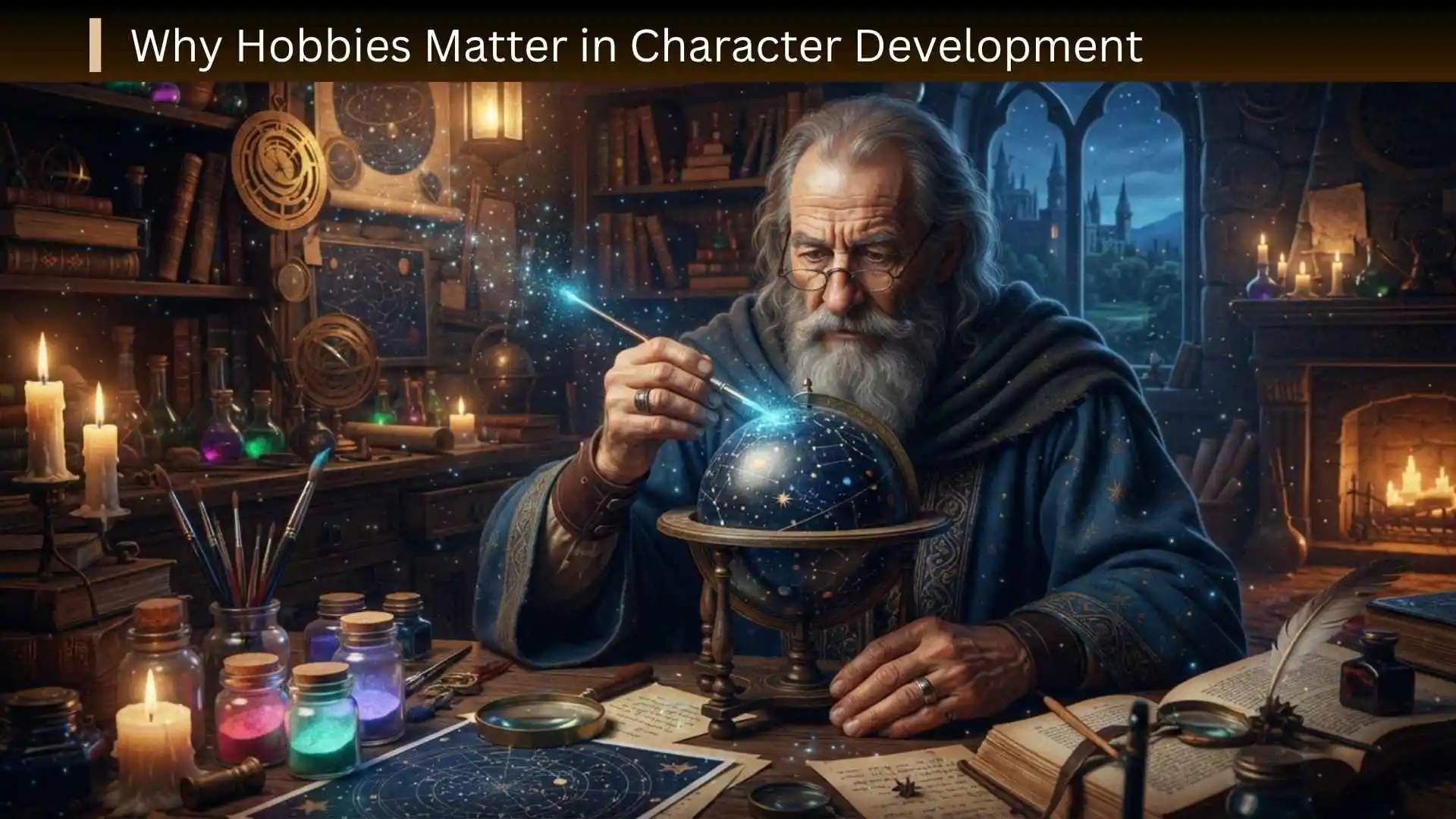
For example, a character who spends weekends restoring antique clocks immediately suggests something different from a character who competes in boxing matches or photographs abandoned buildings.
A hobby can reveal:
- Personality
- Interests
- Skills
- Values
- Social habits
- Emotional needs
- Personal history
- Fears and insecurities
- Spending habits
- Lifestyle
- Relationships
- Goals outside the main plot
A hobby can also create natural scenes. Instead of having two characters sit together and explain their personalities, you can show them cooking, hiking, playing chess, repairing a motorcycle, or browsing a used bookstore.
That makes characterization feel more organic.
How to Choose the Right Hobby for a Character
Before choosing a hobby, think about the character as a complete person.
Consider Their Personality
A quiet, observant character might enjoy activities such as:
- Reading
- Drawing
- Birdwatching
- Photography
- Gardening
- Astronomy
- Puzzles
- Journaling
An outgoing character might prefer:
- Dancing
- Team sports
- Karaoke
- Hiking with friends
- Volunteering
- Theater
- Hosting game nights
Personality does not have to determine the hobby completely, though. Contrasting combinations can be especially interesting.
A serious detective who secretly loves making elaborate cakes may be more memorable than a detective whose hobby simply reinforces their serious personality.
Consider Their Background
A character’s upbringing can influence what hobbies feel natural to them.
Someone raised around farms might know gardening, horseback riding, fishing, or animal care. Someone raised in a creative household might have learned painting, music, sewing, photography, or woodworking.
Background can also explain why a character has access to certain equipment, knowledge, locations, or communities.
Consider Their Resources
Hobbies should make sense within the character’s circumstances.
A wealthy character might have access to:
- Sailing
- Horse riding
- Collecting art
- Golf
- Travel photography
- Wine-making as a fictional interest
A character with limited money might prefer:
- Reading from the library
- Running
- Drawing
- Writing
- Birdwatching
- Hiking
- People-watching
- Thrifting
- Gardening
- Stargazing
Of course, characters can deliberately pursue hobbies that do not match their financial situation. That can itself become part of their story.
Consider Their Age and Lifestyle
A hobby should generally fit the character’s daily life.
A college student might spend free time gaming, playing intramural sports, creating music, volunteering, or collecting vintage clothing.
A retired character might enjoy gardening, woodworking, fishing, genealogy, painting, birdwatching, or restoring furniture.
These are not strict rules. Characters can break expectations, but there should usually be a reason.
Hobbies for Characters Based on Personality
One of the easiest ways to select a hobby is to start with personality.
Hobbies for Introverted Characters
Introverted characters may enjoy hobbies that allow solitude or small-group interaction.
Ideas include:
- Reading
- Journaling
- Painting
- Drawing
- Writing poetry
- Gardening
- Photography
- Birdwatching
- Astronomy
- Knitting
- Sewing
- Puzzles
- Model building
- Baking
- Playing a musical instrument
- Collecting books
- Hiking alone
- Fishing
- Calligraphy
- Origami
These hobbies can work particularly well for characters who spend a lot of time observing the world.
Hobbies for Extroverted Characters
Outgoing characters may gravitate toward activities involving people, competition, performance, or community.
Ideas include:
- Dancing
- Karaoke
- Team sports
- Theater
- Stand-up comedy
- Hosting parties
- Volunteering
- Public speaking
- Cooking for friends
- Board-game nights
- Rock climbing
- Running clubs
- Social dancing
- Community events
- Traveling with friends
- Coaching
- Photography at events
- Live music
- Trivia competitions
- Improv
A social hobby can also give a character a believable network of acquaintances.
Hobbies for Intelligent or Analytical Characters
Characters who enjoy solving problems can have hobbies that demonstrate curiosity and logical thinking.
Consider:
- Chess
- Crossword puzzles
- Sudoku
- Coding
- Astronomy
- Strategy games
- Mathematics puzzles
- Collecting historical information
- Genealogy
- Cryptic puzzles
- Robotics
- Model engineering
- Learning languages
- Researching obscure subjects
- Amateur science projects
These hobbies can show intelligence without repeatedly telling the reader that the character is “smart.”
Hobbies for Creative Characters
Creative characters have many possibilities beyond the obvious choice of painting.
Try:
- Photography
- Sculpture
- Pottery
- Ceramics
- Painting
- Drawing
- Illustration
- Songwriting
- Playing music
- Sewing
- Embroidery
- Jewelry making
- Woodworking
- Creative writing
- Film-making
- Baking
- Interior decorating
- Floral arranging
- Origami
- Costume design
The specific hobby can also help establish the character’s creative style.
Hobbies for Adventurous Characters
Adventurous characters can have hobbies that involve exploration, physical activity, or unfamiliar experiences.
Examples include:
- Hiking
- Camping
- Rock climbing
- Kayaking
- Surfing
- Mountain biking
- Backpacking
- Fishing
- Geocaching
- Scuba diving
- Road trips
- Stargazing
- Photography
- Orienteering
- Horseback riding
An adventurous hobby can also provide natural opportunities for the character to encounter new places and people.
Hobbies for Competitive Characters
Competitive characters benefit from hobbies where winning, improvement, ranking, or performance matters.
Good options include:
- Tennis
- Basketball
- Soccer
- Baseball
- Golf
- Boxing
- Wrestling
- Swimming
- Chess
- Esports
- Running
- Martial arts
- Bowling
- Darts
- Archery
- Trivia
- Card games
A competitive hobby becomes even more useful when the character’s relationship with winning reflects their deeper personality.
For example, one character might compete because they love the challenge, while another desperately needs to prove themselves.
Hobbies for Characters Based on Genre
The setting and genre of your story can also influence appropriate hobbies.
Fantasy Characters
Fantasy characters can have familiar hobbies adapted to their world.
Ideas include:
- Herb collecting
- Falconry
- Sword practice
- Horseback riding
- Herbal gardening
- Mapmaking
- Calligraphy
- Brewing
- Storytelling
- Playing fantasy instruments
- Collecting magical artifacts
- Studying ancient languages
- Carving wood
- Stargazing
- Animal training
The hobby can also help explain the world’s culture.
Science Fiction Characters
Science-fiction characters might enjoy hobbies involving technology, exploration, or futuristic culture.
Examples include:
- Robotics
- Programming
- Drone racing
- Star mapping
- Virtual reality games
- Mechanical repair
- 3D printing
- Digital art
- Collecting old technology
- Space photography
- Building gadgets
- Simulation games
- Studying alien cultures
- Piloting recreational vehicles
- Hacking fictional game systems
A futuristic setting does not mean every hobby needs to be futuristic. A character who collects physical books or grows traditional plants could provide an interesting contrast.
Mystery Characters
Mystery characters can have hobbies that naturally support observation and investigation.
Consider:
- Photography
- Chess
- Puzzles
- Birdwatching
- Genealogy
- Collecting antiques
- Reading old newspapers
- Gardening
- Lock restoration
- Astronomy
- Hiking
- Amateur history
- Model building
- People-watching
A hobby can also become relevant to the mystery without turning every character into an amateur detective.
Horror Characters
Horror stories can benefit from ordinary hobbies because normal activities create contrast with frightening events.
Good choices include:
- Gardening
- Baking
- Photography
- Birdwatching
- Collecting records
- Sewing
- Painting
- Fishing
- Scrapbooking
- Reading
- Home restoration
- Astronomy
- Cooking
A seemingly harmless hobby can become unsettling when connected to the character’s secrets or the story’s setting.
Romance Characters
Romance characters benefit from hobbies that create opportunities for interaction.
Try:
- Cooking
- Dancing
- Hiking
- Photography
- Gardening
- Reading
- Baking
- Traveling
- Music
- Volunteering
- Art
- Running
- Book clubs
- Pottery
- Dog walking
A shared hobby can create believable reasons for two characters to spend time together.
Unique Hobbies for Characters
If you want a character to stand out, consider giving them a less common hobby.
Some possibilities include:
- Restoring antique radios
- Collecting unusual maps
- Identifying old architectural styles
- Making miniature houses
- Pressing flowers
- Restoring vintage cameras
- Collecting postcards
- Making custom dice
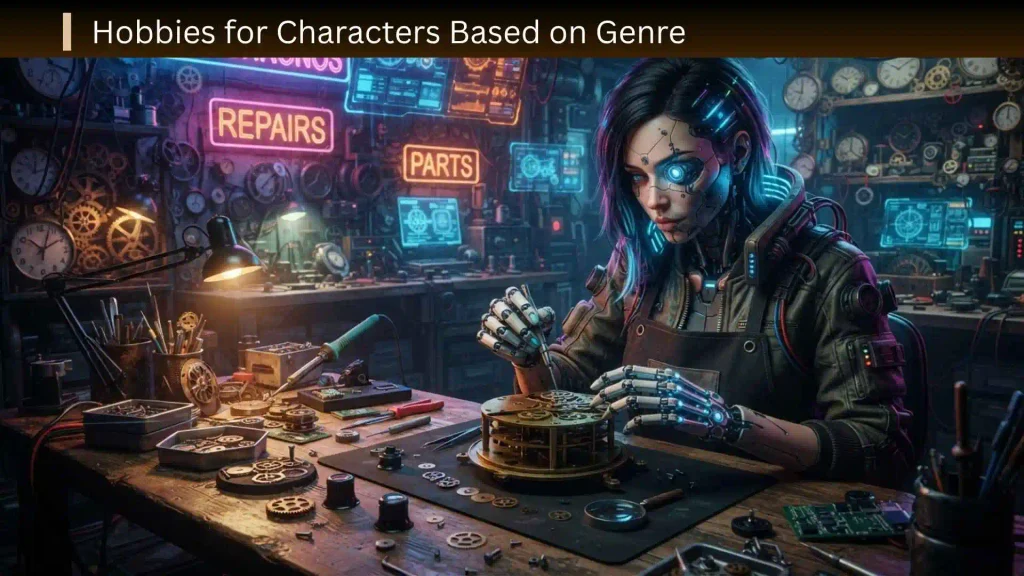
- Repairing mechanical watches
- Building model ships
- Creating terrariums
- Studying local folklore
- Making homemade candles
- Collecting unusual rocks
- Restoring old furniture
- Creating paper models
- Learning historical dances
- Recording ambient sounds
- Drawing city maps from memory
- Making miniature dioramas
- Identifying birds by their calls
- Collecting vintage advertisements
- Practicing traditional calligraphy
- Designing crossword puzzles
- Learning obscure card games
A unique hobby works best when it connects to the character rather than existing purely to make them seem quirky.
Hobbies for Villain Characters
Villains do not need sinister hobbies. In fact, an ordinary hobby can make a villain more unsettling because it creates contrast.
Possible hobbies include:
- Gardening
- Baking
- Chess
- Painting
- Collecting antiques
- Birdwatching
- Classical music
- Cooking
- Photography
- Golf
- Fishing
- Reading history
- Restoring furniture
- Astronomy
- Gardening rare plants
A villain who carefully tends roses can be more memorable than a villain whose hobby is simply “collecting weapons.”
The important question is how the hobby interacts with the villain’s personality.
A perfectionist villain might meticulously grow prize-winning flowers. A manipulative villain might host elaborate dinner parties. A controlling villain might obsess over maintaining a perfectly organized collection.
Hobbies for Hero Characters
Heroic characters can have hobbies that reveal who they are when they are not saving anyone.
Ideas include:
- Running
- Cooking
- Volunteering
- Gardening
- Reading
- Playing music
- Hiking
- Photography
- Coaching
- Painting
- Fishing
- Building things
- Caring for animals
- Collecting memorabilia
- Baking
- Learning languages
- Playing board games
A hobby can humanize a heroic character by showing ordinary interests and vulnerabilities.
Hobbies for Shy Characters
Shy characters do not necessarily need solitary hobbies, but activities with low social pressure can work well.
Examples:
- Reading
- Drawing
- Gardening
- Photography
- Baking
- Writing
- Sewing
- Birdwatching
- Puzzles
- Model building
- Collecting
- Astronomy
- Playing an instrument
- Hiking
- Journaling
You can also use a hobby to show gradual character development. A shy character might begin with solitary photography and eventually join a photography club.
Hobbies for Characters Who Are Secretive
A secretive character can have a hobby that either conceals their personality or accidentally reveals it.
Interesting options include:
- Gardening
- Painting
- Collecting letters
- Photography
- Restoring antiques
- Fishing
- Chess
- Reading biographies
- Astronomy
- Woodworking
- Journaling
- Genealogy
The hobby itself does not need to be suspicious. What matters is what the character does with it.
For example, a character who photographs buildings might have an innocent explanation—or the photographs might contain information they do not want anyone else to discover.
Hobbies for Older Characters
Older characters should not be limited to stereotypical hobbies. Give them interests that fit their individual personality and history.
Possibilities include:
- Gardening
- Golf
- Fishing
- Painting
- Photography
- Woodworking
- Cooking
- Baking
- Birdwatching
- Genealogy
- Traveling
- Reading
- Volunteering
- Chess
- Collecting
- Local history
- Sewing
- Pottery
- Music
- Hiking
An older character might also have a hobby they started decades earlier, giving the activity emotional significance.
Hobbies for Teen Characters
Teen characters can have a wide variety of hobbies depending on their interests and environment.
Ideas include:
- Gaming
- Drawing
- Photography
- Sports
- Music
- Skateboarding
- Reading
- Baking
- Dance
- Theater
- Coding
- Fashion
- Video editing
- Writing
- Art
- Collecting
- Hiking
- Volunteering
- Photography
- Making music
Avoid assuming that every teenager likes the same things. Specific interests make individual characters more convincing.
Hobbies for Characters With Different Personality Contrasts
One of the strongest techniques is to give a character a hobby that conflicts with the audience’s expectations.
For example:
| Character Type | Unexpected Hobby |
| Tough fighter | Flower arranging |
| Serious lawyer | Competitive dancing |
| Shy student | Stand-up comedy |
| Villain | Baking |
| Detective | Birdwatching |
| Athlete | Poetry |
| Wealthy executive | Thrift shopping |
| Rebellious teenager | Gardening |
| Brilliant scientist | Amateur theater |
| Fearless adventurer | Miniature painting |
| Strict teacher | Video games |
| Popular celebrity | Birdwatching |
These combinations create character texture.
The contrast should still make sense once you understand the character’s backstory.
Hobbies That Reveal Character Traits
A hobby can communicate a specific trait without directly stating it.
A Patient Character
Consider:
- Gardening
- Fishing
- Knitting
- Model building
- Painting
- Puzzles
A Curious Character
Consider:
- Astronomy
- Photography
- Genealogy
- Reading
- Birdwatching
- Learning languages
A Perfectionist Character
Consider:
- Chess
- Baking
- Calligraphy
- Model building
- Collecting
- Gardening competitions
A Compassionate Character
Consider:
- Volunteering
- Animal care
- Community gardening
- Coaching
- Cooking for others
- Tutoring
A Nostalgic Character
Consider:
- Collecting records
- Restoring vintage objects
- Scrapbooking
- Photography
- Collecting postcards
- Reading old newspapers
An Impulsive Character
Consider:
- Road trips
- Extreme sports
- Spontaneous travel
- Competitive games
- Dancing
- Trying unusual foods
Hobbies That Create Story Opportunities
Some hobbies are particularly useful because they naturally generate scenes and plot possibilities.
Cooking
Cooking can create family scenes, romantic moments, competitions, arguments, celebrations, and opportunities for characters to care for one another.
Photography
Photography gives characters a reason to observe places and people. It can also preserve memories or reveal details that other characters miss.
Gardening
Gardening provides recurring activities and can symbolize patience, growth, loss, renewal, or control.
Music
Music can connect characters emotionally and provide opportunities for performances, collaboration, rivalry, memories, and cultural identity.
Sports
Sports create built-in settings for teamwork, competition, failure, achievement, discipline, and friendship.
Collecting
Collecting gives a character possessions with history and meaning. A collection can also become important to the plot.
Hiking
Hiking provides opportunities for travel, solitude, conversations, discoveries, and physical challenges.
Writing or Journaling
Writing can reveal thoughts that a character refuses to say aloud. It can also provide a strong device for exploring memory and internal conflict.
Hobbies That Work Well for Character Relationships
Hobbies become especially useful when two characters share or clash over an interest.
A shared hobby can give characters a natural reason to meet repeatedly.
For example:
- Two photographers explore the same neighborhood.
- Two runners train together.
- Two musicians form a small band.
- Two gardeners exchange plants.
- Two chess players become rivals.
- Two bakers compete in local contests.
- Two hikers plan weekend trips.
- Two readers discuss the same books.
- Two gamers become online friends before meeting.
- Two artists attend the same class.
A hobby can therefore function as a relationship engine rather than merely a character detail.
Hobbies Can Change Over the Course of a Story
A character’s hobby does not have to remain static.
Their interests can change because of:
- Age
- Trauma
- Friendship
- Romance
- Failure
- Success
- Relocation
- New responsibilities
- Financial circumstances
- Personal growth
- Loss
- A new opportunity
For example, a character might begin painting because they need a private escape from a stressful life. Later, they could start sharing their artwork with other people, showing increased confidence.
The hobby becomes part of the character arc.
How Many Hobbies Should a Character Have?
There is no fixed number, but most fictional characters do not need an enormous list.
For a detailed character profile, choosing two or three meaningful hobbies is often more useful than listing twenty unrelated interests.
A useful combination might be:
- Primary hobby: Something they spend significant time doing.
- Social hobby: Something that connects them with other people.
- Private or unusual hobby: Something that reveals a less obvious side of their personality.
For example, a character could:
- Play basketball with friends
- Bake alone on weekends
- Collect old postcards
That combination tells us considerably more than simply saying the character is “friendly and creative.”
How to Make a Hobby Feel Real
A hobby should have details.
Instead of writing:
Sarah likes photography.
Consider what that actually means.
Does Sarah photograph:
- Buildings?
- Wildlife?
- Weddings?
- Abandoned places?
- Street scenes?
- Family members?
- The night sky?
What camera does she use? Does she edit photographs? Does she print them? Does she share them online? Does she prefer photographing people who do not know they are being photographed?
Specificity transforms a generic hobby into a believable part of the character.
Give the Hobby a Reason
The strongest character hobbies usually have some emotional or practical connection to the character.
A character might garden because:
- Their grandmother taught them.
- They find repetitive work calming.
- They grew up on a farm.
- They want to grow their own food.
- They are fascinated by plants.
- Gardening reminds them of home.
The same hobby can therefore represent completely different things for different characters.
Let Characters Be Bad at Their Hobbies
A hobby does not have to be a talent.
A character might love:
- Cooking but burn everything.
- Singing but have terrible pitch.
- Gardening despite killing every plant.
- Photography despite taking blurry pictures.
- Chess despite losing constantly.
- Running despite finishing last.
- Painting despite producing terrible art.
This can make characters more human.
People often participate in hobbies because they enjoy them, not because they are exceptionally good at them.
Use Hobbies to Show Emotion
Hobbies can also reveal how a character is feeling.
A normally enthusiastic gardener might stop caring for their plants after a major loss.
A character who usually plays guitar every evening might suddenly stop.
Someone who rarely cooks might begin preparing elaborate meals during a stressful period.
These changes can communicate emotional shifts without requiring lengthy exposition.
100 Hobbies for Characters
If you need a quick idea list, here are 100 possibilities:
- Reading
- Writing
- Journaling
- Poetry
- Painting
- Drawing
- Photography
- Gardening
- Baking
- Cooking
- Hiking
- Camping
- Fishing
- Birdwatching
- Astronomy
- Stargazing
- Chess
- Sudoku
- Crossword puzzles
- Board games
- Video games
- Coding
- Robotics
- Running
- Swimming
- Cycling
- Tennis
- Basketball
- Soccer
- Golf
- Boxing
- Martial arts
- Dancing
- Singing
- Playing guitar
- Playing piano
- Playing violin
- Songwriting
- Theater
- Improv
- Pottery
- Ceramics
- Sculpture
- Sewing
- Knitting
- Embroidery
- Calligraphy
- Origami
- Woodworking
- Furniture restoration
- Model building
- Collecting stamps
- Collecting coins
- Collecting postcards
- Collecting books
- Collecting records
- Collecting antiques
- Thrifting
- Volunteering
- Animal care
- Dog walking
- Horseback riding
- Rock climbing
- Kayaking
- Surfing
- Scuba diving
- Geocaching
- Backpacking
- Road trips
- Traveling
- Learning languages
- Genealogy
- Local history
- Cooking competitions
- Trivia
- Card games
- Magic tricks
- Making candles
- Making jewelry
- Terrarium building
- Flower arranging
- Scrapbooking
- Film-making
- Video editing
- Podcasting
- Collecting maps
- Restoring cameras
- Restoring watches
- Amateur radio
- Building miniature houses
- Diorama making
- Leatherworking
- Calligraphy
- Home brewing of non-alcoholic drinks
- Nature sketching
- People-watching
- Cloud watching
- Cooking family recipes
- Community gardening
- Restoring old photographs
How to Avoid Generic Character Hobbies
Some hobbies can feel generic when they are added without any personality behind them.
For example:
He likes music, sports, and reading.
This tells the reader very little.
A more specific version might be:
He collects scratched-up vinyl records from garage sales, plays basketball every Sunday morning, and reads biographies of musicians who disappeared from the public eye.
Now the hobbies tell us something about his interests and behavior.
The goal is not simply to give a character hobbies. The goal is to make those hobbies character-specific.
Character Hobby Generator Formula
If you are struggling to find the right hobby, use this simple formula:
Personality + Background + Motivation + Activity = Character Hobby
For example:
Patient + grew up around plants + wants peace + gardening = believable hobby
Or:
Competitive + academic family + needs recognition + chess = believable hobby
Or:
Curious + grew up near the ocean + loves exploration + tide-pool observation = believable hobby
You can also deliberately break the formula:
Intimidating personality + artistic upbringing + private emotional side + delicate flower arranging = unexpected hobby
That contrast can produce a much more memorable character.
Questions to Ask When Choosing a Character Hobby
Before finalizing a hobby, ask:
- Why does this character enjoy it?
- How did they discover it?
- How often do they do it?
- Are they good at it?
- Do they spend money on it?
- Do they do it alone or with others?
- Does anyone else know about it?
- Is the hobby connected to their childhood?
- Does it reveal a positive trait?
- Does it expose a flaw?
- Could it create conflict?
- Could it help form relationships?
- Could it change during the story?
- Does it fit their lifestyle?
- What does the hobby reveal that dialogue cannot?
If you can answer several of these questions, the hobby is likely doing useful characterization work.
FAQs About Hobbies for Characters
What are the best hobbies for fictional characters?
The best hobbies are those that reveal something meaningful about the character. Reading, gardening, photography, cooking, music, sports, collecting, gaming, hiking, art, and woodworking are all useful choices, but the most effective hobby depends on the character’s personality and story.
What are some unique hobbies for characters?
Unique character hobbies can include restoring antique radios, collecting unusual maps, building miniature houses, identifying birds by sound, restoring vintage cameras, studying local folklore, creating dioramas, collecting old advertisements, or designing crossword puzzles.
Should a character’s hobby match their personality?
Not necessarily. A hobby can reinforce personality, but an unexpected hobby can create contrast and make a character more interesting. A tough character who loves gardening or a serious detective who enjoys birdwatching can feel more three-dimensional.
How many hobbies should a fictional character have?
Two or three meaningful hobbies are usually enough for a main character. You can give a character more interests if they are relevant, but a long list of hobbies without context can make characterization feel artificial.
Can a hobby become part of the plot?
Yes. A hobby can naturally create locations, relationships, conflicts, skills, clues, and opportunities for character development. Photography, sports, music, collecting, gardening, hiking, and cooking can all become useful story elements.
Should characters be good at their hobbies?
No. A character can enjoy an activity while being mediocre or even terrible at it. Giving a character an imperfect hobby can make them feel more realistic and relatable.
What hobbies are good for shy characters?
Reading, drawing, photography, gardening, journaling, baking, sewing, puzzles, astronomy, model building, and playing an instrument can work well for shy characters, particularly when the hobby allows them to control their level of social interaction.
What hobbies are good for villains?
Villains can have ordinary hobbies such as gardening, baking, chess, painting, fishing, photography, or collecting antiques. An ordinary hobby can make a villain feel more human while creating an interesting contrast with their darker behavior.
How can a hobby reveal a character’s backstory?
Connect the hobby to a person, place, memory, skill, or event from the character’s past. For example, a character may cook recipes taught by a deceased relative, restore old furniture because of their childhood home, or photograph places connected to a forgotten period of their life.
Conclusion
The best hobbies for characters do more than fill empty space in a character sheet. They reveal personality, create opportunities for interaction, strengthen backstory, support character arcs, and make fictional people feel like they have lives beyond the main plot.
When choosing a hobby, think beyond the activity itself. Ask why this particular character enjoys it, what it says about them, and how it could influence the story.
A character who simply “likes painting” is easy to forget. A character who secretly paints portraits of strangers because they are fascinated by expressions they cannot read is much more distinctive.
The hobby is only the starting point. The meaning behind the hobby is what makes the character memorable.

I’m Ethan Mitchell, a curious writer who enjoys turning complex ideas into simple, useful information. At Cognivoora, I focus on creating clear and engaging content that readers can understand and apply in everyday life. I believe good writing should educate, answer real questions, and leave readers with something valuable to remember.
Books:
- The Everyday Mind
- Simple Ideas, Better Thinking