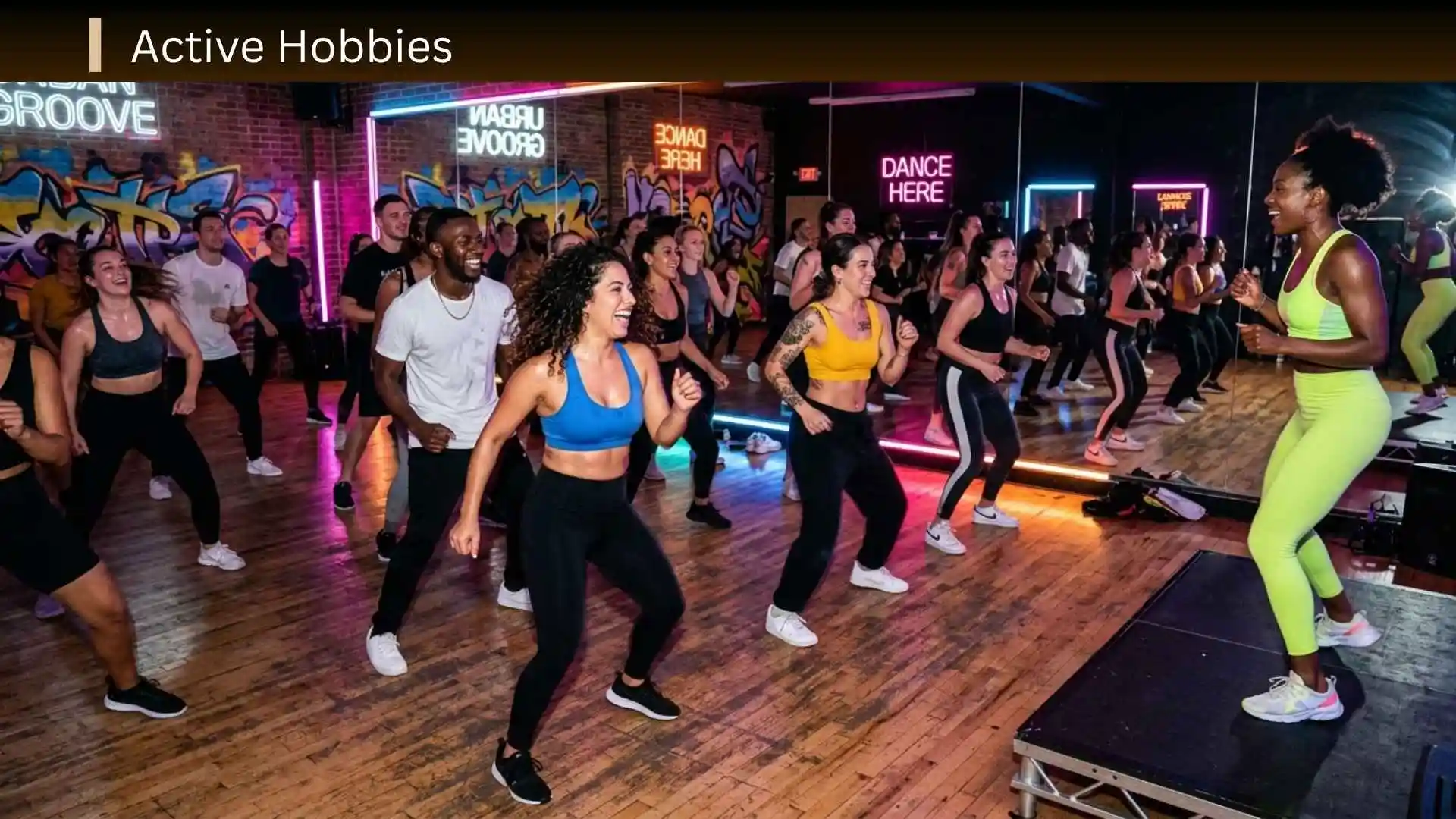
I believe a hobby should be more than something that simply fills your free time it can make you feel energized, motivated, and more connected to yourself. If you spend too much time sitting, scrolling, or repeating the same daily routine, you may be looking for something that gets you moving while still feeling enjoyable. That’s where active hobbies can make a real difference.
You don’t have to be an athlete or spend hours at the gym to get started. From hiking and cycling to dancing, swimming, gardening, skating, or playing a recreational sport, you can choose an activity that matches your interests, fitness level, schedule, and lifestyle. I’ll show you how different active hobbies can turn ordinary free time into something exciting, purposeful, and refreshing so you can find an activity you genuinely look forward to doing.
Active Hobbies(Quick Answer)
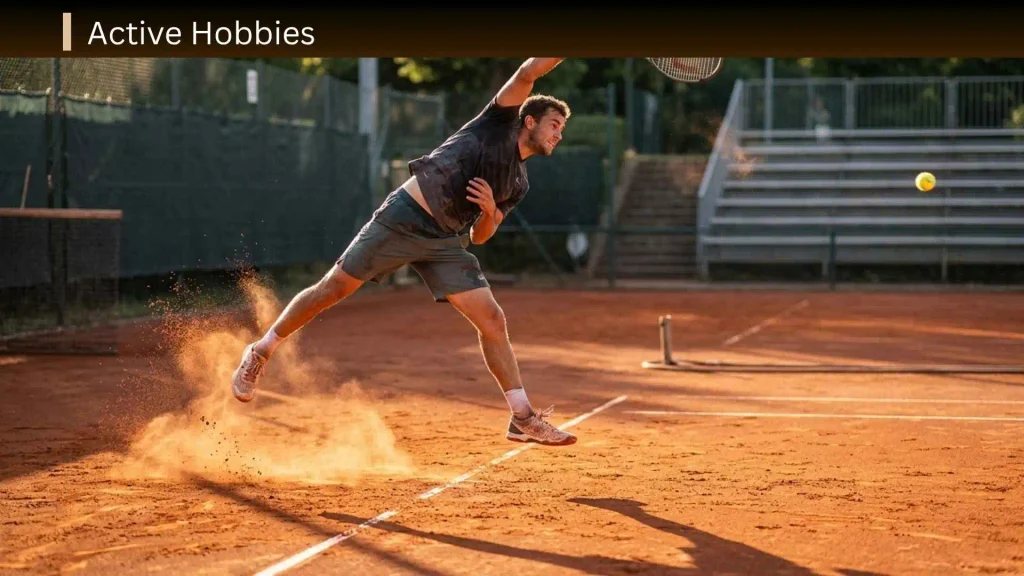
Active hobbies are leisure activities that involve meaningful physical movement rather than primarily sedentary entertainment. They can be outdoor or indoor, solo or social, recreational or skill-based, and their physical demands can vary considerably.
Popular active hobbies include:
- Hiking
- Walking
- Cycling
- Swimming
- Dancing
- Running
- Yoga
- Gardening
- Kayaking
- Rock climbing
- Recreational sports
- Martial arts
- Roller skating
- Skiing and snowboarding
- Paddleboarding
- Geocaching
- Disc golf
- Pickleball
- Tennis
- Golf
- Birdwatching with hiking or walking
- Backpacking
- Camping
- Orienteering
- Rowing
- Martial arts
- Horseback riding
- Skateboarding
- Cross-country skiing
- Photography combined with walking or exploring
You do not have to choose a demanding activity for a hobby to count as active. A regular walking habit, for example, can be a meaningful active hobby if you enjoy exploring different routes, parks, neighborhoods, or trails.
Best Active Hobbies to Try

The right choice depends on what you want from an active hobby. Someone looking for peaceful outdoor time may prefer hiking or gardening, while someone who enjoys competition may gravitate toward tennis, pickleball, or recreational team sports.
1. Hiking
Hiking combines walking with exploration, making it one of the most versatile outdoor active hobbies.
You can choose everything from short local nature trails to full-day mountain hikes. It can also be adapted to different experience levels by changing the distance, terrain, elevation, and pace.
Best for: Nature lovers, explorers, solo hobbyists, couples, and groups
Difficulty: Easy to advanced, depending on terrain
Cost: Low to moderate
Where: Outdoors
What you need: Comfortable footwear, suitable clothing, water, and a route appropriate for your experience
Beginner tip: Start with a well-marked trail that is shorter and less technical than the longest hike you think you can complete. Learning how your body responds to distance and elevation is more useful than trying to maximize mileage immediately.
2. Walking and Urban Exploring
Walking becomes a more engaging hobby when you give it a purpose. You might explore historic neighborhoods, parks, waterfronts, public gardens, or unfamiliar parts of your city.
Urban walking is particularly accessible because it does not require specialized equipment or a trailhead.
Best for: Beginners, people with limited equipment, explorers, and those who prefer lower-impact activities
Difficulty: Easy
Cost: Very low
Where: Indoors or outdoors, depending on the setting
Try creating themed walks, such as photographing interesting architecture, visiting local parks, discovering public art, or exploring independent shops.
3. Cycling
Cycling can be a casual way to explore your surroundings or a highly technical hobby involving road riding, mountain biking, touring, or bikepacking.
One of its biggest advantages is variety. You can ride for 20 minutes around your neighborhood or spend an entire day traveling by bicycle.
Best for: Explorers, commuters, endurance enthusiasts, and people who enjoy mechanical hobbies
Difficulty: Easy to advanced
Cost: Moderate to high depending on the bicycle and equipment
Where: Primarily outdoors
A helmet, properly fitted bicycle, lights when needed, and awareness of local traffic rules are important starting considerations.
4. Swimming
Swimming is an indoor-friendly active hobby that can be practiced throughout the year where suitable facilities are available.
Unlike many outdoor activities, it does not depend heavily on weather. You can focus on learning technique, improving endurance, practicing different strokes, or simply enjoying recreational time in the water.
Best for: People who enjoy water and want an indoor or outdoor activity
Difficulty: Beginner to advanced
Cost: Low to moderate, depending on facility access
Where: Pools, lakes, oceans, and other appropriate swimming environments
Beginners should choose supervised or designated swimming environments and build water skills gradually.
5. Dancing
Dancing combines physical movement with music, rhythm, coordination, and creative expression.
Options include ballroom, salsa, swing, hip-hop, ballet, contemporary dance, line dancing, country dancing, and many other styles. Classes can also provide a built-in social element.
Best for: Social people, music lovers, creative personalities, and beginners who want structured instruction
Difficulty: Beginner to advanced
Cost: Low to moderate
Where: Indoors or outdoors
You do not need to become an accomplished dancer for dancing to work as a hobby. Learning one style you genuinely enjoy can be enough to keep the activity interesting.
6. Running
Running is a straightforward hobby that requires relatively little equipment and can be practiced almost anywhere suitable.
Some people enjoy running for the simplicity of it, while others like having specific goals such as completing a particular distance, participating in local races, or exploring new routes.
Best for: Goal-oriented people and those who enjoy independent activities
Difficulty: Beginner to advanced
Cost: Low to moderate
Where: Outdoors or on a treadmill
New runners should increase their workload gradually rather than immediately copying the mileage of experienced runners.
7. Gardening
Gardening is an active hobby with a productive outcome: you are creating and caring for a living space.
Digging, planting, weeding, watering, moving materials, and maintaining beds can involve substantial movement. Gardening also has a strong learning component because plants respond differently to soil, sunlight, temperature, moisture, and seasonal conditions.
Best for: Nature lovers, home gardeners, patient learners, and people who enjoy creating something tangible
Difficulty: Beginner to advanced
Cost: Low to moderate
Where: Primarily outdoors, with some indoor options
Start with a small container garden or a few easy-to-manage plants rather than creating a large garden immediately.
8. Kayaking
Kayaking provides a way to combine paddling with time on lakes, rivers, or appropriate coastal waters.
The hobby can be recreational and relaxed or develop into a more technical pursuit involving different water conditions and skills.
Best for: Water lovers, explorers, and people who enjoy outdoor adventure
Difficulty: Beginner to advanced depending on conditions
Cost: Moderate to high
Where: Outdoors
Water safety should be treated as part of the hobby rather than an afterthought. Beginners should learn appropriate paddling and safety practices and choose conditions suited to their experience.
9. Paddleboarding
Stand-up paddleboarding, often called SUP, combines balance, paddling, and exploration.
It can be practiced on suitable calm water and can also branch into different forms, including touring and other specialized styles.
Best for: People who enjoy water, balance-based activities, and outdoor recreation
Difficulty: Beginner to advanced
Cost: Moderate to high
Where: Outdoors
Learning how to safely handle the board and paddle in the type of water you intend to use is more important than buying advanced equipment.
10. Pickleball
Pickleball has become a popular recreational racket sport in the United States. It is played on a smaller court than tennis and uses a paddle and perforated plastic ball.
The game can be played recreationally or competitively and naturally creates opportunities for social interaction.
Best for: Social players, beginners, competitive hobbyists, and people who enjoy racket sports
Difficulty: Beginner to advanced
Cost: Low to moderate
Where: Primarily outdoors or in indoor courts
A beginner can learn basic serving, returning, positioning, and scoring before worrying about advanced strategy.
11. Tennis
Tennis offers a combination of movement, hand-eye coordination, technique, and competition.
You can play singles, doubles, casually with friends, or through organized recreational programs. Learning the basic strokes can give you a clear progression path as your skills improve.
Best for: Competitive people, couples, friends, and skill-oriented learners
Difficulty: Beginner to advanced
Cost: Moderate
Where: Indoor or outdoor courts
Beginners often benefit from learning basic technique instead of trying to hit the ball as hard as possible.
12. Golf
Golf is an active outdoor hobby that combines walking, coordination, concentration, and technical skill.
The amount of physical activity varies substantially depending on the course, whether you walk or use a cart, and how you practice.
Best for: People who enjoy precision, outdoor environments, social recreation, and gradual skill development
Difficulty: Beginner to advanced
Cost: Moderate to high
Where: Outdoors, with indoor practice options
Golf can be approached as a relaxed social activity or as a long-term skill-building pursuit.
13. Rock Climbing
Rock climbing challenges problem-solving, grip, balance, coordination, and physical control. Indoor climbing gyms make the hobby accessible without requiring outdoor climbing conditions.
Bouldering is typically performed on shorter climbing walls with appropriate landing surfaces, while roped climbing involves additional equipment and procedures.
Best for: Problem-solvers, adventure seekers, and people who enjoy skill challenges
Difficulty: Beginner to advanced
Cost: Moderate
Where: Indoor and outdoor
Beginners should use qualified instruction and follow the safety procedures of the climbing facility or climbing area.
14. Yoga
Yoga combines physical postures, controlled movement, balance, flexibility work, and focused attention.
It can be practiced at home, in studios, outdoors, or through structured classes. Different approaches can range from gentle sessions to more physically demanding practices.
Best for: People who prefer structured movement, flexibility work, and mind-body practices
Difficulty: Beginner to advanced
Cost: Low to moderate
Where: Indoors or outdoors
A beginner-friendly class can be useful for learning basic positions and movement patterns safely.
15. Martial Arts
Martial arts offer structured learning rather than simply repetitive exercise. Depending on the discipline, training may involve striking, grappling, forms, footwork, controlled sparring, or combinations of these skills.
Examples include karate, judo, Brazilian jiu-jitsu, taekwondo, boxing, and Muay Thai.
Best for: Disciplined learners, people who enjoy structured progression, and those interested in skill-based physical activities
Difficulty: Beginner to advanced
Cost: Moderate
Where: Primarily indoors
Choose a reputable school that emphasizes appropriate instruction, controlled training, and safety.
16. Roller Skating
Roller skating can be recreational, social, or skill-focused. You can skate at rinks, suitable outdoor paths, or participate in specialized forms of skating.
Learning basic balance, stopping, turning, and falling safely should come before attempting advanced tricks.
Best for: People who enjoy music, movement, and skill progression
Difficulty: Beginner to advanced
Cost: Low to moderate
Where: Indoor or outdoor
Protective equipment can be particularly valuable while learning.
17. Skateboarding
Skateboarding is both a physical activity and a technical skill hobby. Progress often comes through learning balance, board control, stopping, turning, and gradually more complex maneuvers.
Best for: Independent learners and people attracted to skill-based action sports
Difficulty: Moderate to advanced
Cost: Moderate
Where: Outdoors and designated skate areas
A helmet and appropriate protective equipment are sensible considerations, particularly for beginners.
18. Disc Golf
Disc golf combines walking through an outdoor course with the technical challenge of throwing a disc toward a target basket.
It is often appealing to people who want an active hobby without the constant pace of a traditional field sport.
Best for: Casual competitors, outdoor enthusiasts, and social groups
Difficulty: Beginner to advanced
Cost: Low
Where: Outdoors
A few beginner-friendly discs are enough to start; there is no need to build a large collection immediately.
19. Geocaching
Geocaching turns outdoor exploration into a location-based treasure hunt. Participants use GPS-enabled technology to locate hidden containers and record their finds according to the activity’s rules.
The physical demand depends on the location, but geocaching can turn an ordinary walk into a more engaging adventure.
Best for: Explorers, families, walkers, and puzzle lovers
Difficulty: Easy to moderate
Cost: Low
Where: Primarily outdoors
Pay attention to terrain, weather, property boundaries, and the difficulty information associated with each cache.
20. Backpacking
Backpacking takes hiking further by combining multi-day travel on foot with carrying necessary equipment and spending nights outdoors.
It requires more preparation than day hiking because route planning, food, shelter, weather, water, navigation, and pack weight become more important.
Best for: Experienced hikers, outdoor travelers, and people who enjoy self-sufficient adventures
Difficulty: Moderate to advanced
Cost: Moderate to high
Where: Outdoors
Start with an established overnight route before attempting remote or technically difficult trips.
21. Camping
Camping can be relatively relaxed or highly active depending on how you approach it. Hiking, paddling, fishing, exploring, setting up camp, and traveling between campsites can all become part of the hobby.
It is particularly flexible because the level of physical challenge is determined largely by the activities you choose.
Best for: Families, couples, outdoor enthusiasts, and people who want a broader outdoor hobby
Difficulty: Beginner to advanced
Cost: Low to high depending on equipment and style
Where: Outdoors
You can begin with established campgrounds rather than immediately investing in specialized backcountry equipment.
22. Orienteering
Orienteering combines navigation with movement. Participants use a map and compass to find designated points, making it an appealing choice for people who want both physical activity and mental challenge.
Best for: Puzzle solvers, navigators, runners, and outdoor learners
Difficulty: Moderate
Cost: Low
Where: Outdoors
Learning basic map-reading and compass skills is useful before tackling more complicated courses.
23. Rowing
Rowing can be practiced on water or indoors on rowing machines, depending on the form of the hobby.
On-water rowing adds technical boat handling and environmental considerations, while indoor rowing provides a convenient way to practice the movement year-round.
Best for: People who enjoy repetitive technique, water activities, or structured training
Difficulty: Beginner to advanced
Cost: Low to high depending on access and equipment
Where: Indoor or outdoor
Instruction is especially useful for learning efficient rowing technique.
24. Horseback Riding
Horseback riding combines physical coordination with learning how to communicate with and care for a horse.
Unlike an activity where equipment is simply an object, riding involves another living animal, so responsible handling and stable etiquette are important parts of the hobby.
Best for: Animal lovers, outdoor enthusiasts, and people interested in developing a long-term skill
Difficulty: Beginner to advanced
Cost: Moderate to high
Where: Primarily outdoors and at riding facilities
Beginners should learn through an experienced instructor and established riding program.
25. Birdwatching With Hiking
Birdwatching does not have to be sedentary. Combining it with walking through parks, wetlands, forests, or nature preserves creates a hobby that engages both observation and movement.
The challenge can come from identifying species, understanding habitats, and learning to notice behavior rather than simply accumulating steps.
Best for: Nature observers, photographers, hikers, and patient learners
Difficulty: Easy to moderate
Cost: Low to moderate
Where: Outdoors
Binoculars can help, but they are not essential for getting started.
26. Recreational Team Sports
Team sports such as soccer, basketball, softball, volleyball, and flag football can provide a strong social component alongside physical activity.
Adult recreational leagues are particularly useful for people who want regular games and scheduled interaction rather than exercising alone.
Best for: Social and competitive personalities
Difficulty: Beginner to advanced
Cost: Low to moderate
Where: Indoor or outdoor depending on the sport
Look for beginner-friendly recreational leagues if you are returning to a sport after a long break.
27. Cross Country Skiing
Cross-country skiing provides an active winter hobby for people who enjoy snow-covered landscapes and sustained outdoor movement.
It can be practiced recreationally or developed into a more technical endurance sport.
Best for: Winter enthusiasts and outdoor explorers
Difficulty: Moderate to advanced
Cost: Moderate to high
Where: Outdoors
Weather, snow conditions, route selection, clothing, and familiarity with winter environments should all influence your plans.
28. Skiing and Snowboarding
Downhill skiing and snowboarding combine technique, balance, terrain awareness, and outdoor adventure.
They have a higher equipment and access barrier than walking or running, but they can become deeply engaging skill-based hobbies.
Best for: Adventure seekers and winter sports enthusiasts
Difficulty: Beginner to advanced
Cost: High
Where: Outdoors
Professional lessons can make the learning process more structured and help beginners develop foundational skills before attempting challenging terrain.
29. Active Photography
Photography is not inherently an active hobby, but it can become one when it is built around walking, hiking, wildlife observation, street exploration, or landscape trips.
Instead of driving directly to a destination and taking a few pictures, photographers can deliberately explore an area on foot.
Best for: Creative people who enjoy exploration
Difficulty: Beginner to advanced
Cost: Low to high depending on equipment
Where: Indoor and outdoor
A smartphone is enough to begin. The more important first step is learning to observe light, composition, subjects, and interesting moments.
30. Fishing With an Outdoor Focus
Fishing can range from stationary relaxation to a highly active outdoor hobby involving hiking to remote waters, wading, casting, and exploring different locations.
Its appeal often comes from patience and environmental observation as much as physical movement.
Best for: Outdoor enthusiasts, patient hobbyists, and people who enjoy nature
Difficulty: Beginner to advanced
Cost: Low to high
Where: Outdoors
Follow local fishing regulations, access rules, and water-safety guidance.
Active Hobbies by Activity Level
Not every person wants the same amount of physical challenge. Thinking in terms of activity level can narrow your choices.
| Activity Level | Active Hobby Examples | Why Choose Them |
| Gentle | Walking, easy gardening, casual photography, beginner yoga | Accessible movement and flexible pacing |
| Moderate | Hiking, cycling, swimming, dancing, pickleball, golf | More sustained movement with room to adjust intensity |
| Challenging | Running, tennis, climbing, martial arts, rowing | Greater technical or physical demands |
| Adventure-focused | Backpacking, kayaking, skiing, snowboarding, horseback riding | Combines movement with outdoor exploration |
| Skill-focused | Climbing, tennis, martial arts, skateboarding, dancing | Provides a clear learning and progression element |
These categories are approximate rather than fixed. A difficult hike may be far more demanding than a casual cycling trip, while an experienced cyclist may find the same route relatively easy.
Best Active Hobbies for Beginners

If you are new to active hobbies, start with activities where you can easily control the pace and difficulty.
Good starting points include:
- Walking
- Easy hiking
- Gardening
- Swimming
- Recreational cycling
- Beginner yoga
- Dancing
- Geocaching
- Casual golf
- Beginner-friendly pickleball
- Disc golf
The easiest hobby to maintain is often the one with the fewest barriers between you and participation. If reaching a climbing gym requires a long drive and expensive equipment, while a local walking trail is five minutes away, the simpler option may be more sustainable.
Best Active Hobbies for People Who Prefer the Outdoors
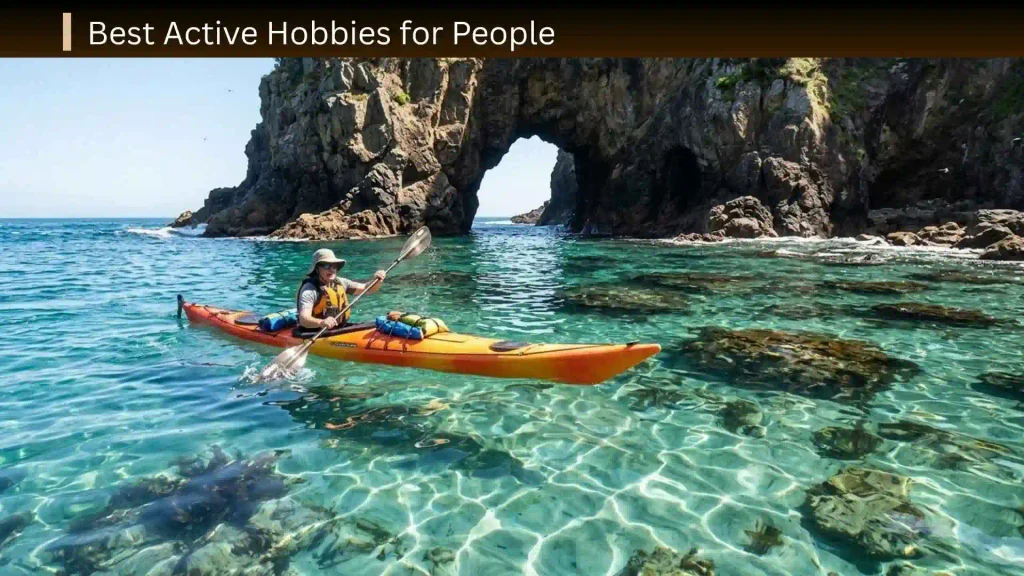
Outdoor hobbies can add exploration and environmental variety to physical activity.
Consider:
- Hiking
- Cycling
- Kayaking
- Paddleboarding
- Camping
- Backpacking
- Gardening
- Birdwatching
- Fishing
- Disc golf
- Geocaching
- Horseback riding
- Orienteering
- Skiing
- Snowboarding
Outdoor hobbies also change naturally with seasons. Cycling may be more appealing during warmer months, while skiing or snowboarding can provide a completely different winter activity.
Best Active Hobbies for Social People
If meeting people is one of your main reasons for choosing a hobby, look for activities with built-in interaction.
Strong options include:
- Pickleball
- Tennis
- Dancing
- Recreational soccer
- Volleyball
- Basketball
- Martial arts classes
- Group hiking
- Cycling groups
- Golf
- Running clubs
- Climbing gyms
- Bowling combined with active recreation
Classes and leagues can be especially useful because they create recurring opportunities to see the same people rather than relying on chance encounters.
Best Active Hobbies You Can Do Alone
Some people prefer movement without coordinating schedules with others.
Good solo choices include:
- Walking
- Running
- Hiking
- Cycling
- Swimming
- Gardening
- Yoga
- Photography walks
- Geocaching
- Fishing
- Skateboarding
- Paddleboarding
- Backpacking, with appropriate preparation and route selection
Solo hobbies can also be flexible. You can choose when to participate and adjust the duration according to your schedule.
Best Low Cost Active Hobbies
You do not need expensive equipment or a membership to become more active through a hobby.
Some of the most accessible options are:
- Walking — requires little beyond appropriate footwear.
- Hiking — local trails can provide a free or inexpensive activity.
- Gardening — a few containers can be enough to begin.
- Running — basic running clothing and suitable shoes may be sufficient.
- Geocaching — many people can begin with a GPS-enabled smartphone.
- Yoga — basic movement can be practiced with minimal equipment.
- Photography walks — a phone can serve as the camera.
- Disc golf — a small amount of equipment can be enough for recreational play.
“Low cost” does not mean completely free. Transportation, appropriate clothing, facility fees, or equipment can still add expenses.
Active Hobbies for Small Spaces
If you live in an apartment or have limited outdoor space, choose hobbies that do not require a large practice area.
Useful options include:
- Yoga
- Dance practice
- Mobility and stretching routines
- Indoor gardening
- Bodyweight movement activities
- Indoor rowing if you have suitable equipment and space
- Balance and coordination practice
- Indoor climbing at a nearby gym
- Dance-based video games
For very small spaces, the goal is not to recreate a sports field indoors. Choose activities that work naturally within your available room.
Active Hobbies for Different Personalities

Your personality can be a useful filter when deciding what to try.
If You Like Competition
Consider:
- Tennis
- Pickleball
- Running races
- Golf
- Martial arts
- Recreational team sports
- Disc golf
If You Prefer Creativity
Consider:
- Dancing
- Active photography
- Gardening
- Skateboarding
- Dance-based movement
- Outdoor nature journaling combined with walking
If You Love Nature
Consider:
- Hiking
- Birdwatching
- Kayaking
- Fishing
- Gardening
- Camping
- Backpacking
- Orienteering
- Geocaching
If You Like Learning Skills
Consider:
- Climbing
- Martial arts
- Tennis
- Cycling
- Rowing
- Dancing
- Skateboarding
- Photography combined with outdoor exploration
If You Prefer Peace and Solitude
Consider:
- Walking
- Hiking
- Gardening
- Fishing
- Solo cycling
- Photography walks
- Paddleboarding in appropriate conditions
- Birdwatching
Active Hobbies vs. Exercise: What’s the Difference?
An active hobby and a formal exercise routine can overlap, but they are not necessarily the same thing.
Exercise is usually undertaken deliberately for physical conditioning, performance, or health-related goals. An active hobby is primarily a leisure activity that you enjoy, with movement being an important part of the experience.
For example:
- Running specifically to train for a race can be exercise-focused.
- Running because you enjoy discovering new routes can function as a hobby.
- Gardening can be a hobby even though it involves physical work.
- Hiking can be both recreation and structured physical training.
- Dancing can be entertainment, skill development, social activity, and physical movement at the same time.
This distinction matters because enjoyment can make an activity feel less like a task. You can also combine an active hobby with a separate exercise routine if you have specific fitness goals.
How to Choose the Right Active Hobby
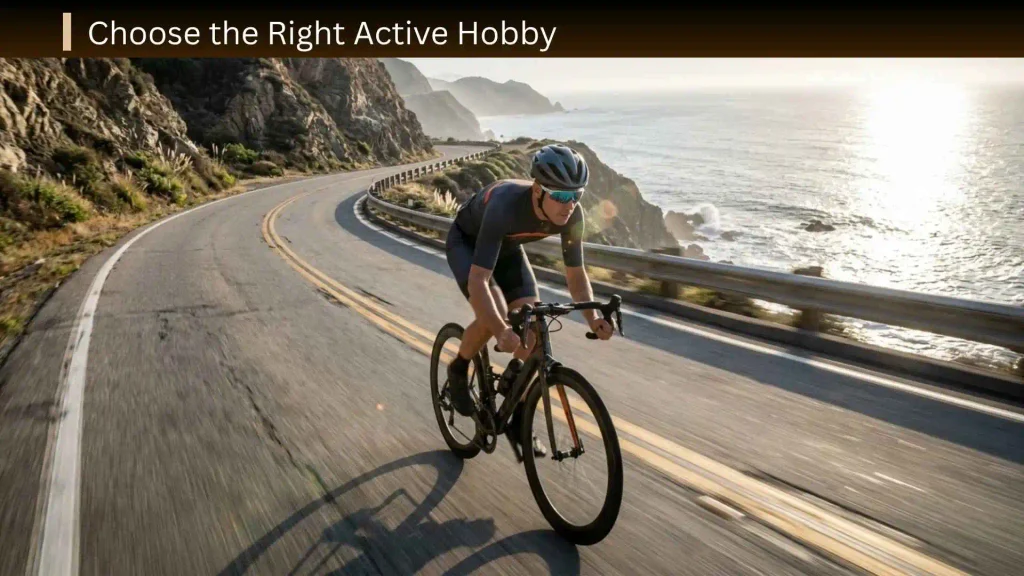
Instead of choosing an activity because it is currently popular, consider five practical questions.
1. What Kind of Movement Do You Enjoy?
Some people enjoy steady movement such as walking or cycling. Others prefer quick changes in direction, such as tennis or pickleball. Some enjoy balance and technique, while others prefer endurance.
Pay attention to the type of movement that feels interesting rather than simply asking which activity is “best.”
2. How Much Time Do You Have?
A hobby requiring a two-hour trip to a mountain may be difficult to maintain if you have only an hour available.
Compare the full time commitment, including:
- Travel
- Preparation
- Setup
- Participation
- Cleanup
- Equipment maintenance
A nearby activity may fit your life better than a more exciting hobby that requires extensive planning.
3. What Is Your Budget?
Costs can come from more than the basic equipment.
Consider:
- Equipment
- Clothing
- Facility memberships
- Lessons
- Transportation
- Entry fees
- Maintenance
- Storage
Walking and gardening can start inexpensively, while skiing, horseback riding, and some forms of cycling can require significantly greater investment.
4. Do You Want Solitude or Social Interaction?
If you enjoy meeting people, a class, club, league, or group activity may provide additional motivation.
If you value independence, choose an activity that does not depend on finding a partner every time you want to participate.
5. Do You Want a Skill to Master?
Some active hobbies are mainly about the experience. Others offer almost endless skill progression.
If you enjoy learning, activities such as climbing, tennis, martial arts, dancing, cycling, photography, and skiing can provide increasingly sophisticated techniques to work on.
How to Make an Active Hobby More Enjoyable
An active hobby does not have to become another obligation on your calendar.
Try making it more engaging by adding a secondary interest:
- Combine hiking with photography.
- Combine walking with urban exploration.
- Combine cycling with discovering local cafés or parks.
- Combine gardening with learning about native plants.
- Combine birdwatching with hiking.
- Combine fishing with camping.
- Combine dancing with social events.
- Combine geocaching with weekend exploration.
- Combine golf with a social group.
- Combine running with discovering new routes.
This approach gives the activity more than one source of enjoyment.
Common Mistakes When Starting an Active Hobby
Choosing Based Only on Popularity
A hobby can be popular and still be a poor fit for you. Your preferences, schedule, location, and budget matter more than trends.
Buying Too Much Equipment
Beginners sometimes purchase advanced equipment before understanding what they actually enjoy. Start with the essentials and upgrade when your experience gives you a reason to do so.
Starting at an Advanced Level
Trying to match an experienced participant immediately can make a new hobby frustrating. Begin with an appropriate difficulty level and let your skills develop.
Ignoring Logistics
A hobby may look perfect on paper but become impractical because of travel time, weather, facility availability, or storage requirements.
Treating Every Session Like a Test
You do not have to set a personal record every time. Recreational hobbies can include practice, exploration, social time, and relaxed sessions.
Forgetting Safety
For activities involving water, heights, vehicles, animals, specialized equipment, or challenging terrain, learning the appropriate safety practices is part of becoming competent at the hobby.
How to Turn an Active Hobby Into a Long-Term Interest
Long-term participation usually becomes easier when the hobby has enough variety to prevent boredom.
You can create progression by:
- Learning a new technique
- Exploring a new location
- Joining a club
- Taking a beginner or intermediate class
- Setting a personal project
- Participating in an event
- Tracking skills rather than only performance
- Teaching a basic skill to a friend
- Combining the hobby with another interest
- Trying different versions of the same activity
For example, a casual cyclist might eventually explore longer routes, bike touring, mountain biking, or cycling photography. A gardener might move from containers to vegetables, native plants, landscaping, or seed starting.
Active Hobbies for Each Season
Choosing hobbies according to the season can keep your lifestyle varied.
Spring
Good options include:
- Gardening
- Hiking
- Cycling
- Running
- Tennis
- Birdwatching
- Walking
- Kayaking as conditions permit
Summer
Consider:
- Swimming
- Paddleboarding
- Kayaking
- Camping
- Hiking
- Cycling
- Fishing
- Outdoor sports
- Gardening
Fall
Fall can be especially appealing for:
- Hiking
- Photography walks
- Cycling
- Camping
- Gardening
- Geocaching
- Golf
- Orienteering
Winter
Depending on your location and access to facilities:
- Skiing
- Snowboarding
- Cross-country skiing
- Ice skating
- Indoor climbing
- Swimming
- Martial arts
- Dancing
- Indoor yoga
The best seasonal hobby is also dependent on local weather and conditions, so an activity that works well in Florida may be impractical in Minnesota during the same month.
How to Get Started Without Overcommitting
You do not need to decide immediately that a hobby will become a permanent part of your life.
Use a trial approach:
- Choose two or three activities that genuinely interest you.
- Try the beginner version rather than the advanced version.
- Borrow or rent equipment when that is practical.
- Take an introductory class for skill-based activities.
- Try the hobby several times before judging it.
- Notice what you look forward to, not just what seems productive.
- Keep the option that fits your real life.
An activity that is slightly less exciting but easy to access may ultimately become a stronger hobby than something spectacular that you can only do a few times a year.
Frequently Asked Questions About Active Hobbies
What is the best active hobby for beginners?
Walking, easy hiking, recreational cycling, swimming, gardening, beginner yoga, dancing, and geocaching are accessible starting points. The best choice depends on your interests, physical ability, available time, location, and budget.
What are some active hobbies that don’t feel like exercise?
Dancing, hiking, kayaking, gardening, recreational sports, cycling, photography walks, geocaching, and horseback riding can feel more like recreation than formal exercise because the activity has another purpose or source of enjoyment.
What is a good active hobby to do alone?
Walking, hiking, running, cycling, gardening, swimming, fishing, photography walks, geocaching, and yoga can all work well as solo hobbies.
What are the best social active hobbies?
Pickleball, tennis, dancing, recreational team sports, group hiking, running clubs, martial arts classes, golf, cycling groups, and climbing gyms can provide regular opportunities for social interaction.
What are the cheapest active hobbies?
Walking, running, hiking, gardening, geocaching, and some forms of yoga can be started with relatively little equipment. Local access and transportation costs can affect the total expense.
What active hobbies can I do indoors?
Swimming, dancing, yoga, martial arts, indoor climbing, roller skating, indoor rowing, and some forms of strength or movement training can be practiced indoors. Indoor options are particularly useful when weather makes outdoor activities impractical.
Are active hobbies suitable for people who are not athletic?
Yes. Active hobbies cover a wide range of movement demands. Walking, gardening, beginner yoga, casual swimming, easy hiking, and recreational activities can be approached at a comfortable level and developed gradually.
How do I stay motivated to continue an active hobby?
Choose something you actually enjoy, make participation convenient, and give yourself reasons to look forward to it. Social groups, new locations, skill progression, personal projects, and occasional challenges can also keep an activity interesting.
Conclusion
Active hobbies do not have to mean intense training or competitive sports. They can be as simple as exploring your neighborhood on foot, caring for a garden, photographing a trail, or joining a recreational pickleball game.
The strongest choice is one that matches your interests, available time, budget, environment, and preferred level of challenge. Start with an activity that is realistic to try, learn the basics, and give yourself enough time to discover whether you genuinely enjoy it.

I’m James Anderson, a dedicated writer and lifelong learner who enjoys researching topics and explaining them in a practical way. Through my work at Cognivoora, I aim to give readers reliable, easy-to-follow information that helps them learn something new. I always try to keep my writing natural, useful, and focused on the questions readers actually have.
Books:
- A Practical Guide to Better Thinking
- Questions Worth Asking