
If you’re looking for a hobby that gets you moving, challenges your skills, and makes your free time more exciting, action hobbies are worth exploring. I believe a great hobby should give you more than something to do.
It should give you a reason to get up, try something new, and push yourself a little further. Whether you enjoy outdoor adventures, sports, speed, competition, or hands-on challenges, you can find an action hobby that matches your personality and comfort level. In this guide, you’ll discover exciting ideas that can help you choose an activity you’ll actually look forward to doing.
What Are the Best Action Hobbies (Quick Answer)
Some of the best action hobbies for adults and teens include:
- Mountain biking
- Skateboarding
- BMX riding
- Rock climbing
- Bouldering
- Surfing
- Kayaking
- Whitewater rafting
- Snowboarding
- Skiing
- Parkour
- Trail running
- Scuba diving
- Snorkeling
- Stand-up paddleboarding
- Longboarding
- Roller skating
- Inline skating
- Motocross
- Off-road driving
- Archery
- Paintball
- Airsoft
- Geocaching
- Hiking and scrambling
- Zip lining
- Paragliding
- Skydiving
- Kitesurfing
- Wakeboarding
The right choice depends less on how extreme an activity looks and more on what you want from the hobby. Someone looking for an inexpensive way to practice regularly may prefer skateboarding, running, or hiking, while someone seeking adventure and travel may gravitate toward surfing, diving, climbing, or whitewater sports.
Best Action Hobbies to Try
1. Mountain Biking
Mountain biking combines cycling with uneven terrain, climbs, descents, obstacles, and route-finding. Unlike ordinary road cycling, the terrain becomes part of the challenge.
Why try it: You can gradually progress from relatively smooth trails to technically demanding terrain as your skills improve.
Best for: People who enjoy outdoor exercise, exploration, and learning bike-handling skills.
Difficulty: Beginner to advanced
Cost: Moderate to high
Time: Moderate to high
Where: Outdoor trails
A beginner does not need an expensive racing bike. A properly sized trail-capable bike, helmet, appropriate clothing, water, and a suitable beginner trail are more important than immediately buying high-end equipment.
2. Skateboarding
Skateboarding is an action hobby centered on balance, board control, footwork, and progressive trick development. It can be practiced at skateparks, suitable private spaces, or other permitted areas.
Why try it: Progress is easy to measure. Learning to push, turn, stop, ride ramps, and eventually perform tricks creates a clear skill ladder.
Best for: Beginners who want an individual hobby with a strong practice-and-progression element.
Difficulty: Beginner to advanced
Cost: Moderate
Time: Flexible
Where: Primarily outdoors
Start with basic balance, controlled stopping, and turning before attempting jumps or complex tricks. A helmet and appropriate protective equipment are particularly sensible when learning.
3. BMX Riding
BMX includes several disciplines, from park and street riding to racing and dirt jumping. It offers more specialized skill development than ordinary recreational cycling.
Why try it: BMX gives riders many directions to explore, so someone who does not enjoy racing can focus on freestyle riding, jumps, or technical tricks instead.
Best for: People who like bicycles but want a more skill-intensive action sport.
Difficulty: Moderate to advanced
Cost: Moderate to high
Where: Skateparks, BMX tracks, streets where permitted, and dirt facilities
Begin with bike control and fundamental riding skills. Jumps and advanced tricks should be learned progressively in an appropriate environment.
4. Rock Climbing
Rock climbing involves moving over a rock face or artificial climbing wall using handholds, footholds, body positioning, and route-reading skills.
Indoor climbing makes this hobby particularly approachable for beginners because climbing gyms provide controlled environments and instruction. Outdoor climbing introduces additional environmental and equipment considerations.
Why try it: It combines physical movement with problem-solving. You have to decide where to place your hands and feet while managing balance and energy.
Best for: People who enjoy challenges, puzzles, heights, and measurable skill progression.
Difficulty: Beginner to advanced
Cost: Moderate
Where: Indoor gyms and outdoor climbing areas
If you are new to climbing, an introductory class or supervised session is preferable to learning technical rope systems independently.
5. Bouldering
Bouldering is a form of climbing performed on shorter walls without the ropes used in conventional roped climbing. Indoor bouldering gyms offer marked problems with different difficulty levels.
Why try it: It has a lower equipment barrier than many forms of climbing and lets you focus heavily on movement and route-solving.
Best for: People who want climbing skills without committing immediately to ropes, harnesses, and outdoor climbing systems.
Difficulty: Beginner to advanced
Cost: Moderate
Where: Mostly indoor gyms, with outdoor options
The relatively short walls do not mean the activity is risk-free. Learn safe falling and landing practices and use appropriate gym equipment.
6. Surfing
Surfing involves riding waves on a board and requires balance, timing, paddling ability, and an understanding of water conditions.
Why try it: The environment constantly changes, so even familiar breaks can present new challenges.
Best for: Ocean lovers who enjoy skill development and outdoor adventure.
Difficulty: Moderate to advanced
Cost: Moderate to high
Where: Ocean beaches with appropriate conditions
Beginners should learn in suitable conditions rather than choosing waves based purely on appearance. A qualified instructor can help with water awareness, board handling, and surf etiquette.
7. Kayaking
Kayaking can mean calm-water paddling, touring, sea kayaking, or whitewater kayaking. These versions vary substantially in technical difficulty.
Why try it: It combines exploration with paddling skills and can provide access to waterways that are difficult to experience from shore.
Best for: People who enjoy water, nature, and exploration.
Difficulty: Beginner to advanced, depending on discipline
Cost: Moderate to high
Where: Lakes, rivers, and coastal waters
A calm-water kayaking trip is a very different starting point from technical whitewater. Beginners should choose an appropriate body of water and learn basic water-safety skills before progressing.
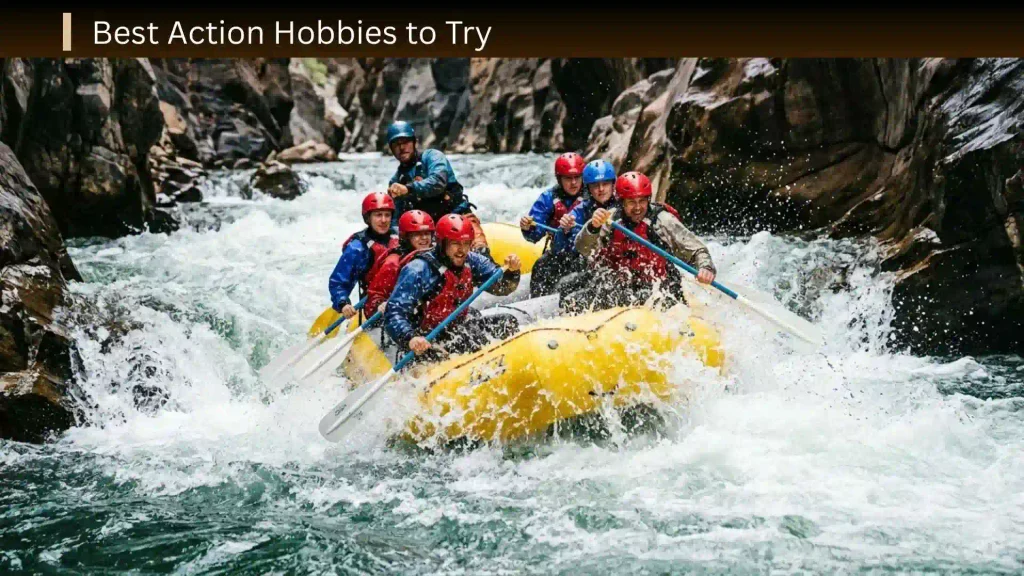
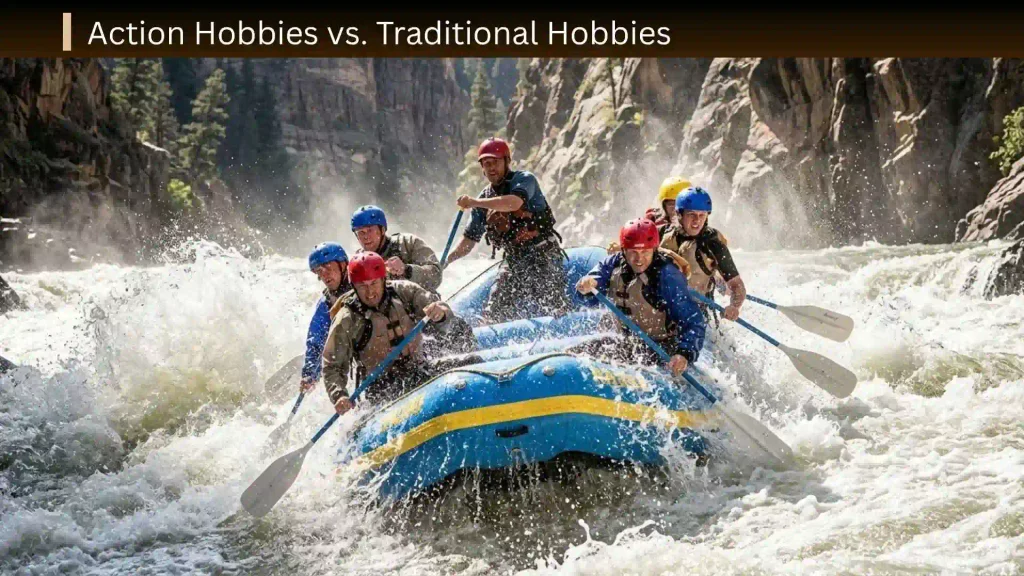
8. Whitewater Rafting
Whitewater rafting turns river travel into a group adventure involving waves, rapids, paddling, and coordinated movement.
Why try it: Unlike many solo action hobbies, rafting emphasizes teamwork. Everyone in the boat contributes to navigating the river.
Best for: People who want an exciting outdoor experience without necessarily owning specialized equipment.
Difficulty: Varies by river and rapid classification
Cost: Moderate
Where: Rivers with commercial or recreational rafting operations
For beginners, a guided commercial trip is generally a more sensible introduction than attempting technical whitewater independently.
9. Skiing
Downhill skiing combines balance, turning, speed control, and terrain management. Ski resorts also provide a progression from beginner slopes to more challenging terrain.
Why try it: It is both a recreational activity and a long-term skill hobby. You can spend years improving technique rather than simply “finishing” the hobby.
Best for: People who enjoy winter, mountains, and skill-based outdoor activities.
Difficulty: Beginner to advanced
Cost: Moderate to high
Where: Ski resorts and appropriate snowy terrain
Lessons can help beginners develop braking, turning, lift use, and slope awareness before progressing to steeper terrain.
10. Snowboarding
Snowboarding uses a single board and requires a different balance and movement pattern from skiing.
Why try it: Once basic control develops, riders can explore carving, terrain parks, freeriding, and other disciplines.
Best for: People who prefer board sports or want a winter action hobby.
Difficulty: Beginner to advanced
Cost: Moderate to high
Where: Snow resorts and appropriate terrain
Beginners often benefit from professional instruction because early technique affects balance and edge control.
11. Parkour
Parkour involves moving through environments efficiently using skills such as running, jumping, climbing, vaulting, and landing.
Why try it: Unlike many action hobbies, parkour can emphasize body control rather than specialized equipment.
Best for: People who enjoy movement, coordination, and creative problem-solving.
Difficulty: Beginner to advanced
Cost: Low to moderate
Where: Gyms, structured training spaces, and suitable permitted environments
Progression matters. Basic landing, balance, mobility, and controlled movement should come before larger jumps or more complex obstacles.
12. Trail Running
Trail running takes running away from smooth pavement and onto natural surfaces such as dirt paths, hills, and wooded trails.
Why try it: The terrain introduces variety. Roots, rocks, elevation changes, and changing surfaces require more attention to foot placement than ordinary road running.
Best for: Runners who want exploration and varied terrain.
Difficulty: Beginner to advanced
Cost: Low to moderate
Where: Outdoor trails
Start with shorter, familiar routes. Trail conditions can change with weather, so footwear, hydration, navigation, and weather awareness become more important as distances increase.
13. Scuba Diving
Scuba diving allows participants to explore underwater environments while using breathing equipment and other specialized gear.
Why try it: It combines adventure, marine exploration, technical learning, and travel.
Best for: People fascinated by oceans, marine environments, and structured skill training.
Difficulty: Moderate
Cost: High
Where: Certified dive sites, training pools, and suitable open water
Scuba diving is not a hobby to approach casually. Formal instruction and appropriate certification are important parts of becoming a competent recreational diver.
14. Snorkeling
Snorkeling offers a simpler way to explore shallow underwater environments using a mask, snorkel, and fins.
Why try it: It provides an accessible introduction to observing marine life without the same equipment requirements as scuba diving.
Best for: Beginners, travelers, families, and people curious about underwater environments.
Difficulty: Beginner
Cost: Low to moderate
Where: Suitable beaches, reefs, and calm water
Water confidence and awareness of currents matter more than having expensive equipment. Never treat calm-looking water as automatically safe.
15. Stand Up Paddleboarding
Stand-up paddleboarding, or SUP, involves standing on a large board and moving through the water with a paddle.
Why try it: It can be peaceful on calm water but still provides a balance and paddling challenge. Different forms include recreational touring, racing, surfing, and fishing.
Best for: People who want a water hobby with adjustable intensity.
Difficulty: Beginner to moderate
Cost: Moderate to high
Where: Lakes, calm rivers, and suitable coastal areas
Choose conditions appropriate to your experience and wear suitable personal flotation equipment where required or recommended.
16. Longboarding
Longboarding is related to skateboarding but uses longer boards designed for different riding styles, including cruising, carving, and downhill disciplines.
Why try it: Cruising can provide a relatively straightforward introduction to board riding, while advanced disciplines become much more technical.
Best for: People who want a transportation-oriented or carving-focused board hobby.
Difficulty: Beginner to advanced
Cost: Moderate
Where: Suitable paved areas
Beginners should prioritize controlled speed and stopping ability before attempting hills.
17. Roller Skating
Roller skating offers a relatively accessible way to practice balance, rhythm, footwork, and movement.
Why try it: You can use it for casual skating, fitness-oriented sessions, dance skating, or more technical disciplines.
Best for: People who want an active hobby without needing a large outdoor space.
Difficulty: Beginner to advanced
Cost: Low to moderate
Where: Indoor rinks and suitable outdoor surfaces
Protective equipment is useful while learning, particularly when developing stopping and turning skills.
18. Inline Skating
Inline skating uses skates with wheels arranged in a line and can range from recreational skating to aggressive skating and racing.
Why try it: It offers a combination of speed, balance, endurance, and technical control.
Best for: People who enjoy skating but want a different feel from traditional quad skates.
Difficulty: Beginner to advanced
Cost: Moderate
Where: Parks, trails, rinks, and appropriate paved areas
Learning to stop reliably should come before focusing on speed.
19. Motocross
Motocross is an off-road motorcycle sport involving purpose-built tracks, jumps, corners, and changing terrain.
Why try it: It combines mechanical interest with demanding riding skills and competitive progression.
Best for: Experienced riders interested in motorcycles and motorsports.
Difficulty: Advanced
Cost: High
Where: Designated motocross facilities
This is one of the action hobbies where proper training, protective equipment, appropriate motorcycles, and designated riding areas are especially important.
20. Off Road Driving
Off-road driving involves operating suitable vehicles on dirt, rocks, mud, sand, or other challenging terrain.
Why try it: It adds navigation, vehicle-control, recovery, and mechanical considerations to driving.
Best for: People interested in vehicles, outdoor exploration, and practical mechanical skills.
Difficulty: Moderate to advanced
Cost: High
Where: Legal off-road parks and designated trails
Stay on legal routes and learn basic vehicle recovery and environmental practices before tackling difficult terrain.
21. Archery
Archery involves shooting arrows toward targets using a bow. While it is less physically intense than some action sports, it is highly skill-oriented and requires concentration, coordination, and controlled technique.
Why try it: It provides a measurable progression from basic form to target accuracy and specialized disciplines.
Best for: People who enjoy precision, repetition, and structured practice.
Difficulty: Beginner to advanced
Cost: Moderate
Where: Archery ranges and other permitted practice facilities
Use appropriate equipment for your experience level and follow range rules. Never shoot toward people, buildings, roads, or any area without a secure backstop.
22. Paintball
Paintball combines movement, teamwork, strategy, and competitive play.
Why try it: It adds tactical decision-making to physical activity without requiring the long-term equipment commitment of some action sports.
Best for: Groups of friends, competitive players, and people who enjoy team challenges.
Difficulty: Beginner to advanced
Cost: Moderate
Where: Paintball fields
Use a reputable field and keep required protective equipment on whenever field rules require it.
23. Airsoft
Airsoft is a team-oriented recreational activity involving realistic-looking replica equipment and organized games.
Why try it: The appeal comes from teamwork, movement, communication, and scenario-based play.
Best for: People interested in tactical games and organized outdoor recreation.
Difficulty: Beginner to advanced
Cost: Moderate
Where: Designated airsoft fields
Only use equipment according to local laws and field rules, transport replicas responsibly, and use required eye and face protection.
24. Geocaching
Geocaching turns outdoor exploration into a location-based treasure hunt using GPS-enabled devices or smartphone applications.
Why try it: It provides a reason to explore parks, neighborhoods, trails, and unfamiliar places while adding a puzzle-solving element.
Best for: Families, walkers, travelers, and people who want an action hobby without extreme physical demands.
Difficulty: Beginner
Cost: Low
Where: Urban and outdoor environments
It is particularly useful for people who want adventure without committing to expensive equipment or formal training.
25. Hiking and Scrambling
Hiking can be relaxed, strenuous, social, or highly adventurous depending on the terrain. Scrambling adds steeper terrain where hands may occasionally be needed for balance or movement.
Why try it: It has one of the widest ranges of difficulty. A beginner can start with an easy local trail and gradually move toward longer or more technical routes.
Best for: Almost anyone who enjoys outdoor exploration and wants an adaptable hobby.
Difficulty: Beginner to advanced
Cost: Low to moderate
Where: Parks, trails, mountains, and public lands where permitted
For more remote or difficult hikes, navigation, weather planning, water, appropriate clothing, and emergency preparation become increasingly important.
26. Wakeboarding
Wakeboarding involves riding a board while being pulled behind a boat or cable system.
Why try it: It combines board control with water skills and offers a clear progression from basic riding to jumps and tricks.
Best for: People who enjoy water sports and board sports.
Difficulty: Moderate to advanced
Cost: Moderate to high
Where: Lakes and dedicated cable parks
A lesson can help beginners learn basic stance, starts, falls, and board control before attempting tricks.
27. Kitesurfing
Kitesurfing combines a board with a controllable kite, using wind power to move across water.
Why try it: It provides a distinctive combination of board riding, weather awareness, and kite control.
Best for: Experienced outdoor enthusiasts who enjoy learning technical skills.
Difficulty: Advanced
Cost: High
Where: Appropriate windy waterways and beaches
Because wind and weather can change quickly, professional instruction is strongly preferable to self-teaching the fundamentals.
28. Paragliding
Paragliding involves launching and flying beneath a fabric wing while using air currents and controls to manage the flight.
Why try it: It offers an entirely different kind of outdoor experience centered on flight, weather, and controlled movement through the air.
Best for: People attracted to aviation and adventure who are willing to undertake formal training.
Difficulty: Advanced
Cost: High
Where: Approved flying sites
This is not a casual beginner activity. Training, appropriate equipment, weather assessment, site rules, and qualified instruction are essential.
29. Skydiving
Skydiving involves exiting an aircraft and descending under a parachute. Tandem skydiving allows newcomers to experience the activity with a qualified instructor.
Why try it: For some people, the appeal is the unique combination of challenge, controlled risk, and a memorable experience.
Best for: Adults who want an occasional high-adventure experience rather than a hobby they practice casually every week.
Difficulty: Advanced
Cost: High
Where: Licensed drop zones
Anyone considering skydiving should use a reputable operation and follow its training, equipment, medical, and weather requirements.
30. Zip Lining
Zip lining involves traveling along a suspended cable, generally between elevated platforms.
Why try it: It provides an accessible introduction to aerial adventure without requiring participants to develop the same technical skill set as climbing, paragliding, or skydiving.
Best for: Beginners, families, travelers, and people who enjoy heights.
Difficulty: Beginner
Cost: Moderate
Where: Adventure parks and designated courses
Use established facilities with appropriate equipment, trained staff, and clear operating procedures.
Action Hobbies Compared
| Hobby | Difficulty | Cost | Typical Setting | Best For |
| Hiking | Beginner–Advanced | Low–Moderate | Outdoors | Exploration |
| Geocaching | Beginner | Low | Outdoors/Urban | Adventure + puzzles |
| Skateboarding | Beginner–Advanced | Moderate | Parks/Paved areas | Skill progression |
| Mountain biking | Beginner–Advanced | Moderate–High | Trails | Riding + exploration |
| Bouldering | Beginner–Advanced | Moderate | Indoor/Outdoor | Problem-solving |
| Rock climbing | Beginner–Advanced | Moderate | Indoor/Outdoor | Challenge + technique |
| Kayaking | Beginner–Advanced | Moderate–High | Water | Exploration |
| Surfing | Moderate–Advanced | Moderate–High | Ocean | Board sports |
| Skiing | Beginner–Advanced | Moderate–High | Snow | Winter adventure |
| Snowboarding | Beginner–Advanced | Moderate–High | Snow | Board sports |
| Paintball | Beginner–Advanced | Moderate | Outdoor fields | Team competition |
| Archery | Beginner–Advanced | Moderate | Ranges | Precision |
| Scuba diving | Moderate | High | Underwater | Marine exploration |
| Wakeboarding | Moderate–Advanced | Moderate–High | Water | Water + board skills |
| Motocross | Advanced | High | Tracks | Motorsports |
| Paragliding | Advanced | High | Mountains/open areas | Flight |
| Skydiving | Advanced | High | Drop zones | High adventure |
The “difficulty” of an action hobby is not a universal rating. A beginner-friendly activity can become highly technical at advanced levels, while an activity that looks extreme may be offered through structured introductory programs. Research on action and adventure sports also notes that these categories contain activities with very different levels of previous experience, environmental knowledge, and technical skill.
How to Choose the Right Action Hobby
The best action hobby is the one whose demands fit your interests, environment, budget, and willingness to learn.
If You Want a Low-Cost Action Hobby
Consider:
- Hiking
- Trail running
- Geocaching
- Parkour
- Skateboarding
- Roller skating
You may still spend money on appropriate shoes, protective equipment, memberships, or transportation, but these hobbies can generally be explored without buying large amounts of specialized equipment immediately.
If You Want an Adrenaline Focused Hobby
Consider:
- Skydiving
- Paragliding
- Motocross
- Whitewater kayaking
- Surfing
- Snowboarding
- Wakeboarding
- Kitesurfing
These activities require more careful attention to training, conditions, equipment, and safety. “More extreme” does not necessarily mean “better”; it simply means the activity has a different risk and skill profile.
If You Want an Action Hobby You Can Practice Regularly
Choose something that is accessible from where you live.
Good possibilities include:
- Skateboarding
- Bouldering
- Cycling
- Running
- Roller skating
- Archery
- Parkour
- Hiking
A hobby that is available every week is often easier to sustain than one requiring a long trip, specialized weather, or expensive facilities.
If You Prefer Social Action Hobbies
Try:
- Paintball
- Whitewater rafting
- Rock climbing
- Kayaking
- Skiing
- Snowboarding
- BMX
- Mountain biking
- Surfing
- Adventure racing
Many action sports develop communities around local clubs, gyms, parks, competitions, classes, and group outings. Action-sports programs commonly combine individual skill development with group participation and coaching.
If You Prefer Solo Action Hobbies
Consider:
- Skateboarding
- Trail running
- Mountain biking
- Hiking
- Bouldering
- Surfing
- Inline skating
- Archery
- Geocaching
Solo does not have to mean isolated. Many of these hobbies have active communities that you can join when you want instruction, competition, or social interaction.
If You Want an Indoor Action Hobby
Outdoor adventure is not a requirement.
Try:
- Indoor bouldering
- Indoor rock climbing
- Parkour training
- Roller skating
- Indoor archery
- Indoor skateparks
- Trampoline-based movement activities
- Martial arts
Indoor facilities can also make skill practice more consistent when weather is a problem.
Action Hobbies for Beginners

If you have never tried an action hobby before, start with an activity that allows gradual progression rather than choosing the most intimidating option.
Good beginner choices include:
- Hiking — Easy to scale from short local walks to demanding mountain routes.
- Geocaching — Adds exploration and problem-solving without requiring advanced physical skills.
- Roller skating — Builds balance and movement control.
- Bouldering — Provides structured indoor challenges with many difficulty levels.
- Kayaking on suitable calm water — Introduces paddling and water awareness.
- Mountain biking on beginner trails — Combines exercise with technical learning.
- Skateboarding — Offers a clear progression from basic balance to advanced tricks.
- Archery — Provides structured practice and measurable improvement.
A useful beginner principle is to rent, borrow, take a lesson, or attend an introductory session before buying expensive equipment. This lets you discover whether you actually enjoy the activity.
For example, someone interested in snowboarding can take a lesson and rent equipment before investing in a board. Someone curious about climbing can visit a climbing gym before purchasing technical gear. Someone considering scuba diving can complete introductory instruction before committing to personal equipment.
How to Start an Action Hobby Safely
Action hobbies can be rewarding precisely because they involve challenge, but challenge should be managed rather than ignored.
Learn the Fundamentals First
Do not confuse confidence with competence. Learn the basic movement, equipment use, environmental awareness, and rules before progressing.
For technical activities such as climbing, scuba diving, skydiving, paragliding, or whitewater sports, structured instruction is particularly important.
Progress Gradually
A sensible progression might look like:
Basic control → supervised practice → consistent fundamentals → moderate challenges → advanced skills
Trying to skip several stages can turn a manageable hobby into an unnecessary risk.
Use Appropriate Protective Equipment
Depending on the activity, this may include:
- Helmet
- Eye protection
- Knee and elbow protection
- Personal flotation device
- Harness
- Appropriate footwear
- Sport-specific protective equipment
Equipment should match the activity and be used according to manufacturer, facility, or instructor guidance.
Respect the Environment
Action hobbies often take place in sensitive outdoor environments. Stay on permitted trails, follow local rules, respect wildlife and other users, and avoid damaging natural areas.
Check Conditions Before You Go
Weather and environmental conditions can transform an ordinary activity into a dangerous one. This is especially important for:
- Surfing
- Kayaking
- Hiking
- Mountain biking
- Skiing
- Snowboarding
- Paragliding
- Kitesurfing
- Scuba diving
For higher-risk activities, appropriate training and formal safety systems should take priority over improvisation.
Common Mistakes When Starting Action Hobbies
Buying Too Much Gear Too Early
Expensive equipment cannot replace skill. Start with the basics and upgrade when you understand what you actually need.
Choosing Difficulty Based on Appearance
A dramatic-looking activity is not necessarily harder in every respect, while a seemingly simple hobby can become technically demanding at advanced levels.
Ignoring Local Access
Before choosing a hobby, determine whether you have reasonable access to trails, climbing gyms, water, snow, skateparks, or other facilities.
Trying to Progress Too Quickly
Progress should come from repeated practice rather than copying advanced athletes before developing the underlying skills.
Practicing Without Understanding the Rules
Many action hobbies have established etiquette and safety practices. Learn them early, particularly in shared environments such as climbing gyms, skateparks, ski slopes, surf breaks, and cycling trails.
How to Make an Action Hobby More Interesting

Once you have chosen an activity, you can keep it engaging by adding new challenges.
Set Skill Goals
Instead of simply saying “I want to get better,” choose a measurable target:
- Complete a particular trail
- Improve a climbing grade
- Learn a new skating skill
- Paddle a longer route
- Improve archery consistency
- Ride a new terrain type
- Complete a beginner certification or course
Explore Different Versions of the Hobby
Many action hobbies branch into distinct disciplines.
Cycling, for example, can lead toward road riding, mountain biking, BMX, bikepacking, or racing. Climbing can lead toward bouldering, sport climbing, trad climbing, or indoor competition. Water sports can branch into kayaking, surfing, paddleboarding, diving, and wakeboarding.
This variety can prevent the hobby from becoming monotonous.
Join a Community
Clubs, gyms, classes, local groups, and organized events can provide:
- Instruction
- Practice partners
- New locations
- Friendly competition
- Equipment advice
- Motivation
- Social opportunities
The community aspect is one reason action hobbies can become long-term interests rather than one-time experiences.
Keep a Progress Log
Record routes completed, skills learned, distances, personal bests, or other meaningful milestones. This is especially useful for skill-based hobbies where progress can be gradual.
Are Action Hobbies Good for People Who Get Bored Easily?
They can be a particularly good fit because many action hobbies provide immediate feedback and continual skill progression.
Instead of repeating exactly the same activity, you may encounter:
- New terrain
- Different weather
- More difficult routes
- New techniques
- Competitive challenges
- New locations
- Different equipment
- Group activities
However, the best choice depends on what type of stimulation you enjoy. Someone who dislikes repetition may prefer climbing, skateboarding, mountain biking, or parkour because these activities offer many technical variations.
Are Action Hobbies Expensive?
Some are inexpensive to start, while others require substantial investment.
Lower-cost possibilities: hiking, running, geocaching, parkour, and some forms of skating.
Moderate-cost possibilities: climbing, kayaking, mountain biking, archery, paintball, and snow sports.
Higher-cost possibilities: scuba diving, motocross, wakeboarding, paragliding, kitesurfing, and skydiving.
The cost also depends on whether you can rent equipment, use public facilities, join a club, or access the activity locally.
Can Action Hobbies Become Competitive?
Yes. Many action hobbies have competitive pathways, although competition is not necessary to enjoy them.
Depending on the activity, you might eventually participate in:
- Local competitions
- Amateur races
- Organized tournaments
- Skill challenges
- Climbing competitions
- BMX events
- Skateboarding contests
- Mountain-bike races
- Surf competitions
- Archery tournaments
Competition can provide motivation, but personal progression is equally valid.
Action Hobbies vs. Traditional Hobbies
Action hobbies differ mainly in how much physical movement, environmental interaction, or skill-based challenge they involve.
For example:
- Reading emphasizes intellectual engagement.
- Painting emphasizes creative expression.
- Gardening combines practical work with nature.
- Hiking emphasizes movement and exploration.
- Climbing combines physical movement with problem-solving.
- Mountain biking combines exercise, technical control, and outdoor exploration.
- Surfing combines balance, environmental awareness, and board skills.
There is no requirement to choose only one category. An action hobby can complement creative or intellectual hobbies rather than replacing them.
Frequently Asked Questions About Action Hobbies
What are action hobbies?
Action hobbies are active, skill-based, adventurous, or movement-oriented activities that typically involve physical participation and some form of challenge. Examples include skateboarding, climbing, mountain biking, surfing, skiing, kayaking, and parkour.
What is a good action hobby for beginners?
Hiking, geocaching, roller skating, bouldering, beginner kayaking, and recreational cycling are good starting points because they can be approached progressively. The best option depends on your fitness, interests, location, and access to instruction.
What are the most adventurous action hobbies?
Skydiving, paragliding, kitesurfing, whitewater sports, motocross, surfing, climbing, skiing, and snowboarding are commonly associated with adventure or higher levels of challenge. Their difficulty and risk vary considerably, so proper instruction and appropriate conditions matter.
What action hobbies can I do alone?
Hiking, trail running, mountain biking, skateboarding, surfing, geocaching, archery, inline skating, and bouldering can all be practiced individually. Many also have communities you can join when you want social interaction.
What are inexpensive action hobbies?
Hiking, running, geocaching, parkour, and some forms of skating can be relatively inexpensive compared with hobbies requiring vehicles, aircraft, boats, or specialized technical equipment.
What action hobbies can I do indoors?
Indoor climbing, bouldering, parkour training, roller skating, indoor archery, and indoor skateboarding are examples. Indoor facilities can be especially useful when weather makes outdoor practice difficult.
Are action hobbies dangerous?
Some action hobbies involve meaningful physical risk, particularly activities involving heights, speed, deep water, vehicles, or difficult terrain. Risk varies substantially between activities and skill levels. Training, appropriate equipment, suitable conditions, and following established safety procedures can help manage those risks.
How do I choose an action hobby?
Start with four questions: What do I enjoy, how much time can I commit, what can I afford, and what activities are realistically available near me? Then choose an introductory session or beginner-level version before making a major investment.
Conclusion
The best action hobby is not necessarily the most extreme one. It is the activity that gives you a compelling reason to keep practicing.
If you want accessible outdoor adventure, start with hiking, cycling, geocaching, or skating. If you prefer technical skill development, consider climbing, bouldering, archery, or skateboarding. For water-based adventure, kayaking, surfing, paddleboarding, and diving offer very different experiences. And if you are specifically looking for high-adventure activities, options such as paragliding, skydiving, kitesurfing, and motocross require a much greater commitment to training, equipment, and safety.
Choose according to your interests, budget, available space, local opportunities, and desired level of challenge. The strongest action hobby is ultimately the one you can practice consistently and enjoy improving at over time.

I’m Olivia Bennett, a passionate writer who loves exploring ideas, learning new concepts, and sharing knowledge in a straightforward way. I write for Cognivoora with the goal of making useful topics easier to understand without unnecessary complexity. My approach combines research, clarity, and a reader-first perspective.
Books:
- Think Clearly, Live Better
- The Curious Reader’s Guide