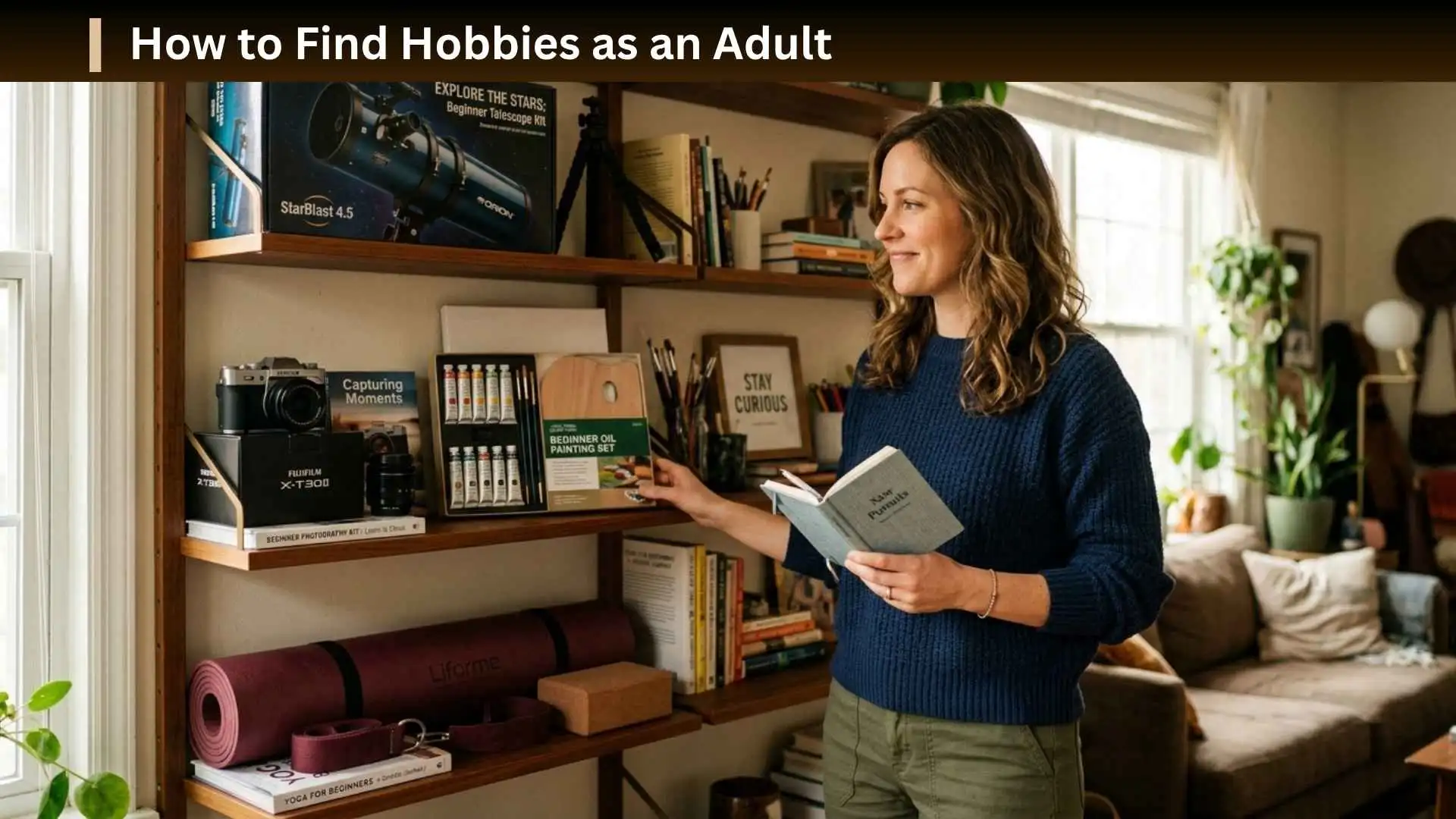
Finding a hobby as an adult can be surprisingly difficult. When you were younger, hobbies often happened naturally—you tried sports at school, drew because you felt like it, played an instrument, collected things, or spent hours building and exploring without worrying whether the activity was “useful.”
Adult life is different. Work, family responsibilities, household tasks, finances, and limited free time can make it difficult to figure out what you actually enjoy doing.
If you are wondering how to find hobbies as an adult, you do not need to discover one perfect passion immediately. A better approach is to explore your existing interests, identify what you want from your free time, choose activities that fit your real schedule, and test several possibilities before committing.
The goal is not to become good at something quickly. The goal is to find activities you genuinely want to return to.
Start by Changing How You Think About Hobbies
One of the biggest obstacles to finding a hobby is believing that you need to know exactly what you enjoy before you start.
You do not.
A hobby can begin as simple curiosity. You might try photography because you like interesting buildings, gardening because you want more time outdoors, baking because you enjoy experimenting with food, or woodworking because you like making things with your hands.
You also do not need to turn your hobby into a side business, become an expert, or produce something impressive.
A hobby can simply be something you choose to do because you enjoy the experience.
This distinction matters because adults often evaluate activities through practical questions:
- Is this productive?
- Can I make money from it?
- Will I become good at it?
- Is it worth the cost?
- What will other people think?
- Do I have enough time?
Those questions can be useful later, but they can make experimentation unnecessarily difficult.
Instead, begin with a simpler question:
“Would I enjoy spending some of my free time doing this?”
1. Think About What You Enjoyed as a Child
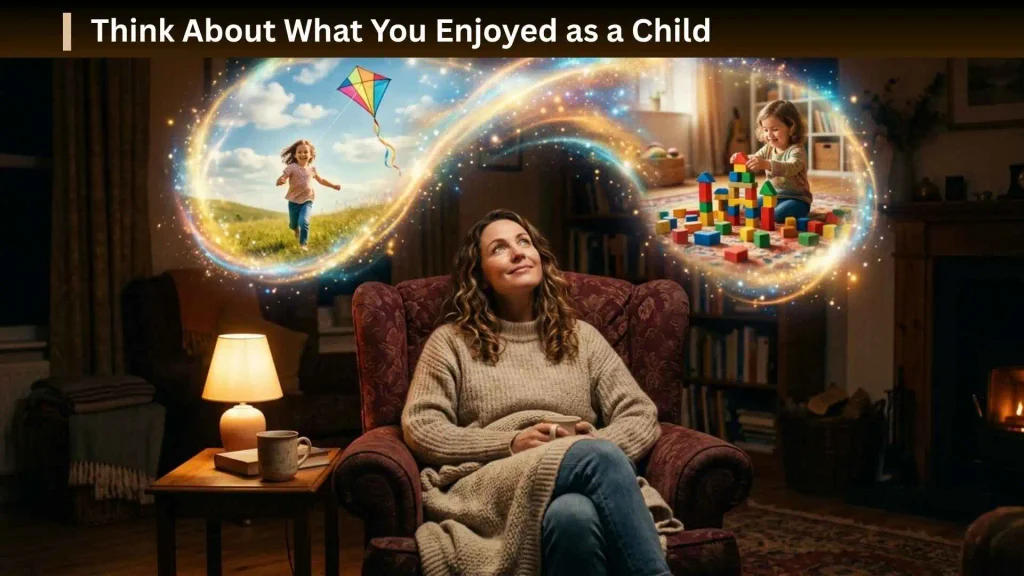
Your childhood interests can provide useful clues, especially if you have no idea where to begin.
Think beyond obvious hobbies. Instead of asking, “What were my hobbies?” ask:
- What activities made me lose track of time?
- What did I ask to do repeatedly?
- What did I collect?
- What did I enjoy making?
- Did I prefer building, drawing, reading, exploring, competing, or pretending?
- Did I enjoy being outdoors?
- Did I prefer doing things alone or with other people?
- What activities did I stop because school, work, or life changed?
For example, childhood interests can lead to adult versions such as:
| Childhood Interest | Possible Adult Hobby |
| Drawing | Sketching, illustration, painting |
| Building with blocks | Model building, woodworking, 3D printing |
| Collecting rocks | Geology, mineral collecting, nature walks |
| Reading | Book clubs, creative writing, literary analysis |
| Playing outside | Hiking, cycling, gardening |
| Making things | Sewing, pottery, woodworking, crafts |
| Playing music | Guitar, piano, singing, music production |
| Taking pictures | Photography or photo editing |
| Exploring | Hiking, birdwatching, geocaching, travel |
You do not have to return to the exact activity you enjoyed as a child. Look for the underlying interest.
If you liked building things, you may enjoy making furniture even if you have no interest in children’s building toys anymore.
2. Look at What Already Gets Your Attention
You may already have clues about your next hobby hidden in your everyday behavior.
Pay attention to the subjects you naturally investigate when nobody is forcing you to.
What videos do you watch when you have free time?
What articles do you read even though nobody asked you to?
What stores or sections of stores do you enjoy browsing?
What kinds of projects make you think, “I would love to try that someday”?
Your answers can reveal interests that are already present.
For example:
- Constantly watching cooking videos → cooking or baking
- Reading about history → historical research or genealogy
- Looking at home renovations → DIY or woodworking
- Watching travel content → hiking, photography, language learning, or trip planning
- Following artists → drawing, painting, pottery, or digital art
- Watching sports → recreational sports, coaching, statistics, or sports photography
- Reading about plants → gardening or houseplant care
- Watching crafting tutorials → sewing, crochet, embroidery, or paper crafts
You are not trying to diagnose your personality. You are simply looking for patterns.
3. Decide What You Want From a Hobby
Different hobbies provide different experiences.
Before choosing one, think about what you want your free time to feel like.
If You Want to Relax
Look for hobbies that feel calm and low-pressure.
Examples include:
- Reading
- Gardening
- Coloring
- Journaling
- Puzzles
- Knitting
- Crochet
- Drawing
- Birdwatching
- Photography walks
If You Want to Be More Creative
Try activities where you make, design, or transform something.
Examples include:
- Painting
- Photography
- Writing
- Pottery
- Sewing
- Woodworking
- Jewelry making
- Digital illustration
- Cooking
- Baking
If You Want More Physical Activity
Choose something that makes movement enjoyable rather than treating exercise as another obligation.
Possible options include:
- Hiking
- Cycling
- Swimming
- Dancing
- Tennis
- Pickleball
- Recreational sports
- Rock climbing
- Kayaking
- Walking and nature exploration
If You Want to Meet People
Choose hobbies with built-in opportunities for interaction.
Consider:
- Book clubs
- Recreational sports
- Board game groups
- Dance classes
- Cooking classes
- Art classes
- Community gardening
- Volunteer activities
- Photography groups
- Hiking groups
If You Want to Learn Something
Choose a hobby with a clear skill progression.
You might explore:
- A new language
- Playing an instrument
- Chess
- Coding
- Drawing
- Photography
- Cooking
- Woodworking
- Astronomy
- Calligraphy
- History or genealogy
The best choice depends on what you want your hobby to add to your life.
4. Match the Hobby to Your Actual Lifestyle
A hobby can sound fantastic on paper and still be completely wrong for your current circumstances.
Suppose you work long hours and have only short periods of free time. A hobby that requires a two-hour drive, specialized equipment, and a large workspace may become frustrating.
Instead, ask yourself:
How much time can I realistically give this hobby?
Then consider:
- Time
- Budget
- Space
- Energy
- Transportation
- Noise
- Cleanup
- Equipment
- Access to classes or groups
For example, someone living in a small apartment might find drawing, reading, photography, cooking, chess, or language learning easier to start than woodworking.
Someone with access to outdoor space might have more options for gardening, cycling, hiking, or birdwatching.
The right hobby is not necessarily the most impressive one. It is the one you can realistically do.
5. Use the “Small Experiment” Method
One of the easiest ways to find hobbies as an adult is to stop trying to choose one permanently.
Instead, run small experiments.
Pick three to five activities that sound mildly interesting. Give each one a low-cost trial.
For example:
- Try a beginner drawing lesson.
- Cook a recipe from a cuisine you enjoy.
- Take a short photography walk.
- Attend a beginner dance class.
- Visit a local gardening or craft workshop.
After each experiment, ask:
- Did I enjoy the process?
- Did I want to keep going?
- Was I curious to improve?
- Did the time pass quickly?
- Would I willingly do this again?
- Did I enjoy learning about it afterward?
- Did I like doing it alone or with others?
You do not need to feel passionate immediately.
Sometimes the first experience is awkward because you are learning the basics. The important question is whether there is enough curiosity to try again.
6. Do Not Confuse Being Bad at Something With Disliking It
Adults often quit hobbies because they expect early competence.
You might try drawing and dislike your first sketch.
You might take a tennis lesson and miss nearly every ball.
You might bake something that does not turn out well.
You might pick up a guitar and struggle to change between chords.
None of those experiences necessarily mean the hobby is wrong for you.
Ask yourself whether you disliked the activity or simply disliked being a beginner.
There is an important difference.
If you enjoyed practicing but hated the result, give it another opportunity.
If you consistently dislike the actual process, move on.
A hobby does not need to become a lifelong commitment just because you bought supplies or attended one class.
7. Try Hobbies That Use Different Parts of Your Brain and Body
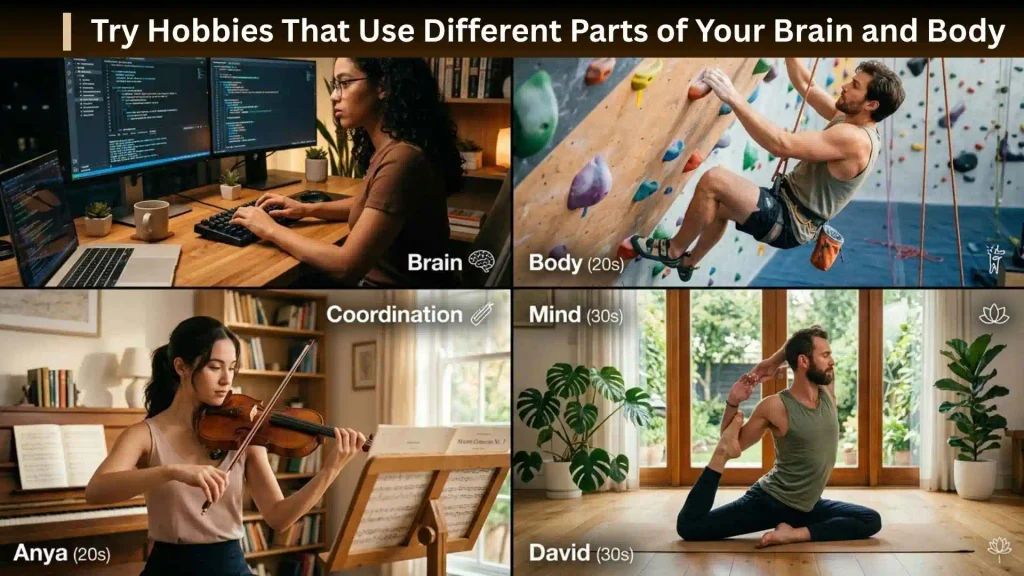
If you normally spend most of your day sitting at a computer, a screen-based hobby may not feel like much of a break.
If your job is physically demanding, a quiet hobby might be more appealing.
Think about creating contrast.
Screen heavy work
Try:
- Gardening
- Cooking
- Pottery
- Hiking
- Drawing
- Woodworking
- Photography
Physically demanding work
Try:
- Reading
- Writing
- Chess
- Painting
- Puzzles
- Music
- Language learning
Highly social work
Try:
- Solo photography
- Gardening
- Reading
- Drawing
- Fishing
- Journaling
Isolated work
Try:
- Recreational sports
- Classes
- Clubs
- Group hiking
- Dance
- Board games
- Volunteering
Your hobby does not have to resemble your career. In fact, something completely different may be exactly what you need.
8. Consider Hobbies That Fit Your Personality Without Letting Labels Limit You
Personality can help you narrow your choices, but it should not become a box.
If you enjoy quiet environments, you might prefer:
- Reading
- Painting
- Writing
- Gardening
- Puzzles
- Model building
If you enjoy competition, you might like:
- Chess
- Tennis
- Pickleball
- Running events
- Bowling
- Strategy games
If you like working with your hands, explore:
- Woodworking
- Pottery
- Sewing
- Cooking
- Gardening
- Leathercraft
- DIY projects
If you enjoy meeting people, try:
- Classes
- Clubs
- Team sports
- Dance
- Volunteering
- Group hikes
But do not assume that because you are introverted you cannot enjoy a social hobby, or because you are outgoing you cannot enjoy a solitary one.
Part of exploring hobbies is discovering sides of yourself that do not fit your usual routine.
9. Start With Low Cost Hobbies Before Buying Expensive Gear
A common mistake is spending a lot of money before knowing whether you actually enjoy an activity.
You do not need the professional version of everything on day one.
Start with what you already own whenever possible.
You can:
- Borrow equipment
- Rent gear
- Buy used equipment
- Take a beginner class
- Use free tutorials
- Visit a library
- Join a community group
- Choose a small starter project
- Buy only the basic supplies
For example, someone interested in photography does not necessarily need a professional camera immediately. Someone curious about painting does not need a studio. Someone interested in cooking can start with recipes that use familiar kitchen equipment.
The first goal is testing interest, not building the perfect hobby setup.
10. Use Your Local Community to Discover Hobbies
Your community can be a surprisingly useful source of ideas.
In the United States, look at what is available through places such as:
- Public libraries
- Parks and recreation departments
- Community centers
- Local colleges
- Art studios
- Recreation leagues
- Farmers markets
- Gardening organizations
- Book clubs
- Makerspaces
- Volunteer organizations
- Local hobby stores
A beginner class can be particularly useful because it removes some of the uncertainty around starting alone.
Instead of thinking, “I might like pottery,” you can attend one introductory class and find out.
11. Ask Friends What They Do for Fun
If you are struggling to generate ideas, ask people around you:
“What do you like doing when you have free time?”
You may discover activities you have never considered.
You can also ask whether you can join them for one session.
A friend might introduce you to:
- Hiking
- Golf
- Fishing
- Photography
- Gaming
- Cooking
- Gardening
- Cycling
- Crafting
- Pickleball
This approach has another advantage: starting with someone you know can make a new activity feel less intimidating.
12. Create a Hobby Menu Instead of Choosing One Hobby
You do not have to have only one hobby.
A better approach for some adults is to maintain a small menu of activities that serve different purposes.
For example:
Quick hobby: Reading for 20 minutes
Creative hobby: Drawing or photography
Active hobby: Hiking or cycling
Social hobby: Board games or a recreational league
Long-term skill: Guitar or another instrument
This gives you flexibility.
On a busy weekday, you might read.
On a free Saturday, you might hike.
When you want to meet people, you might attend a club.
When you want to create something, you might paint.
This can make hobbies easier to maintain because you are not expecting one activity to satisfy every need.
13. Find Hobbies for Different Amounts of Free Time
One of the best ways to make a hobby fit adult life is to choose activities according to your available time.
Hobbies for 10–20 Minutes
Try:
- Reading
- Journaling
- Sketching
- Puzzles
- Language practice
- Meditation
- Origami
- Crossword puzzles
Hobbies for About an Hour
Consider:
- Cooking
- Baking
- Photography
- Drawing
- Exercise classes
- Gardening
- Playing an instrument
- Craft projects
Hobbies for Several Hours
You might enjoy:
- Hiking
- Cycling
- Fishing
- Golf
- Woodworking
- Pottery
- Geocaching
- Longer photography trips
You do not need several uninterrupted hours every day to have a meaningful hobby.
14. What If Nothing Sounds Fun?
This is one of the most common problems people face when trying to discover a hobby.
If nothing immediately sounds exciting, stop searching for your “perfect hobby.”
Instead, use elimination.
Ask:
- Do I want to be indoors or outdoors?
- Alone or with people?
- Sitting or moving?
- Creating or consuming?
- Learning or relaxing?
- Using my hands or my mind?
- Spending little or willing to invest?
- Doing something practical or purely recreational?
Each answer narrows the possibilities.
For example:
Outdoors + social + active + beginner-friendly
could point toward hiking groups, recreational sports, cycling clubs, or outdoor classes.
Indoors + quiet + creative + inexpensive
could point toward drawing, writing, journaling, crochet, origami, or reading.
You do not need to identify your passion first. You only need to find the next reasonable experiment.
15. Try a Hobby Based on Curiosity, Not Usefulness
Adults often feel pressure to make every activity productive.
A hobby can be useful, but it does not have to be.
You can learn something because it interests you.
You can paint something nobody will buy.
You can collect something without turning it into an investment.
You can learn an instrument without performing publicly.
You can garden without trying to grow enough food to replace the grocery store.
You can read fiction simply because you enjoy the story.
This removes unnecessary pressure and gives you more freedom to explore.
16. Give Yourself Permission to Quit the Wrong Hobby
Finding hobbies is an exploration process.
You might try:
- Painting and deciding you prefer photography.
- Running and discovering you enjoy hiking more.
- Gardening and realize you prefer houseplants.
- Guitar and discover that piano suits you better.
- A book club and decide you prefer solo reading.
- Baking and finding that cooking is more enjoyable.
That is not failure.
Each experiment teaches you something about what you like, dislike, and have time for.
The goal is not to collect unfinished hobbies. The goal is to gradually learn which activities deserve more of your time.
17. Avoid These Common Hobby Finding Mistakes
Choosing What Looks Impressive
A hobby does not need to sound interesting when you tell someone about it.
Choose something you actually enjoy.
Buying Everything Before Trying It
Start small. Upgrade later if you stick with the activity.
Expecting Immediate Passion
Some hobbies become enjoyable after you learn enough to feel comfortable.
Choosing Based Only on Trends
A popular hobby is not automatically a good hobby for you.
Ignoring Your Schedule
A hobby that requires more time than you have will eventually become another source of frustration.
Comparing Your Beginning With Someone Else’s Experience
Experienced hobbyists make difficult activities look easy. Your first attempt is supposed to look like a first attempt.
Turning Every Hobby Into a Side Hustle
If every hobby needs to make money, you may lose the freedom that made the activity enjoyable.
Trying Too Many Things Without Reflection
Experimenting is useful, but pause occasionally and ask which activities you actually want to repeat.
18. Use This Simple Hobby Finding Formula
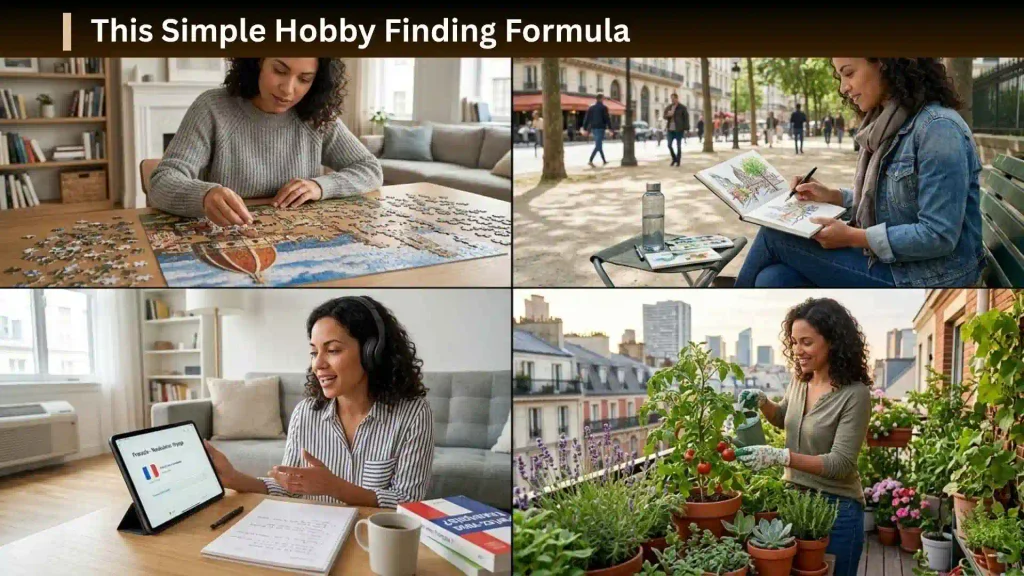
If you want a practical shortcut, use this formula:
Interest + lifestyle fit + low-pressure experiment = potential hobby
Start with something that interests you.
Check whether it fits your available:
- Time
- Money
- Space
- Energy
- Social preferences
Then test it with the smallest reasonable commitment.
Afterward, ask:
“Do I want to do this again?”
If yes, continue.
If no, choose another experiment.
This process is much more useful than waiting for a hobby to magically reveal itself.
19. A 7 Day Plan for Finding a New Hobby
If you want to start immediately, try this simple one-week challenge.
Day 1: Make an Interest List
Write down 10 things you are curious about.
Do not judge them.
Day 2: Identify Your Preferences
Choose whether you prefer:
- Indoor or outdoor
- Solo or social
- Creative or analytical
- Relaxing or active
- Short sessions or longer projects
Day 3: Narrow Your List
Choose three hobbies that fit both your interests and your lifestyle.
Day 4: Research the First Hobby
Find a beginner-friendly way to try it without making a major purchase.
Day 5: Try It
Spend at least a short session actually doing the activity.
Day 6: Test Your Second Option
Try another hobby and compare how each experience felt.
Day 7: Choose Your Next Experiment
You do not have to choose your lifelong hobby.
Choose the activity you are most curious about trying again.
Then give it another opportunity.
20. How to Know When You Have Found the Right Hobby
There is no single sign that proves you have found the perfect hobby.
But several clues are useful.
You may have found a good fit when:
- You look forward to doing it.
- You become curious about improving.
- You enjoy the process, not only the result.
- You naturally think about it when you are not doing it.
- You want to learn more about it.
- It fits reasonably well into your life.
- You can afford to continue it.
- You enjoy talking to others who share your interests.
- You feel satisfied after doing it.
- You would choose to do it even without external rewards.
The strongest sign may simply be that you keep coming back.
Hobbies Do Not Have to Be Permanent
Your interests can change as your circumstances change.
A hobby that works when you are single may not fit during a busy period of family life. A hobby you enjoyed indoors might eventually become less appealing when you want more outdoor time. A physical hobby might be replaced by something quieter for a while.
That is normal.
You are allowed to change hobbies.
Think of hobbies as activities that fit the current version of your life rather than permanent labels that define who you are.
Final Thoughts
Learning how to find hobbies as an adult is less about discovering one perfect activity and more about becoming curious about your own interests again.
Start with what you already enjoy. Think about childhood interests, notice what naturally captures your attention, and decide what you want from your free time. Then consider your actual schedule, budget, space, energy, and social preferences.
Most importantly, experiment.
Try inexpensive beginner versions of several activities instead of committing immediately. Give yourself permission to be bad at something, change your mind, and walk away from hobbies that do not fit.
The right hobby may not be the most impressive or productive activity. It may simply be the one that makes you think, “I would like to do that again.”
Frequently Asked Questions
How do I find hobbies as an adult if I have no interests?
Start with curiosity rather than passion. Make a list of subjects you frequently watch, read about, or notice. Then try several low-cost activities from different categories, such as creative, active, social, outdoor, and skill-based hobbies.
How do I find a hobby when I am bored with everything?
Reduce the pressure to find something you will love immediately. Choose three activities that seem at least mildly interesting and test each one. A small experiment can reveal whether you enjoy an activity more than you expected.
What are good hobbies for adults with little free time?
Look for hobbies that can be done in short sessions, such as reading, drawing, journaling, puzzles, language practice, photography walks, cooking, or playing an instrument. The best option depends on what fits naturally into your schedule.
How can I find a hobby without spending much money?
Start with activities that use things you already own. You can also borrow equipment, use libraries and community resources, take free introductory lessons, buy used supplies, or choose a small beginner project before investing in specialized equipment.
Is it normal to have trouble finding a hobby as an adult?
Yes. Adult responsibilities can leave less time and attention for exploration. Instead of expecting yourself to instantly know what you enjoy, treat hobby discovery as a process of experimentation.
Should I choose a hobby that is useful?
Not necessarily. A hobby can teach you a valuable skill, but it can also exist simply because you enjoy it. You do not have to monetize every interest or make every minute of free time productive.
How many hobbies should an adult have?
There is no required number. Some people prefer one main hobby, while others enjoy several activities for different purposes. A small mix of creative, social, active, and relaxing hobbies can give you more flexibility.
What should I do if I start a hobby and quickly lose interest?
Ask whether you disliked the activity itself or simply disliked being a beginner. If you remain curious, try it a few more times. If the process consistently feels uninteresting, move on and experiment with something else.
Can hobbies help me meet new people?
Yes. Group activities such as recreational sports, classes, book clubs, volunteering, hiking groups, board games, and community projects can create natural opportunities to interact with people who share similar interests.
How do I choose between several hobbies I like?
Compare each option based on enjoyment, cost, time, space, accessibility, and how likely you are to do it regularly. Then choose one to test first rather than trying to make a permanent decision.
Conclusion
Finding a hobby as an adult does not require a sudden burst of inspiration. Start small, follow your curiosity, revisit interests you may have forgotten, and test activities that fit your real life.
The best hobby is not necessarily the one that looks impressive or produces the most obvious result. It is the activity you genuinely enjoy enough to make room for again.

I’m Sophia Carter, a writer who enjoys discovering interesting ideas and transforming them into helpful content. At Cognivoora, I write with a simple goal: to make information clearer, more accessible, and genuinely useful for readers. I value thoughtful research, easy explanations, and content that people can trust and return to whenever they need it.
Books:
- The Knowledge Journey
- Understanding the World Around Us