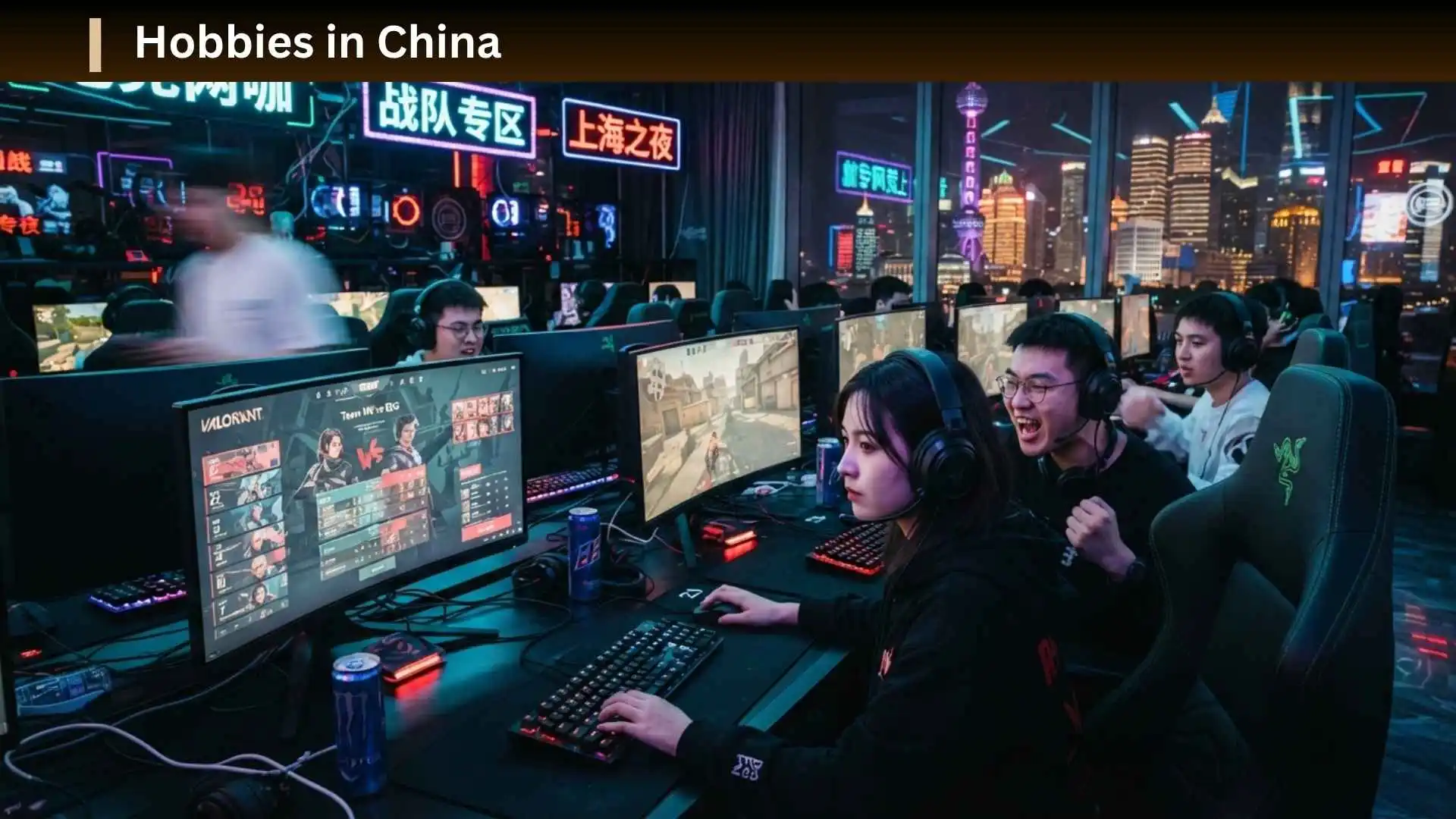
China has a remarkably diverse hobby culture, combining centuries-old traditions with modern interests shaped by urban life, technology, sports, travel, and entertainment. If you are researching hobbies in China, the most useful way to understand them is to look beyond a single list of activities and see how traditional Chinese arts, games, crafts, fitness practices, and contemporary leisure pursuits fit together.
China’s national time-use data shows that culture, leisure, and entertainment occupy a substantial part of everyday life, while sports and fitness are also significant categories of daily activity.
What Are the Most Popular Hobbies in China?
Some of the best-known hobbies in China include tea culture, Chinese calligraphy, traditional painting, tai chi, qigong, mahjong, Go (weiqi), Chinese chess (xiangqi), gardening, photography, hiking, cooking, crafts, reading, gaming, and collecting.
Traditional hobbies remain important, but they exist alongside contemporary interests such as esports, cosplay, city walks, photography, DIY projects, content creation, and other forms of leisure. Recent research on China’s leisure market specifically identifies both traditional Chinese arts and modern activities among contemporary hobbies and interests.
The important point is that hobbies in China are not limited to traditional cultural activities. Someone interested in Chinese hobbies today can encounter everything from an ancient board game to smartphone photography or competitive gaming.
Traditional Hobbies in China
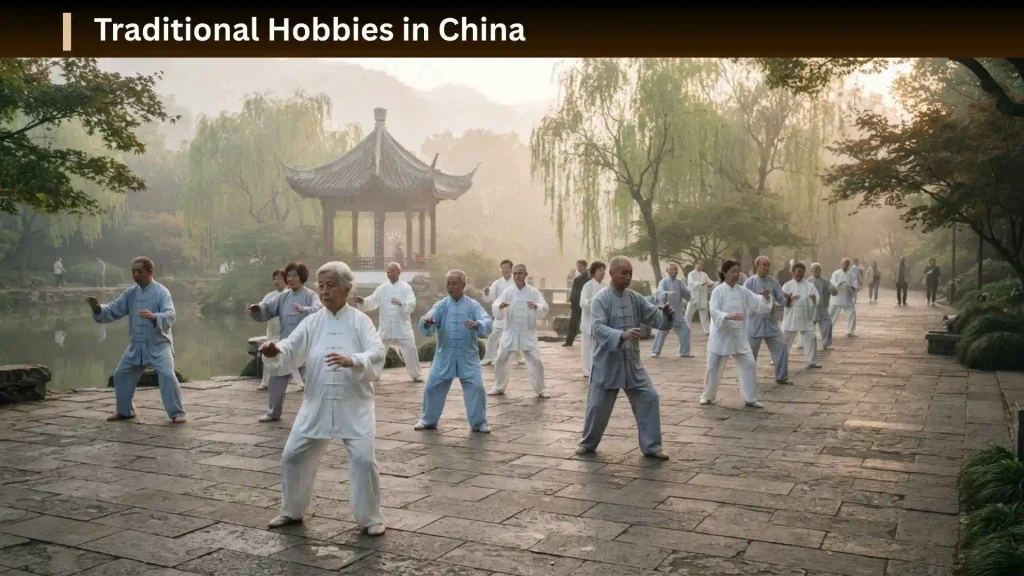
Traditional hobbies are especially interesting for people who want to understand Chinese culture. Many involve patience, craftsmanship, artistic expression, social interaction, or physical discipline.
1. Chinese Calligraphy
Chinese calligraphy, or shūfǎ, is one of the most recognizable traditional Chinese arts.
Rather than simply writing words neatly, calligraphy focuses on brush control, composition, rhythm, spacing, and the visual character of written Chinese. Practitioners commonly work with brushes, ink, paper, and an inkstone.
For beginners, learning basic brush strokes and a small number of characters can provide a practical introduction without requiring advanced artistic skills.
Why it appeals as a hobby:
- Requires relatively little equipment
- Can be practiced indoors
- Combines writing and visual art
- Encourages patience and concentration
- Provides a connection to Chinese cultural history
2. Chinese Painting
Traditional Chinese painting, often associated with guóhuà, uses techniques that differ from many Western painting traditions.
Common subjects include landscapes, flowers, birds, animals, and other elements of nature. Brushwork and the relationship between empty and occupied space are important parts of the artistic approach.
Someone beginning this hobby might start with simple brush exercises before progressing to flowers, plants, animals, or landscape compositions.
3. Tea Culture
Tea is more than a beverage in Chinese cultural life. Learning about different teas, brewing methods, teaware, and traditional tea practices can become a hobby in its own right.
A tea hobby can be as simple as learning to distinguish major tea categories or as detailed as studying brewing temperatures, vessels, preparation methods, and regional traditions.
Tea-related experiences are also increasingly used as hands-on cultural activities for visitors interested in understanding Chinese life.
4. Tai Chi
Tai chi, or taijiquan, is a traditional Chinese martial art characterized by slow, controlled movements and coordinated body positioning.
It is often practiced in parks and other outdoor spaces, making it a distinctive hobby for people who prefer movement without the equipment associated with many modern sports.
Tai chi is also recognized as an important part of Chinese intangible cultural heritage.
5. Qigong
Qigong consists of practices involving coordinated movement, breathing, and attention.
It is often practiced as a gentle physical activity and can be performed individually or in groups. Different qigong traditions and exercises vary, so beginners should distinguish cultural practice and general exercise from medical claims about treating specific conditions.
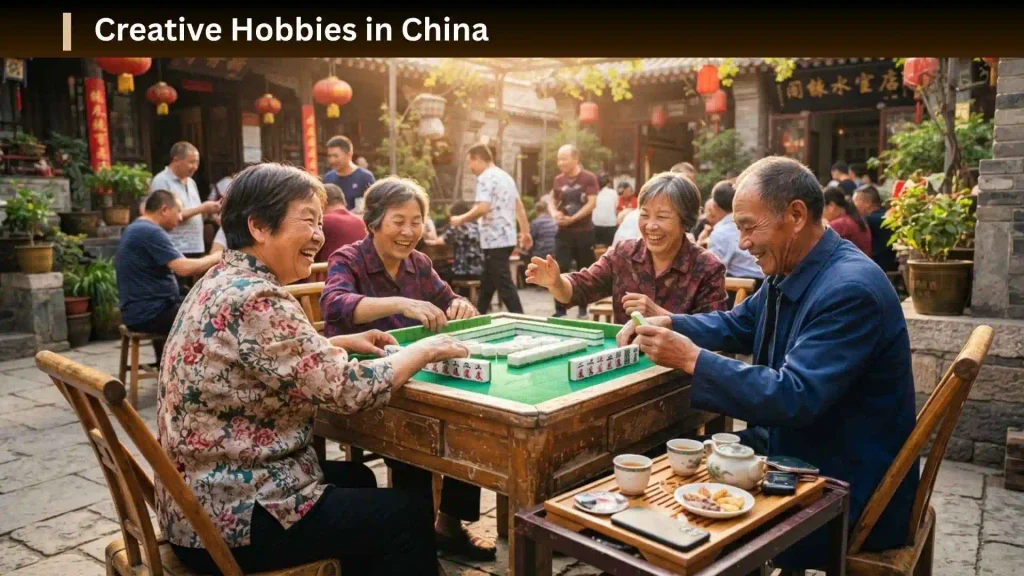
6. Mahjong
Mahjong is one of China’s best-known traditional recreational games.
It is generally played with decorated tiles and combines pattern recognition, strategy, probability, memory, and social interaction. Rules vary considerably between regional and international versions, so someone learning the game should first decide which ruleset they want to study.
Mahjong can therefore function as both a strategic hobby and a social pastime.
7. Go (Weiqi)
Go, known as wéiqí in Chinese, is a strategy board game with ancient roots.
Players place black and white stones on a board with the goal of controlling territory. The rules are simple enough to learn at an introductory level, but strategic possibilities become extremely complex.
It is particularly suitable for people who enjoy:
- Strategy
- Pattern recognition
- Long-term planning
- Competitive play
- Puzzles and abstract games
8. Chinese Chess (Xiangqi)
Chinese chess, or xiàngqí, is another traditional strategy game.
Although it shares some broad similarities with Western chess, its board, pieces, movement rules, and strategic concepts are different.
For someone interested in Chinese culture and board games, learning xiangqi provides a useful way to explore both traditional recreation and strategic thinking.
9. Chinese Paper Cutting
Chinese paper cutting is a traditional craft involving the cutting of paper into decorative designs.
Patterns can feature flowers, animals, people, symbols, and other motifs. Different regional traditions have their own characteristics. Zhangpu paper cutting, for example, has been recognized as part of Chinese intangible cultural heritage and was included in UNESCO’s Representative List as part of Chinese paper-cutting traditions.
This is one of the more accessible Chinese-inspired crafts for beginners because the basic materials are inexpensive.
10. Chinese Knotting
Chinese knotting is a decorative craft based on tying and arranging cords into intricate patterns.
The finished pieces can be used as decorations, ornaments, gifts, or cultural crafts. Beijing’s official intangible-heritage materials, for example, include Chinese knotting among traditional folk crafts.
A beginner can start with simple knots before progressing to more complicated patterns.
11. Embroidery
Embroidery has a long history across different regions of China, with regional techniques and styles.
Beijing embroidery, for example, uses materials such as cotton, silk, and satin and combines multiple textile techniques. It has been recognized as a national intangible cultural heritage.
Embroidery is a good hobby for people who enjoy detailed, slow-paced creative work.
12. Kite Making and Flying
Kite making combines design, construction, decoration, and outdoor recreation.
Chinese kite traditions include many regional forms, and traditional kite-making techniques remain part of China’s cultural heritage. Beijing’s documented folk crafts include Beijing swallow-shaped kite making and Jin Ma-style kite making.
For a hobbyist, the activity can involve either making kites from scratch or simply learning to fly traditional-style kites.
Modern Hobbies in China
China’s hobby culture has changed alongside urbanization, technology, social media, and changing leisure habits.
Modern hobbies may have little connection to traditional arts, although some combine modern formats with Chinese cultural themes.
13. Photography
Photography is a flexible hobby that works in both urban and outdoor environments.
Photographers in China may focus on:
- City architecture
- Street scenes
- Food
- Landscapes
- Wildlife
- Travel
- Portraits
- Traditional festivals
- Everyday life
Smartphones have also made photography accessible without requiring an expensive camera.
14. Hiking and Outdoor Exploration
Hiking is a natural hobby for people who enjoy China’s varied landscapes.
Depending on location and experience, outdoor enthusiasts can explore mountains, forests, riversides, rural areas, and scenic trails.
Hiking also connects with a broader interest in travel and experiential leisure, particularly when people seek activities rather than simply visiting attractions.
15. Gardening and Growing Plants
Growing plants is another accessible hobby, especially for people living in apartments or homes with balconies.
Recent reporting on hobbies among young Chinese people includes growing plants and flowers as examples of lifestyle-oriented interests.
A small-space gardener might grow:
- Houseplants
- Succulents
- Herbs
- Flowers
- Balcony vegetables
- Bonsai-style plants
16. Cooking
Cooking can become both a practical skill and a serious hobby.
China’s enormous regional food culture gives hobbyists an unusually broad range of dishes and techniques to explore. Someone studying Chinese cooking might choose one regional cuisine rather than attempting to learn everything at once.
Possible areas include Sichuan, Cantonese, Jiangsu, Fujian, Hunan, and other regional traditions.
17. Reading and Learning
Reading remains a broad leisure activity that can encompass fiction, history, philosophy, science, biographies, and contemporary subjects.
For someone interested specifically in Chinese culture, reading Chinese history, literature, philosophy, or translated Chinese novels can turn a general reading habit into a more focused cultural hobby.
18. Gaming and Esports
Video games and esports are major examples of modern entertainment interests in China.
Gaming represents a very different side of Chinese hobby culture from calligraphy or tea. It demonstrates that contemporary hobbies in China include digital communities, competitive gaming, online entertainment, and technology-driven activities.
19. Cosplay and Anime/Manga Culture
Cosplay involves creating or wearing costumes based on fictional characters and can combine sewing, makeup, photography, performance, and crafting.
Anime and manga-related communities provide additional opportunities for social interaction and creative expression.
Modern Chinese leisure research identifies cosplay/anime and manga culture among the contemporary interests considered in China’s leisure market.
20. DIY and Model Building
DIY hobbies can include assembling models, customizing objects, crafting decorations, and other hands-on projects.
These activities appeal to people who enjoy building rather than simply consuming finished products.
They also provide an interesting bridge between traditional craftsmanship and modern hobby culture.
21. Content Creation
Photography and video can develop into more than personal hobbies.
People may create videos about cooking, travel, gaming, crafts, fashion, education, technology, or everyday life. Content creation therefore combines several hobbies, including filming, editing, writing, photography, and storytelling.
22. City Walking
City walking has become a recognizable leisure trend in contemporary China.
Instead of treating a city only as a place to travel through, participants explore neighborhoods on foot, looking at architecture, food, shops, cultural sites, and everyday urban life.
It can be a low-cost hobby and requires little equipment beyond comfortable shoes and, optionally, a phone or camera.
Creative Hobbies in China
Creative hobbies are particularly useful for people who want activities they can practice at home.
| Hobby | Main Skill | Equipment | Beginner Difficulty |
| Calligraphy | Brush control | Brush, ink, paper | Moderate |
| Paper cutting | Cutting and design | Paper, scissors/craft knife | Easy |
| Chinese knotting | Handcrafting | Cord | Easy–Moderate |
| Painting | Brush and composition | Brushes, paper, ink/paint | Moderate |
| Embroidery | Stitching | Fabric, thread, needles | Moderate |
| Photography | Composition | Smartphone or camera | Easy |
| Cooking | Food preparation | Kitchen equipment | Easy–Moderate |
| Model building | Construction | Models and tools | Moderate |
The best choice depends less on whether a hobby is traditionally Chinese and more on what type of activity you enjoy.
Social Hobbies in China
Some hobbies are particularly social.
Mahjong
Mahjong naturally creates opportunities for group play and conversation.
Board Games
Go and Chinese chess can be played competitively or casually and allow participants to develop skills over time.
Tea
Tea-related gatherings can combine conversation, cultural learning, and the appreciation of different teas and brewing methods.
Group Exercise
Tai chi, qigong, dancing, and other forms of group exercise can turn physical activity into a social routine.
Cultural Activities
Exhibitions, performances, museums, festivals, and cultural workshops can also function as recurring leisure interests rather than one-time tourist activities.
China’s 2024 leisure research reported cultural leisure activities such as exhibitions, performances, festivals, and calligraphy and painting alongside sports and home-based recreation.
Hobbies in China for Beginners
If you are interested in trying a Chinese-inspired hobby in the United States, you do not need to begin with a highly specialized traditional practice.
Easiest to Start
Chinese paper cutting is inexpensive and requires few materials.
Chinese knotting is another accessible craft that can be learned through progressively more complicated patterns.
Tea exploration can begin simply by learning about different Chinese tea varieties and brewing approaches.
Photography requires little specialized equipment if you already have a smartphone.
Best for Strategy Lovers
Choose Go, Chinese chess, or mahjong if you enjoy games that require planning and decision-making.
Best for Artistic People
Try calligraphy, Chinese painting, paper cutting, or embroidery.
Best for Active People
Tai chi, qigong, hiking, and other outdoor activities are better choices if you prefer movement to sitting at a craft table.
Best for Social Hobbyists
Consider mahjong, group tai chi, tea gatherings, board games, or cultural classes.
How to Choose a Chinese Hobby
You can narrow down the options by asking four simple questions.
Do You Want a Traditional or Modern Hobby?
Choose calligraphy, tea, paper cutting, Go, mahjong, or tai chi if you want a stronger connection to traditional Chinese culture.
Choose gaming, photography, cosplay, content creation, hiking, or DIY if you prefer contemporary activities.
You can also combine both—for example, photographing traditional architecture or learning calligraphy while studying Chinese history.
Do You Prefer Indoor or Outdoor Activities?
Indoor options:
- Calligraphy
- Painting
- Tea
- Mahjong
- Go
- Chinese chess
- Paper cutting
- Embroidery
- Cooking
- Model building
Outdoor options:
- Tai chi
- Qigong
- Hiking
- Kite flying
- Photography
- City walking
- Gardening
Do You Want a Creative or Strategic Hobby?
Creative people may prefer calligraphy, painting, embroidery, paper cutting, knotting, cooking, or photography.
Strategic thinkers may prefer Go, Chinese chess, mahjong, puzzles, and games.
Do You Want a Hobby You Can Practice in the USA?
Many Chinese hobbies are easy to adapt to life in the United States.
You can practice calligraphy, painting, paper cutting, tea preparation, embroidery, cooking, photography, and board games at home. Local Chinese cultural organizations, language schools, community groups, museums, and cultural festivals may also offer classes or events.
Why Are Hobbies in China So Diverse?
One reason is China’s enormous geographical and cultural diversity.
Different regions have developed distinctive food traditions, crafts, performing arts, games, and customs. Some hobbies are closely associated with particular places, while others have spread widely.
Another factor is the coexistence of traditional and modern leisure. Contemporary research on China’s leisure interests includes the traditional “four arts”—guqin, weiqi, calligraphy, and painting—alongside museums, performances, sports, esports, cosplay, DIY, photography, and video production.
This makes it misleading to describe Chinese hobbies as exclusively traditional.
Are Traditional Chinese Hobbies Still Popular?
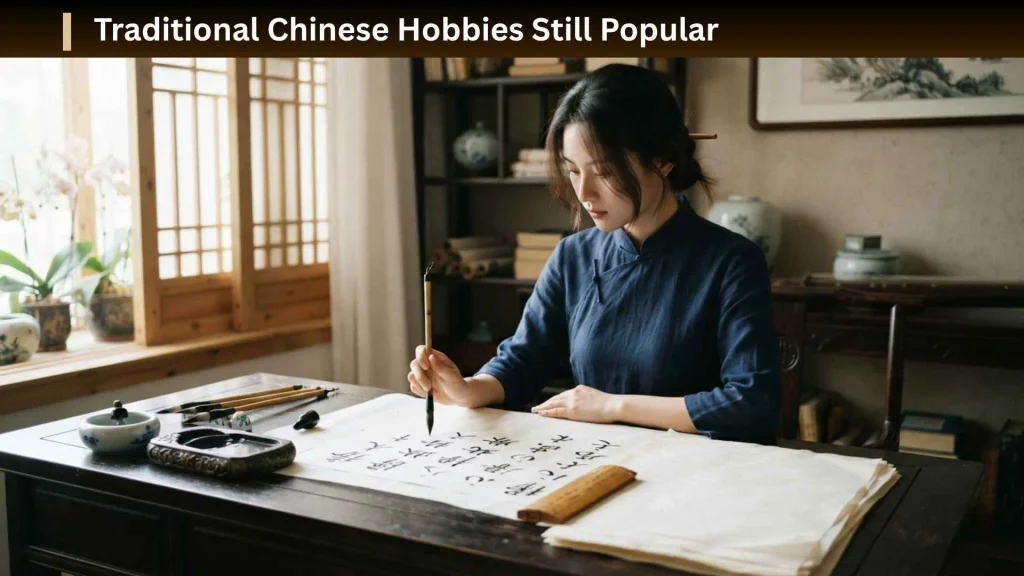
Yes, traditional hobbies continue to exist alongside modern leisure activities.
Current reporting on Chinese youth, for example, describes interests ranging from gardening, cooking, and flower arranging to exercise, board games, travel, reading, tea, handicrafts, music, dance, photography, and language learning.
Traditional crafts are also being preserved through intangible cultural heritage programs and experiential workshops. Recent reporting from Chongqing, for example, describes visitors learning to make Rongchang pottery as part of a growing interest in hands-on cultural experiences.
So the better picture is not “old hobbies versus new hobbies.” Instead, traditional practices and modern interests often exist side by side.
What Can Americans Learn From Hobbies in China?
Exploring Chinese hobbies can be useful even if you live thousands of miles away from China.
A hobby such as calligraphy introduces you to Chinese writing and visual aesthetics. Tea encourages you to learn about regional traditions and preparation. Go introduces a different strategic game. Paper cutting and knotting provide hands-on crafts. Tai chi introduces a traditional movement practice.
The strongest cultural learning happens when you go beyond copying an activity and learn where it came from, what it means, how it developed, and how different regions practice it.
Frequently Asked Questions
What are some traditional hobbies in China?
Traditional hobbies include Chinese calligraphy, Chinese painting, tea culture, tai chi, qigong, mahjong, Go, Chinese chess, paper cutting, knotting, embroidery, kite making, and other regional crafts and games.
What is the most famous Chinese hobby?
There is no single hobby that represents everyone in China. Mahjong, Chinese calligraphy, tea culture, tai chi, Go, and Chinese chess are among the best-known traditional activities associated with Chinese culture.
What hobbies can I try at home in the USA?
Calligraphy, Chinese painting, tea exploration, paper cutting, Chinese knotting, embroidery, cooking, Go, Chinese chess, mahjong, photography, and model building can all be practiced at home.
What Chinese hobbies are good for beginners?
Paper cutting, Chinese knotting, tea exploration, photography, and basic Chinese chess or Go are approachable starting points. The right choice depends on whether you prefer crafts, culture, strategy, or social activities.
Is tai chi a hobby in China?
Tai chi can function as a recreational physical activity and is widely associated with traditional Chinese martial arts and exercise. It is also recognized as an important element of Chinese intangible cultural heritage.
Are modern hobbies popular in China too?
Yes. Modern leisure interests include photography, gaming, esports, cosplay, DIY projects, content creation, city walks, sports, and other forms of entertainment alongside traditional hobbies.
What Chinese hobby is best for learning about Chinese culture?
There is no single best choice. Calligraphy, tea culture, traditional painting, paper cutting, Chinese cooking, Go, and Chinese knotting can each provide a different perspective on Chinese culture.
Conclusion
Hobbies in China range from ancient cultural traditions to highly modern forms of entertainment. Calligraphy, tea, tai chi, mahjong, Go, Chinese chess, paper cutting, embroidery, and knotting showcase traditional interests, while photography, gaming, esports, cosplay, hiking, DIY, content creation, and city walking demonstrate the diversity of contemporary leisure.
For someone in the USA, the best Chinese-inspired hobby is the one that matches your interests. If you enjoy creativity, try calligraphy or paper cutting. If you like strategy, explore Go or Chinese chess. If you prefer social activities, consider mahjong or tea gatherings. And if you want physical activity, tai chi or outdoor exploration may be a better fit.
The real value of exploring these hobbies is that they can be enjoyable on their own while also providing a practical way to learn more about China’s history, craftsmanship, games, arts, and everyday culture.

I’m Sophia Carter, a writer who enjoys discovering interesting ideas and transforming them into helpful content. At Cognivoora, I write with a simple goal: to make information clearer, more accessible, and genuinely useful for readers. I value thoughtful research, easy explanations, and content that people can trust and return to whenever they need it.
Books:
- The Knowledge Journey
- Understanding the World Around Us