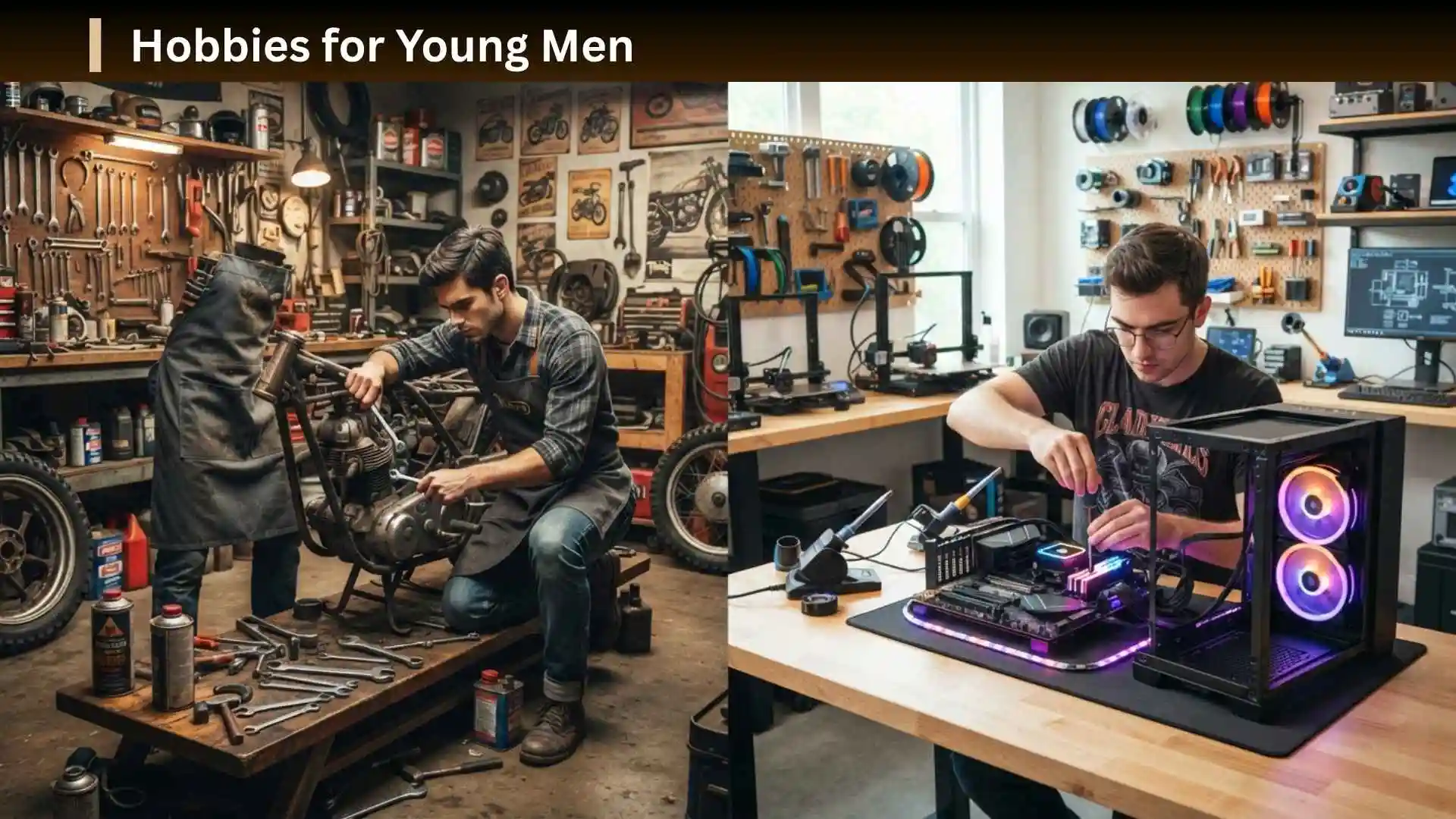
Finding good hobbies for young men is less about choosing the trendiest activity and more about finding something that fits your interests, budget, schedule, and goals. The right hobby can give you a productive way to spend free time while helping you build skills, stay active, meet people, or simply have fun.
Whether you want an inexpensive hobby you can do at home, an outdoor activity, a creative pursuit, or something that could eventually become a serious skill, there are plenty of options worth exploring.
What Are the Best Hobbies for Young Men?
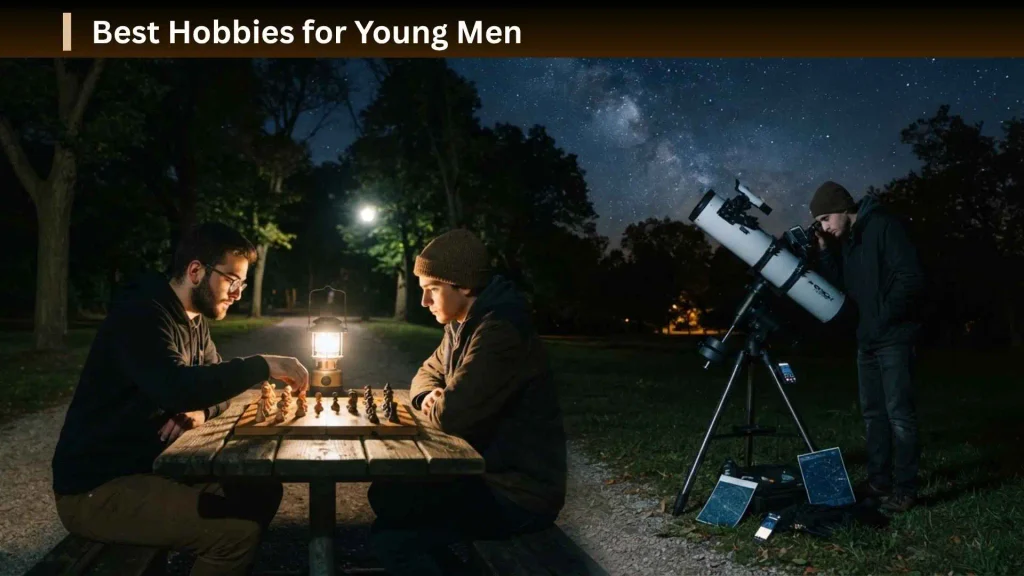
The best hobby depends on what you want from your free time. Some hobbies are mainly for relaxation, while others develop practical skills, physical fitness, creativity, social connections, or career-related abilities.
Here are 25 options worth considering:
| Hobby | Best For | Typical Cost | Where |
| Weightlifting | Fitness and strength | $$ | Gym/Home |
| Running | Cardio and simplicity | $ | Outdoors |
| Hiking | Adventure and nature | $–$$ | Outdoors |
| Cycling | Fitness and exploration | $$–$$$ | Outdoors |
| Cooking | Practical skills | $–$$ | Home |
| Photography | Creativity | $$–$$$ | Anywhere |
| Drawing | Artistic expression | $ | Home |
| Guitar | Music | $$–$$$ | Home |
| Woodworking | Building things | $$–$$$ | Workshop |
| Coding | Technology and problem-solving | $ | Home |
| Reading | Learning and relaxation | $ | Anywhere |
| Chess | Strategy | $ | Home/Online |
| Fishing | Relaxation and outdoors | $$ | Outdoors |
| Camping | Adventure | $$–$$$ | Outdoors |
| Gardening | Nature and patience | $–$$ | Home/Outdoors |
| Model building | Detail-oriented creativity | $–$$ | Home |
| Gaming | Entertainment and competition | $$–$$$ | Home |
| Writing | Creativity and communication | $ | Home |
| Martial arts | Fitness and discipline | $$ | Gym/Studio |
| Swimming | Full-body exercise | $–$$ | Pool |
| Rock climbing | Challenge and fitness | $$ | Indoor/Outdoor |
| Car detailing | Practical hands-on work | $$ | Home |
| DIY projects | Making and repairing | $–$$ | Home |
| Geocaching | Exploration | $ | Outdoors |
| Volunteering | Community and social connection | Free | Community |
Cost varies substantially depending on whether you already own equipment, choose beginner-level gear, or join a club or facility.
1. Weightlifting
Weightlifting is a popular choice for young men who enjoy structured physical activity and want a measurable hobby.
You can track exercises, repetitions, sets, and progress over time. A gym provides access to a broad range of equipment, while a properly equipped home setup can work for people who prefer training privately.
The key is to learn proper technique and progress gradually rather than treating every workout as a competition.
Good for: strength, routine, fitness, and goal setting.
2. Running
Running is one of the simplest hobbies to start because you do not need an elaborate setup.
A pair of suitable running shoes and a safe route can be enough for beginners. You can keep the hobby casual or work toward specific goals such as running a particular distance.
Running also makes it easy to explore parks, neighborhoods, and trails while getting regular physical activity.
Good for: fitness, outdoor time, stress relief, and personal challenges.
3. Hiking
If you prefer being outdoors rather than exercising indoors, hiking can be a rewarding hobby.
Beginners can start with relatively short, easy trails and gradually explore longer or more challenging routes. Hiking can also combine physical activity with photography, nature observation, camping, or travel.
Before tackling unfamiliar trails, learn basic outdoor safety, check conditions, and bring appropriate supplies.
Good for: adventure, nature, exploration, and exercise.
4. Cycling
Cycling can serve several purposes at once: exercise, transportation, exploration, and recreation.
You can ride around your local area, use dedicated bike paths, join cycling groups, or eventually explore longer routes. Road cycling, mountain biking, gravel riding, and casual recreational cycling offer different experiences.
A helmet and properly maintained bicycle are important starting points.
Good for: fitness, exploration, outdoor recreation, and social activities.
5. Cooking
Cooking is a hobby with an unusually practical payoff because the skills can be used throughout everyday life.
Instead of trying complicated recipes immediately, learn foundational techniques such as knife skills, roasting, sautéing, making sauces, preparing grains, and cooking proteins safely.
Once you become comfortable with the basics, you can explore cuisines from different parts of the world.
Good for: independence, creativity, practical skills, and entertaining friends.
6. Photography
Photography is a strong hobby for someone who likes observing details and creating visual stories.
You do not necessarily need an expensive camera to begin. A smartphone can provide a convenient way to learn composition, lighting, perspective, and editing.
You could specialize in landscapes, street scenes, architecture, wildlife, sports, portraits, or everyday photography.
Good for: creativity, travel, observation, and visual storytelling.
7. Drawing
Drawing provides a low-cost creative outlet that can be practiced almost anywhere.
You can start with pencil and paper and focus on fundamentals such as shapes, proportions, shading, perspective, and composition. Digital drawing is another option if you already have a suitable tablet or computer.
Progress usually comes from consistent practice rather than buying expensive supplies.
Good for: creativity, concentration, and artistic development.
8. Learning Guitar
Learning guitar can turn music from something you consume into something you actively create.
Beginners can focus on basic chords, rhythm, simple songs, and eventually scales or music theory. Acoustic guitar can be convenient for informal playing, while electric guitar opens up different musical styles but requires additional equipment.
The most useful approach is to practice regularly rather than attempting long, infrequent sessions.
Good for: music, creativity, relaxation, and social activities.
9. Woodworking
Woodworking appeals to people who enjoy making tangible objects.
Simple projects such as shelves, boxes, small furniture, or decorative pieces can introduce skills including measuring, cutting, sanding, joining, and finishing.
Because woodworking involves tools and materials that can cause injuries if used incorrectly, beginners should learn safe tool handling and use appropriate protective equipment.
Good for: craftsmanship, patience, creativity, and practical skills.
10. Coding
Coding can be both a hobby and a useful technical skill.
You can begin with simple projects rather than trying to learn an entire programming ecosystem at once. Building a small website, automating a repetitive task, creating a simple game, or experimenting with an app can make learning more engaging.
The hobby becomes particularly rewarding when you build projects that solve problems you actually care about.
Good for: problem-solving, technology, creativity, and project building.
11. Reading
Reading is one of the easiest hobbies to adapt to almost any schedule.
You can read fiction for entertainment or explore subjects such as history, science, business, philosophy, biographies, psychology, technology, or travel.
If attention is difficult at first, start with subjects you already find interesting rather than forcing yourself through books you do not enjoy.
Good for: learning, imagination, relaxation, and broadening knowledge.
12. Chess
Chess is an accessible strategy hobby that can be played casually or studied seriously.
You can play against friends, join a local chess club, or use online platforms. Beyond simply playing games, you can study openings, tactics, endgames, and famous games.
Chess works especially well for people who enjoy competition and analytical challenges.
Good for: strategy, concentration, competition, and problem-solving.
13. Fishing
Fishing can be a slower-paced hobby for people who enjoy spending time outdoors.
It combines equipment knowledge, patience, observation, and time in nature. You can keep the activity simple or become deeply interested in different techniques, species, environments, and tackle.
Always follow the fishing regulations applicable to the location where you plan to fish.
Good for: relaxation, outdoor time, patience, and exploration.
14. Camping
Camping offers a way to spend more extended periods outdoors while learning practical skills.
A beginner does not need an enormous collection of equipment. Starting with established campgrounds and basic gear can make the experience more manageable.
As you gain experience, you can learn skills such as meal preparation outdoors, campsite organization, navigation, and trip planning.
Good for: adventure, nature, independence, and outdoor skills.
15. Gardening
Gardening is often overlooked when people think about hobbies for young men, but it can be surprisingly engaging.
You can grow herbs, vegetables, flowers, or container plants even if you do not have a large yard. The hobby combines planning, observation, physical activity, and patience.
Growing herbs such as basil, mint, or parsley can be an especially accessible starting point.
Good for: nature, patience, hands-on work, and home projects.
16. Model Building
Model building is ideal for people who enjoy detail and focused projects.
Depending on your interests, you might build model cars, aircraft, ships, architecture models, miniatures, or other kits. Painting and customization can add another creative dimension.
It is also a hobby that can be practiced indoors without requiring much space.
Good for: concentration, craftsmanship, collecting, and creativity.
17. Gaming
Gaming can be a legitimate recreational hobby when approached intentionally.
Different genres provide different experiences. Strategy games emphasize planning, competitive games focus on skill and reaction, simulation games can encourage experimentation, and story-driven games emphasize exploration and narrative.
For people who enjoy the social side, multiplayer gaming can also provide opportunities to play cooperatively with friends.
Good for: entertainment, competition, strategy, and social connection.
18. Writing
Writing is not limited to professional authors.
You could keep a personal journal, write short stories, create a blog, experiment with poetry, develop fictional worlds, or document your interests.
Writing regularly can also help you become more comfortable expressing ideas clearly.
Good for: creativity, communication, reflection, and storytelling.
19. Martial Arts
Martial arts can combine physical training with technical learning and structured practice.
Different disciplines have different focuses. Brazilian jiu-jitsu emphasizes grappling, boxing focuses heavily on punches and movement, and disciplines such as karate or taekwondo may incorporate striking, forms, and traditional practices.
Choose a reputable school with qualified instructors and an appropriate approach to beginner safety.
Good for: fitness, discipline, coordination, and structured learning.
20. Swimming
Swimming can be both recreational and physically demanding.
You can swim casually, learn new strokes, work on technique, or participate in organized activities. It is also an option for people who prefer exercising without spending time in a traditional weight room.
If you are not a confident swimmer, consider learning with qualified instruction.
Good for: fitness, coordination, recreation, and water skills.
21. Rock Climbing
Rock climbing gives you a physical and mental challenge at the same time.
Indoor climbing gyms provide a controlled environment where beginners can learn fundamental movement and climbing techniques. Bouldering generally involves shorter climbing problems without ropes, while other forms of climbing use rope systems and additional equipment.
Proper instruction and gym safety rules are important, particularly for beginners.
Good for: strength, problem-solving, confidence, and adventure.
22. Car Detailing
If you enjoy cars and hands-on projects, car detailing can turn routine vehicle care into a hobby.
You can learn about washing techniques, interior cleaning, paint care, organization, and detailing products. Start with basic cleaning rather than immediately investing in professional equipment.
The hobby can also develop into a useful side skill if you eventually become proficient.
Good for: cars, hands-on work, attention to detail, and practical skills.
23. DIY Home Projects
DIY projects can range from simple repairs to furniture construction and home organization.
The best projects are matched to your current skill level. Beginners might start with painting, assembling shelves, organizing storage, or making simple decorative items before attempting complex electrical, plumbing, or structural work.
When a project involves significant safety risks or regulated work, professional help may be appropriate.
Good for: practical skills, creativity, problem-solving, and home improvement.
24. Geocaching
Geocaching adds a game-like element to outdoor exploration.
Participants use GPS-enabled devices to find hidden containers or locations and can discover places they might otherwise overlook. It can be enjoyed alone or with friends.
Because locations vary, always respect property boundaries, local rules, and environmental guidelines.
Good for: exploration, walking, puzzles, and outdoor adventure.
25. Volunteering
Volunteering may not look like a traditional hobby, but it can become a meaningful regular activity.
You might help at an animal shelter, community organization, food distribution program, environmental project, youth activity, or another local initiative.
It is particularly useful if you want a hobby that connects you with other people while contributing to your community.
Good for: social connection, purpose, teamwork, and community involvement.
How to Choose the Right Hobby

With so many possibilities, choosing one can be harder than finding ideas.
Start by deciding what you want the hobby to provide.
If You Want to Get Fitter
Consider:
- Running
- Weightlifting
- Cycling
- Swimming
- Hiking
- Martial arts
- Rock climbing
Choose something you can realistically do consistently rather than selecting an activity solely because it appears demanding.
If You Want a Creative Hobby
Try:
- Photography
- Drawing
- Guitar
- Writing
- Woodworking
- Model building
- Cooking
Creative hobbies are especially useful when you want something that produces a tangible result.
If You Want to Learn a Valuable Skill
Consider:
- Cooking
- Coding
- Woodworking
- Photography
- Car detailing
- DIY projects
- Gardening
These hobbies can be enjoyable while also teaching skills that have practical applications outside the hobby itself.
If You Want to Meet New People
Look for hobbies with built-in communities:
- Martial arts
- Team sports
- Running groups
- Cycling clubs
- Chess clubs
- Volunteer organizations
- Climbing gyms
- Group hiking
A hobby becomes more social when you participate in clubs, classes, leagues, events, or group activities instead of practicing entirely alone.
Best Low Cost Hobbies for Young Men
You do not need to spend hundreds of dollars to start a hobby.
Some inexpensive choices include:
- Running — Minimal equipment beyond suitable footwear.
- Reading — Libraries can provide access to books at little or no cost.
- Drawing — Basic paper and pencils are enough to begin.
- Writing — A notebook can be your starting point.
- Hiking — Local trails can provide free recreation.
- Chess — A basic chess set or online play can be inexpensive.
- Gardening — A few containers and beginner-friendly plants can be enough.
- Geocaching — A smartphone can help you get started.
- Bodyweight exercise — Many exercises require little or no equipment.
- Photography — A smartphone can serve as an entry-level camera.
The important distinction is between starting a hobby and collecting equipment for a hobby. You can usually begin with basic tools and upgrade later if you remain interested.
Hobbies You Can Do at Home
If you prefer staying indoors, consider:
- Cooking
- Baking
- Reading
- Gaming
- Coding
- Drawing
- Writing
- Guitar
- Chess
- Model building
- DIY projects
- Photography editing
Home hobbies are particularly convenient for people with unpredictable schedules because they eliminate travel time.
Hobbies That Can Become Useful Skills
Some hobbies have a natural path from beginner activity to advanced skill.
| Hobby | Skill You Can Develop | Possible Long-Term Direction |
| Cooking | Food preparation | Culinary work, entertaining |
| Coding | Programming | Software projects |
| Photography | Visual composition | Freelance photography |
| Woodworking | Craftsmanship | Furniture making |
| Writing | Communication | Publishing/content work |
| Car detailing | Vehicle care | Detailing services |
| Gardening | Plant cultivation | Advanced gardening |
| Guitar | Musical performance | Bands, recording, teaching |
| DIY | Repair/building | Home projects |
| Drawing | Illustration | Digital art/design |
A hobby does not need to become a business to be worthwhile. Turning every interest into a side hustle can remove some of the enjoyment that made the activity appealing in the first place.
Hobbies for Young Men in Their 20s
Your 20s can be a good time to experiment with hobbies because interests, schedules, careers, and social circles can change considerably.
A balanced hobby mix might include:
- One physical hobby: running, lifting, climbing, swimming, or cycling.
- One creative hobby: photography, music, drawing, or writing.
- One practical hobby: cooking, DIY, coding, or woodworking.
- One social hobby: volunteering, martial arts, clubs, or group activities.
You do not need to maintain all four. The idea is simply to explore different categories and discover what fits your lifestyle.
Hobbies for Young Men With Busy Schedules
If you have limited free time, choose hobbies that have low setup requirements.
10–20 minute options:
- Reading
- Drawing
- Chess puzzles
- Guitar practice
- Journaling
- Bodyweight exercises
- Language practice
30–60 minute options:
- Running
- Cooking
- Gym workouts
- Coding
- Photography walks
- Gaming
- Swimming
Weekend-focused options:
- Hiking
- Camping
- Fishing
- Cycling
- Longer DIY projects
- Volunteering
- Rock climbing
A hobby does not need to occupy several hours every day to be meaningful.
How to Start a New Hobby Without Overspending

A common mistake is buying everything before deciding whether you actually enjoy the activity.
Instead:
- Choose one hobby.
- Identify the minimum equipment required.
- Use what you already own when possible.
- Try beginner-level activities first.
- Practice consistently for several weeks.
- Upgrade equipment only when you understand what you need.
For example, someone interested in photography does not necessarily need a professional camera immediately. Someone interested in cooking does not need a professional kitchen. Someone curious about drawing does not need an expensive tablet.
Start with the activity itself, not the shopping.
Should You Have More Than One Hobby?
Yes, if having multiple hobbies fits your schedule.
A useful combination is to choose activities that serve different purposes. For example, you might have one hobby for fitness, one for creativity, and one for relaxation.
The goal is variety without creating another source of pressure. If maintaining five hobbies becomes stressful, there is nothing wrong with focusing on one or two.
FAQs
What are good hobbies for young men?
Good hobbies include weightlifting, running, hiking, cycling, cooking, photography, coding, reading, guitar, woodworking, gaming, chess, fishing, camping, martial arts, and DIY projects. The best choice depends on whether you want fitness, creativity, social connection, relaxation, adventure, or practical skills.
What is a good hobby for a young man with no money?
Reading, running, writing, drawing, walking, bodyweight exercise, chess, hiking, and learning free online skills can be started with little or no spending. Local libraries, parks, and community resources can also reduce costs.
What hobbies are good for meeting people?
Group-based activities are generally better for social connection. Martial arts, running groups, cycling clubs, climbing gyms, chess clubs, volunteering, recreational sports, and organized outdoor activities can all create opportunities to meet people with similar interests.
What is a useful hobby for a young man?
Cooking, coding, woodworking, photography, gardening, DIY, car detailing, and writing can all develop practical skills. A useful hobby does not have to be career-related; learning something that improves your everyday life can also make a hobby worthwhile.
What are good hobbies to do at home?
Cooking, reading, gaming, coding, drawing, writing, playing guitar, chess, model building, and DIY projects can all be done at home. The best choice depends on how much space, equipment, time, and concentration you have available.
What is a good hobby for someone who gets bored easily?
Choose hobbies with variety and measurable progression. Photography, hiking, cooking, coding projects, woodworking, climbing, and learning an instrument can all provide new challenges as your skills improve.
How do I find a hobby I actually enjoy?
Try several activities at a beginner level instead of trying to identify the perfect hobby immediately. Pay attention to which activities make you curious, hold your attention, and leave you wanting to improve. Give promising hobbies enough time to get past the initial learning curve.
Conclusion
The best hobbies for young men are not necessarily the most expensive, impressive, or popular ones. A worthwhile hobby is one that fits your interests and gives you a reason to spend your free time intentionally.
If you want fitness, try running, lifting, cycling, swimming, or climbing. If you want creativity, explore photography, drawing, music, writing, or woodworking. If you want practical skills, consider cooking, coding, DIY, gardening, or car detailing. And if you want more social interaction, look for clubs, classes, volunteering opportunities, or group activities.
Start small, avoid unnecessary equipment purchases, and give yourself permission to experiment. You do not need to find your lifelong hobby on the first attempt—the process of trying different activities is part of discovering what you genuinely enjoy.

I’m Ethan Mitchell, a curious writer who enjoys turning complex ideas into simple, useful information. At Cognivoora, I focus on creating clear and engaging content that readers can understand and apply in everyday life. I believe good writing should educate, answer real questions, and leave readers with something valuable to remember.
Books:
- The Everyday Mind
- Simple Ideas, Better Thinking