
Turning 60 can open the door to hobbies that fit your interests, schedule, budget, and lifestyle. Whether you want to stay creative, learn something new, spend more time outdoors, meet people, or simply enjoy peaceful moments at home, there are plenty of hobbies for women over 60 to explore.
The best hobby is not necessarily the most impressive one. It is the one that feels enjoyable and gives you a reason to look forward to your free time.
What Are Good Hobbies for Women Over 60( Quick Answer )
Some of the most enjoyable hobbies for women over 60 include gardening, reading, knitting, crocheting, painting, photography, birdwatching, cooking, baking, genealogy, journaling, puzzles, volunteering, walking, dancing, crafting, learning a musical instrument, and joining local clubs or classes.
The right choice depends on what you want from a hobby. For example, gardening and walking are good choices for people who enjoy being outdoors, while reading, puzzles, crafts, and journaling can be done comfortably at home.
How to Choose the Right Hobby After 60
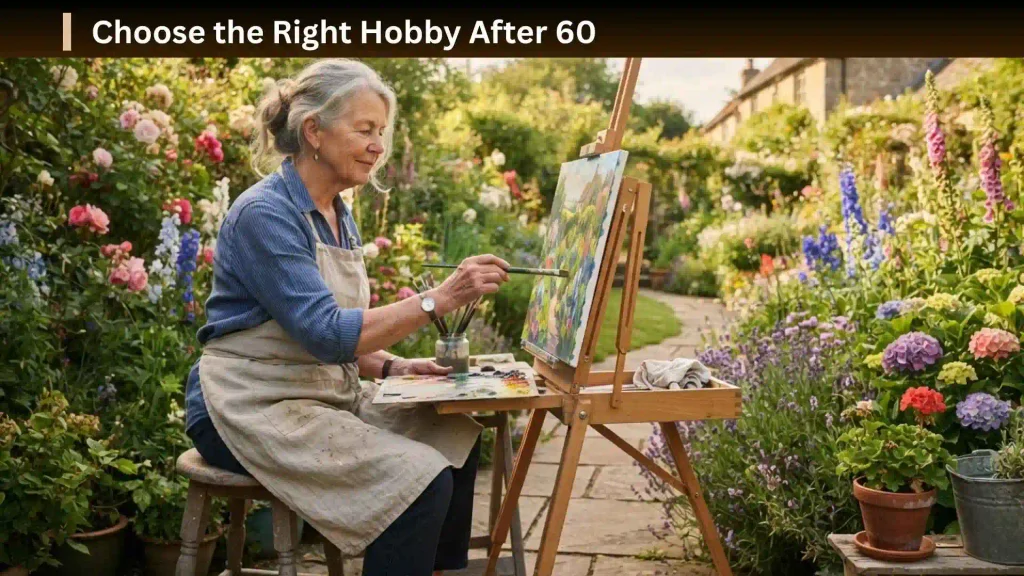
There is no single list of hobbies that works for every woman. Your ideal hobby should match your interests and the kind of experience you want.
Consider these questions before choosing one:
- Do you prefer indoor or outdoor activities?
- Would you rather enjoy a hobby alone or with other people?
- Do you want to learn a skill or simply relax?
- Are you looking for something inexpensive?
- How much time do you want to spend on it?
- Do you already have supplies or equipment you can use?
- Would you enjoy a hobby that produces something tangible?
- Do you want a hobby that encourages you to leave the house?
- Would you prefer something peaceful or mentally challenging?
You can also try several hobbies before deciding which one deserves more of your time.
25 Hobbies for Women Over 60
1. Gardening
Gardening can be a rewarding hobby for women who enjoy plants, flowers, vegetables, or spending time outside.
You do not need a large yard. Container gardening, raised beds, balcony plants, and indoor herbs can all provide opportunities to grow something.
Good for: Nature lovers, beginners, and people who enjoy hands-on projects.
Getting started: Try a few easy-to-grow plants rather than creating a large garden immediately.
2. Reading
Reading is one of the easiest hobbies to start because you can do it almost anywhere.
You might explore novels, biographies, history, mysteries, memoirs, travel books, poetry, or nonfiction. Libraries can also provide access to books without requiring you to purchase them.
Good for: Quiet evenings, relaxation, and lifelong learning.
3. Knitting
Knitting combines creativity with a practical result. Scarves, blankets, hats, dishcloths, and other projects can make satisfying beginner projects.
Starting with basic stitches is usually easier than immediately attempting a complicated pattern.
Good for: Creative people who enjoy repetitive, focused activities.
4. Crocheting
Crocheting is another flexible fiber-art hobby. A crochet hook and yarn are enough to begin many simple projects.
Once you learn basic techniques, you can experiment with blankets, accessories, decorations, and gifts.
Good for: People who enjoy crafts that can be practiced at home.
5. Painting
Painting provides plenty of room for experimentation. You can try watercolor, acrylics, oils, or other mediums.
You do not have to consider yourself an artist to enjoy painting. The activity itself can be the goal.
Good for: Creative exploration and personal expression.
6. Drawing
Drawing requires relatively little equipment. A sketchbook and pencils can be enough for beginners.
You could draw flowers, household objects, landscapes, animals, or people. Online lessons and local art classes can help you develop specific skills.
7. Photography
Photography can turn ordinary outings into opportunities to notice interesting details.
You can use a smartphone or a dedicated camera. Try photographing gardens, architecture, wildlife, family gatherings, landscapes, or everyday moments.
Good for: People who enjoy observation, creativity, and exploring their surroundings.
8. Birdwatching
Birdwatching can be enjoyed in a backyard, local park, nature preserve, or other suitable outdoor setting.
A pair of binoculars can be helpful, but you can begin by simply observing birds around your home.
Keeping a bird journal can make the hobby more engaging as you record species, dates, locations, or observations.
9. Journaling
Journaling can take many forms. You might write about your day, record memories, document travel, keep a gratitude journal, or explore creative writing.
There are no strict rules. A notebook and pen are enough.
Good for: Reflection, creativity, memory keeping, and quiet personal time.
10. Genealogy
If you are curious about your family’s history, genealogy can become a fascinating long-term hobby.
You can begin by talking with relatives and organizing names, dates, photographs, and family stories. Public records and genealogy databases can provide additional research opportunities.
A useful approach is to document the source of important information rather than assuming every family story is historically accurate.
11. Cooking
Cooking can become more interesting when you treat it as a hobby rather than simply a daily responsibility.
Try learning dishes from different regions, improving a particular technique, making homemade bread, or recreating favorite restaurant meals.
You can also create a personal recipe collection containing dishes you want to keep and share with family.
12. Baking
Baking offers a structured creative outlet. Cookies, breads, pies, cakes, muffins, and pastries all provide opportunities to practice.
Start with simple recipes and gradually try more technical projects as your confidence grows.
13. Puzzles
Jigsaw puzzles, crossword puzzles, word searches, logic puzzles, and Sudoku can provide enjoyable mental challenges.
Choose the type and difficulty based on what you find satisfying rather than what seems difficult.
Good for: Quiet afternoons and people who enjoy problem-solving.
14. Walking
Walking can be both a hobby and a way to explore your surroundings.
Instead of thinking only about distance or speed, give each walk a theme. You might explore local parks, photograph interesting houses, observe seasonal changes, or walk with a friend.
If you have physical limitations or concerns about starting a new activity, choose an appropriate level for your circumstances and discuss exercise plans with a healthcare professional when needed.
15. Dancing
Dancing can be social, creative, and enjoyable.
Depending on your preferences and local options, you might explore ballroom dancing, line dancing, social dance classes, or other forms of movement.
A beginner class can also be a good way to meet people who share similar interests.
16. Sewing
Sewing can begin with straightforward projects such as repairing clothing, making simple accessories, or creating household items.
As your skills develop, you can move toward quilting, garment making, embroidery, or more advanced projects.
17. Quilting
Quilting is particularly appealing if you enjoy detailed crafts and want to create something substantial.
A small patchwork project can be a better starting point than immediately attempting a large quilt.
Quilting can also have a social component through community groups, classes, and quilting circles.
18. Embroidery
Embroidery is a portable craft that can be practiced with relatively little space.
You can decorate fabric with simple designs and gradually learn more complicated stitches.
It is also an option for someone who wants a creative hobby without needing a dedicated workspace.
19. Scrapbooking
Scrapbooking combines photographs, written memories, paper crafts, and personal storytelling.
It can be particularly meaningful when used to preserve family occasions, vacations, celebrations, or important milestones.
Digital scrapbooking is another option if you prefer working on a computer.
20. Learning a Musical Instrument
It is never necessary to have started music lessons as a child to explore an instrument as a hobby.
Ukulele, piano, keyboard, guitar, recorder, and other instruments can provide different learning experiences.
Choose an instrument based on the type of music you enjoy and the amount of practice you realistically want to do.
21. Singing
Singing can be enjoyed privately or socially.
You might sing along with favorite music at home, join a community choir, or take lessons. A choir can add a social dimension for someone who wants a hobby involving other people.
22. Volunteering
Volunteering is a hobby-like activity for people who want their free time to have a community purpose.
Opportunities may include libraries, animal organizations, community groups, museums, schools, food programs, or local events.
The best option depends on what organizations are available in your area and what type of commitment you want to make.
23. Creative Writing
Creative writing allows you to explore stories, poems, personal essays, or fictional characters.
You could write short stories, family memories, travel experiences, or even a collection of poems.
Writing groups can provide encouragement and opportunities to share ideas with other writers.
24. Learning a New Language
Learning a language can give you a long-term project with clear milestones.
You can practice through books, apps, classes, conversation groups, music, films, or language exchanges.
Instead of trying to become fluent quickly, focus on practical goals such as learning greetings, understanding common phrases, or holding a simple conversation.
25. Visiting Museums and Historic Places
If you enjoy history, art, culture, or architecture, visiting museums and historic sites can become a regular hobby.
You can make each outing more interesting by choosing a theme, researching an exhibit beforehand, or keeping a notebook of things you learned.
Best Hobbies for Women Over 60 at Home
Not every hobby requires leaving the house. Some activities are particularly convenient when you want something you can pick up whenever you have free time.
| Hobby | Space Needed | Approximate Startup Cost | Best For |
| Reading | Very little | Low | Relaxation and learning |
| Journaling | Very little | Low | Writing and reflection |
| Puzzles | Small table | Low | Mental challenges |
| Knitting | Very little | Low | Crafting |
| Crocheting | Very little | Low | Creative projects |
| Drawing | Small workspace | Low | Artistic practice |
| Painting | Small workspace | Low–Moderate | Creativity |
| Baking | Kitchen | Low–Moderate | Food and experimentation |
| Genealogy | Small workspace | Low–Moderate | Family history |
| Music practice | Varies | Moderate | Learning and creativity |
Costs vary considerably depending on what supplies or equipment you already own and how deeply you pursue the hobby.
Best Social Hobbies for Women Over 60
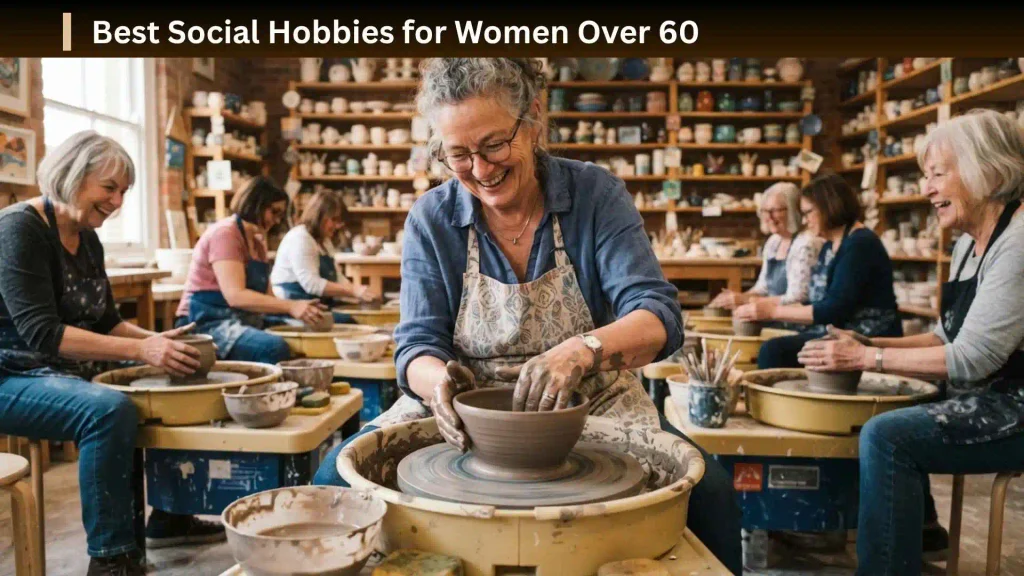
If your main goal is meeting people, choose activities that naturally create opportunities for conversation and regular interaction.
Good options include:
- Book clubs
- Community choirs
- Dance classes
- Craft groups
- Quilting circles
- Gardening clubs
- Photography groups
- Volunteer organizations
- Walking groups
- Art classes
- Cooking classes
- Local history groups
- Language classes
- Community theater
- Board-game groups
A recurring class or club can be especially useful because seeing the same people regularly gives relationships more opportunity to develop naturally.
Best Creative Hobbies for Women Over 60
Creative hobbies can be rewarding because there is always another technique, project, or subject to explore.
Consider:
- Painting
- Drawing
- Photography
- Knitting
- Crocheting
- Quilting
- Sewing
- Embroidery
- Scrapbooking
- Creative writing
- Pottery
- Jewelry making
- Floral arranging
- Music
- Woodworking or small craft projects
You do not need to produce something “perfect.” A hobby can be worthwhile simply because you enjoy the process.
Low-Cost Hobbies to Try
If you want to start without spending much money, consider hobbies that use items you already have.
Reading
Use your local library, existing books, or digital library services available through your library.
Walking
A neighborhood, park, or other suitable public area can provide a setting for regular walks without requiring specialized equipment.
Writing
A basic notebook can become a journal, poetry book, memory journal, or creative-writing workbook.
Drawing
Start with ordinary pencils and inexpensive paper before investing in specialized art supplies.
Birdwatching
You can begin by observing birds without buying equipment. Add binoculars or field guides later if the hobby becomes a serious interest.
Puzzles
Look for inexpensive puzzles, puzzle exchanges, used books of crossword or logic puzzles, or community resources.
Hobbies That Can Turn Into Creative Projects
Some hobbies become even more rewarding when you have a tangible result at the end.
For example:
- Gardening: Grow herbs, flowers, or vegetables.
- Knitting: Make scarves, blankets, or gifts.
- Crocheting: Create blankets or decorative pieces.
- Photography: Build themed photo collections.
- Baking: Develop a personal recipe collection.
- Genealogy: Create a documented family history.
- Writing: Compile stories, poems, or memories.
- Quilting: Create finished quilts or wall pieces.
- Painting: Build a personal collection of artwork.
- Scrapbooking: Preserve family photographs and stories.
These projects can also make meaningful gifts for family members and friends.
How to Start a New Hobby Without Getting Overwhelmed
A common mistake is buying everything before deciding whether you actually enjoy an activity.
Instead, use a simple approach.
Start Small
Choose a beginner-level project that can be completed relatively quickly.
Finishing something small can help you decide whether you want to continue.
Borrow or Buy Used Equipment
Libraries, community organizations, friends, local groups, and secondhand markets may provide ways to explore an interest before making a larger investment.
Give Yourself Time to Learn
A new hobby often feels awkward at first. Learning basic techniques takes practice.
Do not judge the entire hobby based on your first attempt.
Set a Realistic Schedule
You do not need to spend hours every day.
Even a short, regular session can give a hobby a place in your routine.
Choose Enjoyment Over Productivity
Your hobby does not have to make money, produce something useful, or become a serious skill.
Relaxation and enjoyment are legitimate reasons to pursue an activity.
How to Turn a Hobby Into a Social Experience
A hobby can become more meaningful when it connects you with other people.
Start by looking for local options such as:
- Public library programs
- Community centers
- Parks and recreation programs
- Senior or active-adult programs
- Local clubs
- Art studios
- Gardening organizations
- Volunteer organizations
- Religious or community groups
- Adult education programs
You can also look for online communities when attending an in-person group is inconvenient.
The key is to find people who genuinely share your interest rather than joining a group simply because it is popular.
How Many Hobbies Should You Have?
There is no ideal number.
Some women may prefer one hobby that they practice regularly. Others may enjoy several activities depending on the season or mood.
For example, you might:
- Garden in spring and summer
- Photograph nature throughout the year
- Read during quiet evenings
- Join a craft group once a week
- Work on genealogy during winter
Having several hobbies can also prevent your free time from feeling repetitive.
What If You Have Never Had a Hobby Before?
Start with curiosity rather than trying to identify your “perfect” hobby.
Think about activities you enjoyed when you were younger, subjects you have always wanted to learn about, or things you regularly notice and find interesting.
You can also use the three-hobby test:
- Choose one creative hobby.
- Choose one physical or outdoor hobby that fits your abilities.
- Choose one social or intellectual hobby.
Try each one for a few weeks and pay attention to which activity you naturally want to return to.
Frequently Asked Questions
What are the best hobbies for women over 60?
Good choices include gardening, reading, painting, photography, knitting, crocheting, walking, birdwatching, genealogy, cooking, puzzles, volunteering, dancing, music, and creative writing. The best option depends on personal interests, available time, budget, and preferred social setting.
What are some easy hobbies for women over 60?
Reading, journaling, drawing, puzzles, photography, birdwatching, gardening in containers, knitting, crocheting, and baking are relatively accessible options. Many can be started with basic supplies.
What are good hobbies for women over 60 who live alone?
Reading, gardening, crafts, photography, genealogy, cooking, writing, puzzles, music, and online learning can all work well independently. If social connection is important, consider adding a club, class, volunteer activity, or group hobby.
What are inexpensive hobbies for women over 60?
Reading through a library, walking, journaling, drawing, writing, birdwatching without specialized equipment, and many types of puzzles can be inexpensive ways to start. Crafting can also be affordable when you begin with small projects and basic supplies.
What hobbies help women over 60 meet new people?
Book clubs, dance classes, community choirs, craft groups, gardening clubs, volunteer programs, photography groups, walking groups, and adult education classes naturally create opportunities to interact with other people.
Can women over 60 learn completely new skills?
Absolutely. Learning a new skill can be part of the enjoyment of a hobby at any age. Start with manageable goals, use beginner-friendly resources, and give yourself time to improve.
What is a good hobby for a woman over 60 who wants to stay creative?
Painting, drawing, photography, writing, knitting, crocheting, quilting, sewing, embroidery, pottery, music, and floral arranging are all possibilities. Choose the medium that makes you curious enough to keep practicing.
How can I find a hobby I actually enjoy?
Try several activities rather than searching for one perfect choice. Start inexpensively, choose beginner-friendly projects, and notice which activities make you want to continue. Your interests may also change over time, so it is perfectly reasonable to try something new.
Conclusion
The best hobbies for women over 60 are the ones that fit the life you want to enjoy now. You might choose gardening for a connection with nature, painting for creativity, genealogy for family history, reading for quiet entertainment, or a club or volunteer activity for social connection.
There is also no need to limit yourself to one type of hobby. Try something new, start small, and give yourself permission to change direction if an activity does not suit you. A hobby does not have to be productive or impressive—it simply needs to make your time more enjoyable and meaningful.

I’m Sophia Carter, a writer who enjoys discovering interesting ideas and transforming them into helpful content. At Cognivoora, I write with a simple goal: to make information clearer, more accessible, and genuinely useful for readers. I value thoughtful research, easy explanations, and content that people can trust and return to whenever they need it.
Books:
- The Knowledge Journey
- Understanding the World Around Us