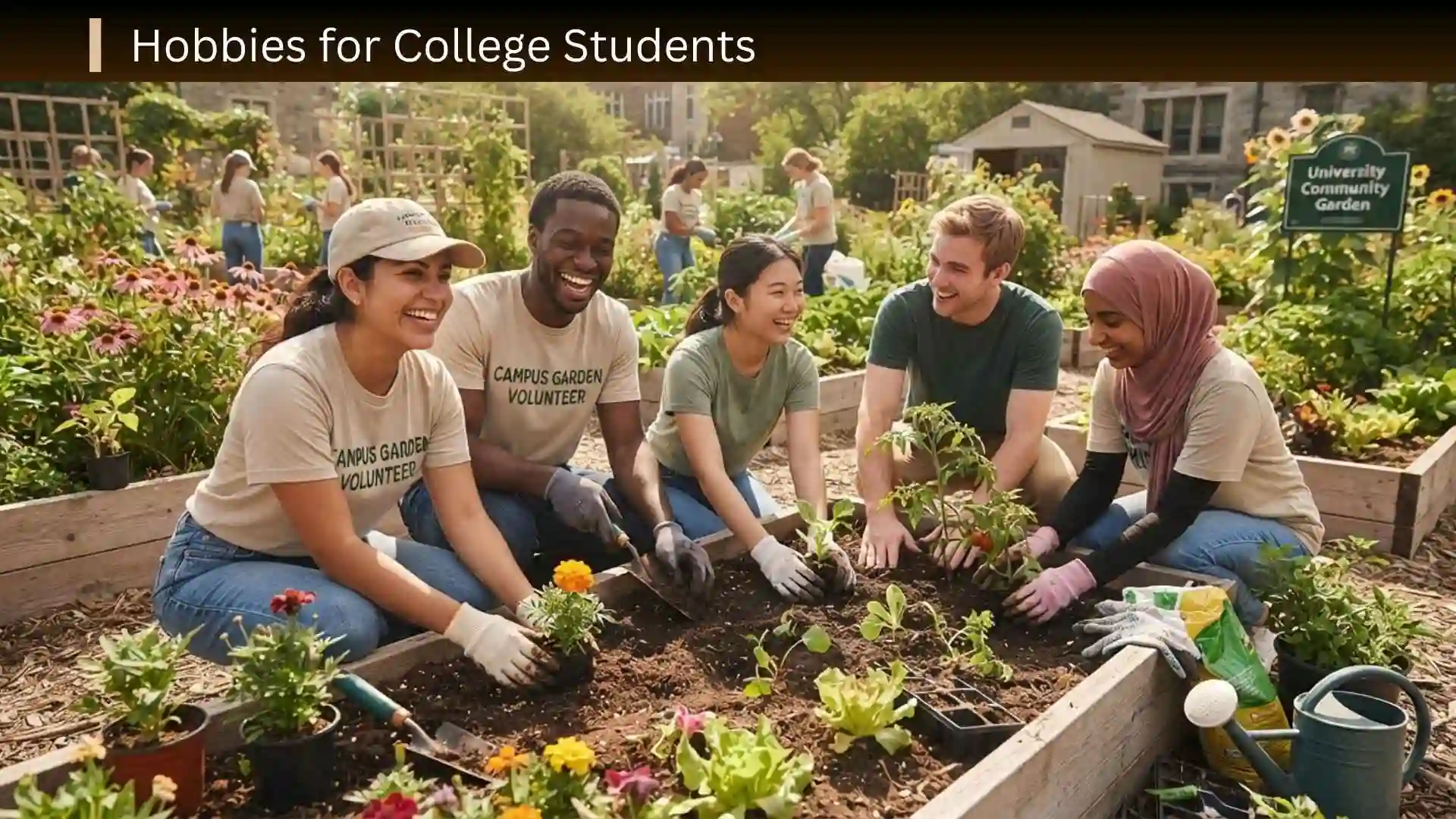
College is a busy time filled with classes, assignments, social activities, and career planning. A good hobby can give you something enjoyable to look forward to outside your academic responsibilities. The best hobbies for college students do not necessarily require lots of money, free time, or specialized equipment. Many can fit into a busy schedule and can be practiced alone or with friends.
Whether you want a creative outlet, a way to stay active, something relaxing to do after studying, or a hobby that could eventually become a useful skill, there are plenty of options to explore.
What Are Good Hobbies for College Students(Quick Answer)
The best hobbies for college students are activities that match their interests, schedules, budgets, and available space. Popular choices include reading, photography, drawing, journaling, cooking, baking, hiking, running, yoga, gardening, playing music, gaming, volunteering, learning a language, coding, crafting, and creative writing.
A good college hobby should ideally be enjoyable enough that you want to keep doing it without making your academic workload harder.
Best Hobbies for College Students
Here are practical hobby ideas organized by the type of experience they offer.
| Hobby | Cost | Time Needed | Difficulty | Good For |
| Reading | Low | 15–30 min | Easy | Relaxation |
| Journaling | Low | 10–20 min | Easy | Reflection |
| Drawing | Low | 20–60 min | Easy–Moderate | Creativity |
| Photography | Low–Moderate | Flexible | Easy–Moderate | Creativity |
| Running | Low | 20–45 min | Easy–Moderate | Exercise |
| Cooking | Moderate | 30–90 min | Moderate | Practical skills |
| Hiking | Low | 1–4 hours | Moderate | Outdoors |
| Playing guitar | Moderate | 20–45 min | Moderate | Music |
| Gardening | Low–Moderate | Flexible | Easy–Moderate | Nature |
| Coding | Low | 30–90 min | Moderate | Skill building |
| Volunteering | Low | 1–3 hours | Easy | Community |
| Knitting | Low | 20–60 min | Moderate | Relaxation |
| Gaming | Variable | Flexible | Easy | Entertainment |
| Learning a language | Low | 15–30 min | Moderate | Learning |
| Creative writing | Low | 20–60 min | Easy–Moderate | Creativity |
The costs and time commitments depend heavily on the specific version of each hobby you choose.
Creative Hobbies for College Students
Creative hobbies can be especially appealing when most of your college day involves reading, writing papers, taking notes, or working with structured assignments.
1. Drawing
You can start drawing with a basic pencil and notebook. Practice sketches, portraits, buildings, objects around campus, or simple illustrations.
You do not need to consider yourself an artist to enjoy drawing. The hobby can simply be about observing things differently and improving gradually.
2. Painting
Watercolor, acrylic, and other beginner-friendly painting styles can provide a relaxing break from studying.
If you live in a dorm, smaller canvases and compact supplies can make painting easier to manage.
3. Photography
Photography is a flexible hobby because you can start with a smartphone.
Try photographing:
- Campus architecture
- Nature
- Interesting buildings
- Food
- Sunsets
- Local events
- Street scenes
- Everyday objects
As your interest develops, you can learn about composition, lighting, editing, and different photography styles.
4. Creative Writing
Write short stories, personal essays, fictional scenes, poetry, or character ideas.
Creative writing can be done almost anywhere, making it convenient for students who have unpredictable schedules.
5. Poetry
Poetry is another inexpensive hobby that can be practiced in short sessions.
You can experiment with different forms and styles rather than worrying about producing something perfect.
6. Calligraphy
Calligraphy can turn ordinary handwriting into a creative activity. It can also be useful for cards, posters, journals, and handmade gifts.
7. Scrapbooking
Use photographs, tickets, notes, stickers, and other small keepsakes to create pages documenting your college years.
It can become a meaningful personal project rather than simply a pastime.
8. Collage Making
Collage combines photographs, magazine pages, printed designs, drawings, and other materials.
It is a good choice if you want a creative activity without needing advanced drawing skills.
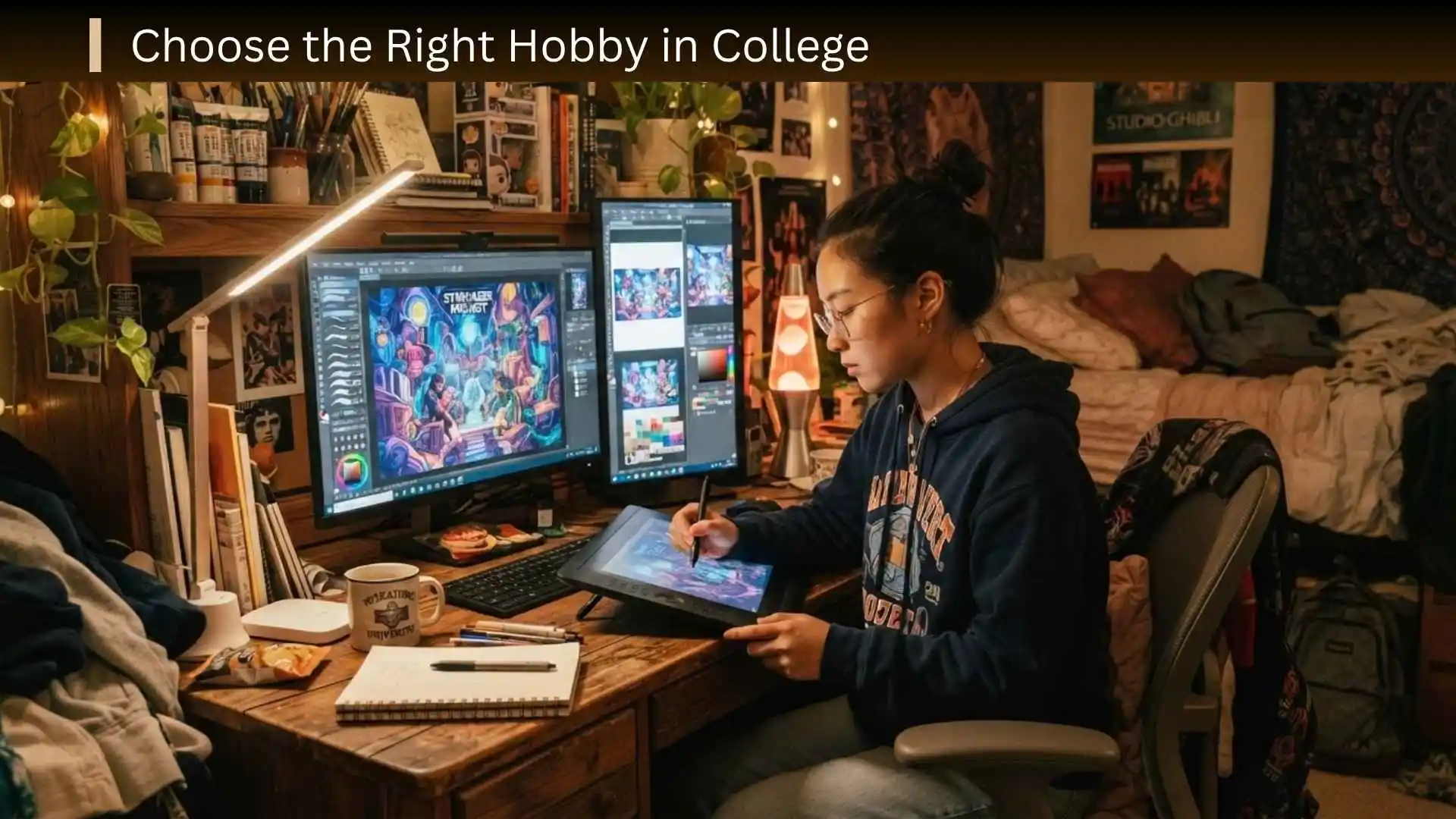
9. Digital Art
A tablet, computer, or even a smartphone can become a creative workspace for digital illustration and design.
You can learn gradually by experimenting with drawing tools, typography, layouts, and digital composition.
10. Graphic Design
Learning basic graphic design can be both creative and practical.
You can practice by creating:
- Posters
- Social media graphics
- Event flyers
- Personal projects
- Digital illustrations
- Presentation designs
11. DIY Crafts
DIY projects can range from simple paper crafts to room decorations and handmade gifts.
Choose projects that match the amount of storage space you have available.
12. Knitting
Knitting can be practiced while listening to music, podcasts, or watching something casually.
Start with simple projects such as scarves, small accessories, or basic patterns.
13. Crocheting
Crochet requires relatively little equipment and can be practiced in a dorm room, apartment, or common area.
Once you learn the basic stitches, you can move toward more complicated projects.
14. Origami
Origami is inexpensive and requires little space. A few sheets of paper can provide plenty of opportunities to practice different designs.
15. Jewelry Making
Beads, cords, wire, and simple tools can be used to make bracelets, necklaces, and other accessories.
It can also become a social hobby if you work on projects with friends.
Hobbies for College Students Who Want to Stay Active
If you spend much of the day sitting in lectures or studying, an active hobby can provide a useful change of pace.
16. Running
Running is accessible because you can begin with little equipment beyond appropriate footwear.
You can run around campus, through local neighborhoods, or on suitable trails.
17. Walking
Walking is one of the simplest hobbies for students with busy schedules.
Listen to music or a podcast, explore your campus, or simply take a break from screens.
18. Hiking
Hiking combines physical activity with time outdoors.
If you are new to hiking, start with appropriate trails and learn about local conditions before choosing more demanding routes.
19. Cycling
Cycling can be both recreational and practical. Some students enjoy exploring their college town by bike, while others prefer dedicated recreational rides.
20. Swimming
If your campus or local community has an accessible pool, swimming can become a regular recreational activity.
21. Yoga
Yoga can be practiced in a small space and adapted to different experience levels.
For college students, short sessions may be easier to maintain than lengthy routines.
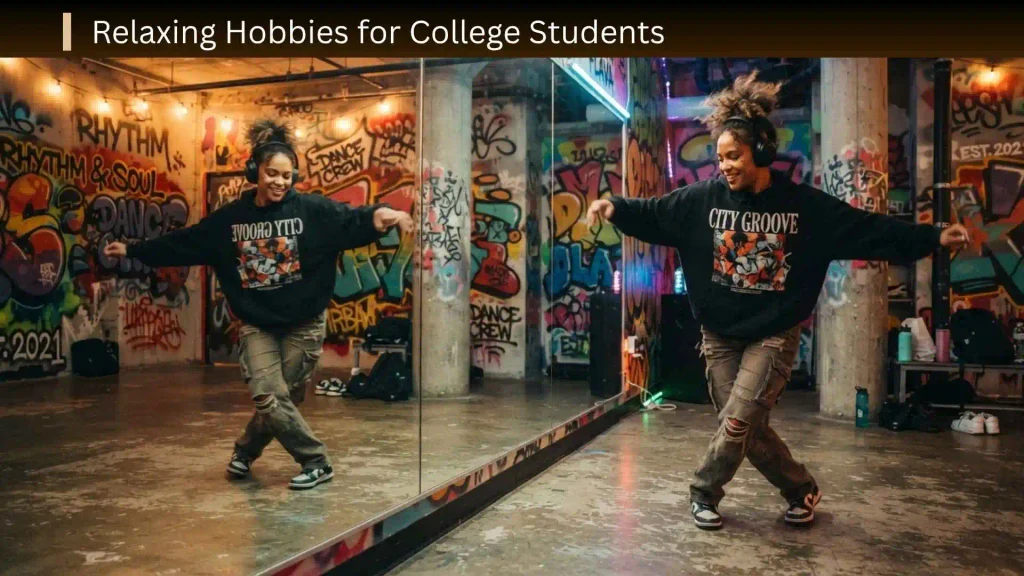
22. Dancing
Try dance classes, social dancing, or practice routines at home.
College campuses may also offer student organizations centered around particular dance styles.
23. Rock Climbing
Indoor climbing gyms can provide a combination of physical activity, problem-solving, and social interaction.
Check beginner instruction and facility requirements before getting started.
24. Martial Arts
Martial arts can combine structured practice, physical activity, discipline, and community.
Look for beginner programs through your college or local organizations.
25. Skateboarding
Students who enjoy outdoor activities may find skateboarding an entertaining way to practice balance and movement.
Choose appropriate locations and follow local safety requirements.
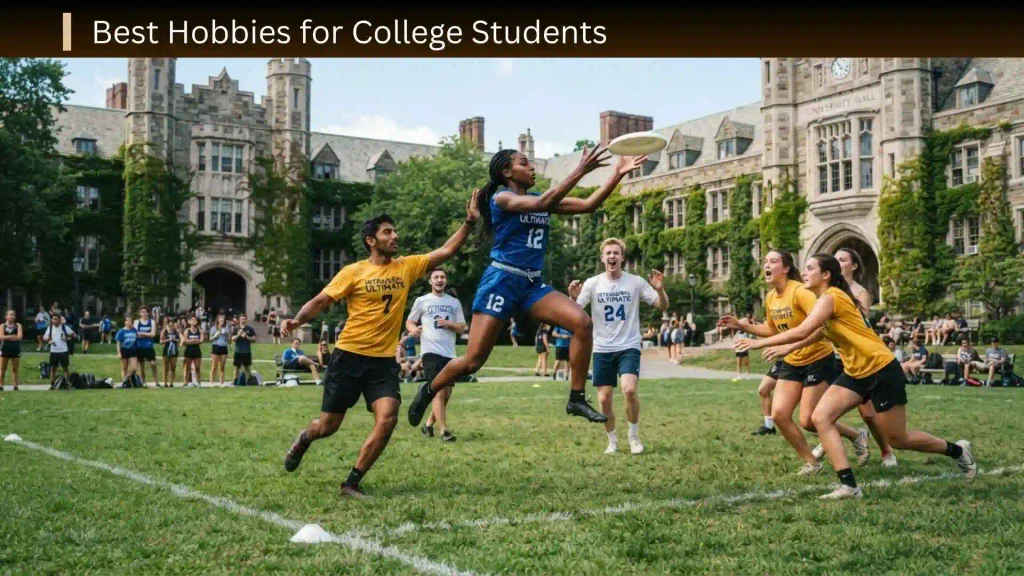
26. Frisbee
A simple frisbee can provide an easy outdoor activity with friends.
You can casually throw it around or learn organized games such as ultimate.
27. Pickleball
Pickleball has become a popular recreational sport in many communities and can be played socially or competitively.
Look for campus courts or local recreation facilities.
28. Basketball
Playing basketball casually with classmates can be an easy way to combine exercise and social time.
29. Soccer
Join an intramural team, recreational group, or informal game if your campus has suitable facilities.
30. Rock or Wall Climbing
For students who enjoy challenges, climbing can offer both physical and mental engagement.
Relaxing Hobbies for College Students
Not every hobby needs to be productive. Sometimes the best hobby is simply something that helps you enjoy your free time.
31. Reading
Reading for pleasure can provide a break from required academic material.
Try novels, biographies, mysteries, science fiction, fantasy, essays, or other subjects that genuinely interest you.
32. Journaling
Journaling can be as simple as writing down what happened during your day, what you are thinking about, or what you want to accomplish.
You do not need a complicated system.
33. Listening to Music
Explore new artists, genres, albums, or musical traditions.
You can make discovering music itself part of the hobby.
34. Playing an Instrument
Guitar, keyboard, ukulele, drums, violin, and other instruments can provide long-term learning opportunities.
If space or noise is a concern, consider an instrument and practice setup suitable for your living situation.
35. Meditation
Meditation can be practiced in short periods and does not require expensive equipment.
If you are new to it, start with a simple guided practice rather than assuming you need to sit for long periods.
36. Puzzles
Jigsaw puzzles, crossword puzzles, logic puzzles, and similar activities can provide screen-free entertainment.
37. Adult Coloring
Coloring books designed for adults offer a simple creative activity that requires relatively little preparation.
38. Collecting
Collect something that genuinely interests you, such as postcards, books, stamps, art prints, or other inexpensive objects.
Avoid turning collecting into an unnecessary financial burden.
39. Watching Classic Movies
Explore older films, different genres, or influential directors.
You can keep a simple movie journal recording what you watched and what you thought about it.
40. Birdwatching
Birdwatching encourages you to spend time outdoors and pay attention to your surroundings.
A smartphone can be enough to begin, although binoculars can become useful if the hobby develops.
Social Hobbies for College Students
If you want a hobby that helps you meet people, choose activities where interaction happens naturally.
41. Board Games
Board games can turn a study break into a social activity.
Try strategy games, party games, cooperative games, or classic games depending on your group.
42. Tabletop Role-Playing Games
Games such as tabletop role-playing campaigns can combine storytelling, creativity, problem-solving, and social interaction.
43. Volunteering
Volunteering allows you to spend your free time supporting a cause or community organization.
Possible areas include:
- Community programs
- Animal shelters
- Food assistance organizations
- Environmental projects
- Youth programs
- Campus initiatives
Choose opportunities that fit your schedule rather than committing to more hours than you can realistically maintain.
44. Joining a Student Club
A college club can turn an existing interest into a recurring social hobby.
You might find groups focused on:
- Books
- Photography
- Music
- Games
- Languages
- Arts
- Sports
- Technology
- Entrepreneurship
- Outdoor activities
45. Cooking With Friends
Cooking becomes more social when you prepare meals with roommates or classmates.
Try choosing a theme, such as homemade pizza, tacos, pasta, or a particular regional cuisine.
46. Trivia
Trivia nights can be a fun way to socialize while testing your knowledge.
Many colleges and local venues organize trivia events.
47. Community Gardening
If a community garden is available nearby, gardening can combine social interaction with outdoor activity.
48. Language Exchange
Practice a language with other learners or people who speak it.
The activity can involve casual conversations, games, reading, or cultural discussions.
Skill Building Hobbies for College Students
Some hobbies can also help you develop skills that remain useful beyond college.
49. Coding
Coding can be a hobby even if you are not studying computer science.
Start with a beginner-friendly language or area that interests you, then build small projects instead of trying to learn everything at once.
50. Web Design
Learning basic web design can let you create personal websites, portfolios, blogs, or small projects.
51. Video Editing
Video editing can be useful for creative projects, social media, school organizations, and personal videos.
Start by learning basic cutting, transitions, audio, and organization.
52. Podcasting
You can explore podcasting by researching topics, writing short scripts, recording conversations, and learning basic audio editing.
You do not need to create a large public show for the hobby to be worthwhile.
53. Public Speaking
Join a speaking club, debate group, or campus organization that gives you opportunities to practice communicating ideas.
54. Learning a New Language
Language learning can become a long-term hobby.
Short, consistent practice is often easier to fit around college responsibilities than attempting long study sessions.
55. Cooking
Cooking is both a hobby and a practical life skill.
College students can begin with inexpensive recipes and gradually learn techniques such as roasting, sautéing, baking, seasoning, and meal preparation.
56. Baking
Baking can be creative as well as practical.
Start with simple recipes before moving into bread, decorated desserts, or more technical projects.
57. Personal Finance as a Learning Hobby
Learning about budgeting, saving, credit, taxes, and basic financial concepts can be useful for students approaching independent adulthood.
Because financial decisions can have real consequences, focus on reliable educational sources rather than treating social media advice as authoritative.
58. Learning Basic Sewing
Learning how to sew buttons, repair small tears, or alter simple garments can save money and increase independence.
59. Woodworking
Students with appropriate access to tools and workspace can explore woodworking through beginner classes or supervised facilities.
This is less suitable for a typical dorm room because of equipment and space requirements.
60. 3D Printing
If your college has a makerspace, 3D printing can be an accessible way to explore design and fabrication without purchasing a printer immediately.
Outdoor Hobbies for College Students
Outdoor hobbies can be particularly appealing if most of your daily routine takes place indoors.
61. Gardening
Grow herbs, flowers, or vegetables in whatever space is realistically available.
Students without outdoor space can investigate container gardening or other compact approaches.
62. Geocaching
Geocaching turns outdoor exploration into a location-based treasure hunt.
It can be done alone or with friends.
63. Nature Photography
Combine photography with walks through parks, trails, or campus green spaces.
64. Stargazing
Learn basic astronomy and identify visible celestial objects.
A smartphone astronomy app can help beginners learn the night sky.
65. Fishing
If suitable legal fishing locations are available, fishing can offer a slower-paced outdoor hobby.
Check local regulations and licensing requirements before fishing.
66. Camping
Camping can be a rewarding group activity for students who enjoy spending time outdoors.
Beginners should start with manageable trips and learn basic outdoor safety.
67. Kayaking
Where appropriate facilities and conditions exist, kayaking can combine recreation, exercise, and outdoor exploration.
Beginners should use proper instruction and safety equipment.
Low Cost Hobbies for College Students
A limited student budget does not mean you need to give up hobbies.
68. Reading Free Library Books
Your college or public library can provide access to books without requiring you to purchase every title you want to read.
69. Sketching
A basic pencil and inexpensive paper can be enough to begin.
70. Writing
All you really need is a way to write, whether that means a notebook, computer, or phone.
71. Walking and Exploring
Explore your campus or nearby public areas on foot while discovering places you have not visited before.
72. Free Online Learning
Educational resources can help you explore subjects such as languages, programming, art, history, music, and other interests.
Check the quality and credibility of the resource before relying on it.
73. Photography With Your Phone
Instead of buying a camera immediately, learn composition and lighting with the phone you already have.
74. Bodyweight Exercise
Exercises that require little or no equipment can be practiced in an appropriate space.
75. Birdwatching
You can start by observing birds around campus or local parks without purchasing specialized equipment.
How to Choose the Right Hobby in College
The best hobby is not necessarily the most impressive one. It is the one you can realistically enjoy and maintain.
Consider these five questions:
How Much Time Do You Have?
If your schedule is unpredictable, choose something that can be paused easily.
Reading, drawing, journaling, photography, and language practice can often be adapted to short sessions.
What Is Your Budget?
Start with hobbies that use equipment you already own.
Instead of immediately buying expensive gear, try the basic version of the activity first.
Do You Want to Be Alone or Social?
If you want to meet people, consider clubs, recreational sports, volunteering, board games, or group classes.
If you need quiet time, reading, journaling, drawing, music, or puzzles may be better.
Do You Want Relaxation or Challenge?
Some hobbies are primarily recreational, while others require continuous learning.
For relaxation, consider reading, coloring, gardening, walking, or puzzles.
For a challenge, consider coding, playing an instrument, photography, language learning, or climbing.
Does It Fit Your Living Situation?
A hobby that works well in a house may be inconvenient in a dorm.
Consider noise, storage, mess, roommates, shared spaces, and campus rules before investing in equipment.
How to Start a Hobby Without Spending Too Much
You do not need to buy everything at the beginning.
A simple approach is:
- Choose one activity that genuinely interests you.
- Try the beginner version first.
- Use free or borrowed resources where possible.
- Practice for a short period each week.
- Decide whether you actually enjoy it before buying more equipment.
- Upgrade only when you understand what you need.
For example, someone interested in photography can begin with a smartphone instead of immediately purchasing a camera. Someone interested in music can investigate campus practice rooms or introductory lessons before investing in an expensive instrument.
How Much Time Should College Students Spend on Hobbies?
There is no universal number of hours that every college student should spend on hobbies.
The right amount depends on your academic schedule, responsibilities, energy level, and goals.
A hobby might take 10–20 minutes a day, a few hours each weekend, or several hours spread throughout the week. The important thing is that it fits comfortably into your life.
A hobby should complement your college experience rather than consistently interfering with classes, sleep, work, or important responsibilities.
Hobbies That Can Become Useful Skills
Some hobbies can eventually develop into capabilities you can use in school, work, or personal projects.
| Hobby | Skills You May Develop |
| Photography | Composition, visual communication, editing |
| Coding | Programming, logic, problem-solving |
| Cooking | Planning, organization, practical independence |
| Writing | Communication, storytelling, editing |
| Public speaking | Presentation, communication, confidence |
| Graphic design | Visual communication, design principles |
| Language learning | Communication and cultural awareness |
| Video editing | Storytelling, media production |
| Gardening | Planning, observation, plant care |
| Music | Practice habits, musical skills, creativity |
| Sewing | Repair and practical craftsmanship |
| Volunteering | Collaboration and community involvement |
These benefits should be viewed as potential outcomes of sustained practice, not guaranteed career advantages.
Hobbies for College Students Based on Personality
If You Are Introverted
Consider:
- Reading
- Drawing
- Journaling
- Photography
- Coding
- Writing
- Puzzles
- Gardening
- Playing an instrument
If You Are Social
Consider:
- Intramural sports
- Board games
- Volunteering
- Student clubs
- Dancing
- Trivia
- Cooking with friends
- Language exchange
If You Are Creative
Consider:
- Painting
- Photography
- Creative writing
- Music
- Graphic design
- Crafting
- Jewelry making
- Digital art
If You Love the Outdoors
Consider:
- Hiking
- Cycling
- Camping
- Birdwatching
- Gardening
- Fishing
- Stargazing
- Kayaking
If You Enjoy Learning
Consider:
- Coding
- Language learning
- Reading
- Astronomy
- Cooking
- Photography
- History-related hobbies
- Learning an instrument
How to Make a Hobby Stick During College
Starting a hobby is easy. Maintaining it during midterms, finals, projects, work, and social commitments can be harder.
Keep the First Goal Small
Instead of deciding to become an expert immediately, make your first goal simple.
For example:
- Read 10 pages
- Draw for 15 minutes
- Practice guitar for 20 minutes
- Walk for 30 minutes
- Cook one new recipe
- Write 300 words
- Complete one small coding project
Attach the Hobby to an Existing Routine
You might read before bed, photograph your surroundings during walks, or practice a language while commuting.
This makes the hobby easier to remember.
Avoid Turning Every Hobby Into a Productivity Project
Not everything you do needs to improve your résumé.
A hobby can simply be enjoyable.
If you love gaming, reading fantasy novels, painting, baking, or collecting something, you do not need to justify it by turning it into a business.
Let Your Hobby Change
Your interests may change during college.
You might start with photography and later discover an interest in filmmaking. You might begin running and eventually try hiking.
Experimenting is part of finding activities that suit you.
Frequently Asked Questions
What are the best hobbies for college students?
Good options include reading, photography, drawing, cooking, running, hiking, gaming, journaling, playing music, volunteering, coding, language learning, crafting, and joining student clubs. The best choice depends on your interests, budget, schedule, and living situation.
What is a good hobby for a busy college student?
Choose an activity that can be practiced in short sessions. Reading, journaling, drawing, walking, photography, language practice, puzzles, and playing an instrument can all be divided into manageable periods.
What are inexpensive hobbies for college students?
Reading from a library, walking, writing, sketching, phone photography, bodyweight exercise, birdwatching, and exploring free educational resources are inexpensive ways to develop hobbies.
What hobbies can college students do in a dorm?
Dorm-friendly options include reading, journaling, drawing, digital art, photography, knitting, crocheting, puzzles, writing, language learning, and quiet music practice where permitted.
Always consider roommate preferences, residence policies, noise restrictions, and available storage.
What hobbies are good for meeting people in college?
Student clubs, intramural sports, volunteering, board games, dance groups, language exchanges, recreational activities, and group classes can naturally create opportunities to meet people with similar interests.
Can a hobby help with college stress?
A hobby can provide a break from academic work and give you time to engage with something enjoyable. However, hobbies are not a substitute for professional help when someone is dealing with significant mental health difficulties.
What hobby should I start if I have no idea what I like?
Try several inexpensive activities for short periods rather than committing to one immediately. For example, spend a week experimenting with photography, drawing, cooking, walking, reading, or a creative activity and notice which one you naturally want to continue.
Should college students choose hobbies related to their major?
Not necessarily. A hobby can complement your studies, but it can also be completely unrelated.
A computer science student might enjoy painting, while an art student might enjoy hiking or cooking. Variety can make free time feel different from academic work.
Are hobbies worth the time in college?
Yes, if the hobby fits your responsibilities and genuinely adds enjoyment, creativity, social connection, relaxation, or learning to your life. The goal is not to maximize the number of activities but to find something worth making time for.
Conclusion
The best hobbies for college students are not necessarily expensive, complicated, or career-focused. A good hobby can be as simple as reading a book, taking photographs around campus, going for a walk, learning to cook, writing, drawing, playing a game, or joining a student club.
Start with something that interests you, keep the initial commitment manageable, and avoid spending heavily until you know you enjoy the activity. Whether you want to meet people, develop a skill, relax after class, stay active, or simply have more fun outside your studies, there is a hobby that can fit your college lifestyle.

I’m James Anderson, a dedicated writer and lifelong learner who enjoys researching topics and explaining them in a practical way. Through my work at Cognivoora, I aim to give readers reliable, easy-to-follow information that helps them learn something new. I always try to keep my writing natural, useful, and focused on the questions readers actually have.
Books:
- A Practical Guide to Better Thinking
- Questions Worth Asking