If you’re curious about Harps Hobbies, you’re not alone. I believe a hobby should be more than just a way to pass time, it should give you something to look forward to. Whether you’re interested in harp music, learning a new skill, or simply exploring a creative activity, Harps Hobbies can open the door to a rewarding experience. In this guide, you’ll discover what Harps Hobbies means, why people enjoy it, and how you can get started even if you’re a complete beginner.
Is Playing the Harp a Good Hobby(Quick Answer)
Yes. Playing the harp can be a rewarding hobby for people who enjoy music and want an instrument that can be played for personal enjoyment or developed into a serious musical skill.
A beginner can start by:
- Choosing a suitable harp
- Learning basic hand position and plucking technique
- Learning how the strings are arranged
- Practicing simple melodies and chords
- Developing a consistent practice routine
- Learning to tune and care for the instrument
- Exploring different musical styles
- Connecting with teachers and other harpists
For many beginners, a lever harp is a practical starting point because it is generally smaller and more portable than a pedal harp. However, the best instrument depends on what you ultimately want to play.
Why Is the Harp a Popular Hobby?
The harp offers more than simply learning another musical instrument. It can become a long-term creative activity with many different directions.
Creative Expression
The harp can be used to play melodies, chords, accompaniment patterns, arrangements, improvisations, and original compositions.
You can learn existing songs or gradually develop your own musical ideas. This makes the instrument suitable for people who want structured lessons as well as those who prefer creative exploration.
A Relaxing Musical Activity
Many hobbyists enjoy practicing because it gives them a focused activity away from screens and everyday distractions.
The physical act of producing individual notes also makes the harp different from simply listening to music. Even a short practice session can provide a sense of progress when you are learning a new melody or technique.
A Hobby That Can Grow With You
One advantage of learning harp as a hobby is that there is plenty of room for development.
A beginner might start with:
- Simple melodies
- Basic chords
- Two-hand playing
- Easy arrangements
- Folk or Celtic music
- Classical pieces
- Improvisation
- Composition
- Ensemble playing
- Public performance
You do not have to decide your entire musical path when you first begin.
What Types of Harps Can You Play as a Hobby?
There is no single harp that is right for every hobbyist. The two most important modern categories for beginners are lever harps and pedal harps.
Lever Harps
Lever harps use individual levers near the strings to raise their pitch by a half step. They are commonly associated with folk, Celtic, and other traditional styles, although they can be used for many types of music.
They are often attractive to hobbyists because they can be considerably more compact and portable than concert pedal harps.
A lever harp may be a good fit if you want to:
- Play folk or Celtic music
- Learn at home
- Accompany singing
- Explore popular songs
- Take your instrument to lessons or gatherings
- Develop harp skills without immediately committing to a concert harp
Lever harps are available in a range of sizes and string configurations, so it is important to compare instruments rather than assuming that every lever harp is the same.
Pedal Harps
Pedal harps use seven pedals to alter the pitch of the notes. This system provides the chromatic flexibility required for much of the traditional orchestral and advanced classical repertoire.
A pedal harp may make more sense if your long-term goal involves:
- Orchestral playing
- Advanced classical repertoire
- Conservatory or university study
- Professional concert performance
- Music that requires frequent chromatic changes
Pedal harps are substantially larger and require additional coordination because the feet operate the pedals while the hands play the strings.
Diatonic Harps
Diatonic harps are designed without pitch-changing levers or pedals. They can provide a straightforward way to explore the basic sound and technique of the harp, although their musical flexibility is more limited than instruments with pitch-changing mechanisms.
The important point is that a harp should be selected according to your intended use rather than simply its appearance.
Lever Harp vs. Pedal Harp for a Hobby
| Feature | Lever Harp | Pedal Harp |
| Pitch changes | Hand-operated levers | Foot-operated pedals |
| Typical use | Folk, Celtic, popular, traditional and varied repertoire | Classical, orchestral and advanced chromatic repertoire |
| Portability | Generally easier to transport | Larger and more difficult to move |
| Learning focus | Basic harp technique plus lever management | Harp technique plus pedal coordination |
| Space requirements | Usually more manageable | Requires considerably more room |
| Beginner suitability | Often a practical starting point | Better suited to players whose goals require it |
| Long-term path | Can support serious study and performance | Well suited to advanced classical and orchestral study |
These are general distinctions rather than absolute rules. Lever harps can be used for many genres, and experienced players can accomplish sophisticated music on them. Your intended repertoire should therefore be one of the biggest factors in your decision.
How Do You Choose Your First Harp?
Choosing a first harp requires more thought than simply selecting the instrument that looks most attractive.
Start With Your Musical Goals
Ask yourself what you actually want to do.
Do you want to play:
- Celtic tunes?
- Folk songs?
- Pop music?
- Hymns?
- Classical music?
- Original compositions?
- Accompaniment for singing?
- Music simply for personal enjoyment?
The American Harp Society specifically recommends considering your goals before choosing an instrument because your intended musical direction can influence which harp is appropriate.
Consider the Size
A larger harp can provide greater range and a fuller low register, but it can also take up more space and be harder to transport.
Smaller harps can be convenient for people with limited living space or those who expect to transport their instrument frequently.
Do not assume that a smaller instrument is automatically better for a beginner. The useful question is whether its range, dimensions, tone, and portability match your needs.
Consider the Number of Strings
String count affects the instrument’s range.
A smaller harp may be sufficient for simple melodies and certain styles, while a larger harp can provide more notes and a broader repertoire.
Instead of choosing a string count simply because it is popular, consider the music you want to play and ask a teacher or experienced harpist whether the instrument provides enough range for your goals.
Think About Your Available Space
Before buying, measure the space where the harp will be stored and played.
Consider:
- Floor space
- Ceiling height
- Doorways
- Storage conditions
- Transportation
- Whether the instrument can remain safely assembled
A harp is not an instrument you should choose without considering its physical environment.
Try Before You Buy
If possible, play or at least sit with different harps before making a purchase.
The experience can reveal differences in:
- String spacing
- Playing position
- Tone
- Reach
- Instrument height
- Weight
- Overall comfort
The American Harp Society recommends connecting with harpists, teachers, and local harp communities as part of the process of finding the right instrument.
Should You Rent or Buy a Harp?
For someone completely new to the instrument, renting can be worth considering before making a major purchase.
A rental period can help you determine whether:
- You enjoy practicing regularly
- The instrument fits your home
- You like its sound
- Its size works for you
- You want to continue studying
- Your chosen harp matches your musical goals
Buying may make more sense after you understand your preferences.
The American Harp Society specifically includes renting versus buying, new versus pre-owned instruments, and finding an appropriate teacher among the key considerations for people starting their harp journey.
How Much Does a Harp Hobby Cost?
The cost varies enormously depending on the type, size, construction, condition, and manufacturer.
Quality lever harps can range from the low thousands of dollars to several thousand dollars or more, while pedal harps generally represent a substantially larger financial investment. One current manufacturer guide, for example, lists its lever harps from a little over $1,000 to around $7,000 and notes that pedal harps tend to cost more than $10,000.
The purchase price is not the only expense to consider.
A harp hobby may also involve:
- Lessons
- Sheet music
- Tuning equipment
- Replacement strings
- Protective covers
- Transport equipment
- Maintenance or repairs
- Event or membership costs
Prices vary significantly, so treat published figures as general guidance rather than a guaranteed market price.
What Equipment Does a Beginner Harpist Need?
You do not need a huge collection of accessories to begin.
Harp
The instrument itself is obviously the most important purchase. Select one that matches your goals and physical circumstances.
Tuning Tool
Harps need regular tuning. A suitable tuning wrench is normally specific to the instrument and should be kept with it.
A chromatic tuner can also make the tuning process easier for beginners.
Music Stand
A music stand can be useful when learning from books or printed music.
Sheet Music or Learning Materials
Choose beginner-level material that matches your ability. Starting with music that is too difficult can make practice frustrating.
Protective Equipment
If you transport the harp, appropriate protection becomes especially important.
A larger instrument may also require suitable moving equipment or assistance.
How Do You Start Learning the Harp?
The basic learning process is more manageable when divided into stages.
1. Learn Proper Posture
Your sitting position affects comfort, reach, and technique.
A teacher can help you establish a stable position and prevent inefficient habits from becoming ingrained.
2. Learn Basic Hand Position
Beginners need to learn how to place and move their fingers efficiently.
Good technique is more important than trying to play complicated music immediately.
3. Learn the String Layout
Understanding how the strings correspond to musical notes makes it easier to navigate the instrument.
You will gradually become more comfortable finding notes without constantly looking at your hands.
4. Practice Simple Patterns
Start with exercises that develop:
- Finger independence
- Evenness
- Accuracy
- Basic rhythm
- Coordination
- Tone production
5. Learn Simple Songs
Playing recognizable music can make practice more enjoyable.
Beginner resources commonly introduce students to familiar melodies and progressively more demanding exercises.
6. Gradually Add Chords and Accompaniment
Once basic technique is comfortable, you can begin combining melody and harmony.
This is particularly useful for people who want to sing while playing or accompany another musician.
Is the Harp Hard to Learn?
The harp has a learning curve, but beginners do not need to master advanced techniques immediately.
Early challenges often include:
- Learning which string corresponds to each note
- Developing finger independence
- Reading music
- Coordinating both hands
- Maintaining consistent rhythm
- Tuning the instrument
- Learning efficient practice habits
Pedal harp players eventually have the additional challenge of coordinating foot movements with their hands.
The important distinction is between starting and mastering. You can learn simple pieces relatively early while continuing to develop technique for years.
How Much Should You Practice?
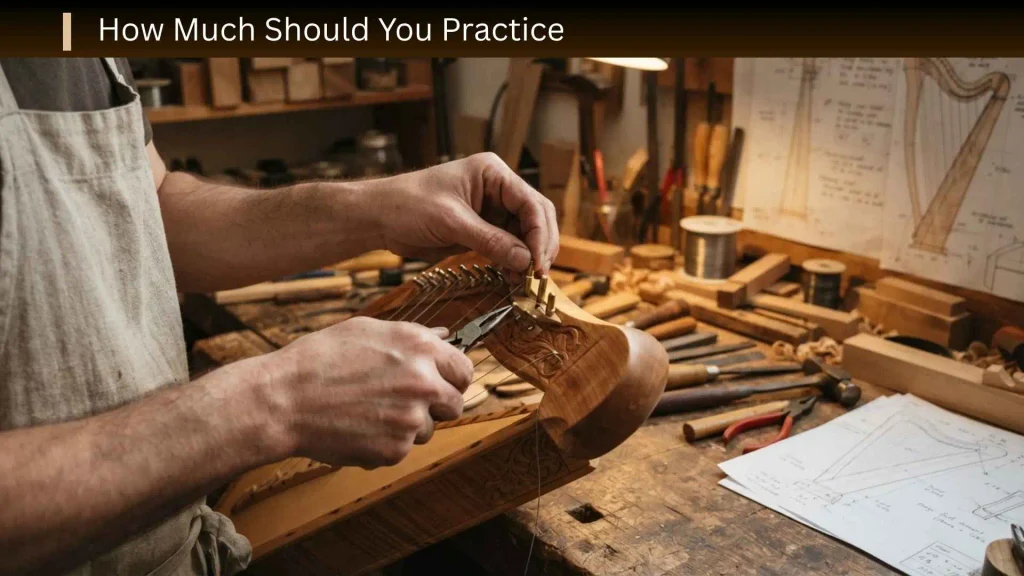
There is no universal practice schedule that every hobbyist must follow.
Consistency generally matters more than occasional marathon sessions.
A practical beginner routine might include:
- A short warm-up
- Technique exercises
- Review of previously learned material
- Work on a new section
- Playing something enjoyable
- Briefly noting what needs attention next time
Even when you have limited time, a focused practice session can be useful.
As your skills develop, you can increase practice time according to your goals.
What Music Can You Play on a Harp?
One of the most appealing aspects of harps’ hobbies is the variety of music available.
Depending on the instrument and your skill level, you can explore:
Celtic and Folk Music
Celtic and folk traditions are closely associated with lever and folk harps.
You can explore airs, traditional melodies, dances, and contemporary arrangements.
Classical Music
The harp has an important role in classical music.
Players interested in advanced classical and orchestral repertoire may eventually need a pedal harp, depending on the specific music they want to perform.
Popular Music
Many harpists arrange contemporary songs for solo harp or use the instrument as accompaniment.
The harp’s ability to combine melody and harmony can make it particularly effective for intimate arrangements.
Religious and Community Music
Harpists may also play hymns and other music in community or religious settings.
Original Music and Improvisation
You do not have to restrict yourself to written music.
Improvising chord progressions, creating melodies, and composing original pieces can turn harp playing into a broader creative hobby.
The American Harp Society highlights the instrument’s use across folk, popular, classical, cultural, ensemble, and personal musical settings.
Harp Hobbies for Different Types of People
The hobby can be adapted to different interests.
For Adults
Adults can begin harp lessons without needing to pursue a professional music career.
The hobby can provide a structured creative activity and a way to continue developing musical skills.
For Children
A child may enjoy the harp as part of general musical education.
The appropriate instrument size, seating position, lesson style, and supervision should be considered carefully.
For Retirees
Learning harp can be a meaningful way to explore music later in life.
There is no requirement to pursue advanced performance. Playing a few favorite songs can be a perfectly worthwhile goal.
For Creative Hobbyists
People interested in songwriting, composition, or improvisation can use the harp as a tool for developing original music.
How Can You Make Harp Practice More Enjoyable?
A hobby is easier to maintain when the activity itself remains enjoyable.
Try these approaches:
Keep Some Easy Music in Your Practice
Not every session needs to be technically demanding.
Playing familiar pieces gives you an opportunity to enjoy the instrument.
Set Small Goals
Instead of saying, “I need to become a good harpist,” choose a measurable goal such as:
- Learn four measures
- Improve one chord transition
- Memorize a short melody
- Practice a difficult passage five times
- Learn one new song this month
Record Your Progress
Occasional recordings can help you hear improvement that may be difficult to notice from day to day.
Explore Different Styles
If one musical style stops being exciting, try something different.
A folk tune, classical arrangement, popular song, or improvisation may provide a fresh challenge.
Play for Other People
When you are comfortable, play a simple piece for a friend or family member.
Informal performances can make your progress feel more meaningful without turning the hobby into a competition.
How Do You Find a Harp Teacher in the USA?
A good teacher can help you avoid inefficient technique and choose appropriate learning material.
You can look for teachers through:
- Local harp communities
- Harp associations
- Music schools
- Colleges and universities
- Local orchestras
- Music teacher organizations
- Online harp instruction
The American Harp Society recommends starting with local connections and expanding your search through harp communities, teachers, orchestras, and educational music programs.
When evaluating a teacher, consider whether they have experience with the type of harp and music you want to learn.
How Do You Care for a Harp?
Basic harp care is an important part of the hobby.
Keep It Properly Tuned
Regular tuning is part of normal harp ownership.
Learn the correct tuning procedure for your particular instrument rather than applying generic instructions.
Protect It From Poor Conditions
Wooden musical instruments can be affected by environmental conditions. Follow the manufacturer’s recommendations for temperature, humidity, storage, and placement.
Handle It Carefully
Harps contain many strings and structural components. Avoid unnecessary movement and use appropriate protection when transporting the instrument.
Learn About String Replacement
Strings can eventually break or wear out.
Your teacher, harp maker, or experienced technician can show you how to replace strings correctly for your specific harp.
How Can Harp Hobbies Become More Social?
Although practicing at home can be a solitary activity, harp playing does not have to be.
You can:
- Join a local harp group
- Attend harp workshops
- Go to harp concerts
- Participate in harp ensembles
- Attend music festivals
- Connect with teachers and players
- Play informal community events
- Share arrangements with other musicians
The American Harp Society maintains chapters and resources designed to help harpists connect with other people interested in the instrument.
Community involvement can also help beginners discover teachers, repertoire, instruments, and performance opportunities.
Common Mistakes Beginners Should Avoid
Buying Before Understanding Your Goals
A beautiful harp is not necessarily the right harp for your musical plans.
Determine what you want to play first.
Choosing Based Only on Price
The cheapest instrument may not provide the experience you need, while the most expensive instrument may offer features you will never use.
Think about value, quality, suitability, and long-term goals.
Starting With Music That Is Too Difficult
Advanced pieces can be inspiring, but they can also create unnecessary frustration.
Choose music that challenges you without overwhelming your current technique.
Ignoring Technique
It can be tempting to focus only on songs.
However, efficient hand position, finger technique, rhythm, and posture create the foundation for future progress.
Practicing Only When You Feel Motivated
Waiting for motivation can make progress inconsistent.
A manageable routine is usually easier to sustain.
Assuming You Need a Pedal Harp
A pedal harp is not automatically the better instrument.
If your interests center on folk, Celtic, popular, traditional, or personal music-making, a lever harp may provide everything you need.
Frequently Asked Questions About Harps Hobbies
Is the harp a good hobby for beginners?
Yes. Beginners can start with simple techniques and music and gradually build their skills. A suitable lever harp is often a practical starting point, particularly for people interested in folk, Celtic, popular, or personal playing.
Can adults learn to play the harp?
Absolutely. Adults can learn harp for personal enjoyment, musical development, performance, or other goals. Your age does not determine whether the hobby is worthwhile.
Is a lever harp or pedal harp better for a beginner?
Neither is universally better. A lever harp is often a practical starting choice because of its size and flexibility, while a pedal harp may be appropriate when the learner’s goals specifically require the chromatic capabilities of the pedal system.
How expensive is a harp hobby?
Costs vary widely. The harp itself can range from relatively modest prices for some smaller instruments to several thousand dollars for quality lever harps and substantially more for pedal harps. Lessons, accessories, maintenance, and transportation can add to the total cost.
Do you need to read music to play harp?
No. You can begin learning basic patterns and melodies without being an advanced music reader. However, learning to read music can greatly expand the amount of repertoire available to you.
How often should a beginner practice harp?
There is no single required schedule. Regular, focused practice is generally more useful than infrequent long sessions. Start with an amount of practice you can realistically maintain and increase it as your goals develop.
Can you play modern songs on a harp?
Yes. Harpists can arrange and perform many contemporary songs. The exact possibilities depend on the harp’s range, tuning system, and the arrangement.
Can a harp be a relaxing hobby?
Yes. Many people choose music-making specifically as a creative and focused leisure activity. You can keep your goals completely recreational and play simply because you enjoy the sound and process.
Should I buy a harp before taking lessons?
Not necessarily. Taking an introductory lesson or speaking with a harp teacher can help you understand what type of instrument suits you before making a significant purchase.
What is the best harp hobby for someone with limited space?
A smaller lever harp may be more practical than a large pedal harp, but you should still check the instrument’s exact dimensions and storage requirements before buying.
Conclusion
Harps hobbies offer a flexible way to combine music, creativity, learning, and personal enjoyment. You can approach the harp casually by learning a few favorite songs, or you can gradually develop advanced skills in folk, Celtic, classical, popular, or original music.
For many newcomers, the most important first decision is choosing an instrument that fits their goals. A lever harp can be an accessible and versatile starting point, while a pedal harp becomes particularly relevant for players pursuing repertoire that requires its greater chromatic and orchestral capabilities.
Start slowly, learn good technique, choose manageable music, and give yourself time to discover what you enjoy. The best harp hobby is not necessarily the one that leads to the most advanced playing—it is the one that keeps you interested enough to continue making music.

I’m Olivia Bennett, a passionate writer who loves exploring ideas, learning new concepts, and sharing knowledge in a straightforward way. I write for Cognivoora with the goal of making useful topics easier to understand without unnecessary complexity. My approach combines research, clarity, and a reader-first perspective.
Books:
- Think Clearly, Live Better
- The Curious Reader’s Guide