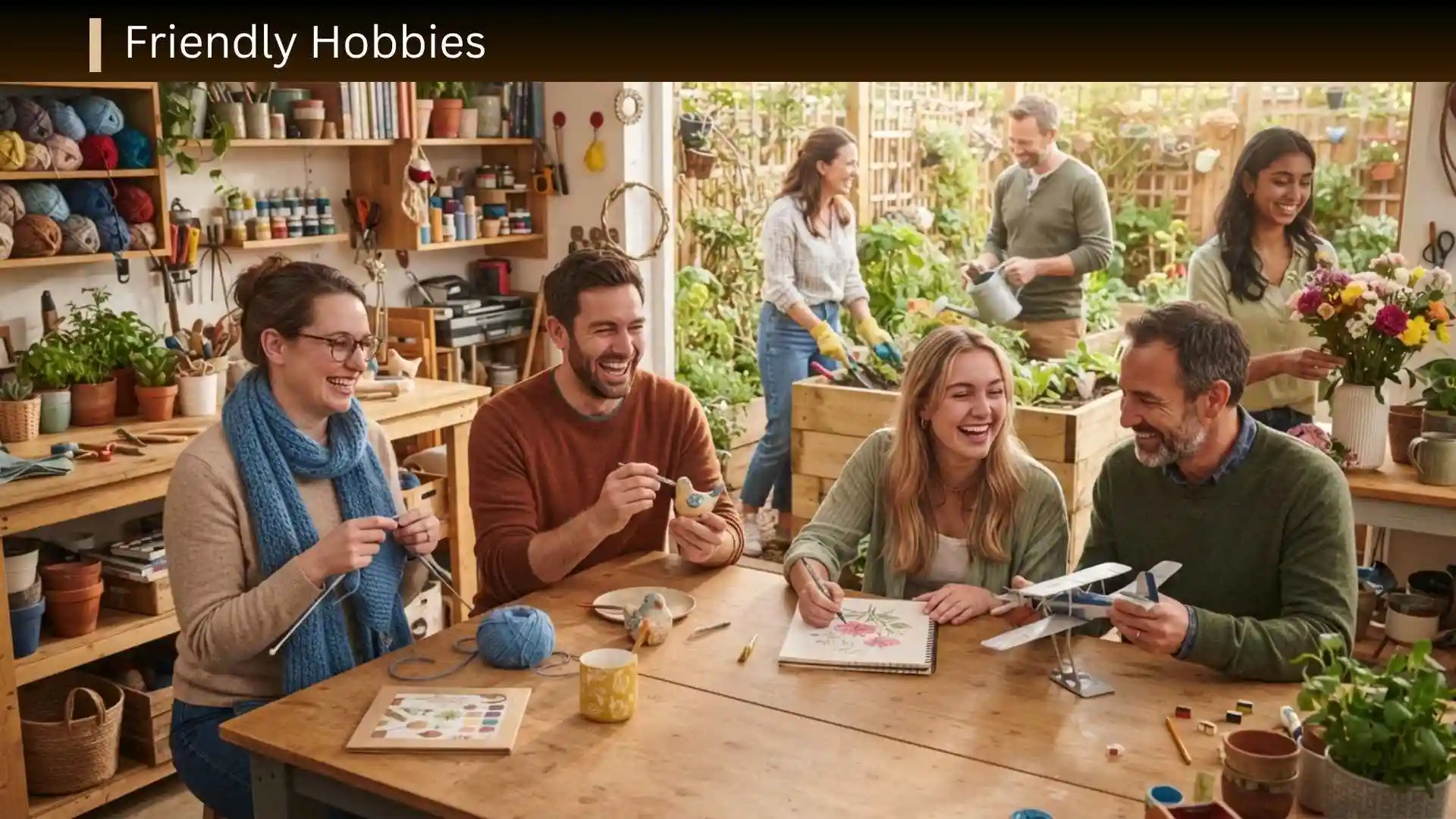
Finding the right friendly hobbies can make everyday life more enjoyable, especially when you want activities that help you connect with others without feeling pressured. I believe a good hobby should give you something to look forward to while also creating opportunities to meet people, share experiences, and build genuine connections.
If you enjoy being around others but are not sure which activity fits your personality, you have plenty of options to explore. You can choose from creative projects, games, sports, volunteering, outdoor activities, or simple hobbies that encourage conversation and teamwork. The best part is that you don’t have to be extremely outgoing to enjoy friendly hobbies, you can start at your own pace and find people who share your interests.
Whether you want to make new friends, spend more quality time with others, or simply try something different, the right hobby can turn an ordinary activity into a meaningful social experience.
What Makes a Hobby Friendly and Social?
A friendly hobby is more than an activity where other people happen to be present. The most socially rewarding hobbies usually have one or more of these characteristics:
- Regular meetings: Seeing the same people each week makes relationships easier to develop.
- Shared goals: Teamwork gives you an immediate reason to communicate.
- Conversation opportunities: Activities with breaks or relaxed pacing make chatting easier.
- Beginner-friendly environments: A welcoming group can make starting less intimidating.
- Shared interests: Common interests provide natural conversation topics.
- Low pressure: You do not have to be highly skilled or outgoing to participate.
For example, going to a crowded gym may put you around many people, but a beginner hiking group or recreational sports league may create much more opportunity for actual interaction.
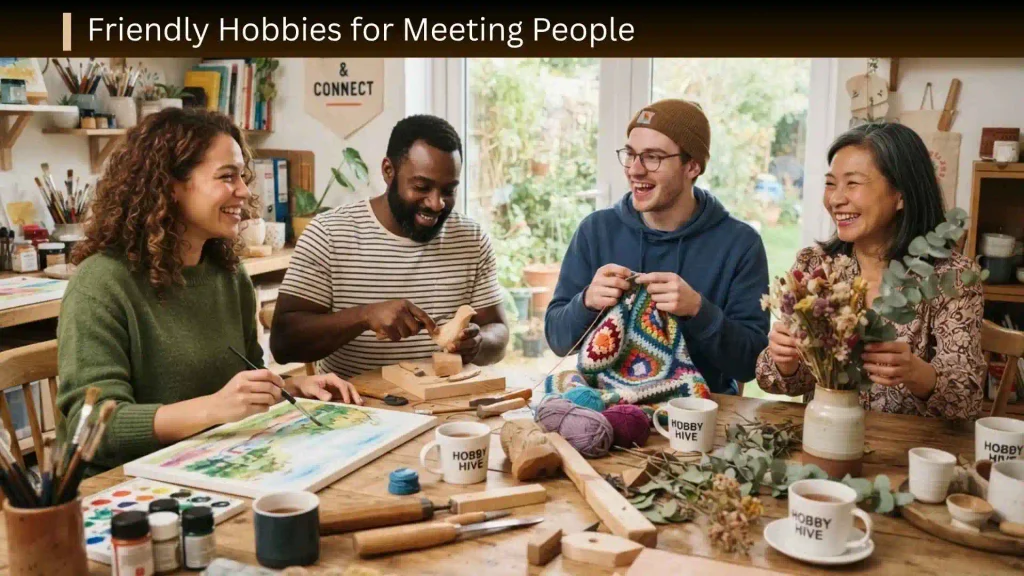
25 Friendly Hobbies for Meeting People
1. Hiking Groups
Hiking is a particularly good social hobby because walking alongside someone creates natural opportunities for conversation.
You can join a local hiking club, organized trail group, or beginner-friendly outdoor meetup. Group hikes also provide a shared experience, which can make conversations feel less forced.
Best for: People who enjoy nature, walking, and casual conversation.
Beginner tip: Start with shorter, easier group hikes rather than choosing a demanding trail simply because it sounds impressive.
2. Recreational Sports
Recreational sports are among the easiest hobbies for meeting people because teamwork creates built-in interaction.
Consider activities such as:
- Pickleball
- Tennis
- Volleyball
- Soccer
- Basketball
- Softball
- Bowling
- Badminton
You do not necessarily need to be highly competitive. Many recreational leagues are designed around participation and socializing rather than serious competition.
Best for: People who enjoy movement, teamwork, and structured social interaction.
3. Board Games
Board games offer a simple way to socialize because the game itself provides a shared focus.
Local game stores, libraries, community centers, and organized game groups may host regular events. Cooperative games can be especially useful for people who prefer working with others rather than competing directly.
Best for: People who enjoy strategy, puzzles, conversation, and indoor activities.
Beginner tip: Look for beginner or open-play events where newcomers can join established groups.
4. Book Clubs
A book club gives you an automatic conversation topic: the book.
This can be particularly helpful if you find unstructured social situations uncomfortable. Instead of wondering what to talk about, you can discuss characters, ideas, themes, and your reactions to the book.
Book clubs can also vary considerably. Some focus on fiction, while others specialize in nonfiction, mysteries, science fiction, romance, history, or specific genres.
Best for: Readers who prefer thoughtful conversations and smaller groups.
5. Cooking Classes
Cooking classes combine learning with social interaction. Participants typically work in the same space, exchange tips, and sometimes prepare food together.
A class can also give you something to talk about before and after the lesson, making interaction more natural.
Best for: People who enjoy food, practical skills, and structured activities.
6. Gardening
Gardening can become surprisingly social when you participate in a community garden, gardening club, plant exchange, or local horticultural group.
Unlike a purely individual gardening project, community gardening creates opportunities to learn from experienced gardeners and share practical advice.
Best for: Plant lovers and people who prefer relaxed, hands-on social activities.
7. Volunteering
Volunteering is an excellent option if you want a hobby that combines social connection with meaningful activity.
You might volunteer with:
- Food distribution programs
- Animal shelters
- Community gardens
- Libraries
- Environmental projects
- Local events
- Community organizations
The shared purpose can make introductions and conversations easier because everyone is working toward something together.
Best for: People who want social interaction with a strong sense of purpose.
8. Photography Walks
Photography does not have to be a solitary hobby.
Joining a photography club or photo walk gives you opportunities to explore places with other photographers, compare techniques, and discuss what you are photographing.
You can participate with a dedicated camera or, depending on the group, simply use a smartphone.
Best for: Creative people who enjoy exploring and observing their surroundings.
9. Art Classes
Painting, drawing, pottery, and other art classes can create a relaxed social environment.
Because everyone is focused on making something, you do not have to maintain conversation constantly. That can make art classes particularly comfortable for people who want social interaction without nonstop talking.
Best for: Creative beginners and people who prefer quieter social settings.
10. Pottery and Ceramics
Pottery deserves special attention because studio classes often involve repeated sessions, shared workspaces, and plenty of opportunities to exchange ideas.
The hands-on nature of the activity also gives participants something concrete to discuss.
You might compare techniques, ask how someone created a particular shape, or simply talk while working.
Best for: People who enjoy tactile, creative hobbies and small-group environments.
11. Dance Classes
Dance classes naturally involve interaction, making them useful for people who want a more active social hobby.
Options include:
- Salsa
- Swing
- Ballroom
- Country dancing
- Line dancing
- Latin dance
Some classes rotate partners, while others involve learning routines as a group.
Best for: People who enjoy music, movement, and frequent interaction.
Beginner tip: Choose a beginner class rather than assuming you need previous dance experience.
12. Running Clubs
Running clubs can provide a strong sense of community while allowing participants to socialize before and after runs.
You do not need to be a fast runner to benefit from a club. Many groups have different pace levels or shorter routes.
If you prefer walking or a slower pace, look for groups that explicitly welcome walkers or beginners.
Best for: People who enjoy exercise and meeting the same group regularly.
13. Language Learning Groups
Learning a language becomes more engaging when you practice with other people.
Conversation groups and language clubs can bring together beginners and more experienced learners. The shared challenge of learning vocabulary and practicing conversation gives participants an immediate common interest.
Best for: Travelers, language enthusiasts, and people who enjoy educational hobbies.
14. Improv Classes
Improv can be highly social because participants work together through games, exercises, and spontaneous performances.
It can be a good choice if you want to become more comfortable speaking with others, although it may feel intimidating if you strongly dislike being put on the spot.
Best for: Outgoing people and those who want a highly interactive creative activity.
15. Community Theater
Community theater offers several ways to participate beyond acting.
Depending on the production, volunteers may help with:
- Acting
- Costumes
- Props
- Set construction
- Makeup
- Lighting
- Sound
- Promotion
This makes theater accessible to people with different personalities and skill sets.
Best for: People who enjoy creative projects and collaborative communities.
16. Craft Groups
Crafting becomes more social when you participate in a regular group.
Possible activities include:
- Knitting
- Crochet
- Quilting
- Sewing
- Scrapbooking
- Jewelry making
- Paper crafts
Craft groups can be particularly appealing if you prefer conversation around a shared activity rather than activities centered entirely on socializing.
Best for: People who enjoy creative, relaxed, hands-on hobbies.
17. Birdwatching
Birdwatching can start as a quiet personal hobby and become a social one through local birding groups.
Experienced birdwatchers often enjoy sharing observations, identifying species, and visiting different locations together.
You can start with relatively simple equipment and gradually develop your knowledge.
Best for: Nature lovers, photographers, and people who prefer calm social activities.
18. Trivia Nights
Trivia nights provide an easy way to meet people because teams already have a reason to communicate.
Bars are one common setting, but trivia events can also take place at libraries, community centers, restaurants, and other venues.
If you do not have a team, look for events that allow individuals to join existing groups.
Best for: People who enjoy general knowledge, friendly competition, and lively environments.
19. Cycling Groups
Cycling clubs and group rides combine physical activity with social interaction.
Groups can range from casual recreational rides to more performance-focused cycling communities, so choosing the right level is important.
If you are new to cycling, look for beginner or recreational rides rather than advanced-distance groups.
Best for: People who enjoy biking, exploration, and outdoor activity.
20. Fishing Clubs
Fishing is usually slower-paced than many recreational sports, which can make it easier to have longer conversations.
Local fishing clubs may organize outings, educational events, or informal gatherings.
Best for: People who prefer relaxed outdoor hobbies and small-group interaction.
21. Chess Clubs
Chess clubs offer structured interaction without requiring constant conversation.
You can play games, analyze positions, learn from stronger players, and gradually become familiar with regular members.
This makes chess a good option for people who enjoy intellectual activities but do not necessarily want a highly energetic social environment.
Best for: Strategic thinkers and people who prefer structured socializing.
22. Dungeons & Dragons
Dungeons & Dragons and similar tabletop role-playing games combine storytelling, strategy, creativity, and teamwork.
Players typically meet regularly and develop an ongoing shared experience, which can provide repeated opportunities to build friendships.
It can be particularly appealing if you enjoy fantasy, storytelling, problem-solving, or collaborative games.
Best for: Gamers, storytellers, creative thinkers, and people who enjoy long-term group activities.
23. Community Choirs
Singing in a community choir gives you a shared project and regular rehearsals.
You do not necessarily need professional singing ability. Community groups vary in expectations, so beginners should look for organizations that clearly state their experience requirements.
Best for: Music lovers who enjoy group participation.
24. Local Classes and Workshops
A recurring class can be one of the simplest ways to turn an interest into a social hobby.
Depending on your area, you might find classes involving:
- Woodworking
- Cooking
- Painting
- Writing
- Gardening
- Dance
- Music
- Crafts
- Languages
The advantage is repetition: attending several sessions gives you multiple chances to get to know the same people.
25. Meetup-Style Interest Groups
Interest-based groups can be useful when you already know what you like but want more people to share it with.
Instead of searching for a generic “social group,” choose a specific interest such as hiking, photography, books, games, food, crafts, or local exploration.
A shared interest usually provides a much stronger starting point for friendship than simply attending a social event with strangers.
Which Friendly Hobby Is Best for You?
The best friendly hobby depends less on which activity sounds popular and more on how you prefer to socialize.
| If you prefer… | Consider… |
| Quiet conversation | Book clubs, gardening, crafts, birdwatching |
| Teamwork | Recreational sports, theater, volunteering |
| Creative activities | Art, pottery, photography, crafts |
| Physical activity | Hiking, running, cycling, dance |
| Intellectual challenges | Chess, board games, trivia |
| Structured interaction | Classes, workshops, dance |
| Purpose-driven socializing | Volunteering, community projects |
| Larger groups | Choirs, sports leagues, dance |
| Smaller groups | Book clubs, crafts, chess, gardening |
| Online-to-offline communities | Gaming, photography, language groups |
The important distinction is social energy versus social opportunity. A hobby can involve many people without making it easy to form friendships. Look for activities where people repeatedly interact rather than simply occupy the same space.
How to Choose a Friendly Hobby If You Are Shy
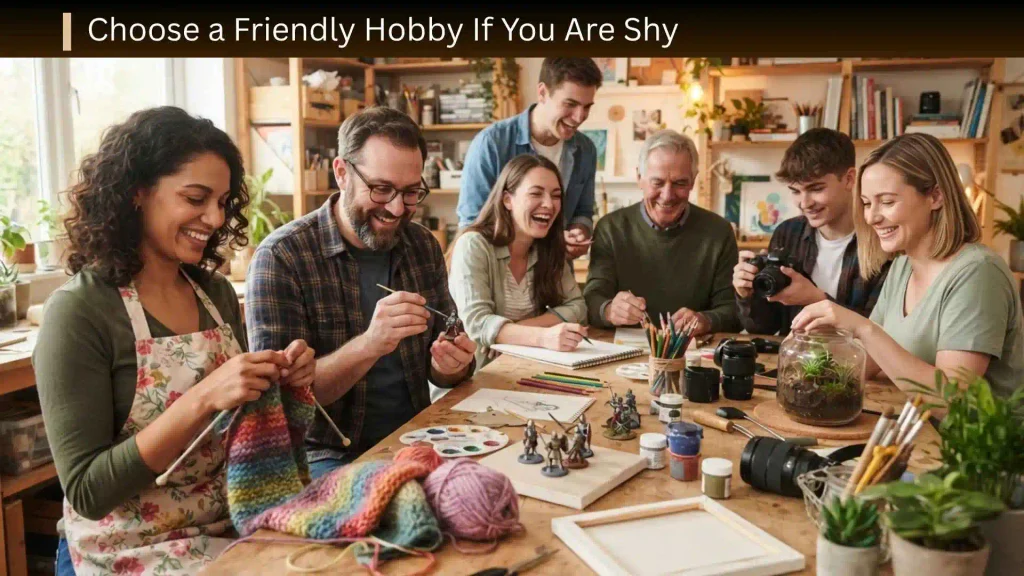
You do not have to choose the most social or energetic activity.
If you are uncomfortable walking into a large group, begin with hobbies that provide a shared focus. A book club, pottery class, board-game group, gardening club, or volunteer project can reduce the pressure to make conversation from scratch.
A useful progression is:
- Choose something you genuinely like.
- Find a beginner-friendly group.
- Attend consistently.
- Learn a few people’s names.
- Ask simple questions about the shared activity.
- Give the group several meetings before deciding whether it fits.
Friendships usually develop through repeated interaction, not one perfect conversation.
How to Turn a Hobby Into Real Friendships
Joining a group is only the first step. If you want acquaintances to become friends, consistency matters.
Attend regularly
If you attend once and disappear for two months, it is difficult to build familiarity. A regular schedule makes you recognizable to other members.
Talk about the activity first
You do not need an impressive conversation starter. Ask about the hobby itself:
- How long have you been doing this?
- How did you get started?
- Have you tried this group before?
- Do you have any recommendations for a beginner?
These questions feel natural because they relate directly to the reason everyone is there.
Participate in smaller interactions
You do not need to become friends with the entire group. Start by getting to know one or two people.
Accept casual invitations
If another member suggests coffee after class, another game, a group hike, or a future event, consider joining when you feel comfortable.
Give it time
A friendly hobby creates opportunities for connection, but it cannot guarantee friendship. Personality, group culture, schedules, and individual compatibility all matter.
What to Look for in a Welcoming Hobby Group
The activity itself is only part of the experience. Group culture matters just as much.
Look for groups that:
- Clearly welcome beginners
- Explain how newcomers can participate
- Have regular events
- Encourage respectful interaction
- Do not make newcomers feel excluded
- Have a reasonable balance between experienced and new members
- Match your preferred level of activity
Be cautious about groups where newcomers are consistently ignored, beginners are mocked, or participation feels excessively competitive when you expect a casual environment.
Friendly Hobbies for Different Social Preferences
Best for introverts
Quiet or structured activities can provide social contact without overwhelming interaction.
Good choices include:
- Book clubs
- Gardening groups
- Photography
- Birdwatching
- Chess
- Crafts
- Pottery
- Small volunteer projects
Best for extroverts
If you enjoy energetic environments, consider:
- Team sports
- Dance
- Improv
- Community theater
- Trivia
- Choirs
- Large volunteer events
Best for people new to an area
Choose hobbies with recurring meetings rather than one-time events.
Good options include:
- Running clubs
- Recreational sports
- Classes
- Book clubs
- Volunteer organizations
- Gaming groups
- Community gardens
Regular attendance makes it easier to build a local social network.
Best for people who want low cost options
You can find social hobbies without making a major financial commitment.
Consider:
- Walking groups
- Hiking groups
- Library book clubs
- Community volunteering
- Public photography walks
- Chess groups
- Board-game meetups
- Community gardening programs
Costs vary by location, so check what equipment, membership fees, transportation, or class fees are actually required before committing.
Friendly Hobbies vs. Social Activities
A social activity is not necessarily a hobby, and a hobby is not automatically social.
For example, attending a concert can be a social experience, but it may provide limited opportunity to interact with other attendees. A weekly dance class, by contrast, gives you repeated interaction with the same people.
If your main goal is friendship, prioritize hobbies that offer:
Shared interest + repeated contact + interaction + enough time to talk.
That combination is generally more useful than simply choosing the largest possible social gathering.
How to Start Without Feeling Overwhelmed
You do not need to transform your entire social life at once.
Pick one hobby that genuinely interests you and find one beginner-friendly group or class. Attend a few times before judging the experience.
If you dislike the group, that does not necessarily mean the hobby is wrong for you. The problem may simply be the group’s culture, schedule, skill level, or format.
Trying a different group can produce a completely different experience.
Frequently Asked Questions
What are the most friendly hobbies for meeting people?
Group activities with repeated interaction tend to work well. Examples include recreational sports, hiking groups, book clubs, volunteering, dance classes, board games, community theater, crafts, and cooking classes.
What is a good hobby for someone who wants to make friends?
Choose an activity you genuinely enjoy that meets regularly and gives participants a reason to interact. A weekly class, club, recreational league, or volunteer group can be a strong starting point.
What are good social hobbies for introverts?
Book clubs, gardening, photography, pottery, crafts, chess, birdwatching, and small volunteer groups can provide social interaction without requiring constant conversation or large-group participation.
Can a hobby really help you make friends?
Yes, a hobby can create repeated opportunities to meet people with a shared interest. However, becoming friends depends on factors such as compatibility, group culture, consistency, and willingness to interact.
What are inexpensive, friendly hobbies?
Walking groups, volunteering, library book clubs, some hiking groups, chess meetups, community events, and certain online-to-offline interest groups can be relatively inexpensive. Costs vary by location and organization.
How often should I attend a hobby group to make connections?
Consistency is generally more useful than attending occasionally. If possible, attend regularly enough that you see familiar people and gradually become part of the group.
What if I do not like the first hobby group I try?
Try another group or another activity before giving up on social hobbies entirely. A poor fit may reflect the specific group, schedule, skill level, or atmosphere rather than the hobby itself.
Conclusion
The best friendly hobbies are activities that combine a genuine interest with regular opportunities to interact with other people. Hiking, recreational sports, book clubs, volunteering, cooking, crafts, dance, board games, photography, and community classes can all provide different paths to social connection.
Rather than choosing a hobby simply because it is popular, consider how you like to socialize, how much interaction you want, your budget, and whether you can participate regularly. Start with one activity that sounds genuinely enjoyable, attend consistently, and let relationships develop naturally over time.

I’m Olivia Bennett, a passionate writer who loves exploring ideas, learning new concepts, and sharing knowledge in a straightforward way. I write for Cognivoora with the goal of making useful topics easier to understand without unnecessary complexity. My approach combines research, clarity, and a reader-first perspective.
Books:
- Think Clearly, Live Better
- The Curious Reader’s Guide