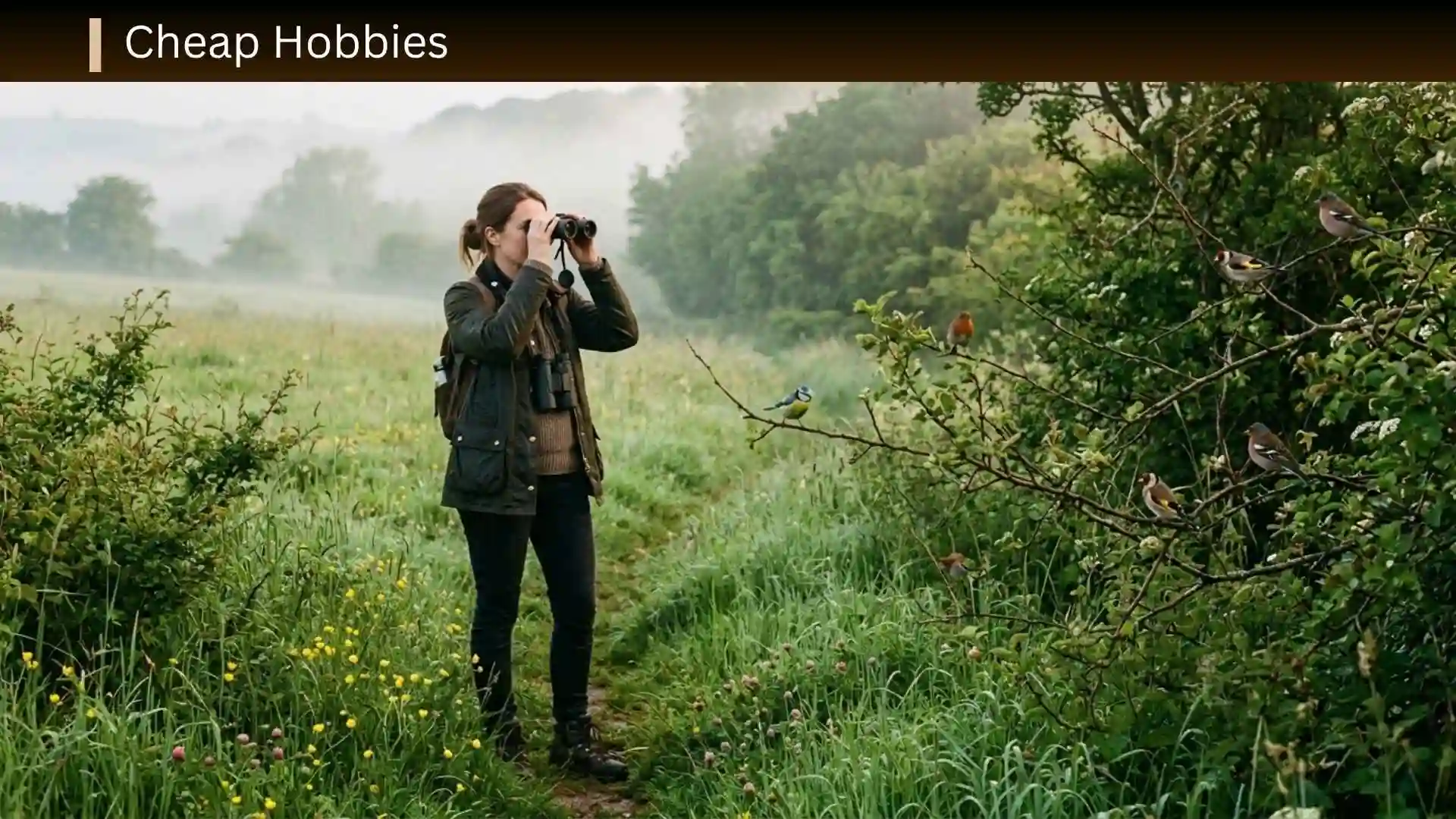
Finding a hobby doesn’t have to mean spending a lot of money. I believe some of the most enjoyable hobbies can start with things you already have at home or with a very small budget. If you want something fun, relaxing, creative, or useful without putting pressure on your wallet, you have plenty of options to explore.
In this guide, you’ll discover cheap hobbies that can fit different interests, lifestyles, and skill levels. Whether you want to stay busy after work, learn something new, get creative, or simply find an affordable way to enjoy your free time, I’ll help you find ideas that make sense for you. You don’t need expensive equipment or a big budget—you just need a little curiosity and the willingness to try something new.
Cheap Hobbies(Quick Answer)

Some of the easiest inexpensive hobbies to start include:
- Reading
- Walking
- Hiking
- Journaling
- Drawing
- Photography with a smartphone
- Birdwatching
- Gardening from seeds or cuttings
- Cooking
- Baking
- Geocaching
- Stargazing
- Origami
- Sketching
- Creative writing
- Puzzles
- Learning a language
- Meditation
- Yoga
- Fishing with basic equipment
- Thrifting
- Volunteering
- Chess
- Card games
- Calligraphy
- Knitting
- Crochet
- Houseplant care
- Nature photography
- DIY crafts
- Genealogy
- Astronomy
- People-watching and urban sketching
- Listening to and studying music
- Learning a free digital skill
The cheapest choice depends on what you already have, how much space you have, and whether you prefer a solo, social, creative, intellectual, or active pastime.
What Makes a Hobby Cheap?
A cheap hobby is not necessarily one that costs absolutely nothing. A better definition is an activity with a low barrier to entry and manageable ongoing expenses.
For example, reading can be nearly free if you use a public library, while gardening may require some supplies initially but become inexpensive when you save seeds and propagate plants. Photography can also be surprisingly affordable if you begin with a smartphone rather than buying a dedicated camera.
When comparing hobbies, consider four types of cost:
- Startup cost: What you need to begin.
- Recurring cost: What you need to keep buying.
- Space cost: Whether the hobby requires a dedicated room, storage, or outdoor area.
- Upgrade temptation: Whether the activity encourages increasingly expensive equipment.
A hobby that costs $20 to start but remains inexpensive can be more sustainable than one that is technically cheap to begin but quickly leads to costly purchases.
Best Cheap Hobbies for Adults
1. Reading
Reading is one of the easiest low-cost hobbies because you can access thousands of books without buying them.
Public libraries, library apps, used bookstores, Little Free Libraries, and digital borrowing services can make reading especially affordable.
Best for: People who enjoy stories, learning, history, science, biographies, or personal development.
Cost: Free to very low
Difficulty: Easy
Where: Indoors or anywhere you can comfortably read
A useful way to make reading more engaging is to choose a theme for a month, such as mystery novels, American history, science fiction, biographies, or books from a particular country.
2. Walking
Walking requires little more than comfortable clothing and footwear. You can turn an ordinary walk into a genuine hobby by exploring different routes, parks, neighborhoods, or trails.
Try setting small goals such as discovering a new local park each week, photographing interesting architecture, or keeping a walking journal.
Cost: Free if you already have suitable shoes
Difficulty: Easy
Where: Outdoors
3. Journaling
Journaling can be as simple as writing in an inexpensive notebook. You can use it for personal reflections, daily observations, travel notes, creative ideas, gratitude lists, or planning.
You do not need an elaborate journaling system. A notebook and pen are enough.
Cost: Free to very low
Difficulty: Easy
Best for: Reflection, writing practice, organization, and creativity
4. Drawing
You can start drawing with a pencil and ordinary paper. There is no need to begin with a professional art set.
Practice simple subjects such as household objects, plants, buildings, faces, or scenes from photographs. Drawing becomes particularly rewarding when you compare sketches over several months and can see how your observation and technique develop.
Cost: Very low
Difficulty: Beginner-friendly, with room for advanced learning
Where: Indoors or outdoors
5. Smartphone Photography
If you already own a smartphone, you have a capable starting point for photography.
Instead of immediately buying a camera, learn about composition, perspective, lighting, framing, and visual storytelling. Give yourself challenges such as photographing reflections, shadows, textures, interesting doors, local wildlife, or the same location at different times of day.
Cost: Free if you already have a smartphone
Difficulty: Easy to start, moderate to master
Where: Anywhere
6. Creative Writing
Creative writing requires remarkably little equipment. A notebook, computer, or phone can become your writing workspace.
You can experiment with short stories, poetry, essays, fictional characters, personal observations, or microfiction.
One advantage is that the hobby can scale with your interests. You can write for ten minutes during a break or spend several hours developing a longer story.
Cost: Free to very low
Best for: People who enjoy imagination, storytelling, and language
7. Puzzles
Jigsaw puzzles, crossword puzzles, logic puzzles, Sudoku, and word puzzles can all become inexpensive forms of entertainment.
Physical puzzles can often be found secondhand, while many digital puzzle options are free or inexpensive.
Cost: Free to low
Where: Mostly indoors
Best for: Quiet, focused leisure
8. Chess
Chess is a good example of a hobby that can be almost free while offering practically unlimited room for improvement.
You can learn the rules with free resources and play against friends, family members, or online opponents. Once you understand the basics, studying openings, tactics, endgames, and famous games gives the hobby greater depth.
Cost: Free to very low
Social level: Flexible
Difficulty: Easy to start, challenging to master
9. Learning a Language
Learning a language can be an inexpensive long-term project when you combine free lessons, library resources, podcasts, books, videos, and conversation practice.
Rather than trying to master everything at once, choose a practical target such as learning basic conversation, understanding common phrases, or reading simple material.
Cost: Free to low
Time commitment: Moderate to high
Best for: Lifelong learning
10. Cooking
Cooking becomes a hobby when you move beyond simply preparing meals and start experimenting with techniques, cuisines, ingredients, and recipes.
You can keep costs under control by choosing recipes based on ingredients you already have. Cooking one unfamiliar dish each week can also turn routine meal preparation into a learning project.
Cost: Low to moderate, depending on ingredients
Where: Indoors
Best for: Practical learners and food enthusiasts
Creative Cheap Hobbies
Creative hobbies are particularly attractive when you want to make something rather than simply consume entertainment.
11. Origami
Origami turns ordinary paper into decorative or functional objects through folding.
You can begin with regular printer paper before purchasing specialized origami paper. Simple animals, boxes, flowers, and geometric designs provide plenty of beginner projects.
Startup cost: Nearly free
Space: Very little
Best for: Quiet, hands-on creativity
12. Sketching
Sketching differs from formal drawing in its emphasis on quick observation and experimentation.
Carry a small notebook and sketch things you encounter: coffee cups, trees, buildings, people in public spaces, or objects around your home.
This makes sketching especially portable.
13. Calligraphy
Calligraphy can begin with an inexpensive pen and paper. Beginners can practice letterforms, spacing, consistency, and basic composition before investing in specialized tools.
If traditional calligraphy appeals to you, start with one style rather than buying several pen sets immediately.
14. Collage Making
Old magazines, newspapers, packaging, photographs, scrap paper, and other household materials can become collage supplies.
College is useful for people who want to create visual art but do not feel confident drawing or painting.
15. DIY Crafts
DIY crafting can encompass paper crafts, simple decorations, upcycling, handmade cards, recycled-material projects, and many other activities.
The key to keeping it cheap is to choose projects based on materials you already have rather than buying a large collection of supplies before deciding what you actually enjoy.
16. Knitting or Crochet
Knitting and crochet require some initial learning and basic supplies, but small projects can be inexpensive once you understand the fundamentals.
Start with a simple item rather than an elaborate pattern. Learning one stitch or technique well can be more satisfying than buying a large amount of yarn and equipment.
Cost: Low to moderate
Where: Indoors
Best for: Repetitive, hands-on creative work
17. Origami Inspired Paper Crafting
If traditional origami becomes too restrictive, explore paper cutting, paper sculpture, modular paper construction, or handmade cards.
These activities allow you to reuse inexpensive paper while gradually developing precision and design skills.
Cheap Outdoor Hobbies
Outdoor hobbies can provide variety without requiring expensive memberships or specialized equipment.
18. Hiking
Hiking can range from a short walk on a local nature trail to a full-day trek.
Beginners can start with nearby parks and well-established trails rather than immediately buying specialized hiking equipment. Comfortable footwear, water, weather-appropriate clothing, and sensible planning matter more than an expensive gear collection.
Cost: Free to low, depending on location
Difficulty: Varies by trail
Best for: People who enjoy nature and exploration
Always check trail conditions and local rules before heading out, particularly when weather or terrain could create additional risks.
19. Birdwatching
Birdwatching is a surprisingly accessible hobby. You can begin by identifying birds from your backyard, neighborhood, city park, or local trail.
Binoculars can improve the experience but are not essential at the beginning. A phone camera or bird-identification guide can be enough to start learning.
Cost: Free to low
Best for: Nature lovers and patient observers
Where: Outdoors
20. Stargazing
You do not need a telescope to begin exploring the night sky.
Start by learning major constellations, bright stars, planets, and recurring celestial events visible from your location. A clear, dark location can make a bigger difference than expensive equipment.
A telescope can be added later if you discover that astronomy genuinely interests you.
21. Geocaching
Geocaching combines outdoor exploration with a treasure-hunt format. Participants use GPS-enabled devices to locate hidden caches and record their finds according to the rules of the particular cache.
It can turn a familiar park or neighborhood into a discovery activity.
Cost: Often free or low-cost to begin
Best for: Explorers who like puzzles and outdoor challenges
22. Nature Photography
Nature photography can overlap with smartphone photography, but its focus is on observing plants, landscapes, insects, weather, birds, and other outdoor subjects.
The hobby encourages you to slow down and notice details that might otherwise be overlooked.
23. Fishing
Fishing can become expensive if you immediately buy specialized equipment, boats, electronics, or extensive tackle. It can also be approached much more simply.
Beginners should learn and follow local licensing, seasonal, size, and location regulations before fishing. A basic setup may be enough to determine whether you enjoy the activity before spending more.
Cost: Low to moderate depending on equipment and local requirements
Where: Outdoors
Difficulty: Beginner-friendly, with technical depth available
24. Gardening
Gardening does not require a large backyard. Container gardening, herbs, windowsill plants, and small vegetable gardens can all work in limited spaces.
To keep costs low, start with a few plants suited to your conditions rather than attempting a large garden immediately. Saving seeds where appropriate and propagating suitable plants can also reduce future expenses.
Relaxing Cheap Hobbies
25. Meditation
Meditation can be practiced without special equipment. A quiet place and a few minutes of uninterrupted time are enough to begin.
If you prefer structure, free guided sessions or library resources can provide instruction.
It is best viewed as a practice rather than a quick solution to every form of stress or emotional difficulty.
26. Coloring
Adult coloring can be inexpensive if you use a basic coloring book and pencils, markers, or other supplies you already own.
You can also print simple designs or create your own patterns.
27. Houseplant Care
Caring for houseplants can become an ongoing hobby involving watering, propagation, potting, pruning, plant identification, and learning about growing conditions.
You do not need dozens of plants. One or two suitable plants can provide a manageable starting point.
28. Listening to Music More Actively
Instead of simply playing music in the background, turn listening into a hobby.
Explore an artist’s discography, compare different versions of the same composition, learn about musical genres, study lyrics and songwriting structure, or build themed playlists.
This costs little if you already have access to music.
29. Tea Tasting
Tea tasting can be approached inexpensively by comparing a few varieties rather than collecting premium teas.
Pay attention to aroma, flavor, brewing method, temperature, and how different teas change as they cool. A simple notebook can become your tasting journal.
Social Cheap Hobbies
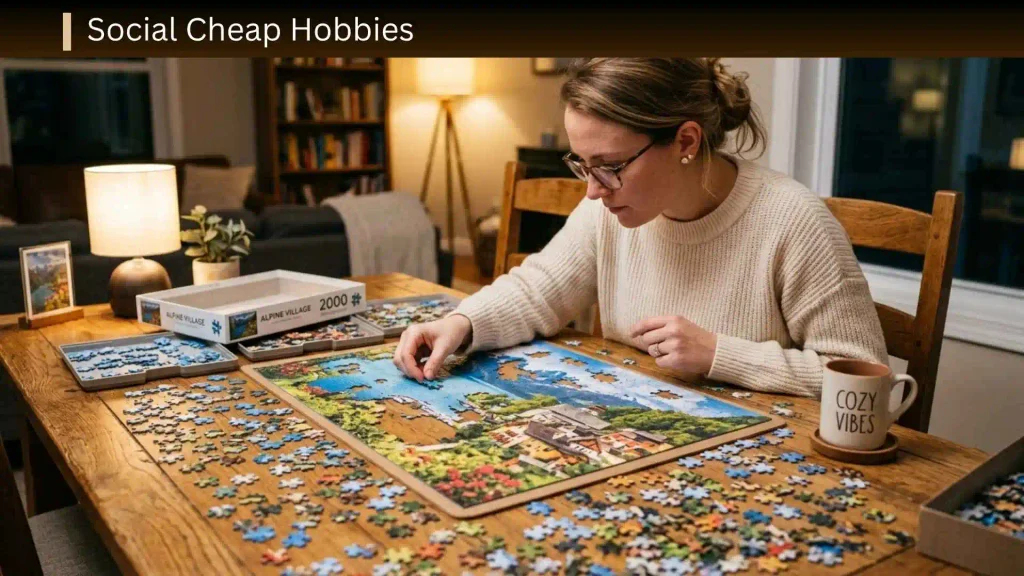
Cheap hobbies do not have to be solitary.
30. Volunteering
Volunteering can turn free time into a structured social activity while supporting a community organization or cause.
Opportunities vary widely, from community events and libraries to environmental projects, animal organizations, food programs, and neighborhood initiatives.
The financial cost is usually low, although transportation or other incidental expenses may apply.
31. Board Games and Card Games
You do not need a large collection to enjoy tabletop games.
A standard deck of cards provides numerous games, while chess, checkers, dominoes, and inexpensive secondhand board games can provide repeated entertainment.
Consider borrowing games from friends or libraries before buying more.
32. Book Clubs
A book club combines reading with social interaction. You can join an existing group or organize a small gathering with friends.
Because participants can borrow books from libraries, the activity can remain inexpensive.
33. Community Walking Groups
A walking group combines an active pastime with social interaction.
If there is no suitable local group, friends, neighbors, or coworkers can create an informal recurring walk without needing a paid membership.
Cheap Hobbies for Learning and Personal Development
34. Genealogy
Genealogy involves researching family history through records, documents, photographs, newspapers, archives, and conversations with relatives.
You can begin by recording names, dates, locations, family stories, and documents already available to you.
Because genealogical research can eventually involve paid databases or records, start with free libraries, archives, public resources, and family materials before paying for subscriptions.
35. Learning a Digital Skill
A computer or smartphone can become a learning tool for many inexpensive hobbies.
Possible directions include:
- Basic graphic design
- Photo editing
- Coding
- Digital illustration
- Spreadsheet skills
- Video editing
- Typing
- 3D modeling
- Web design
- Audio editing
Free tutorials, documentation, library resources, and practice projects can take you surprisingly far before paid courses become necessary.
Cheap Hobbies Comparison
| Hobby | Starting Cost | Time Commitment | Where | Best For |
| Reading | Free–Low | Flexible | Indoor | Learning and relaxation |
| Walking | Free–Low | Flexible | Outdoor | Gentle activity and exploration |
| Journaling | Free–Low | Low | Indoor | Reflection and writing |
| Drawing | Very Low | Flexible | Both | Creativity |
| Smartphone photography | Free | Flexible | Both | Visual creativity |
| Hiking | Free–Low | Moderate | Outdoor | Exploration |
| Birdwatching | Free–Low | Flexible | Outdoor | Nature observation |
| Origami | Very Low | Low–Moderate | Indoor | Hands-on creativity |
| Chess | Free–Low | Flexible | Both | Strategy |
| Gardening | Low | Moderate | Both | Plants and practical skills |
| Stargazing | Free–Low | Flexible | Outdoor | Astronomy |
| Creative writing | Free | Flexible | Both | Storytelling |
| Cooking | Low–Moderate | Moderate | Indoor | Practical creativity |
| Puzzles | Free–Low | Flexible | Indoor | Focus and entertainment |
| Volunteering | Usually Free | Moderate | Both | Community and social connection |
| Language learning | Free–Low | Moderate | Both | Education |
| Knitting/Crochet | Low | Moderate | Indoor | Crafting |
| Geocaching | Free–Low | Moderate | Outdoor | Adventure and puzzles |
Costs are broad starting estimates rather than fixed prices. Your actual expense depends on what you already own, where you live, and whether you choose paid equipment, memberships, classes, or premium materials.
How to Choose the Right Cheap Hobby
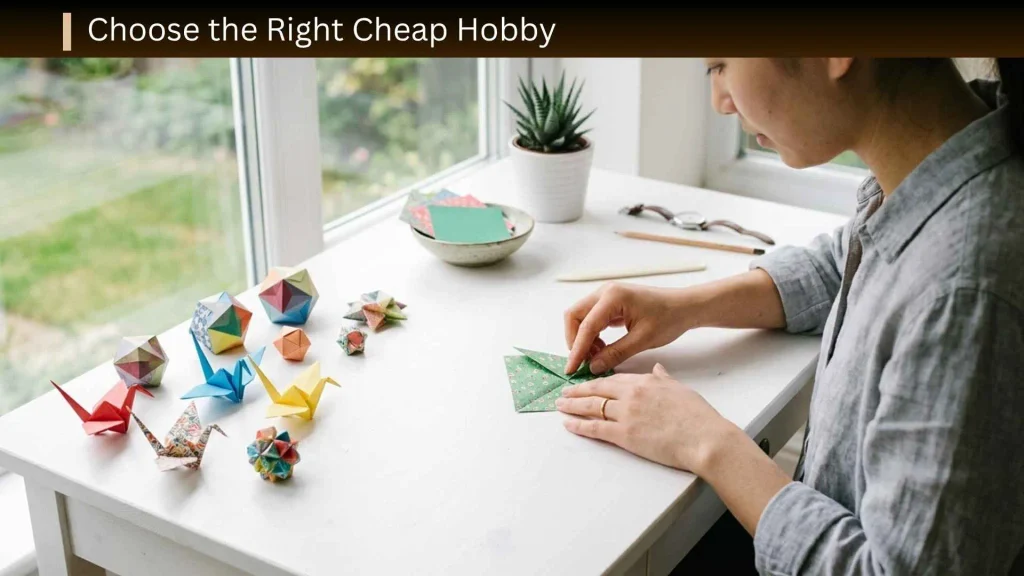
The cheapest hobby is not automatically the best hobby. A free activity that you quickly abandon is less valuable than a low-cost hobby you genuinely want to continue.
If You Want Something Completely Free
Start with activities that use resources you already have:
- Walking
- Creative writing
- Reading through a public library
- Meditation
- Smartphone photography
- Stargazing
- Chess through free platforms
- Language learning
- Sketching with existing paper
- Volunteering
If You Want to Make Things
Consider:
- Drawing
- Origami
- Collage
- Calligraphy
- Crochet
- Knitting
- DIY crafts
- Creative writing
- Cooking
If You Want to Spend More Time Outside
Try:
- Hiking
- Walking
- Birdwatching
- Gardening
- Stargazing
- Geocaching
- Nature photography
- Fishing
If You Want a Social Hobby
Look at:
- Book clubs
- Board games
- Card games
- Volunteering
- Walking groups
- Community gardening
- Group language practice
If You Want a Hobby That Builds a Skill
Good candidates include:
- Cooking
- Drawing
- Photography
- Language learning
- Creative writing
- Chess
- Gardening
- Coding
- Genealogy
- Musical study
How to Keep a Hobby Cheap
Use What You Already Own
Before buying supplies, look around your home. Paper, notebooks, kitchen equipment, old magazines, smartphones, computers, playing cards, and unused craft materials can support many activities.
Borrow Before Buying
Libraries, friends, community groups, and local organizations can sometimes provide access to books, games, equipment, or learning materials.
This is particularly useful for hobbies where specialized equipment is expensive.
Buy Used
Secondhand stores, yard sales, community marketplaces, and thrift shops can be useful sources for books, puzzles, games, craft supplies, tools, and some sporting equipment.
For safety-critical equipment, however, condition matters more than price. Do not choose damaged or questionable equipment simply because it is cheap.
Start With One Project
A common mistake is buying supplies for an imagined future version of the hobby.
If you want to try watercolor painting, for example, you do not need a large professional set on day one. Complete a few small projects first and decide what you actually need.
Watch for the “Upgrade Trap”
Many hobbies have endless opportunities to purchase better equipment. That does not mean expensive equipment is necessary for beginners.
Set a simple rule: learn the hobby first, then upgrade when a specific limitation prevents you from doing something you want to do.
Choose Hobbies With Low Recurring Costs
A hobby’s long-term expense matters more than its initial price.
Reading through a library may cost almost nothing month after month. A hobby that requires regularly replacing consumables, paying membership fees, or traveling long distances may become substantially more expensive over time.
How to Start a Cheap Hobby Without Losing Interest
Choosing an activity is only the first step. The way you start can determine whether it becomes a lasting pastime.
Give Yourself a Small First Goal
Instead of saying, “I’m going to learn photography,” choose a manageable project such as taking 20 photographs using different compositions.
Instead of “I’m going to learn to draw,” sketch five everyday objects.
A specific project makes a new hobby easier to begin.
Give the Hobby a Trial Period
Try the activity several times before deciding whether you like it.
A hobby may feel awkward during the first session because you are still learning the basic skills. Conversely, if you consistently avoid returning to it, that is useful information too.
Track Progress, Not Just Results
Keep photographs of your projects, save drawings, record books you’ve read, or maintain a gardening journal.
Seeing progress can make an inexpensive hobby feel much more rewarding.
Avoid Comparing Your Beginning With Someone Else’s Expertise
Online communities often contain people who have practiced a hobby for years and own advanced equipment.
Their work can provide inspiration, but it should not become the standard you expect from your first attempt.
Cheap Hobbies vs. Free Hobbies
The terms are sometimes used interchangeably, but there is a useful distinction.
Free hobbies can generally be practiced without spending money, especially when you already have the necessary resources. Walking, writing, observing nature, and some forms of reading fit this category.
Cheap hobbies may involve a modest expense for supplies, equipment, transportation, or materials. Drawing, gardening, fishing, crochet, and cooking may fall into this category depending on how you approach them.
The distinction matters because a hobby that costs $10 or $20 to begin may still be highly affordable while offering substantially more variety than an activity requiring no purchases at all.
What Are the Cheapest Hobbies to Start at Home?
If you want to avoid travel and memberships, focus on hobbies that use common household resources.
Good options include:
- Reading
- Journaling
- Creative writing
- Drawing
- Origami
- Puzzles
- Chess
- Coloring
- Meditation
- Cooking
- Baking
- Houseplant care
- Language learning
- Digital skill development
- Music listening and study
For an extremely tight budget, begin with something you can do using resources you already own rather than trying to purchase a complete hobby setup.
What Are Good Cheap Hobbies for Someone Who Gets Bored Easily?
If variety is important, choose hobbies that contain many different activities rather than a narrow repetitive task.
Photography can involve portraits, architecture, nature, street scenes, macro subjects, and creative composition.
Cooking can involve different cuisines, ingredients, techniques, and recipes.
Hiking can become a combination of route discovery, nature observation, photography, birdwatching, and geocaching.
Learning a language can combine reading, listening, writing, vocabulary, conversation, films, music, and cultural exploration.
A hobby with multiple directions gives you more ways to stay interested without necessarily increasing the cost.
What Cheap Hobbies Can You Do Alone?
Many inexpensive hobbies work particularly well as solo activities:
- Reading
- Drawing
- Writing
- Journaling
- Photography
- Hiking
- Walking
- Stargazing
- Gardening
- Puzzles
- Chess
- Meditation
- Language learning
- Birdwatching
- Cooking
- Genealogy
- Houseplant care
Solo hobbies can also be flexible because you can decide when to start, stop, and practice.
What Cheap Hobbies Can You Do With Friends?
If you want inexpensive social activities, consider:
- Card games
- Chess
- Board games
- Hiking
- Walking
- Book clubs
- Cooking together
- Photography walks
- Geocaching
- Stargazing
- Volunteering
- Language practice
- Community gardening
A useful way to reduce costs is to make the activity itself the focus rather than adding expensive food, entertainment, or equipment around it.
Are Cheap Hobbies Actually Worth It?
Yes, when the hobby matches your interests and is sustainable for your budget.
A low-cost hobby can provide a structured way to spend free time, develop skills, express creativity, explore the outdoors, or connect with other people. But cost should not be the only selection criterion.
Consider three questions:
- Would I still enjoy this if nobody saw the result?
- Can I realistically fit it into my schedule?
- Can I continue doing it without feeling pressured to spend more?
If the answer is yes, you may have found a hobby worth keeping.
Frequently Asked Questions About Cheap Hobbies
What is the cheapest hobby to have?
There is no single cheapest hobby for everyone, but activities such as walking, writing, meditation, observing nature, reading through a public library, and stargazing can cost little or nothing to begin.
What are some cheap hobbies for adults?
Affordable hobbies for adults include reading, hiking, walking, photography with a smartphone, drawing, gardening, cooking, chess, journaling, creative writing, birdwatching, puzzles, language learning, and volunteering.
What hobbies can I do for free?
You can walk, write, sketch with existing materials, read library books, observe nature, stargaze, meditate, learn through free educational resources, practice languages, and participate in some community activities without spending money.
What is a good hobby for someone on a tight budget?
Choose a hobby with low recurring expenses and use resources you already have. Reading through a library, walking, writing, drawing, smartphone photography, chess, and free learning projects are strong starting points.
How can I start a hobby without buying expensive equipment?
Start with the simplest version of the activity. Borrow or use existing equipment, complete several beginner projects, and only purchase something when you know exactly how it will improve your experience.
Are hobbies expensive to maintain?
Some are, but many are not. The biggest difference usually comes from recurring supplies, memberships, travel, and equipment upgrades. A hobby can remain inexpensive when you control these ongoing costs.
What are good cheap indoor hobbies?
Reading, drawing, journaling, creative writing, puzzles, chess, origami, coloring, cooking, baking, language learning, crochet, knitting, and digital skill development can all be practiced indoors.
What are good cheap outdoor hobbies?
Walking, hiking, birdwatching, gardening, stargazing, geocaching, nature photography, and some forms of fishing can be affordable outdoor hobbies.
Conclusion
The best cheap hobby is not necessarily the one that costs the least—it is the one you genuinely enjoy and can continue without straining your budget. Start with what you already have, test an activity before buying specialized equipment, and let your interests determine whether you eventually invest more.
For a free starting point, try reading, walking, writing, stargazing, or nature observation. For creative projects, drawing, origami, photography, and crafting are strong choices. If you want outdoor adventure, hiking, birdwatching, and geocaching offer plenty to explore without requiring an expensive setup.
You do not need a large budget to develop a meaningful hobby. You mainly need an activity that makes you curious enough to come back to it.

I’m James Anderson, a dedicated writer and lifelong learner who enjoys researching topics and explaining them in a practical way. Through my work at Cognivoora, I aim to give readers reliable, easy-to-follow information that helps them learn something new. I always try to keep my writing natural, useful, and focused on the questions readers actually have.
Books:
- A Practical Guide to Better Thinking
- Questions Worth Asking