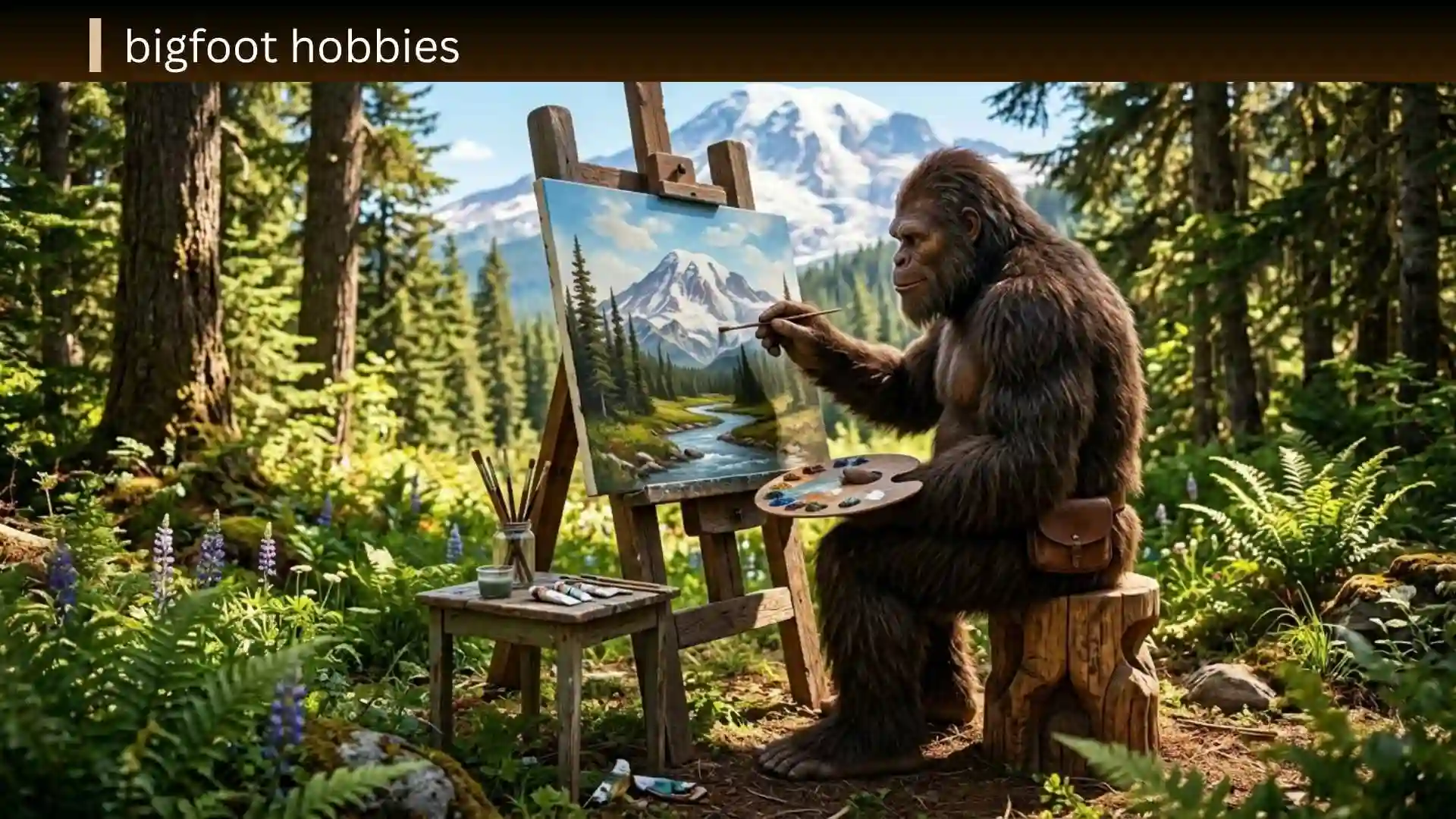
If you’ve ever been fascinated by Bigfoot, you already know there’s something exciting about the mystery surrounding this legendary creature.I think Bigfoot hobbies are a fun way to turn that curiosity into something you can actually enjoy, whether you love outdoor adventures, wildlife research, photography, storytelling, or collecting unusual Bigfoot themed items.
You don’t have to be an expert or believe every Bigfoot story to get involved. You can simply follow your curiosity, explore new interests, and discover a hobby that makes your free time more exciting. From hiking and nature tracking to Bigfoot art, books, podcasts, and field research, there are plenty of ways for you to enjoy the world of Bigfoot at your own pace.
Bigfoot Hobbies(Quick Answer)
The best Bigfoot hobbies depend on what interests you most. Outdoor enthusiasts may enjoy Bigfoot field research, tracking, hiking, and wildlife photography, while people who prefer indoor activities may enjoy sighting research, reading, folklore, collecting, and Bigfoot art. Festivals and conferences are good options if you want to meet other enthusiasts.
You do not have to believe Bigfoot exists to enjoy these hobbies. The subject can be approached as a mystery, cultural phenomenon, outdoor activity, or research interest.
1. Bigfoot Field Research

Bigfoot field research involves visiting locations associated with reported Sasquatch encounters and documenting what you observe. The goal can range from simply exploring the environment to systematically recording possible evidence.
A field researcher might:
- Explore forested areas where access is permitted
- Document unusual footprints or environmental signs
- Record sounds
- Photograph the surrounding terrain
- Take detailed field notes
- Map observations
- Compare current observations with previous reports
- Consider ordinary explanations for unusual findings
The Bigfoot Field Researchers Organization (BFRO) maintains a database of reported sightings and information about field investigations. Its approach focuses on collecting and evaluating observations rather than simply telling stories about Bigfoot.
The most useful mindset is to document first and interpret later. A strange sound or footprint should be recorded accurately before deciding what caused it.
Difficulty: Moderate
Cost: Low to moderate
Setting: Outdoors
Best for: Hikers, investigators, nature enthusiasts, and mystery fans
Beginner Tip
Start with daytime trips in familiar areas. Learning about local wildlife, tracks, weather, and terrain will make your observations much more useful.
2. Sasquatch Tracking and Footprint Research
Tracking is one of the more hands-on Bigfoot hobbies. Many reported encounters involve alleged footprints, so learning how to identify and document tracks can become an important part of the hobby.
However, beginners should first learn to recognize ordinary animal tracks and human footprints.
Useful tracking skills include:
- Measuring impressions
- Photographing tracks with a scale
- Examining the surrounding ground
- Looking for multiple prints rather than one isolated impression
- Recording soil and weather conditions
- Comparing tracks with known animal footprints
- Mapping the location
- Observing how rain and erosion affect impressions
A single unusual mark is easy to misinterpret. A carefully documented sequence of observations provides much more information.
Why Tracking Is Worth Learning
Even if you never find anything associated with Bigfoot, tracking teaches you how to observe the natural environment more carefully. You may become better at recognizing wildlife activity, trails, feeding signs, and changes in terrain.
Difficulty: Moderate
Cost: Low
Setting: Outdoors
Best for: Hikers, nature lovers, and detail-oriented hobbyists
3. Wildlife Photography
Wildlife photography can give your Bigfoot interest a practical direction without requiring specialized “Bigfoot” equipment.
Instead of trying to photograph Sasquatch specifically, photograph the wildlife and environment around you. This helps you understand what normally moves through the area.
You might photograph:
- Deer
- Birds
- Bears
- Coyotes
- Small mammals
- Animal tracks
- Forest landscapes
- Broken branches
- Trails and vegetation
A smartphone is enough to begin. If photography becomes a serious interest, you can later explore cameras, telephoto lenses, tripods, and other equipment.
Turn Photography Into a Research Project
Choose a local trail or natural area and photograph it repeatedly.
Record:
- Date
- Time
- Weather
- Location
- Wildlife observed
- Tracks found
- Environmental changes
After several visits, you will have a personal visual record of the area rather than relying on isolated observations.
Difficulty: Easy to moderate
Cost: Low to high
Setting: Outdoors
Best for: Photographers and outdoor enthusiasts
4. Bigfoot Sound Recording
Some Bigfoot reports involve unusual sounds, which makes audio recording another possible hobby.
The broader skill is field recording. You can record the natural soundscape and then work on identifying what produced different sounds.
Recordings might include:
- Birds
- Insects
- Wind
- Water
- Mammals
- Branches moving
- Human activity
- Vehicles
- Unidentified sounds
A smartphone can provide a starting point, although a dedicated audio recorder can offer greater control.
The Important Part: Don’t Jump to Conclusions
An unfamiliar sound is not automatically a Bigfoot vocalization.
A better process is:
- Record the sound.
- Note the exact location and time.
- Record weather and environmental conditions.
- Listen for surrounding sounds.
- Compare it with known wildlife recordings.
- Keep the source classified as unknown if you cannot identify it.
That approach makes the hobby more interesting because you’re practicing actual observation rather than simply collecting mysterious recordings.
Difficulty: Easy to moderate
Cost: Low to moderate
Setting: Mostly outdoors
5. Research Bigfoot Sightings
If you enjoy investigation more than hiking, researching Bigfoot reports can become a fascinating indoor hobby.
You can examine reported encounters and ask practical questions:
- Where did the sighting occur?
- When did it happen?
- How long did the witness observe the creature?
- What were the lighting conditions?
- Was there more than one witness?
- Was there photographic or audio evidence?
- What was the surrounding habitat?
- Could ordinary wildlife explain the observation?
- Are there similar reports from the same area?
The BFRO maintains a database of reports and provides its own classification system for reported encounters.
Create Your Own Bigfoot Research Database
A spreadsheet can make your research much easier.
| Information | What to Record |
| Location | State, county, or general area |
| Date | When the report occurred |
| Type | Sighting, track, sound, photograph |
| Witnesses | Number of people involved |
| Evidence | Photo, video, audio, physical trace |
| Environment | Forest, mountain, rural area, etc. |
| Alternative explanations | Possible known causes |
| Source | Where the report came from |
This turns casual reading into a genuine research project.
6. Read Bigfoot Books and Watch Documentaries
You don’t have to go outdoors to enjoy Bigfoot.
Reading books and watching documentaries can introduce you to:
- Famous sightings
- Regional stories
- Alleged evidence
- Bigfoot researchers
- Cryptozoology
- American folklore
- Historical newspaper reports
- Different interpretations of Sasquatch
- Arguments from believers and skeptics
This hobby is especially suitable for people who enjoy research but don’t necessarily want to hike through remote forests.
Practice Source Evaluation
When reading about Bigfoot, separate three things:
What was reported:
What someone claims happened.
What evidence exists:
Photographs, recordings, physical traces, documents, or other material.
What the evidence means:
The interpretation someone gives to that material.
Keeping these categories separate helps prevent claims from becoming stronger as they are repeated.
7. Bigfoot Art and Crafts
If you enjoy creative hobbies, Bigfoot provides an easy theme for artistic projects.
You could create:
- Drawings
- Paintings
- Digital illustrations
- Sculptures
- Wood carvings
- Handmade signs
- Stickers
- Posters
- Greeting cards
- Embroidery
- Decorative crafts
You can also combine Bigfoot with another hobby you already enjoy.
For example, a woodworker could create a carved Sasquatch figure, while a digital artist could design fictional forest scenes.
Create a Bigfoot Field Journal
One fun creative project is making a fictional field journal containing:
- Sasquatch sketches
- Forest drawings
- Maps
- Track illustrations
- Fictional observations
- Creature designs
If you share fictional material online, clearly identify it as creative work so readers don’t mistake it for evidence.
Difficulty: Easy to advanced
Cost: Low to moderate
Setting: Mostly indoors
Best for: Artists, makers, and creative hobbyists
8. Collect Bigfoot Memorabilia
Bigfoot’s popularity has produced a wide range of themed memorabilia, making collecting another accessible hobby.
Collectors might focus on:
- Figurines
- Books
- Posters
- Vintage magazines
- Artwork
- Festival merchandise
- Souvenirs
- Clothing
- Trading cards
- Local Bigfoot memorabilia
Rather than buying everything that features Bigfoot, choose a collecting theme.
Collect by Location
Collect Bigfoot items from different states or regions.
Collect by Era
Look for older books, magazines, posters, or other historical material.
Collect by Artist
Build a collection around particular Bigfoot artists or designers.
Collect From Events
Keep programs, artwork, books, or souvenirs from Bigfoot festivals and conferences.
A focused collection is usually easier to organize and gives your hobby a clearer purpose.
9. Attend Bigfoot Festivals and Conferences
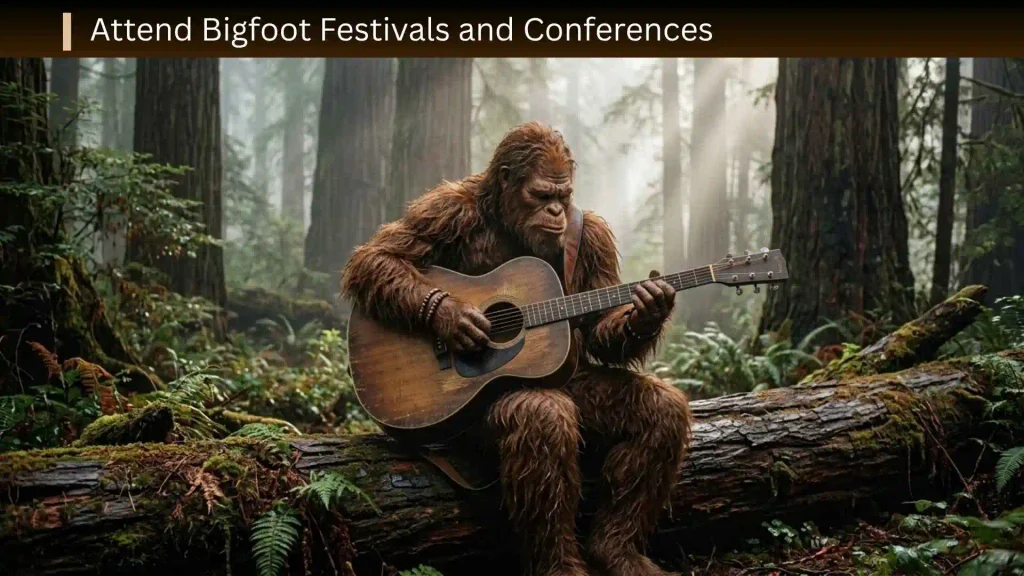
Bigfoot can also be a social hobby.
Bigfoot festivals and conferences in the United States may bring together enthusiasts, researchers, artists, authors, vendors, and people who simply enjoy the mystery.
Events can include:
- Guest speakers
- Research presentations
- Discussions
- Vendor areas
- Artwork
- Books
- Merchandise
- Family activities
- Local attractions
- Informal conversations with other enthusiasts
Some events emphasize research, while others are more entertainment-oriented.
This makes it worthwhile to check the event’s program before attending so you know whether it matches your interests.
10. Study Cryptozoology and Folklore
Bigfoot can serve as an introduction to the wider world of cryptozoology and folklore.
Cryptozoology commonly concerns animals whose existence is disputed or not established by mainstream zoological science. Folklore takes a different approach, examining stories, traditions, beliefs, and cultural practices.
Studying both perspectives can help you understand why Bigfoot remains culturally significant even though its biological existence has not been scientifically established.
You can explore:
- American folklore
- Regional legends
- Wild-man traditions
- Cryptid reports
- Newspaper stories
- Oral histories
- Popular culture
- Modern Bigfoot communities
This is a particularly good hobby for people who enjoy history, writing, research, anthropology, or storytelling.
Bigfoot Hobbies Compared
| Hobby | Difficulty | Cost | Setting | Best For |
| Field research | Moderate | Low–Moderate | Outdoor | Outdoor investigators |
| Tracking | Moderate | Low | Outdoor | Hikers |
| Wildlife photography | Easy–Moderate | Low–High | Outdoor | Photographers |
| Sound recording | Easy–Moderate | Low–Moderate | Outdoor | Audio enthusiasts |
| Sighting research | Easy | Low | Indoor | Researchers |
| Books and documentaries | Easy | Low–Moderate | Indoor | Readers |
| Art and crafts | Easy–Advanced | Low–Moderate | Indoor | Creative people |
| Collecting | Easy | Low–High | Both | Collectors |
| Festivals | Easy | Moderate | Both | Social enthusiasts |
| Folklore research | Moderate | Low | Indoor | History fans |
How to Start a Bigfoot Hobby on a Budget
You don’t need expensive equipment to get started.
Begin With a Notebook and Smartphone
Your phone can handle basic photography, video, audio recording, mapping, and note-taking.
A notebook can be used to document observations that you might otherwise forget.
Explore Nearby Areas
You don’t need to travel across the country. A permitted local trail, forest, or natural area can provide plenty of opportunities to practice observation.
Learn About Local Wildlife
Before interpreting something as unusual, learn which animals live in your region and what their tracks, calls, and behaviors look like.
This is one of the most valuable skills for anyone interested in Bigfoot research.
Read Existing Reports
Research reports from your state and compare them with information about the local environment.
Look for patterns without assuming that similar reports necessarily have the same explanation.
Upgrade Equipment Slowly
Don’t purchase expensive cameras, recorders, night-vision devices, or other specialized equipment before you know what part of the hobby you enjoy.
Start with basic equipment and upgrade only when a genuine need develops.
How to Approach Bigfoot Research Responsibly
The most useful Bigfoot hobbyists are willing to consider more than one explanation.
If you find a large footprint, don’t immediately decide that it belongs to Sasquatch. Consider:
- Human footprints
- Animal tracks
- Overlapping impressions
- Soil movement
- Water erosion
- Footwear
- Environmental disturbances
The same principle applies to sounds and photographs.
An unexplained observation is worth documenting, but unexplained does not automatically mean Bigfoot.
This approach doesn’t make the hobby less exciting. It gives you a stronger foundation for investigating unusual claims.
Bigfoot Hobbies for Families
Families can enjoy Bigfoot-themed activities without turning them into serious investigations.
Good choices include:
- Nature walks
- Wildlife photography
- Animal-track identification
- Bigfoot drawing
- Making a field journal
- Reading books together
- Creating a fictional Sasquatch story
- Visiting a Bigfoot festival
- Building a scrapbook
- Learning about local forests
For children, focus on age-appropriate outdoor activities and supervision. The Bigfoot theme can make ordinary nature exploration more engaging while encouraging observation and curiosity.
Bigfoot Hobbies for Introverts
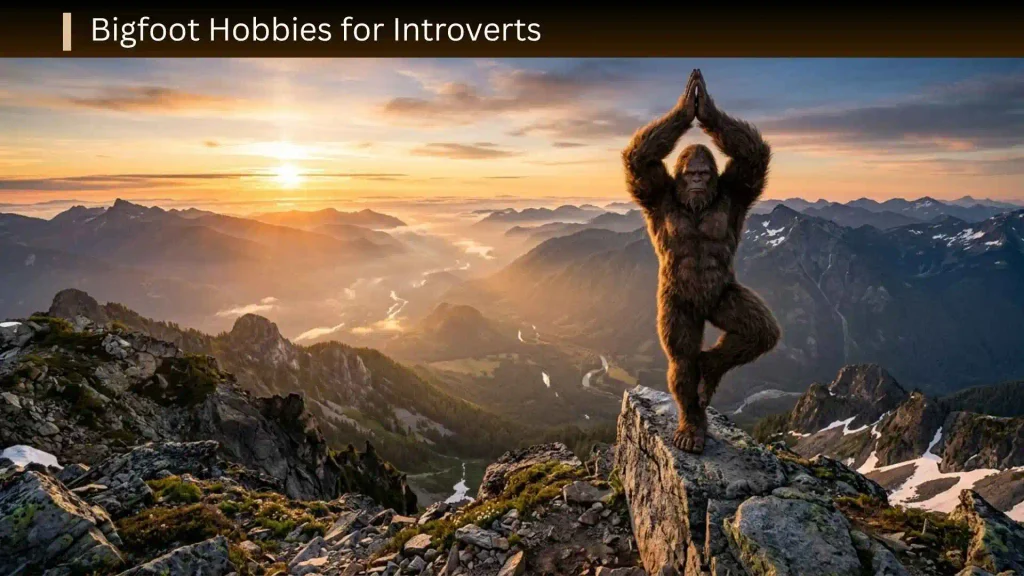
You can enjoy the subject without joining a group or expedition.
Good solo options include:
- Reading Bigfoot books
- Researching sightings
- Studying folklore
- Building a collection
- Drawing or painting
- Writing fictional stories
- Editing audio recordings
- Organizing a research database
- Analyzing maps
- Wildlife photography
These activities let you explore the topic privately and at your own pace.
Bigfoot Hobbies for Outdoor Enthusiasts
If you already enjoy hiking, camping, or nature photography, Bigfoot can provide a theme for your existing interests.
A typical outing might combine:
Hiking + wildlife observation + tracking + photography + field notes.
This combination has an important advantage: you still gain something from the activity even if you don’t encounter anything mysterious.
You may discover wildlife, improve your photography, learn tracking skills, or simply become more familiar with your local landscape.
Safety Tips for Bigfoot Outdoor Activities
Bigfoot exploration should follow normal outdoor safety practices.
Stay on Legal Trails and Property
Do not trespass on private property or enter closed areas because of a reported sighting.
Be Prepared for the Environment
Bring appropriate clothing, water, navigation equipment, lighting, and communication equipment for the location and conditions.
Don’t Approach Wildlife
Real wildlife presents genuine risks. Never deliberately approach, feed, corner, or provoke animals.
Be Careful After Dark
Night hiking can make navigation and terrain hazards harder to recognize. Beginners should avoid unnecessary nighttime trips into unfamiliar remote areas.
Tell Someone Your Plans
For remote outdoor activities, let someone know where you’re going and when you expect to return.
Frequently Asked Questions About Bigfoot Hobbies
What is the best Bigfoot hobby for beginners?
Bigfoot research, wildlife photography, hiking, and tracking are good beginner options. They require relatively little specialized equipment and can help you develop observation skills.
Do I need expensive equipment to investigate Bigfoot?
No. A smartphone, notebook, flashlight, suitable outdoor clothing, and basic navigation tools can be enough to begin. Specialized equipment can be added later if you develop a specific interest.
Is Bigfoot a real animal?
Bigfoot has not been scientifically established as a biological species. Many sightings and alleged pieces of evidence have been reported, but their interpretation remains disputed.
Can hiking be considered a Bigfoot hobby?
Yes. Hiking can become part of a Bigfoot hobby when you combine it with wildlife observation, tracking, photography, sound recording, or research into local reports.
What should I record during a Bigfoot investigation?
Record the date, time, general location, weather, terrain, what you observed, how long you observed it, photographs or recordings, and possible alternative explanations.
Can someone enjoy Bigfoot without believing in it?
Absolutely. Bigfoot can be approached as folklore, popular culture, an outdoor research subject, or an unresolved mystery. Skeptical investigation is also a legitimate way to engage with the topic.
Are there Bigfoot festivals in the United States?
Yes. Bigfoot-themed festivals, conferences, and gatherings take place in different parts of the United States. Individual events vary considerably in their focus, size, and activities.
What hobby goes well with Bigfoot research?
Wildlife tracking, hiking, photography, field recording, local history, and folklore research all complement Bigfoot research particularly well because they provide skills for documenting and evaluating observations.
Conclusion
The best Bigfoot hobby depends on what attracts you to Sasquatch in the first place. Outdoor enthusiasts can explore tracking and field research, photographers can document wildlife and landscapes, researchers can study sighting reports and folklore, and creative people can turn Bigfoot into an art or collecting project.
You don’t need to settle the question of whether Bigfoot exists to enjoy the hobby. Start with something practical, such as hiking, photography, tracking, reading, or research, and let your interests determine how deeply you want to explore the Sasquatch mystery.

I’m James Anderson, a dedicated writer and lifelong learner who enjoys researching topics and explaining them in a practical way. Through my work at Cognivoora, I aim to give readers reliable, easy-to-follow information that helps them learn something new. I always try to keep my writing natural, useful, and focused on the questions readers actually have.
Books:
- A Practical Guide to Better Thinking
- Questions Worth Asking