
Hobbies and interests are activities, subjects, or pursuits that people enjoy exploring during their free time. They can include creative activities such as painting and photography, physical activities such as hiking and cycling, intellectual pursuits such as reading and learning languages, or social interests such as volunteering and joining clubs.
The terms are closely related, but they are not exactly the same. An interest is something you are curious about or enjoy learning about, while a hobby is usually an activity you regularly spend time doing.
Understanding that difference can make it easier to identify hobbies that genuinely fit your personality, schedule, budget, and goals.
What Are Hobbies and Interests?
A hobby is an activity someone chooses to do regularly for enjoyment, relaxation, learning, creativity, social connection, or personal development.
An interest is a broader area of curiosity, attention, or enthusiasm. You can be interested in astronomy without owning a telescope, for example. If you regularly spend your free time observing the night sky, learning constellations, or photographing celestial objects, astronomy may have developed into a hobby.
In simple terms:
- Interest: Something you enjoy knowing about or exploring.
- Hobby: Something you actively spend time doing.
- Passion: Something you may feel especially strongly about and pursue deeply.
- Skill: An ability developed through learning and practice.
These categories can overlap. A person might have an interest in cooking, turn cooking into a hobby, and eventually develop advanced culinary skills.
Hobbies vs. Interests: What’s the Difference?
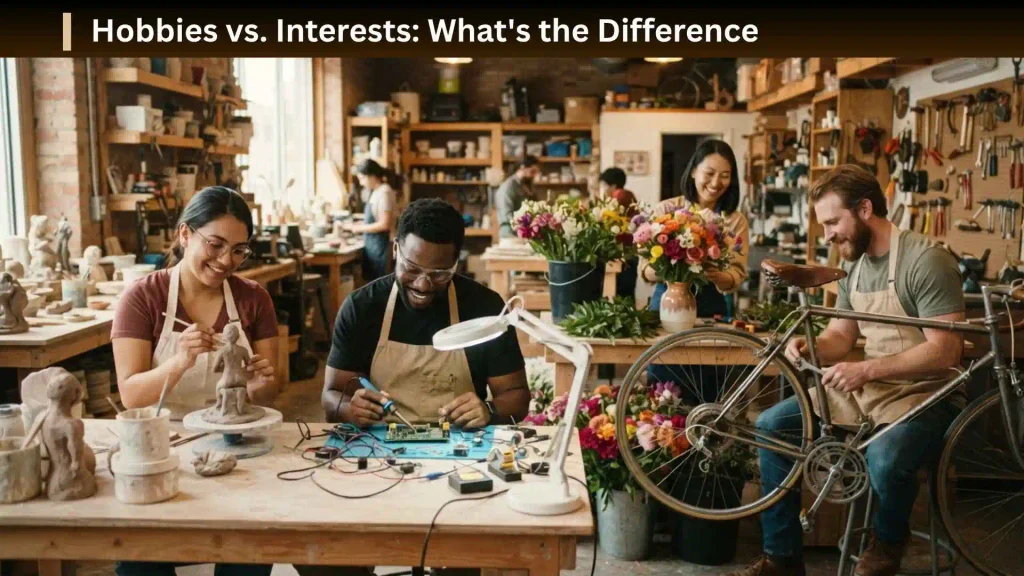
The main difference is active participation.
| Hobbies | Interests |
| Usually involve doing an activity | May involve learning, observing, or thinking about a subject |
| Often practiced regularly | Can be occasional or casual |
| Require some level of participation | May require little or no equipment |
| Can develop into skills | Can lead to discovering new hobbies |
| Often become part of a person’s routine | May change as curiosity changes |
For example, someone may have an interest in history but have photography as a hobby. Another person may be interested in gardening and actively maintain a vegetable garden as a hobby.
There is no requirement that an interest become a hobby. It is perfectly normal to enjoy learning about something without regularly practicing it.
Examples of Hobbies and Interests
There is no universal list of the “best” hobbies. The right choice depends on what you enjoy and what fits your lifestyle.
Creative Hobbies
Creative activities allow people to make, design, write, or express ideas.
Examples include:
- Drawing
- Painting
- Sketching
- Photography
- Creative writing
- Journaling
- Calligraphy
- Knitting
- Crocheting
- Sewing
- Woodworking
- Pottery
- Scrapbooking
- Jewelry making
- DIY crafts
- Digital art
Creative hobbies can be particularly appealing to people who enjoy making tangible projects or experimenting with ideas.
Outdoor Hobbies
Outdoor hobbies provide opportunities to spend time outside while pursuing recreation or exploration.
Examples include:
- Hiking
- Camping
- Gardening
- Birdwatching
- Fishing
- Cycling
- Kayaking
- Geocaching
- Nature photography
- Stargazing
- Walking
- Rock collecting
Many outdoor hobbies can be adapted to different experience levels and budgets.
Indoor Hobbies
Indoor hobbies can be useful when weather, space, or personal preference makes outdoor activities less convenient.
Examples include:
- Reading
- Cooking
- Baking
- Puzzles
- Board games
- Chess
- Model building
- Learning an instrument
- Watching and studying films
- Language learning
- Home crafts
- Collecting
- Coding
- Calligraphy
Some indoor hobbies require almost no equipment, while others can involve specialized tools.
Intellectual Hobbies and Interests
People who enjoy learning and problem-solving may prefer intellectually stimulating pursuits.
Examples include:
- Reading nonfiction
- History
- Astronomy
- Philosophy
- Psychology
- Learning languages
- Creative writing
- Genealogy
- Chess
- Puzzles
- Researching local history
- Learning about science
- Studying art or architecture
An intellectual interest does not necessarily need to become an organized hobby. Simply exploring a subject through books, lectures, museums, or educational resources can be meaningful.
Active and Fitness Related Hobbies
Some people prefer hobbies that involve movement and physical activity.
Examples include:
- Walking
- Running
- Swimming
- Cycling
- Hiking
- Dancing
- Yoga
- Recreational sports
- Tennis
- Golf
- Martial arts
- Rock climbing
When choosing an active hobby, consider your current ability, available facilities, equipment needs, and any relevant safety considerations.
Social Hobbies
Social hobbies combine an activity with interaction with other people.
Examples include:
- Book clubs
- Community theater
- Recreational sports
- Dance groups
- Choirs
- Board-game groups
- Volunteering
- Photography clubs
- Gardening clubs
- Craft groups
- Community organizations
Social hobbies can be especially appealing if your main goal is to meet people while doing something you already enjoy.
Collecting Hobbies
Collecting involves intentionally building and organizing a group of related objects.
Examples include:
- Books
- Coins
- Stamps
- Vinyl records
- Trading cards
- Postcards
- Rocks and minerals
- Vintage items
- Sports memorabilia
- Antiques
A collection does not have to be expensive. Someone can build a meaningful collection around inexpensive or found objects.
Hobbies for Different Personalities
Personality can influence the activities people find enjoyable, although no hobby belongs exclusively to one personality type.
If You Like Creativity
Consider:
- Painting
- Photography
- Writing
- Crafting
- Music
- Sewing
- Drawing
- DIY projects
If You Like Learning
Consider:
- Reading
- Languages
- Astronomy
- History
- Genealogy
- Chess
- Educational courses
- Research-based hobbies
If You Prefer Being Outdoors
Consider:
- Hiking
- Gardening
- Birdwatching
- Fishing
- Camping
- Cycling
- Nature photography
If You Enjoy Social Interaction
Consider:
- Team sports
- Book clubs
- Dance
- Volunteering
- Theater
- Choirs
- Community groups
If You Prefer Quiet, Independent Activities
Consider:
- Reading
- Journaling
- Drawing
- Puzzles
- Model building
- Photography
- Writing
- Collecting
You do not need to fit a particular personality category to enjoy any of these activities. Trying something outside your usual preferences can also help you discover unexpected interests.
How to Find a Hobby That Fits You
Choosing a hobby is easier when you start with your actual circumstances rather than choosing an activity simply because it is popular.
1. Think About What Naturally Holds Your Attention
Ask yourself:
- What subjects do I frequently search for?
- What activities make me lose track of time?
- What did I enjoy doing as a child?
- What do I like watching, reading, or learning about?
- What would I try if I did not worry about being good at it?
Your existing interests can provide clues about hobbies you may enjoy.
2. Consider Your Available Time
A hobby should fit realistically into your schedule.
If you have only a few minutes at a time, reading, sketching, journaling, puzzles, or language practice may be easier to maintain than activities requiring long travel or setup periods.
If you have several free hours on weekends, hiking, woodworking, photography, gardening, or longer creative projects may be more practical.
3. Consider Your Budget
Some hobbies are inexpensive or nearly free, while others require equipment, lessons, memberships, travel, or ongoing supplies.
Before starting, consider:
- Initial equipment
- Consumable supplies
- Classes or instruction
- Membership fees
- Transportation
- Storage requirements
- Maintenance costs
You can often start with basic equipment rather than purchasing an advanced setup immediately.
4. Decide Whether You Want Solitude or Social Interaction
Ask whether you would rather:
- Practice alone
- Practice with one or two friends
- Join a group
- Participate in organized events
- Meet new people through an activity
This can narrow down your choices considerably.
5. Decide Whether You Want Relaxation or Challenge
Different hobbies satisfy different needs.
If you want relaxation, consider reading, gardening, coloring, casual photography, puzzles, or crafts.
If you want a challenge, consider chess, learning an instrument, programming, advanced crafts, a new language, or technical photography.
You can also choose one hobby for relaxation and another for personal challenge.
How to Start a New Hobby Without Spending Too Much
A common mistake is buying expensive equipment before knowing whether you actually enjoy the activity.
A better approach is to test the hobby first.
Start With the Basics
Use what you already have whenever possible. For example, you can begin photography with a smartphone, try drawing with inexpensive paper and pencils, or explore cooking with basic kitchen equipment.
Borrow or Rent Equipment
For hobbies involving expensive equipment, borrowing or renting can help you understand whether continued investment makes sense.
Use Libraries and Community Resources
Libraries, community centers, parks, museums, clubs, and local organizations may provide access to educational materials, events, classes, or groups related to hobbies.
Set a Small First Goal
Instead of saying, “I want to become a photographer,” set a manageable goal such as taking 20 intentional photographs during a weekend walk.
Small projects make it easier to determine whether you genuinely enjoy the process.
How to Turn an Interest Into a Hobby
An interest can become a hobby when you begin actively engaging with it.
For example:
Interest: You enjoy learning about birds.
First step: Learn to identify common birds in your area.
Hobby: Start birdwatching during local walks.
Deeper involvement: Keep a birding journal, participate in local birding groups, or learn nature photography.
The same progression can work for almost any subject.
If you enjoy learning about history, you could visit historical sites, read primary sources, research local history, or create a family-history project.
If you enjoy music, you could learn an instrument, study music theory, attend performances, or explore music production.
Hobbies That Can Be Done at Home
If you prefer staying home, there are many possibilities.
| Hobby | Typical Space Needed | Beginner Cost |
| Reading | Very little | Low |
| Journaling | Very little | Low |
| Drawing | Small workspace | Low |
| Puzzles | Table space | Low to moderate |
| Baking | Kitchen | Low to moderate |
| Cooking | Kitchen | Low to moderate |
| Knitting | Small workspace | Low to moderate |
| Photography | Minimal | Low if using an existing phone |
| Gardening | Depends on setup | Low to moderate |
| Learning an instrument | Varies | Moderate |
| Model building | Small workspace | Moderate |
| Digital art | Computer/tablet setup | Moderate |
Costs vary significantly depending on equipment quality and whether you already own the necessary supplies.
Hobbies for Busy Adults
A good hobby does not have to consume an entire evening.
For limited schedules, consider activities that can be divided into short sessions:
- Reading a few pages
- Journaling
- Sketching
- Photography during daily walks
- Language practice
- Puzzles
- Crochet or knitting
- Listening to and studying music
- Gardening in small increments
- Short creative-writing sessions
The most sustainable hobby is often one that is easy to start and stop without significant preparation.
Can a Hobby Become a Career?
Yes. Some hobbies can develop into professional skills or businesses, but enjoying an activity does not automatically mean it should become a career.
For example, someone interested in photography may eventually work professionally as a photographer. A person who enjoys woodworking might sell furniture or handmade items. A writer may eventually publish books or work in content creation.
However, turning a hobby into income can change the experience. Deadlines, customers, marketing, expenses, and business responsibilities may make the activity feel more like work.
It is perfectly valid to keep a hobby purely for enjoyment.
Should You Have More Than One Hobby?
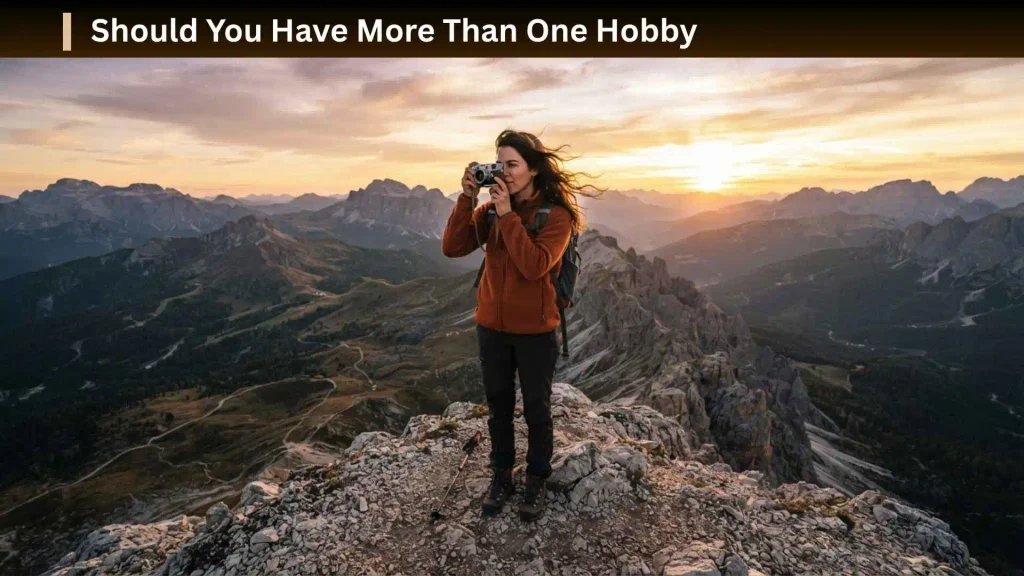
There is no ideal number of hobbies.
Having several interests can be useful because different activities can meet different needs. For example:
- Creative hobby: drawing
- Active hobby: hiking
- Relaxing hobby: reading
- Social hobby: a book club
- Learning hobby: studying a language
You also do not have to maintain every hobby permanently. Interests naturally change over time.
A hobby you loved five years ago may no longer appeal to you, and discovering something new does not mean your previous interest was wasted.
Common Mistakes When Choosing a Hobby
Choosing Based Only on Popularity
A hobby can be popular without being right for you. Personal enjoyment matters more than trends.
Expecting Immediate Skill
Beginners often compare their first attempts with work produced by experienced practitioners. Skill normally develops through practice.
Buying Too Much Equipment
Expensive equipment does not guarantee enjoyment or improvement. Start with the basics and upgrade when you understand what you actually need.
Treating Every Hobby as Productive
A hobby does not have to teach you a marketable skill, generate money, or produce something impressive. Enjoyment is a legitimate reason to have one.
Turning Relaxation Into Another Obligation
If your hobby becomes another source of pressure, reconsider how you approach it. Flexible participation can make leisure more enjoyable.
How to Know If a Hobby Is Right for You
A hobby may be a good fit if you:
- Look forward to doing it
- Enjoy the process, not just the result
- Can fit it into your lifestyle
- Can afford its ongoing costs
- Feel curious about improving
- Can practice without excessive stress
- Would continue doing it even without external recognition
You do not need to be naturally talented for a hobby to be worthwhile.
Frequently Asked Questions About Hobbies and Interests
What is the difference between a hobby and an interest?
An interest is something you are curious about, enjoy learning about, or care about. A hobby usually involves actively and regularly spending time doing an activity. An interest can therefore exist without becoming a hobby.
What are examples of hobbies and interests?
Examples include reading, writing, photography, gardening, cooking, hiking, cycling, painting, drawing, music, collecting, gaming, volunteering, learning languages, astronomy, history, and crafts.
How do I find hobbies that I actually enjoy?
Start with subjects and activities that already attract your attention. Consider your available time, budget, preferred environment, social preferences, and desired level of challenge. Then test a few activities before making a major investment.
Can watching or learning about something be a hobby?
Yes. People can engage deeply with subjects through reading, research, collecting information, studying, attending events, or following a particular field. The boundary between an interest and a hobby can be flexible.
What are some inexpensive hobbies?
Reading, walking, writing, journaling, drawing, photography with an existing phone, puzzles, birdwatching, learning from free educational resources, and many forms of DIY crafting can be relatively inexpensive.
Is it okay to have only one hobby?
Absolutely. There is no required number of hobbies. One activity that you genuinely enjoy can be more rewarding than maintaining several hobbies you do not have time for.
Can hobbies change over time?
Yes. People’s interests often change as their circumstances, schedules, skills, and preferences change. Trying new activities and leaving old ones behind is a normal part of discovering what you enjoy.
Conclusion
Hobbies and interests give people opportunities to explore curiosity, creativity, recreation, learning, and connection outside their everyday responsibilities. An interest may simply be something you enjoy learning about, while a hobby usually involves actively spending time on an activity.
Whether you prefer reading at home, exploring nature, making crafts, playing sports, collecting objects, learning a skill, or participating in a social group, the best hobby is one that fits your life and genuinely interests you.
You do not need expensive equipment, exceptional talent, or a long-term commitment to get started. Choose something that catches your attention, begin at a manageable level, and give yourself permission to experiment until you find activities that you genuinely enjoy.

I’m Sophia Carter, a writer who enjoys discovering interesting ideas and transforming them into helpful content. At Cognivoora, I write with a simple goal: to make information clearer, more accessible, and genuinely useful for readers. I value thoughtful research, easy explanations, and content that people can trust and return to whenever they need it.
Books:
- The Knowledge Journey
- Understanding the World Around Us