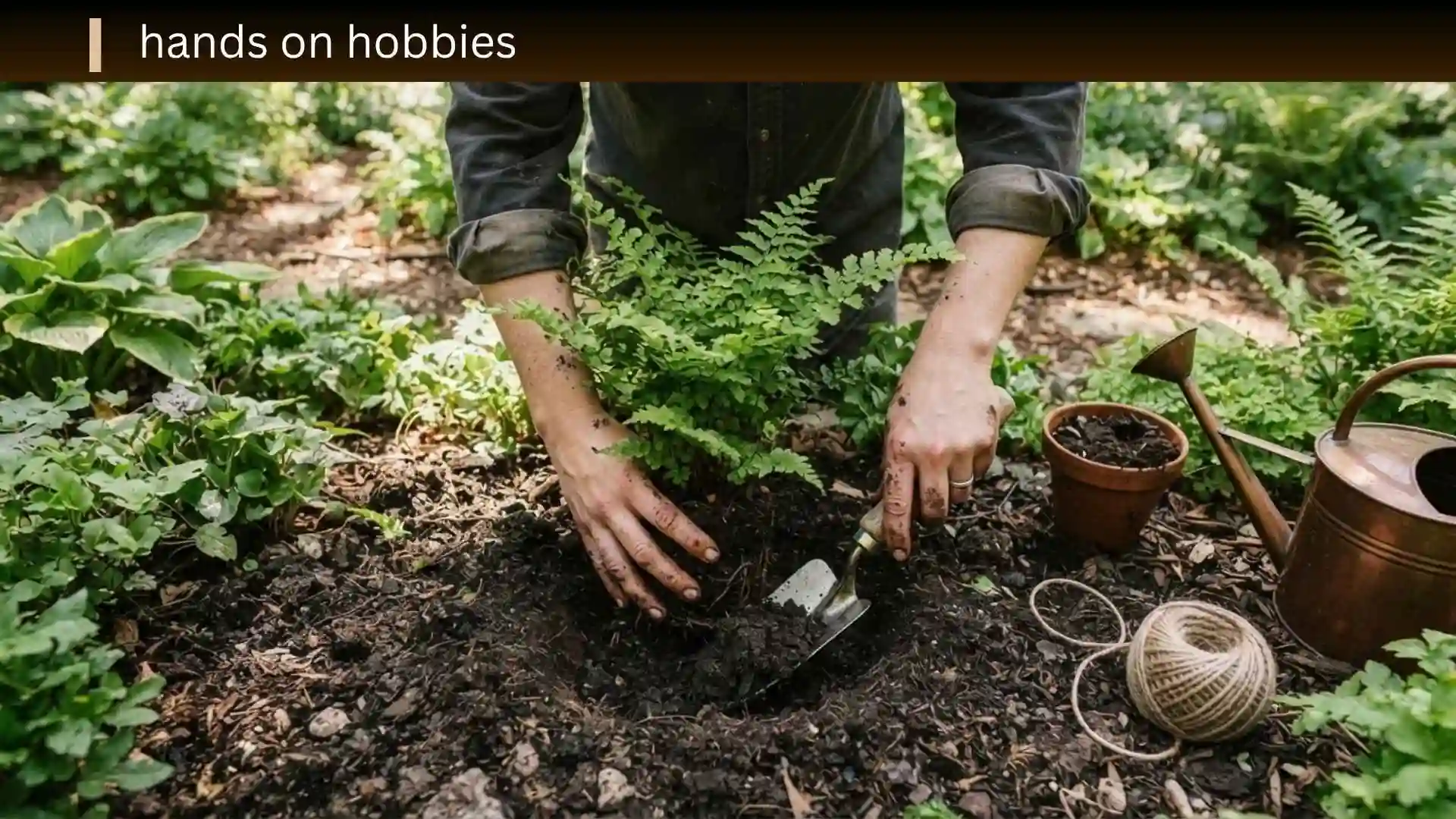
If you’re tired of hobbies that keep you glued to a screen, hands-on hobbies can give you something different, a chance to create, build, fix, and learn with your own hands. I believe the best part is seeing a real result at the end of your time, whether you’ve made something beautiful, learned a practical skill, or simply enjoyed the process. When you choose a hands-on hobby, you can turn your free time into something creative, useful, and genuinely satisfying. From woodworking and gardening to pottery, painting, crafting, and DIY projects, there are countless ways to find an activity that fits your interests and lifestyle.
What Are Hands On Hobbies?
Hands-on hobbies are activities where physical interaction is an important part of the experience. You might use tools, materials, ingredients, plants, fabric, clay, wood, or other objects to produce something tangible.
Examples include:
- Woodworking
- Pottery
- Gardening
- Sewing
- Knitting
- Painting
- Baking
- Cooking
- Jewelry making
- Model building
- Leathercraft
- Candle making
- Home DIY
- Soap making
- Photography
- Birdhouse building
- Scrapbooking
- Origami
- Embroidery
- Rock painting
What makes these hobbies appealing is the combination of activity and creation. You are not simply consuming entertainment; you are actively doing something and often ending up with an object, meal, artwork, plant, repair, or other visible result.
Why Try Hands On Hobbies?
Hands-on activities can be rewarding for several reasons.
They Give You Something Tangible to Make
Many hobbies provide a finished product you can see, use, display, give as a gift, or improve over time. Finishing a handmade project can provide a satisfying sense of progress.
They Encourage Creativity
Creative hobbies give you room to experiment with colors, shapes, textures, materials, techniques, and designs. Even structured activities can become personal once you start making your own choices.
They Help You Learn Practical Skills
Some hands-on hobbies can teach useful everyday abilities. Cooking, sewing, woodworking, gardening, and basic DIY projects can all involve skills that have applications beyond the hobby itself.
They Offer a Break From Screens
If much of your work or entertainment happens on a phone or computer, a physical hobby can provide a different type of activity. You can spend an hour working with fabric, clay, plants, paper, wood, or food instead of looking at another screen.
They Can Be Social
Many hands-on hobbies work well as group activities. Community gardens, craft groups, pottery classes, woodworking clubs, quilting circles, cooking classes, and maker spaces can turn an individual interest into a social experience.
25 Hands On Hobbies Worth Trying
There is no single best hands-on hobby for everyone. The right choice depends on what you enjoy making, how much space you have, your budget, and how much time you want to invest.
Here are 25 options covering a range of creative and practical interests.
1. Gardening
Gardening is one of the most accessible hands-on hobbies because you can start with a few containers, a small garden bed, or even a windowsill.
You can grow flowers, herbs, vegetables, or houseplants depending on your space and interests. Gardening also gives you an ongoing project rather than a hobby that ends when you finish one object.
Good for: Beginners, nature lovers, people with outdoor space, and anyone who enjoys long-term projects.
Start with: A few easy-to-grow plants, containers, potting mix, and basic gardening tools.
2. Woodworking
Woodworking allows you to turn pieces of wood into functional or decorative objects. Beginners can start with relatively simple projects such as shelves, planter boxes, small stools, birdhouses, or wooden organizers.
As your skills improve, you can learn techniques involving measuring, cutting, joining, sanding, and finishing.
Good for: Builders, DIY enthusiasts, and people who enjoy working with tools.
Start with: Simple hand tools and a beginner-friendly project before investing in larger equipment.
Always follow appropriate tool and workshop safety practices.
3. Pottery
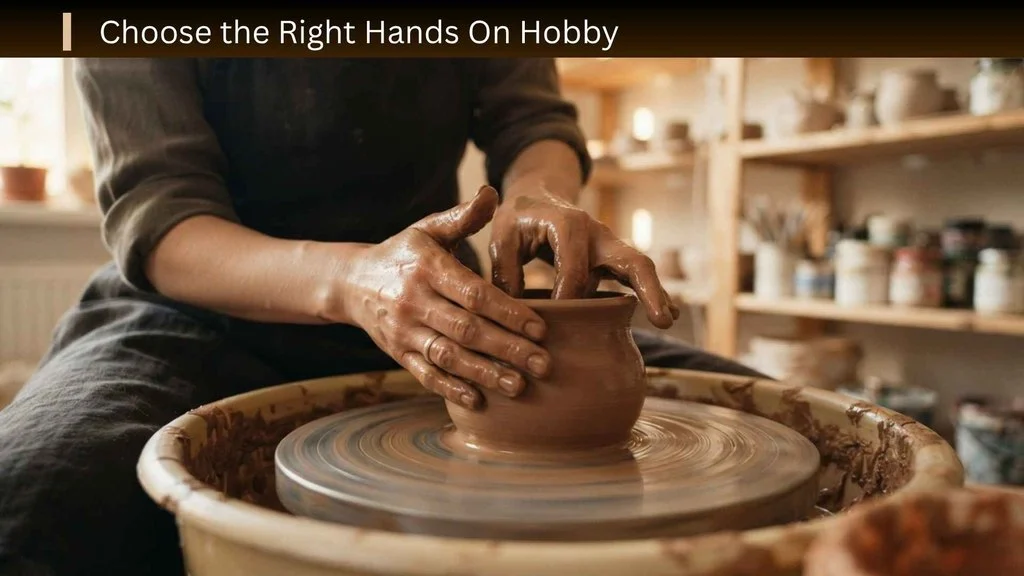
Pottery involves shaping clay into bowls, mugs, vases, sculptures, and other objects. You can work by hand using techniques such as pinch pots and coil building, or learn wheel throwing at a pottery studio.
Pottery is particularly appealing if you enjoy tactile materials and do not mind learning through practice.
Good for: Creative people who enjoy texture, sculpture, and functional art.
Start with: A beginner pottery class or studio rather than purchasing a complete home setup.
4. Painting
Painting is a versatile hands-on hobby with many possible approaches. You can experiment with acrylics, watercolor, gouache, oils, or other media.
You do not need to begin with complicated subjects. Still lifes, landscapes, abstract compositions, and simple studies can all help you learn.
Good for: Creative beginners and people who enjoy visual art.
Start with: One medium, a small selection of brushes, suitable paper or canvas, and a limited color palette.
5. Drawing and Sketching
Drawing is one of the easiest hands-on hobbies to start because the basic equipment is inexpensive and portable.
You can sketch people, animals, architecture, plants, objects, landscapes, or imaginary subjects. Regular practice can also introduce you to perspective, shading, composition, and observational drawing.
Good for: Beginners, travelers, artists, and people looking for a low-cost hobby.
Start with: A sketchbook and pencils.
6. Sewing
Sewing combines creativity with practical skills. You can make clothing, bags, pillow covers, decorations, quilts, costumes, or simple repairs.
Beginners can learn basic stitches by hand before moving to a sewing machine.
Good for: People who enjoy fabric, fashion, crafts, and useful projects.
Start with: Basic sewing supplies and a simple beginner project.
7. Knitting
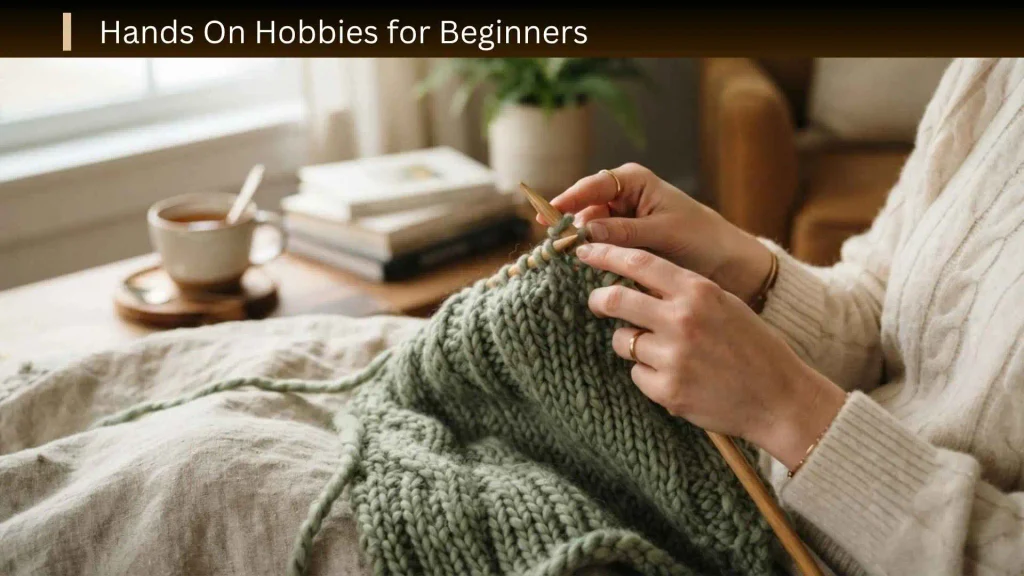
Knitting uses yarn and needles to create items such as scarves, hats, blankets, sweaters, and decorative pieces.
It can be started with relatively little equipment, although mastering techniques such as increasing, decreasing, shaping, and following patterns takes practice.
Good for: People who enjoy repetitive, methodical crafting.
Start with: Medium-weight yarn, appropriately sized needles, and a beginner pattern.
8. Crocheting
Crocheting is another fiber-based hobby that requires relatively few supplies. With a crochet hook and yarn, you can create blankets, hats, bags, stuffed animals, accessories, and decorative items.
Because projects can be small, crocheting can be a convenient hobby for people with limited space.
Good for: Beginners, crafters, and people who enjoy portable projects.
Start with: One crochet hook, yarn, and a simple tutorial or beginner pattern.
9. Embroidery
Embroidery involves decorating fabric with thread using different stitches and techniques. You can create floral designs, lettering, geometric patterns, illustrations, or personalized gifts.
An embroidery project can be small enough to work on during short periods of free time.
Good for: Detail-oriented crafters and people who enjoy textile art.
Start with: An embroidery hoop, fabric, embroidery floss, needles, and a simple design.
10. Jewelry Making
Jewelry making can range from simple beadwork to more advanced metalworking. Beginners can create bracelets, necklaces, earrings, keychains, and other accessories without needing a full jewelry workshop.
The hobby offers plenty of opportunities to experiment with color, texture, materials, and design.
Good for: Creative people who enjoy small projects and wearable art.
Start with: Beads, findings, jewelry wire or cord, and basic jewelry-making tools.
11. Baking
Baking is a hands-on hobby that produces something you can actually eat. You can begin with cookies, muffins, bread, cakes, or simple pastries and gradually explore more advanced techniques.
Baking also teaches useful skills such as measuring, timing, temperature control, ingredient handling, and recipe following.
Good for: Food lovers, beginners, families, and people who enjoy sharing what they make.
Start with: A few basic recipes and standard kitchen equipment.
12. Cooking
Cooking offers almost endless room for experimentation. You can explore cuisines, ingredients, sauces, breads, soups, grilling, fermentation, or meal preparation.
Unlike some hobbies that require dedicated equipment, cooking can often be incorporated into your normal routine.
Good for: Anyone who wants a practical hobby with everyday benefits.
Start with: A few dishes you genuinely want to learn rather than trying to master everything at once.
13. Leathercraft
Leathercraft involves cutting, shaping, stitching, stamping, and finishing leather to make items such as wallets, belts, key holders, bags, and small accessories.
It can become increasingly technical as you learn different construction and finishing techniques.
Good for: Makers who like durable materials and functional objects.
Start with: A beginner project and appropriate hand tools rather than buying a large collection immediately.
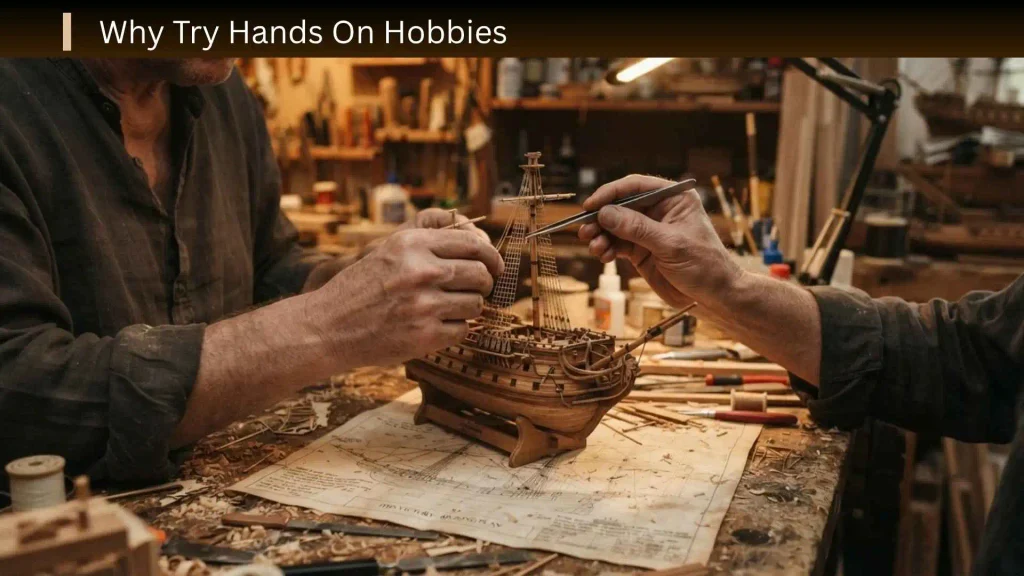
14. Model Building
Model building includes scale models, miniature structures, vehicles, aircraft, ships, figurines, and other detailed projects.
The hobby can combine assembly, painting, customization, research, and careful attention to detail.
Good for: Patient hobbyists, collectors, history enthusiasts, and detail-oriented creators.
Start with: A beginner-friendly kit that matches your current skill level.
15. Miniature Making
Miniatures can include dollhouse rooms, tiny furniture, fantasy scenes, miniature food, dioramas, and other small-scale creations.
One advantage is that you can work on relatively small surfaces, making this appealing to people who have limited room.
Good for: Detail-oriented people and creative hobbyists who enjoy tiny objects.
Start with: A small scene or simple miniature kit.
16. Origami and Paper Crafting
Origami turns paper into decorative and functional forms through folding. Other paper crafts include paper cutting, quilling, card making, paper flowers, and scrapbooking.
Paper hobbies are inexpensive, portable, and easy to adapt for different ages and skill levels.
Good for: Beginners, families, travelers, and people seeking an inexpensive creative hobby.
Start with: Paper and a few simple beginner designs.
17. Candle Making
Candle making combines materials, fragrance, containers, color, and design to create decorative or functional candles.
Because candle-making involves heated materials and potentially flammable substances, beginners should learn appropriate safety practices and follow the instructions for their specific materials.
Good for: Craft lovers interested in home décor and gift making.
Start with: A beginner kit and a straightforward container-candle project.
18. Soap Making
Soap making can become an involved craft with different ingredients, molds, colors, textures, and scents.
However, some soap-making methods involve caustic materials, so beginners should choose an appropriate method and follow established safety instructions carefully.
Good for: DIY enthusiasts interested in personal-care crafts and experimenting with designs.
Start with: A beginner-friendly method and carefully follow the product instructions.
19. Home DIY Projects
Home DIY is a broad category that can include painting furniture, installing shelves, refinishing small items, organizing spaces, repairing household objects, and building simple décor.
It is especially satisfying when the project solves a genuine problem in your home.
Good for: Practical people who enjoy fixing, improving, or customizing their surroundings.
Start with: One small project that can be completed with tools you already have.
20. Birdhouse and Bird Feeder Building
Building a birdhouse or bird feeder combines woodworking and nature observation.
You can make a simple project from suitable materials and then place it where you can observe visiting birds. If you build one for wildlife, research appropriate designs and placement for the bird species in your region.
Good for: Families, woodworkers, gardeners, and nature enthusiasts.
Start with: A simple beginner plan and basic woodworking tools.
21. Rock Painting
Rock painting is a low-cost creative activity that can be done individually or with family and friends.
You can paint patterns, landscapes, animals, inspirational designs, seasonal decorations, or simple characters on suitable clean stones.
Good for: Families, beginners, and casual crafters.
Start with: Smooth rocks, suitable paints, brushes, and a protective finish appropriate for your intended use.
22. Scrapbooking
Scrapbooking combines photographs, paper, lettering, embellishments, and personal memories into physical albums.
It can be particularly meaningful if you enjoy preserving family events, vacations, celebrations, or other memories in a creative format.
Good for: Memory keepers, paper crafters, and people who enjoy personalized projects.
Start with: An album, photographs, paper, adhesive, scissors, and a few decorative elements.
23. Floral Arranging
Floral arranging turns flowers and foliage into bouquets or decorative displays. You can work with fresh, dried, or artificial materials depending on your preferences.
The hobby introduces concepts such as proportion, balance, color, texture, and composition.
Good for: People interested in flowers, interior décor, and visual design.
Start with: A small selection of flowers and greenery and practice creating simple arrangements.
24. Photography
Photography may involve technology, but it is also a hands-on creative pursuit because you actively compose images, operate equipment, explore locations, and learn how light affects a scene.
You do not necessarily need a dedicated camera to begin. A smartphone can provide a convenient way to learn composition and visual storytelling.
Good for: Travelers, nature lovers, creative people, and anyone interested in observing the world differently.
Start with: The camera you already own and practice with composition, light, and subject selection.
25. DIY Mini Projects
DIY mini projects are ideal if you want hands-on activities without committing to a large undertaking.
Examples include:
- Making a simple wall organizer
- Decorating plant pots
- Creating handmade cards
- Building a small storage box
- Upcycling an old item
- Making a picture frame
- Creating seasonal decorations
- Customizing a notebook
- Making simple home décor
Good for: Busy people who want projects they can finish in an afternoon or weekend.
Start with: A project that matches your available materials, space, and skill level.
Hands On Hobbies Compared
The best hobby depends heavily on what you want from it. This quick comparison can help narrow your choices.
| Hobby | Beginner Friendly | Typical Space | Equipment Level | Main Appeal |
| Gardening | Yes | Small to large | Low to moderate | Growing things |
| Drawing | Yes | Very small | Low | Artistic expression |
| Painting | Yes | Small | Low to moderate | Creativity |
| Knitting | Yes | Very small | Low | Relaxed crafting |
| Crocheting | Yes | Very small | Low | Portable creativity |
| Sewing | Yes | Small to moderate | Moderate | Useful creations |
| Pottery | Yes | Studio usually best | Moderate to high | Tactile creativity |
| Woodworking | With guidance | Moderate to large | Moderate to high | Building |
| Baking | Yes | Kitchen | Low to moderate | Food and creativity |
| Cooking | Yes | Kitchen | Low to moderate | Practical skill |
| Jewelry making | Yes | Small | Low to moderate | Small creative projects |
| Model building | Yes | Small | Low to moderate | Detail and collecting |
| Leathercraft | Yes | Small | Moderate | Durable handmade goods |
| Origami | Yes | Very small | Very low | Paper creativity |
| Photography | Yes | Flexible | Low to high | Visual storytelling |
| Home DIY | Depends on project | Flexible | Low to high | Improving your space |
How to Choose the Right Hands On Hobby
If you have too many possibilities, start by considering what you want the hobby to provide.
If You Want a Low Cost Hobby
Try:
- Drawing
- Origami
- Rock painting
- Gardening with containers
- Knitting
- Crocheting
- Paper crafts
These can be started without a major investment.
If You Want to Make Useful Things
Consider:
- Cooking
- Baking
- Sewing
- Woodworking
- Leathercraft
- Home DIY
- Gardening
These hobbies can produce things you can use around the house or incorporate into everyday life.
If You Want Maximum Creativity
Consider:
- Painting
- Pottery
- Jewelry making
- Embroidery
- Floral arranging
- Miniature making
- Photography
These activities provide considerable freedom to experiment with design and aesthetics.
If You Have Very Little Space
Good options include:
- Drawing
- Sketching
- Origami
- Embroidery
- Knitting
- Crocheting
- Jewelry making
- Model building
A small desk or table may be enough for many beginner projects.
If You Want an Outdoor Hobby
Consider:
- Gardening
- Birdhouse building
- Nature photography
- Outdoor sketching
- Rock painting
- Floral arranging using home-grown flowers
Outdoor hobbies can also be combined. For example, gardening and nature photography can become complementary activities.
Hands On Hobbies for Adults
Adults often want hobbies that are relaxing but also feel productive. A hands-on activity can satisfy both needs.
Some particularly versatile choices include:
Gardening
It offers an ongoing project and allows you to work with living things.
Woodworking
It provides a path from simple beginner projects to increasingly sophisticated construction.
Pottery
It combines physical movement, creativity, and learning.
Sewing
It can be both artistic and practical, from simple repairs to making original garments.
Cooking
It fits naturally into daily life and allows you to continually explore new techniques and cuisines.
Photography
It can be practiced almost anywhere and can develop into a deeper creative pursuit.
Hands On Hobbies for Beginners
If you have never had a creative or craft hobby before, avoid choosing an activity solely because it looks impressive online.
Instead, choose something with:
- A simple first project
- Affordable starter materials
- Clear beginner instructions
- Minimal equipment
- A realistic learning curve
Drawing, cooking, baking, gardening, origami, knitting, crocheting, and simple paper crafts are all reasonable places to start.
Your first project does not need to be perfect. The goal is to determine whether you enjoy the process.
Hands On Hobbies for Families
Many hands-on activities can become shared family experiences.
Good choices include:
- Gardening
- Baking
- Cooking
- Rock painting
- Paper crafts
- Origami
- Simple woodworking projects
- Model building
- Nature photography
- Decorating seasonal crafts
For family activities, choose projects appropriate for the participants’ ages and supervise children when tools, heat, sharp objects, chemicals, or other hazards are involved.
Hands On Hobbies for People Who Like DIY
If you enjoy taking something apart, improving it, or building something from scratch, practical hobbies may be especially satisfying.
Try:
- Woodworking
- Furniture refinishing
- Home DIY
- Leathercraft
- Sewing
- Model building
- Gardening
- Basic repairs
- Upcycling
A useful approach is to start with projects that solve small problems rather than immediately attempting complicated renovations.
How Much Should You Spend on a New Hobby?
You do not need to purchase everything associated with a hobby immediately.
A better strategy is to start with the minimum equipment required for one beginner project. After you determine that you genuinely enjoy the activity, you can gradually add tools and materials.
For example, someone interested in woodworking does not necessarily need a fully equipped workshop for a first project. Likewise, someone interested in painting can learn with a limited selection of paints rather than purchasing every color available.
Try the hobby first. Upgrade your equipment second.
This approach reduces wasted spending and gives you a better idea of what equipment you actually need.
How to Make a Hands-On Hobby a Regular Habit
Starting a hobby is easy; maintaining it is often harder.
Try these strategies:
Keep Supplies Accessible
If your materials are difficult to reach, you may be less likely to begin. Store frequently used supplies somewhere convenient.
Choose Small Projects
A project that takes 30 minutes or an hour can feel more manageable than something that requires several weekends.
Schedule Hobby Time
Treat your hobby like another activity you intentionally make room for rather than waiting until you happen to have free time.
Accept Imperfect Results
Learning requires mistakes. A crooked stitch, uneven painting, imperfect bowl, or failed recipe is part of developing skill.
Increase Difficulty Gradually
Once you become comfortable with basic techniques, introduce one new challenge at a time.
What Makes a Hands On Hobby Worth Continuing?
A good hobby does not have to be productive in the traditional sense.
The most worthwhile hobby may simply be one that makes you curious enough to keep coming back.
Look for an activity that gives you at least one of these:
- Enjoyment
- Creative freedom
- A sense of progress
- Useful skills
- Social connection
- Physical activity
- A reason to spend time outdoors
- Something meaningful to make
- A satisfying learning challenge
If you consistently enjoy the process, you have probably found a good hobby.
Frequently Asked Questions
What are the best hands-on hobbies?
Some popular hands-on hobbies include gardening, woodworking, pottery, painting, drawing, sewing, knitting, crocheting, cooking, baking, jewelry making, model building, photography, and DIY projects. The best choice depends on your interests, available space, budget, and preferred level of difficulty.
What is the easiest hands-on hobby to start?
Drawing, origami, rock painting, basic cooking, gardening with containers, and simple paper crafts are among the easier options because they can be started with relatively few supplies.
What hands on hobbies are good for adults?
Adults may enjoy woodworking, gardening, pottery, sewing, cooking, baking, photography, painting, leathercraft, jewelry making, and home DIY. The best option depends on whether you want creativity, practical skills, relaxation, social interaction, or a combination.
What are some inexpensive hands-on hobbies?
Inexpensive options can include drawing, origami, paper crafts, gardening from seeds or cuttings, rock painting, sketching, knitting, crocheting, and some forms of photography using equipment you already own.
What hands on hobbies can I do at home?
You can do many hands-on hobbies at home, including cooking, baking, painting, drawing, knitting, crocheting, embroidery, sewing, jewelry making, model building, paper crafts, gardening, and certain DIY projects.
What hands on hobbies are good for people with limited space?
Drawing, embroidery, knitting, crocheting, origami, jewelry making, paper crafts, and small-scale model building require relatively little workspace.
Are hands on hobbies expensive?
They can be, but they do not have to be. Many hobbies can be started inexpensively and expanded over time. The cost usually depends on the materials, tools, equipment, workspace, classes, and level of specialization involved.
How do I find a hands on hobby I actually enjoy?
Choose two or three activities that genuinely interest you and try a small beginner project for each. Pay attention to whether you enjoy the process, not just the finished result. The hobby that makes you curious to try another project is often the strongest candidate.
Conclusion
Hands-on hobbies provide a simple way to spend free time actively creating, learning, building, growing, and experimenting. From low-cost activities such as drawing and origami to more involved pursuits such as woodworking and pottery, there is an option for almost every interest, budget, and living situation.
You do not need to become an expert before a hobby becomes worthwhile. Start with a manageable project, use basic equipment, learn as you go, and give yourself permission to make mistakes.
The best hands-on hobby is ultimately the one you look forward to doing again.

I’m Ethan Mitchell, a curious writer who enjoys turning complex ideas into simple, useful information. At Cognivoora, I focus on creating clear and engaging content that readers can understand and apply in everyday life. I believe good writing should educate, answer real questions, and leave readers with something valuable to remember.
Books:
- The Everyday Mind
- Simple Ideas, Better Thinking