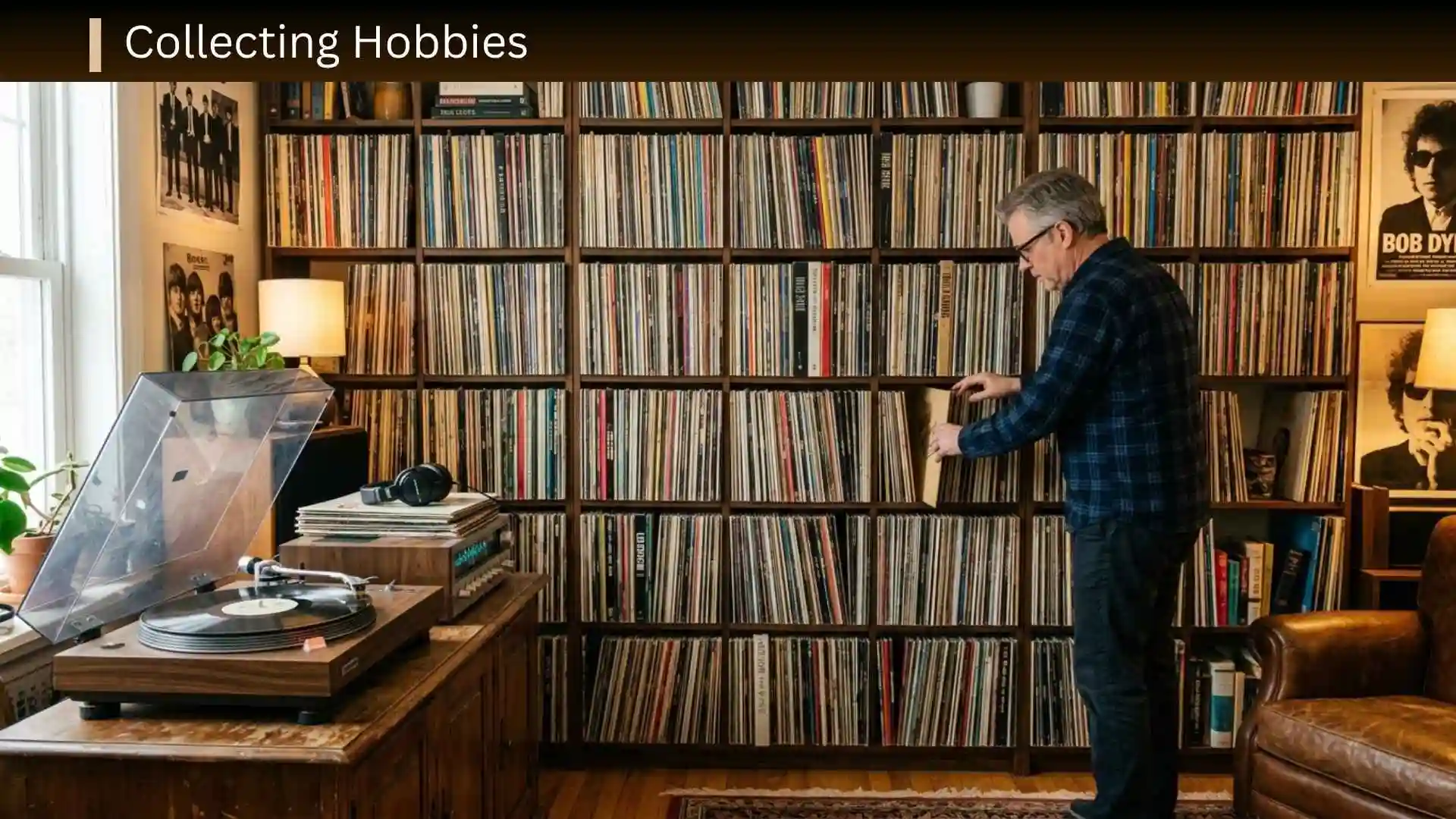
I’ve always found it fascinating how something small can hold a big story. Maybe you’ve kept old coins, postcards, books, stamps, rocks, action figures, or other items simply because they caught your attention. That simple curiosity can grow into a rewarding hobby—and that’s where collecting hobbies come in.
You don’t need a huge budget, a special skill, or an entire room to become a collector. I believe the best collections are often built around things you genuinely enjoy. Whether you love history, art, nature, nostalgia, or discovering unusual objects, you can start with a few meaningful pieces and slowly create a collection that feels uniquely yours.
In this guide, I’ll explore different collecting hobbies, what makes them enjoyable, how you can get started, and practical tips to help you build a collection without letting it become overwhelming. By the end, you may discover something you’ve been collecting all along—or find a new collection you can’t wait to start.
What Are Good Collecting Hobbies?(Quick Answer)
Some of the most approachable collecting hobbies include:
- Coins and currency — good for history and research enthusiasts
- Stamps — compact, inexpensive to begin, and historically rich
- Postcards — ideal for travel, history, and visual-art interests
- Books — flexible enough for casual or highly specialized collections
- Vinyl records — combines music discovery with physical collecting
- Sports cards — appealing to fans who enjoy sports history and memorabilia
- Trading cards — offers collecting, organization, and optional gameplay
- Rocks and minerals — suitable for nature and geology enthusiasts
- Seashells — interesting for beachgoers and natural-history collectors
- Comic books — combines storytelling, art, and publishing history
- Action figures — popular among fans of movies, games, and fictional characters
- Model cars — works well for automotive enthusiasts with limited space
- Vintage toys — connects collecting with nostalgia and design history
- Pressed flowers — a creative, inexpensive option when collected responsibly
- Keychains — small, easy to display, and often connected to travel
- Magnets — particularly suited to travel-themed collections
- Perfume bottles — combines design, packaging, and fragrance history
- Art prints — useful for people who appreciate illustration and visual art
- Board games — combines collecting with actual play
- Maps — especially interesting for travelers and geography enthusiasts
The right choice depends less on what is traditionally considered collectible and more on whether the subject gives you a reason to keep exploring.
Why Do People Enjoy Collecting?
Collecting can satisfy several different interests at once. The experience varies considerably depending on what is being collected.
The thrill of discovery
Finding an unusual postcard at an estate sale, identifying an unfamiliar mineral, or coming across an out-of-print book can make the hobby feel like a treasure hunt.
Learning through objects
Collections often encourage research. A coin can lead to questions about a particular historical period; a baseball card can introduce a player and the era in which they played; an old advertisement can reveal how products were marketed decades ago.
Creating a personal record
A collection can document a particular interest, place, period, franchise, artist, or personal journey. A travel collection, for example, can become a physical record of places visited.
Organizing and curating
Some collectors enjoy the organizational side as much as acquisition. Sorting, cataloging, photographing, labeling, and displaying objects can turn a pile of possessions into a coherent collection.
Connecting with other people
Collecting can also be social. Local clubs, conventions, swap meets, collector communities, specialty shops, and online groups can provide opportunities to compare items, exchange knowledge, and trade.
35+ Collecting Hobbies to Explore
There is no universal “best” collecting hobby. Each option below has a different appeal, cost profile, storage challenge, and learning curve.
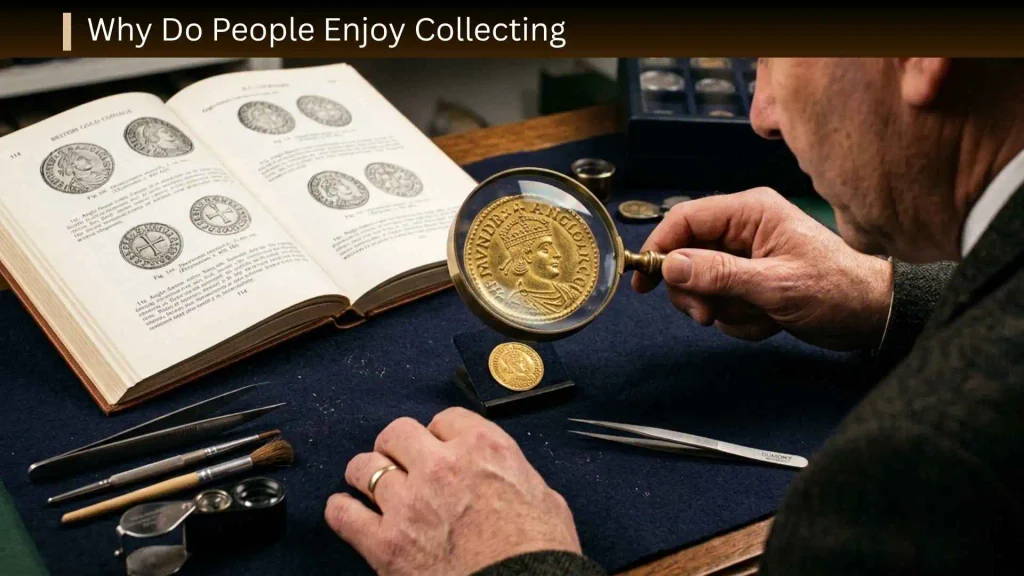
1. Coin Collecting
Coin collecting, often called numismatics, involves collecting coins based on characteristics such as country, historical period, denomination, design, minting details, or condition.
It is especially appealing if you enjoy history because individual coins can provide a physical connection to different governments, eras, and cultures.
Good for: History enthusiasts, researchers, detail-oriented beginners
Difficulty: Easy to start; advanced collecting can become specialized
Cost: Low to high depending on the collection
Space: Low
Beginner tip: Start by learning how to identify the basic information on coins before purchasing expensive examples.
2. Stamp Collecting
Stamp collecting, or philately, focuses on postage stamps and related postal material.
A collection can be organized by country, subject, historical period, printing variety, postal use, or another theme. Because stamps are small, this hobby can grow considerably without requiring much physical space.
Good for: History, geography, art, and postal-history enthusiasts
Difficulty: Easy to begin; specialized areas can be advanced
Cost: Low to high
Space: Very low
Beginner tip: Choose a theme you genuinely care about instead of trying to collect everything.
3. Postcard Collecting
Postcards provide an accessible way to explore travel, architecture, advertising, photography, illustrations, and social history.
You could focus on American towns and cities, national parks, vintage holiday cards, particular artists, historic hotels, transportation, or cards from places you have visited.
Good for: Travelers, history buffs, photography lovers
Difficulty: Easy
Cost: Low to moderate
Space: Low
Beginner tip: Decide whether your collection is organized around location, time period, subject, or visual style.
4. Book Collecting
Book collecting can be as simple as building a personal library or as specific as collecting first editions, books by one author, illustrated editions, signed copies, or publications from a particular period.
The important distinction is that reading books and collecting books are not necessarily the same hobby. A collector may care about edition, printing, binding, provenance, illustrations, or condition in addition to the content.
Good for: Readers, literary enthusiasts, historians
Difficulty: Easy to start; advanced collecting requires research
Cost: Low to high
Space: Moderate to high
Beginner tip: Define your collecting criteria before buying books simply because they are inexpensive.
5. Vinyl Record Collecting
Vinyl collecting combines music appreciation with physical-object collecting.
Collectors may concentrate on particular artists, genres, labels, pressing variations, album artwork, or historical periods. Listening to the records can also make this a collection that serves a practical purpose rather than simply sitting on a shelf.
Good for: Music lovers and album-art enthusiasts
Difficulty: Easy
Cost: Moderate
Space: Moderate
Beginner tip: Learn the difference between an interesting record and a desirable pressing before spending heavily.
6. Sports Card Collecting
Sports cards can be collected around a favorite sport, team, player, league, era, or card set.
The hobby can involve statistics, sports history, photography, design, trading, and memorabilia. Card condition and authenticity can become important considerations as a collection becomes more valuable.
Good for: Sports fans and collectors who enjoy categorization
Difficulty: Easy to begin; advanced collecting can be complex
Cost: Low to high
Space: Very low
Beginner tip: Pick a focused collecting goal instead of buying random cards without knowing what you want to build.
7. Trading Card Collecting
Trading cards extend well beyond sports. Collectors pursue cards connected with games, entertainment franchises, characters, artwork, and limited sets.
Some trading-card hobbies also include a playable game, giving the collection an additional purpose.
Good for: Gamers, franchise fans, and collectors who enjoy completing sets
Difficulty: Easy
Cost: Low to high
Space: Very low
Beginner tip: Learn the difference between collecting for enjoyment and buying cards primarily because you expect their value to increase.
8. Comic Book Collecting
Comic books bring together storytelling, illustration, character history, and publishing culture.
You can collect a particular character, publisher, series, creator, story arc, era, or cover style. Older or scarce comics can require more specialized knowledge concerning condition and authenticity.
Good for: Readers, artists, pop-culture fans
Difficulty: Easy to begin
Cost: Low to high
Space: Moderate
Beginner tip: Establish a theme before chasing expensive issues.
9. Rock and Mineral Collecting
Rocks and minerals are excellent choices for people who enjoy nature and geology.
A collection might contain specimens gathered legally during travel, purchased from mineral dealers, or obtained through organized collecting activities. Identification becomes part of the hobby, making it both observational and educational.
Good for: Nature lovers and science enthusiasts
Difficulty: Easy to moderate
Cost: Low to high
Space: Moderate
Beginner tip: Learn basic identification techniques and check local rules before collecting specimens outdoors.
10. Seashell Collecting
Seashells can turn beach visits into an observational hobby. Collectors may focus on species, locations, shapes, colors, or unusual specimens.
However, responsible collecting matters. Local and state regulations can restrict collection, and removing shells can affect coastal ecosystems. Check local rules and avoid collecting living animals or shells where removal is prohibited.
Good for: Beachgoers, nature enthusiasts, families
Difficulty: Easy
Cost: Low
Space: Low to moderate
Beginner tip: Consider photography and identification as part of the hobby rather than treating every shell as something that must be taken home.
11. Vintage Toy Collecting
Vintage toys appeal strongly to people interested in childhood nostalgia, design, manufacturing, and popular culture.
Collections might focus on toys from a particular decade, manufacturer, franchise, or category.
Good for: Nostalgia enthusiasts and pop-culture fans
Difficulty: Easy to start
Cost: Moderate to high
Space: Moderate to high
Beginner tip: Decide whether you want boxed examples, loose toys, complete sets, or simply interesting pieces.
12. Action Figure Collecting
Action figures offer an enormous range of themes, from superheroes and science fiction to video games and television.
Collectors may focus on a character, franchise, manufacturer, scale, release period, or particular figure line.
Good for: Entertainment and character-design fans
Difficulty: Easy
Cost: Moderate to high
Space: Moderate
Beginner tip: Think about display space before allowing the collection to grow faster than your storage system.
13. Model Car Collecting
Model cars provide an accessible way to explore automotive design without needing a full-size vehicle.
Collections can focus on manufacturers, decades, racing cars, classic automobiles, specific scales, or particular models.
Good for: Car enthusiasts
Difficulty: Easy
Cost: Low to moderate
Space: Low to moderate
Beginner tip: Choose a scale and theme early if you want the collection to remain visually cohesive.
14. LEGO Set Collecting
LEGO collecting can involve current sets, retired sets, themed collections, minifigures, or historically significant designs.
Unlike many collectibles, LEGO can also be built, rebuilt, displayed, and incorporated into creative projects.
Good for: Builders, designers, families, and fans of themed sets
Difficulty: Easy
Cost: Moderate
Space: Moderate to high
Beginner tip: Decide whether you care most about building, displaying, collecting complete sets, or some combination.
15. Board Game Collecting
Board game collecting works particularly well for people who want their collection to remain interactive.
You can focus on strategy games, family games, cooperative games, classic titles, particular designers, or games from different eras.
Good for: Gamers and social hobbyists
Difficulty: Easy
Cost: Moderate
Space: Moderate to high
Beginner tip: Buy games you expect to play rather than allowing unopened boxes to become the main objective.
16. Playing Card Collecting
Playing cards are small, visually interesting, and available in an enormous range of designs.
Collectors may focus on historical decks, casino cards, artistic designs, limited editions, advertising decks, or cards from particular countries.
Good for: Design enthusiasts and compact-collection fans
Difficulty: Easy
Cost: Low to moderate
Space: Very low
Beginner tip: Store decks away from excessive moisture, heat, and direct sunlight.
17. Keychain Collecting
Keychains are inexpensive, portable, and easy to connect with travel or personal interests.
A collection can document vacations, sports teams, attractions, brands, cities, or events.
Good for: Travelers and casual collectors
Difficulty: Very easy
Cost: Low
Space: Very low
Beginner tip: Use a display board or small organizer so the collection remains visible instead of disappearing into drawers.
18. Souvenir Magnet Collecting
Travel magnets are one of the simplest ways to create a geographical collection.
Each item can represent a city, state, national park, museum, attraction, or memorable trip.
Good for: Travelers and beginners
Difficulty: Very easy
Cost: Low
Space: Low
Beginner tip: Consider dedicating one section of your display to each trip or region.
19. Perfume Bottle Collecting
Empty perfume bottles can be collected for their glasswork, labels, packaging, historical design, or connection to particular fragrance houses.
This hobby can be more about decorative objects and packaging history than fragrance itself.
Good for: Design, fashion, and decorative-art enthusiasts
Difficulty: Easy
Cost: Low to high
Space: Low to moderate
Beginner tip: Handle older glass carefully and research unusual bottles before assuming they are valuable.
20. Art Print Collecting
Collecting prints can make visual art more accessible than purchasing original paintings.
A collection could center on a particular artist, illustration style, subject, poster tradition, or local art scene.
Good for: Art and interior-design enthusiasts
Difficulty: Easy
Cost: Low to high
Space: Low to moderate
Beginner tip: Consider archival storage and framing if preservation is important to you.
21. Poster Collecting
Posters can document movies, concerts, political campaigns, tourism, advertising, sports, or graphic-design trends.
Their large size can make storage more difficult than with smaller collectibles, so space should be considered from the beginning.
Good for: Graphic-design, entertainment, and history enthusiasts
Difficulty: Moderate
Cost: Low to high
Space: Moderate
Beginner tip: Store valuable paper items properly rather than folding them repeatedly.
22. Map Collecting
Maps appeal to people who enjoy geography, exploration, transportation, history, and graphic design.
Collectors might focus on antique maps, road maps, city maps, national parks, railroads, or maps of places with personal significance.
Good for: Travelers, geographers, historians
Difficulty: Easy to moderate
Cost: Low to high
Space: Moderate
Beginner tip: Pick a geographical or historical theme to give the collection a clear identity.
23. Fountain Pen Collecting
Fountain pens can be appreciated as writing instruments, manufactured objects, examples of industrial design, or pieces of writing history.
Some collectors focus on brands, filling mechanisms, materials, nibs, or particular periods.
Good for: Writers, stationery enthusiasts, and design lovers
Difficulty: Moderate
Cost: Moderate to high
Space: Very low
Beginner tip: Learn basic pen maintenance before purchasing vintage or mechanically complex pens.
24. Mechanical Pencil Collecting
Mechanical pencils provide a smaller and often less expensive alternative to some traditional writing-instrument collections.
Interesting differences include mechanisms, materials, manufacturers, eras, and unusual designs.
Good for: Stationery enthusiasts and collectors who want minimal storage requirements
Difficulty: Easy
Cost: Low to moderate
Space: Very low
Beginner tip: Keep a simple record of manufacturer, model, and condition.
25. Bottle Collecting
Vintage bottles can reveal information about beverages, medicines, cosmetics, food products, manufacturing, and local businesses.
Color, shape, markings, age, and manufacturing techniques can all become areas of study.
Good for: History and antiques enthusiasts
Difficulty: Moderate
Cost: Low to moderate
Space: Moderate
Beginner tip: Research an item’s history before cleaning or altering it; aggressive cleaning can sometimes damage useful original characteristics.
26. Antique Advertising Collectibles
Old advertising signs, tins, labels, calendars, packaging, and promotional objects can make an especially interesting collection.
They preserve examples of branding and commercial design from different periods.
Good for: Advertising, design, business, and social-history enthusiasts
Difficulty: Moderate
Cost: Low to high
Space: Moderate
Beginner tip: Collect around a coherent theme such as a product category, company, period, or design style.
27. Pin Collecting
Enamel pins and commemorative pins are compact collectibles that can represent organizations, events, destinations, fictional characters, artists, or personal interests.
Good for: Travelers, pop-culture fans, and collectors with limited space
Difficulty: Very easy
Cost: Low to moderate
Space: Very low
Beginner tip: Display pins on fabric boards, banners, or cases rather than keeping them loose.
28. Patch Collecting
Embroidered and woven patches can document military history, scouting, sports, travel, organizations, music, and pop culture.
Because patches are lightweight and flexible, storage is easier than for many larger collectibles.
Good for: Textile, history, travel, and pop-culture enthusiasts
Difficulty: Easy
Cost: Low to moderate
Space: Very low
Beginner tip: Use archival or appropriate textile storage when preservation matters.
29. Matchbook and Matchbox Collecting
Vintage matchbooks and matchboxes can preserve the branding of restaurants, hotels, airlines, businesses, and destinations.
They are particularly interesting as small pieces of commercial and travel history.
Good for: Ephemera and design collectors
Difficulty: Easy
Cost: Low
Space: Very low
Beginner tip: Because these are paper objects, keep them dry and away from excessive heat.
30. Tea or Coffee Packaging Collecting
Packaging from coffee, tea, and other everyday products can become a study of graphic design, branding, regional products, and changing consumer culture.
For practical storage, collectors generally focus on clean, empty packaging rather than keeping perishable contents.
Good for: Design and food-culture enthusiasts
Difficulty: Easy
Cost: Low
Space: Low to moderate
Beginner tip: Photograph unusual packaging before recycling ordinary examples, then keep only the pieces that genuinely fit your theme.
31. Pressed Flower Collecting
Pressed flowers combine collecting with preservation and crafts.
You can create a botanical-themed collection and use selected specimens in bookmarks, cards, journals, or framed arrangements. Identification is an important part of doing this well.
Good for: Nature lovers and creative hobbyists
Difficulty: Easy to moderate
Cost: Low
Space: Low
Beginner tip: Only collect plants where you are permitted to do so, and avoid protected or threatened species.
32. Feather Collecting
Feathers can be visually appealing and educational, particularly for people interested in birds.
However, laws concerning possession of wild bird feathers vary, and in the United States many native bird species are protected under federal law. Do not assume that a naturally found feather is automatically legal to keep.
Good for: Bird and nature enthusiasts who want a research-oriented hobby
Difficulty: Moderate because of legal considerations
Cost: Low
Space: Very low
Beginner tip: Learn the applicable federal, state, and local rules before collecting or keeping feathers.
33. Fossil Collecting
Fossils combine collecting with paleontology and earth science.
Collectors may focus on particular organisms, geological periods, locations, or specimen types. Legal access and collecting rules can differ substantially depending on the land and location.
Good for: Science and natural-history enthusiasts
Difficulty: Moderate
Cost: Low to high
Space: Moderate
Beginner tip: Learn where collecting is permitted and how to identify specimens before taking anything from the field.
34. Christmas Ornament Collecting
Holiday ornaments are an easy way to create a collection tied to family traditions, travel, interests, or particular design periods.
Because ornaments are seasonal, they can also become a yearly ritual: each new piece can mark a place visited, milestone reached, or interest developed.
Good for: Families, decorators, and sentimental collectors
Difficulty: Very easy
Cost: Low to moderate
Space: Moderate
Beginner tip: Label fragile pieces with their origin or the year they were acquired.
35. Music Memorabilia Collecting
Music memorabilia can include concert posters, ticket stubs, tour programs, backstage passes, photographs, promotional material, and other physical items connected to musicians or performances.
Paper memorabilia generally requires more careful storage than ordinary household objects.
Good for: Music historians and dedicated fans
Difficulty: Moderate
Cost: Low to high
Space: Low to moderate
Beginner tip: Keep provenance and acquisition details whenever possible, particularly for valuable items.
36. Local History Collecting
Instead of collecting one specific object, you can build a collection around a place.
Items might include old postcards, maps, photographs, advertisements, menus, brochures, newspapers, business cards, and other ephemera associated with a town, county, or region.
Good for: Researchers, historians, and people interested in their community
Difficulty: Moderate
Cost: Low to moderate
Space: Moderate
Beginner tip: Organize material by date, location, or subject so the collection becomes a useful historical record rather than an unstructured archive.
Collecting Hobbies by Budget
Your budget can shape the hobby more than the object itself. Fortunately, many collecting hobbies can be started without a large investment.
| Budget | Collecting hobbies to consider |
| Free to very low cost | Postcards you already own, local ephemera, pressed leaves, photographs, found rocks where permitted |
| Low cost | Stamps, keychains, magnets, pins, patches, playing cards, used books |
| Low to moderate | Coins, postcards, model cars, board games, fountain pens, comic books |
| Moderate | Vinyl records, sports cards, vintage toys, maps, art prints |
| Potentially expensive | Rare coins, valuable comics, sought-after cards, historical memorabilia, rare bottles |
A low-budget collection can actually be easier to manage because it encourages you to develop a clear theme rather than purchasing everything that looks interesting.
Best Collecting Hobbies for Beginners
If you have never collected anything before, start with an object that is:
- Easy to identify
- Affordable enough that mistakes are inexpensive
- Simple to store
- Interesting enough to research
- Available through several sources
- Capable of being organized into a clear theme
Postcards, stamps, books, keychains, pins, magnets, playing cards, and inexpensive coins are particularly approachable because you can learn the basics without immediately needing specialized equipment.
If you already have a strong interest—such as baseball, music, cars, geology, or comics—starting with that subject may be even better. Existing curiosity gives you a reason to keep learning.
How to Choose a Collecting Hobby
Start with an interest you already have
Ask yourself what you naturally research or notice.
If you frequently look at old architecture, historic postcards may be more rewarding than collecting random decorative objects. If you follow a particular sport closely, sports memorabilia may provide a stronger foundation.
Decide whether you enjoy the hunt or the display
Some collectors love searching flea markets and antique shops. Others prefer carefully building an organized display.
If the search is the exciting part, choose something with plenty of variation and discovery. If display matters more, consider objects that look good together and fit your available space.
Think about storage before buying
A collection can become difficult when the physical objects outgrow your home.
Coins and stamps take very little room. Books, vinyl records, toys, bottles, and framed posters can consume substantially more space.
A useful rule is to decide where the next 25 or 50 items will go before purchasing the first 25 or 50.
Set a collecting boundary
A boundary gives the hobby direction.
Instead of:
“I collect old things.”
Try:
“I collect postcards showing American national parks.”
Or:
“I collect paperback science-fiction novels published before 1980.”
A specific boundary makes decisions easier and reduces impulse purchases.
Decide whether condition matters
Condition is important in some collecting areas but much less important in others.
If you are collecting for personal enjoyment, a worn item may be more interesting than a pristine one. If you are collecting items where condition strongly affects desirability or value, you will need to learn the relevant grading conventions.
How to Start a Collection Without Overspending
Collecting can become expensive when every interesting object feels like something you need to own.
A simple approach is to establish three rules:
Set a monthly budget.
Choose an amount you are comfortable spending and treat it as a hobby expense.
Create a “want list.”
Write down the items, themes, editions, or characteristics you are actually looking for.
Wait before buying expensive pieces.
Research an item and compare examples before making a significant purchase. Rarity, condition, authenticity, demand, and provenance can all matter depending on the category.
The goal is to make acquisition part of the hobby rather than allowing purchasing to become the hobby by itself.
Where to Find Collectibles
Different collecting hobbies have different sourcing opportunities.
Thrift stores and secondhand shops
These can be useful for books, games, toys, household ephemera, decorative objects, and inexpensive surprises.
Estate and garage sales
Estate sales can be particularly interesting for older household collections because sellers may have accumulated items over many years.
Antique stores and flea markets
These are useful when you want to physically inspect objects before purchasing them.
Bookstores and record stores
Specialty stores can provide both objects and knowledge, particularly for books, comics, records, and related memorabilia.
Conventions and collector shows
Specialty events can make it easier to compare many items and meet people who understand the hobby.
Online marketplaces
Online buying provides enormous selection, but photographs may not reveal condition problems. For expensive or potentially rare objects, research the seller, examine detailed photos, understand return policies, and learn how authenticity is established in that collecting category.
How to Organize a Collection
A collection becomes much more useful when you can find individual pieces quickly.
Use a catalog
A simple spreadsheet or notebook can record:
- Item name
- Date acquired
- Where it came from
- Purchase price, if relevant
- Condition
- Identification details
- Notes
- Storage location
For larger collections, photographs can make identification easier.
Choose a logical sorting system
Depending on the hobby, you might organize items by:
- Date
- Geographic location
- Manufacturer
- Artist
- Theme
- Series
- Category
- Size
- Color
- Historical period
The best system is the one that helps you find and understand the collection.
Keep valuable information with the object
For collectibles where authenticity or provenance matters, retain receipts, certificates, original packaging, seller information, and acquisition notes when available.
Leave room for growth
Avoid filling every shelf, box, or display case immediately. A little empty space makes future additions easier to accommodate.
Displaying a Collection
Display can transform collecting from storage into a visible hobby.
Small objects such as pins, coins, cards, and playing-card decks work well in cases, binders, boxes, or wall-mounted displays.
Books, records, toys, and board games may need shelves designed to support their weight.
Paper collectibles—including postcards, posters, maps, and prints—should be protected from excessive light, moisture, and poor storage conditions. Fragile or valuable materials may require archival-quality storage or professional conservation advice.
For anything valuable, preservation should take priority over an attractive but potentially damaging display.
Common Beginner Mistakes
Collecting without a theme
Buying whatever catches your attention can produce an expensive assortment rather than a satisfying collection.
Chasing supposed bargains
An inexpensive collectible is not necessarily a good purchase. If it does not fit your interests or collection, it may simply become clutter.
Assuming old means valuable
Age alone does not determine desirability. Other factors can include rarity, condition, authenticity, demand, provenance, and historical significance.
Buying before learning
A little research can prevent avoidable mistakes, particularly in markets where reproductions, altered items, counterfeits, or misidentified objects exist.
Ignoring storage
The object may be safe when you buy it but deteriorate if exposed to unsuitable humidity, sunlight, temperature, handling, or storage materials.
Treating investment as the main goal
Collectibles can change in desirability and price. If financial return is your only reason for collecting, the hobby may become frustrating. Collecting for genuine interest gives you value even when market prices change.
How to Make Collecting More Interesting
A collection does not have to remain a simple accumulation of objects.
Turn it into a research project
Choose a historical period, manufacturer, artist, location, or theme and learn its background.
Document the story behind each piece
Record where an item came from and why you wanted it. This can make an ordinary object much more meaningful.
Photograph your collection
A digital catalog is useful for organization and can help you remember what you own before purchasing duplicates.
Build a themed display
Instead of displaying everything at once, create smaller displays around a particular topic.
Share what you learn
Collector communities can provide identification help, historical context, trade opportunities, and new collecting ideas.
Create a personal challenge
You might try completing a particular set, finding an example from every state, collecting one item from each decade, or documenting a subject through objects.
The challenge should make the hobby more engaging—not turn it into an obligation.
Collecting Hobbies That Take Very Little Space
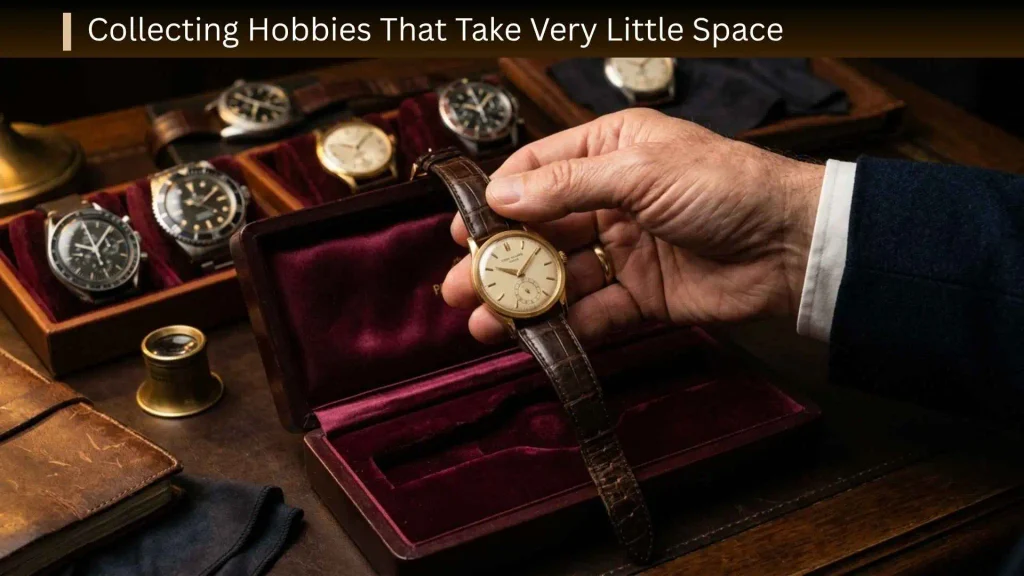
If you live in an apartment, dorm, small home, or simply dislike clutter, consider compact collections such as:
- Stamps
- Coins
- Trading cards
- Postcards
- Pins
- Patches
- Keychains
- Playing cards
- Fountain pens
- Mechanical pencils
- Small photographs
- Bookmarks
Compact collecting also makes cataloging easier and can reduce storage costs.
Collecting Hobbies for History Lovers
If historical context is the main attraction, consider:
- Coins
- Stamps
- Postcards
- Antique maps
- Old books
- Bottles
- Advertising ephemera
- Historical photographs
- Vintage newspapers
- Local-history objects
The advantage of these hobbies is that the collection can become a research archive rather than simply a display.
Collecting Hobbies for Travelers
Travel gives you a natural opportunity to build collections without making collecting the sole purpose of a trip.
Good choices include:
- Postcards
- Magnets
- Keychains
- Maps
- Pins
- Local art prints
- Transit cards where appropriate
- Regional packaging
- Small, legal natural-history souvenirs
Choose one category if you want your collection to remain manageable. Collecting every souvenir available can quickly create storage problems.
Collecting Hobbies for Families
Families can make collecting a shared activity by choosing objects that are inexpensive, easy to identify, and connected to outings.
Good possibilities include postcards, rocks where legally collected, magnets, stamps, leaves pressed from permitted plants, or photographs.
For children, the educational side can be more important than rarity or monetary value. Identifying, sorting, labeling, and researching items can turn the collection into a practical learning project.
How to Know When a Collection Is Getting Too Large
A collection may need reassessment when:
- You no longer know what you own
- Storage areas are overflowing
- You buy duplicates accidentally
- You purchase items you do not actually want
- The collection interferes with normal living space
- Maintaining it feels like a chore
- You are spending beyond your planned hobby budget
Downsizing does not mean abandoning collecting. You can keep the pieces that best represent your interests and let less-important items go.
Is Collecting a Good Hobby?
Collecting can be an excellent hobby if you enjoy discovery, research, organization, history, design, nostalgia, or the process of building something over time.
It is particularly flexible because you can make it:
- Low-cost or expensive
- Solo or social
- Indoor or travel-based
- Highly organized or casual
- Creative or research-oriented
- Tiny enough for a drawer or large enough for a dedicated room
The important part is choosing a collecting boundary that gives you direction without taking away the fun.
Frequently Asked Questions About Collecting Hobbies
What is the best collecting hobby for beginners?
There is no single best choice, but stamps, postcards, books, coins, pins, keychains, and playing cards are relatively accessible. Choose based on an interest you already have rather than selecting an item solely because it is considered collectible.
What is the cheapest collecting hobby?
Many collections can begin for little or no money. Postcards, local ephemera, photographs, natural objects collected legally, and some types of paper memorabilia can be inexpensive. Your costs depend on how specialized the collection becomes.
What collecting hobbies take the least space?
Stamps, coins, cards, pins, patches, keychains, postcards, and small writing instruments require very little storage compared with books, records, toys, bottles, or large framed items.
What collectibles are good for history lovers?
Coins, stamps, postcards, maps, old books, bottles, advertising materials, photographs, and local-history ephemera can all provide historical context. The strongest choice depends on which period or subject interests you.
How do I start collecting without spending a lot of money?
Choose a narrow theme, establish a budget, learn the basics before purchasing expensive items, and look for opportunities to trade or buy inexpensive examples. A focused collection is usually more satisfying than accumulating random objects.
Does collecting make a good hobby for kids?
Yes, when the subject is age-appropriate and the activity emphasizes discovery rather than monetary value. Collections involving sorting, identification, drawing, labeling, or research can also support learning. Adult supervision may be appropriate for fragile objects, outdoor collecting, or activities involving tools.
Can collectibles be a good investment?
Some collectibles have active markets and may increase in monetary value, but prices are not guaranteed. Rarity, condition, authenticity, demand, and market trends can affect value. It is safer to treat collecting primarily as a hobby rather than assuming every collectible will be appreciated.
How do I prevent my collection from becoming clutter?
Set a defined theme, establish a physical storage limit, catalog what you own, and use a “one in, one out” rule when appropriate. Periodically review the collection and keep items that genuinely fit your collecting goal.
Conclusion
The best collecting hobby is not necessarily the rarest, most valuable, or most impressive one. It is the one that gives you a reason to keep looking, learning, organizing, and appreciating what you find.
Start with a subject you already care about, define a manageable theme, set a budget and storage limit, and learn enough about the hobby to recognize what makes an item interesting. Whether your collection fits inside a small box or eventually fills a room, the real value is in the curiosity and knowledge you build along the way.

I’m Olivia Bennett, a passionate writer who loves exploring ideas, learning new concepts, and sharing knowledge in a straightforward way. I write for Cognivoora with the goal of making useful topics easier to understand without unnecessary complexity. My approach combines research, clarity, and a reader-first perspective.
Books:
- Think Clearly, Live Better
- The Curious Reader’s Guide